
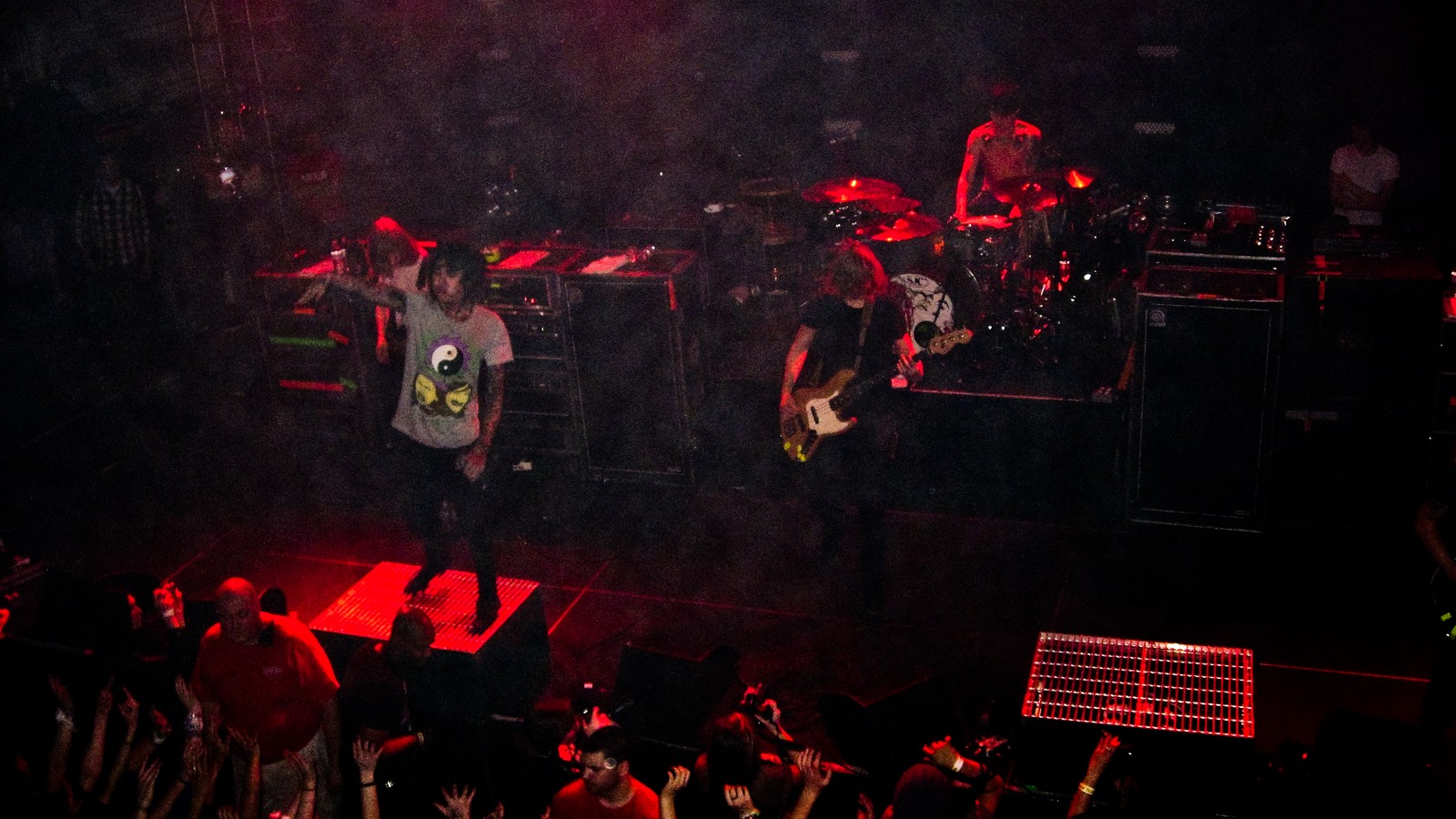
The word on the table is a critic's. Reviewing the debut for Exclaim! on 17 September 2007, Bill Whish wrote that the dubbing of Bring Me the Horizon's sound as deathcore was "actually pretty accurate", and he said it flat, the way a man reads a street name off a sign, with no flicker of doubt about the address.
Formed in Sheffield in 2004, signed to Visible Noise before most of America had heard a note of it, and sent into the clubs with a debut whose breakdowns were built to stamp the boards of a stage flat and rattle the bar shelves behind the crowd, the band at the centre of that sentence is Bring Me the Horizon, and the argument over Bring Me the Horizon deathcore has followed every record the band has put out since. One critic's word settles nothing. A genre is a set of parts, and the parts are on the tapes.
Run those parts against the definition the genre works by and the answer is yes, for one album. Count Your Blessings is a deathcore record. The four-song EP before it is something looser, and Suicide Season in 2008 is metalcore. Picture the strip of tarmac behind a club, laid fresh on the morning of a show: the band backs the trailer over it while it is still soft, drags a full backline across it, plants the drum riser and stamps every breakdown of soundcheck down through its feet, and by midnight the ruts the band gouged into the surface have set as hard as stone. The band drives off toward bigger rooms. The ruts stay where they set.
The band could leave. The record could not, which is why it keeps its place in the story of deathcore beside bands that never left at all, and why the verdict has to be reached record by record instead of by reputation.
Four songs from Nottingham, first
Cut at Pristine Studios in Nottingham with Johnny Carter and Paul Yeadon producing, put out by the small Thirty Days of Night label on 25 September 2004 and picked up by Visible Noise for a British reissue on 30 January 2005, This Is What the Edge of Your Seat Was Made For holds four songs, the longest of them "RE: They Have No Reflections" at five minutes and forty-two seconds, and it is the record where the band's later reputation rests on the least evidence. The breakdowns are there. The screaming is there. What the four songs lack is the death metal side of the bargain.
The critic who heard it first heard punk rather than death metal. Mike Diver at Drowned in Sound, reviewing it at the end of January 2005, called the songs tough and brutal and, above all, punk, and set the band among hardcore and punk acts with a post-hardcore approach. A review that reaches for punk and hardcore and never for metal is not describing death metal, and punk energy is not one of the parts that make the genre. The EP is the hinge, the sound before the sound settled, and it belongs to the format traced in Doom, demos and the EP, the short release that carried a young band to a label before it had an album to sell.
Bring Me the Horizon deathcore, part by part
Recorded at DEP International Studios in Birmingham with Dan Sprigg, by five young musicians, and released by Visible Noise on 30 October 2006, Count Your Blessings is the record the question really turns on, and on the mechanics it answers yes. Last Rites, reviewing the American issue, heard European melodic death metal with black metal styled vocals and a smattering of slow and heavy breakdowns, and judged the metal to outweigh the core by a wide margin.
The voice is the strongest evidence. The same review, dated 22 November 2007, found no clean singing on the record at all, only very high shrieks, deep death growls and a bit of hardcore shouting, which is the low and high trade-off that defines the genre's vocal line. Nobody in the band sings a clean line. Nobody tries.
Those slow and heavy breakdowns are where the shriek and the growl were aimed. Each one arrives like a wheelie bin of the night's empties tipped down the cellar stairs of a club at closing time: a long tilt over the top step while the glass inside grinds and shifts, then the whole load bursting on the concrete at the bottom in one crash that leaves nothing standing. The fast passages exist to get the bin to the top of the stairs.
The riffs are where the record splits its loyalties. Last Rites heard guitar flourishes that owe much to the Gothenburg school of At the Gates, which is the Swedish side of the family, while Bill Whish at Exclaim! heard riffs and production close to Cannibal Corpse, which is the American side, a split bloodline that the voice and the breakdowns settle in deathcore's favour. "For Stevie Wonder's Eyes Only (Braille)" went out with its video on 6 March 2008, nearly a year and a half after the album, which means the label was still selling the deathcore record in the same year the band went to Sweden to write its way out of it. The parts the critics of the day agreed on are enough to carry the verdict.
The band could leave. The record could not.
How the deathcore name was attached
The word did not arrive with the album. In Britain in November 2006, Raziq Rauf at Drowned in Sound called the band's music extreme metalcore, and Sykes himself, in the same interview, called what the band does party music. The word deathcore does not appear in the interview. In North America it was becoming the word for a whole class of bands, and the US release is where the name was pinned on.
| Date | Who | About | The word used |
|---|---|---|---|
| 6 November 2006 | Drowned in Sound | Count Your Blessings | extreme metalcore |
| 17 September 2007 | Exclaim! | Count Your Blessings | deathcore, "pretty accurate" |
| 22 November 2007 | Last Rites | Count Your Blessings | melodic death metal with black metal vocals |
| 28 November 2008 | Punknews.org | Suicide Season | metalcore, with "deathcore" in quotation marks |
| 25 June 2026 | Consequence | "Dehumanized" | deathcore |
Issued in the United States by Earache on 14 August 2007, the record landed in a market that already had a shelf for it, and the critic who looked at that shelf and judged the fit was Bill Whish of Exclaim!, who wrote on 17 September 2007 that dubbing the band deathcore was pretty accurate and that these were not just another breakdown-happy metalcore band. Last Rites, two months later, went in expecting one more band on the metalcore bandwagon and came out describing melodic death metal. Both were listening to the same record.
The North American reading stuck in a market that already had a class of bands, the Top 8s and touring packages covered in chapter two, and a British band whose debut sounded like that class was filed with it. The filing was not a mistake. It was made on the evidence, and the evidence holds up.
Suicide Season walks out
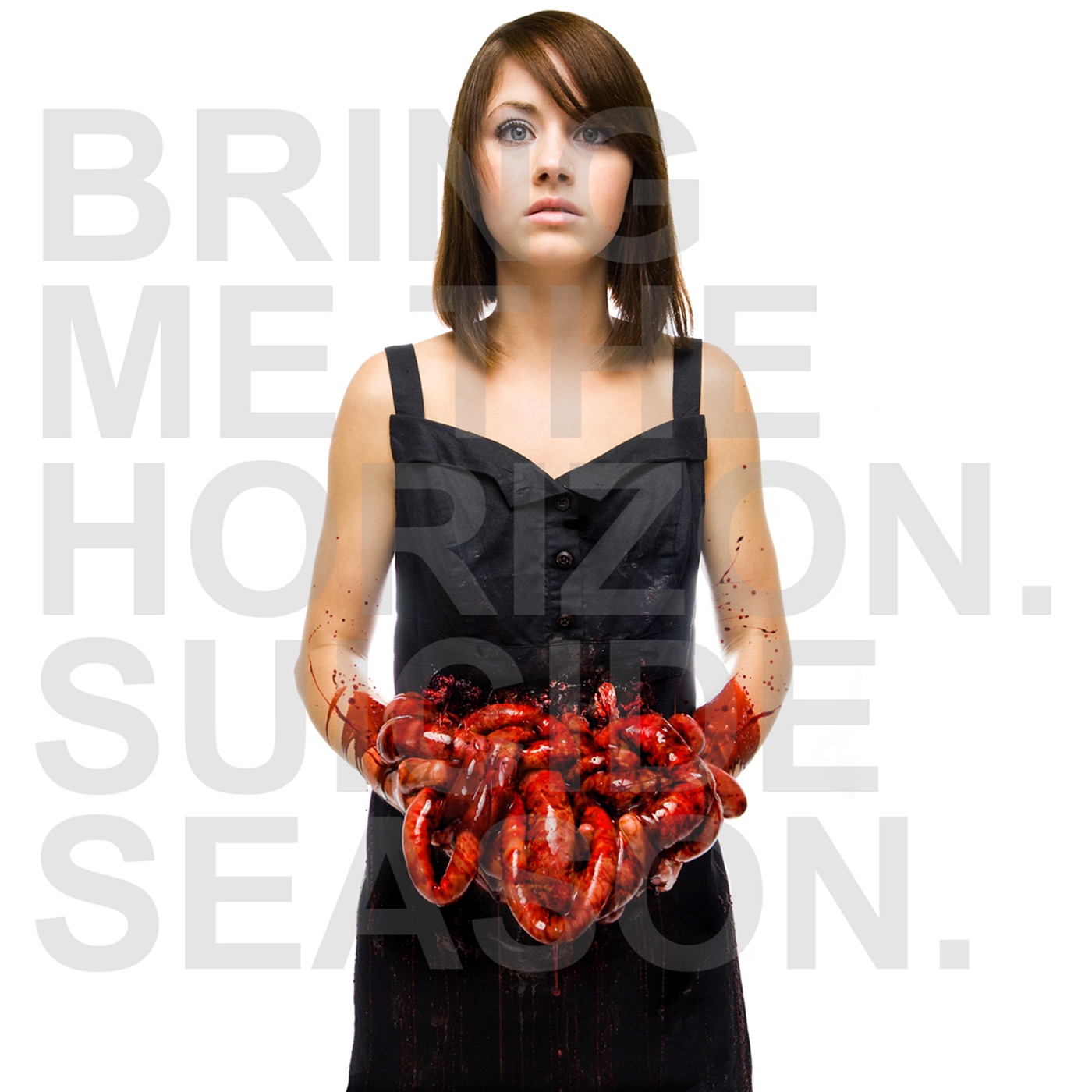
Written and recorded in Sweden with a producer whose name was already stamped on a shelf of Gothenburg records, and released by Visible Noise in the autumn of 2008 with Epitaph following in the United States on 18 November, the second album was the band's deliberate break with the first, and the man who turned the knobs on it was Fredrik Nordström. It kept one part of the debut and let the rest go.
"The Comedown", whose video arrived in August 2008, shows what changed. The breakdowns stayed. What went was the fast death metal around them, ripped out from under the songs the way a tablecloth is yanked off a green room rider table: the plates of chug left standing in place, the table legs buckling under them, everything that used to hold them up gone in one pull. Mike French at Punknews.org, on 28 November 2008, called the band British metalcore and put deathcore in quotation marks, the way a word is held up for inspection once it has stopped fitting.
That is how the exit looked from outside: the old word surviving only inside scare quotes. Nobody walks out of a room he was never in.
One record settles it, and 2026 reopens it
So: was Bring Me the Horizon ever deathcore? On one album, on any honest reading. Count Your Blessings carries the breakdowns, the shriek and the growl with no clean voice anywhere, and riffs that borrow from American death metal as well as from Sweden, and whatever its makers have recorded since, not a single bar on the disc has moved. No later album can absolve the first one of its parts. The EP before it holds the breakdown and the scream without the death metal. Suicide Season holds the breakdown without the rest. Neither is deathcore.
The apostasy turned out not to be permanent. In April 2026 the band announced Count Your Blessings | Repented, a re-recording of the whole debut for its twentieth anniversary, mixed by Buster Odeholm and due out on 10 July. "Black & Blue" came first, on 12 June, and on 25 June the one new song, "Dehumanized", which Langdon Hickman at Consequence called a churning deathcore track mirroring the innovations the genre has made in the years since. The amplifier head came down out of the loft, was re-valved, and was dropped onto a new cabinet hard enough to snap the casters.
That is the last piece of evidence and the least needed. The case rests on what is on the 2006 record, and the record says deathcore in every part that counts: the breakdowns, the riffs, the voice with no clean singing. The band that made it spent most of two decades as something else. For one record in 2006 it was a deathcore band, and nothing it has done since has taken that back.
