
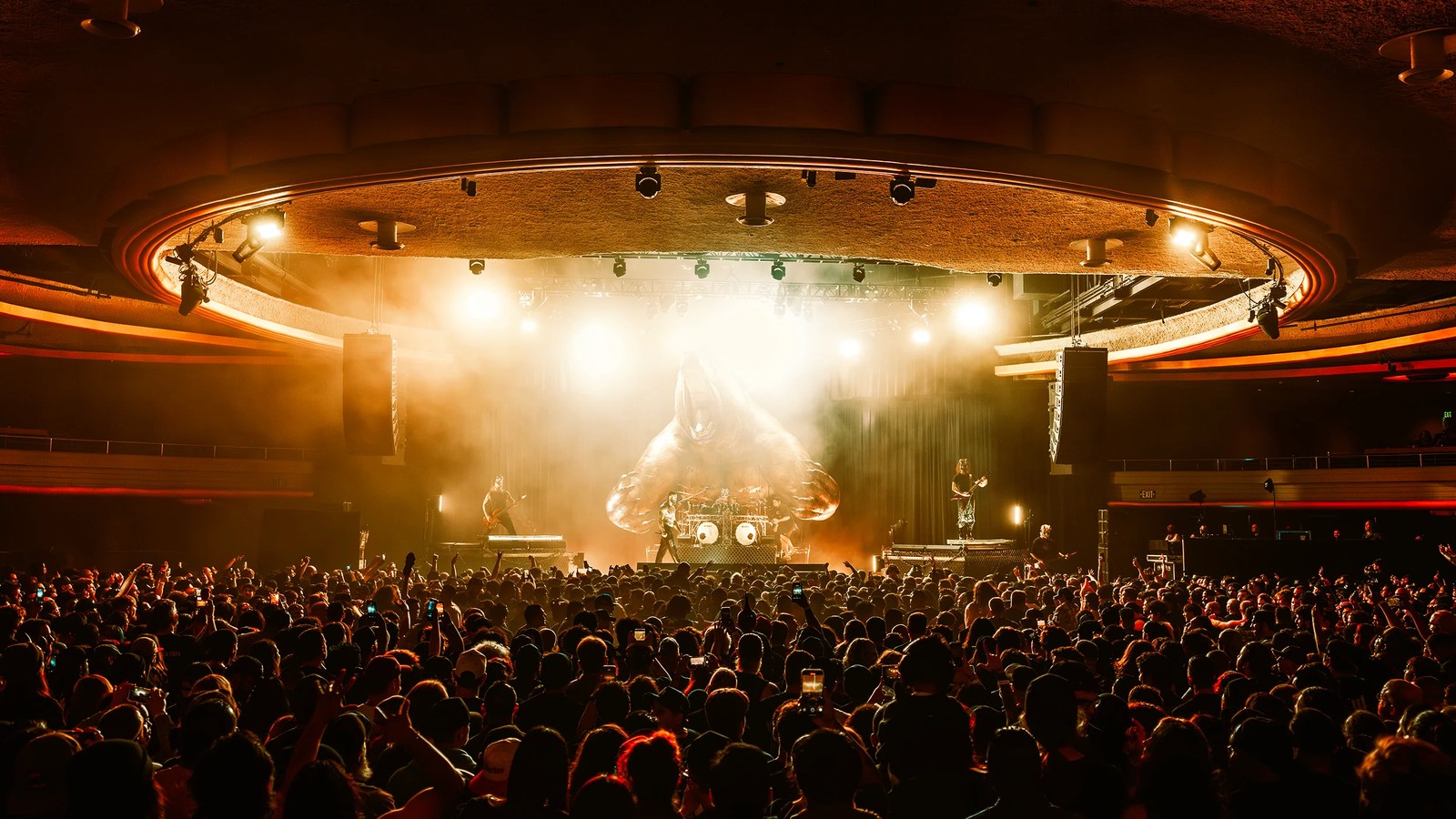
In an all-ages room at the turn of the millennium, with a death metal demo in one jacket pocket and a hardcore seven inch in the other, a kid could be told by both crowds on the same night that the two records had no business sharing a stage, and the refusal to swallow that answer, repeated in basements from Montreal to Glendale, is the whole of deathcore history: a blast beat lifted from death metal and a breakdown lifted from hardcore, rammed into one song until neither could get back out.
They shared it anyway.
Picture two microphone cables, one pulled from death metal's stage box and one from hardcore's, stripped back to the copper behind a borrowed soundboard in a fire hall and twisted together inside a fist of electrical tape, a repair no sound man would ever sign off on, which has carried the blast beat and the breakdown down a single wire ever since, while every new wave of bands has kicked it, tripped over it and torn it halfway out of the board.
The wire has never once gone dead. The Montreal sextet that put two singers on one stage and let them trade gutturals for squeals was Despised Icon; the Bay Area five who smuggled melodic death metal leads into a hardcore room were All Shall Perish; and the teenagers out of Glendale, Arizona, whose first EP outran every label in the country through a website barely two years old were Job for a Cowboy. Three cities, three sounds, one argument. None of them sounded alike. All of them sounded like deathcore.
The genre's own timeline breaks into five stretches: the late-nineties records nobody yet had a name for, the Montreal and Bay Area years when the name finally fit, the MySpace boom, a 2010s decade that blew the sound apart into half a dozen subgenres, and the second wave of the 2020s, which put it in front of more people than ever before. Each stretch has its own bands, and no single band owns any of them.
Before the sound had a name, from the late nineties to 2002
Nobody set out to invent anything, and the quarrel over where deathcore came from has never been settled by a single record. What the late nineties had was a generation of hardcore kids who owned their Earth Crisis records and their Suffocation records side by side, and who had noticed that the slow, crushing passage a New York brutal death metal band drops into the middle of a song and the breakdown a metalcore band builds a whole set around were working the same muscle. The next step was obvious. Somebody just had to take it.
Several bands took it at once, in places that had nothing to do with each other. Released through the Christian hardcore label Solid State in 1998, Embrace the Eternal dragged death metal riffing straight into the hardcore circuit, and the Arlington, Texas, band behind it was Embodyment, while Eighteen Visions in Orange County put out Yesterday Is Time Killed in 1999 and Prayer for Cleansing in North Carolina did the same with Rain in Endless Fall that same year. Out in the San Francisco Bay Area, the band whose guitarist is called the father of deathcore in more than one account was Antagony, formed in December 1999 around the guitarist Nick Vasallo and a fixture of the Bay Area underground by 2001.
Those early records do not sound like what came later. The vocals are hardcore shouts far more often than the inhaled pig squeal the next decade would turn into a trademark. Listen to them now and the thing you hear is a hardcore band gutting a death metal record for parts. Neither camp claimed it. That is usually how a genre starts.
Montreal, the Bay Area and the desert, 2002 to 2005
The word itself was older than the sound it stuck to, and the British magazine Terrorizer floated it in December 1996, in a piece by Nick Terry, for the likes of Earth Crisis and Merauder. But the years in which deathcore history turns from a scatter of records into a style with a name are 2002 to 2005, and the bridgehead was Montreal, a city whose underground already ran hot with technical death metal and with the chaotic, odd-metred hardcore that would later be filed as mathcore.
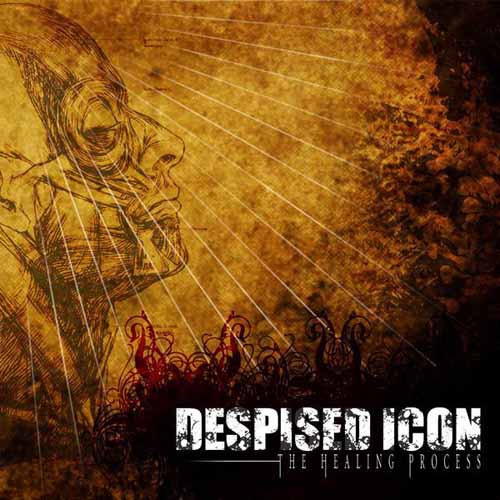
Formed in Montreal in 2002 and on record that same year with Consumed by Your Poison, the band that would turn two vocalists into a weapon was Despised Icon, and by The Healing Process in 2005 the formula was set: one throat churning out the low growl like a sump pump choking on a flooded basement, the other answering with a high squeal, tremolo riffs at grind speed, and then the drop into half time where the room either moved or got moved. Their neighbours in Ion Dissonance came at the same years from a mathier angle, all lurching time signatures and dissonant chords, and down in Massachusetts The Red Chord were doing something close to it. The mathy strand never became the main road. It is the reason early deathcore riffs twist where later ones pound.
The West Coast answered fast. Released in 2003, Hate . Malice . Revenge by All Shall Perish took the same formula and pushed melodic death metal leads into it, Swedish harmonies laid over Californian breakdowns, while in South Carolina Through the Eyes of the Dead cut Bloodlust, out at the end of 2005 and often filed under metalcore at the time. Then, in December 2005, the five teenagers from Glendale released the Doom EP, and the rest of the decade was decided on a screen rather than in a room.
Job for a Cowboy did not stay. Signed to Metal Blade, they put out Genesis in May 2007, watched it enter the Billboard 200 at number 54, and walked off toward straight death metal with Ruination two years later. The template they had helped build stayed behind without them. It did not need them anymore.
The MySpace years, 2005 to 2010
Every scene has its infrastructure, and the MySpace years gave deathcore one that no genre before it had: a profile page with a music player, a friends counter, a list of eight favourite bands and a comment wall, free to anyone with a demo and a laptop. MySpace went live in August 2003. Within three years a band from a town with no club could have more listeners than a signed band from a city with ten, and the kids who were finding these bands were the kids who were booking the shows, printing the shirts and driving the vans.
California built most of the first canon. The Riverside band that turned the pig squeal into a signature and the breakdown into a crowd event was Suicide Silence, whose debut The Cleansing came out on Century Media on 18 September 2007, sold 7,250 copies in its first week and entered the Billboard 200 at number 94. Out of San Diego came Carnifex, and from Knoxville, Tennessee, three guitarists strong, came Whitechapel, whose This Is Exile reached the Billboard 200 for Metal Blade in July 2008. By common consent those three, with Despised Icon, are the names any account of the decade starts with. They are not the only ones that count.

Recorded for Victory and released on 24 June 2008, The Diseased and the Poisoned showed what the second record of a MySpace band could do once the first had paid for the van: Carnifex tightened every riff, dropped every breakdown lower, and climbed to number 19 on the Billboard Heatseekers chart, the list for acts that have never reached the main top 100. The pig squeals of that whole class came out like a fan belt slipping on a cold engine in a venue parking lot, a shriek of scorched rubber that strips every other sound off the air for a second, and the breakdowns that followed them were written to be counted in on the fingers of a singer's raised hand.
The Bay Area did not sit still while Southern California took the headlines. All Shall Perish had Eddie Hermida on vocals for The Price of Existence, released by Nuclear Blast in 2006 and opening with "Eradication", and followed it with Awaken the Dreamers in 2008, a more melodic record loaded with lead guitar that made the point that deathcore could be fast and tuneful without giving up a single pound of its weight.
The map kept widening. From Sheffield came Bring Me the Horizon, whose Count Your Blessings was released by Visible Noise on 30 October 2006 before the band turned toward metalcore and then much further from it; from Salt Lake City came Chelsea Grin, from Upland, California, the keyboard-heavy Winds of Plague, from the American Northeast the bounce of Emmure, from Chicago Oceano. A new label, Sumerian Records, founded in 2006 by Ash Avildsen, built a roster around the more progressive end of the sound, Born of Osiris, Veil of Maya and After the Burial, and package tours with five deathcore bands on a single bill carried the sound into every mid-sized room in North America.
Within three years a band from a town with no club could have more listeners than a signed band from a city with ten.
The sound had a fingerprint by then, and the fingerprint was as much in the mixing as in the writing. Seven-string guitars in drop A or drop B, kick drums triggered and quantised until every hit landed on the grid, a low growl handed to a high scream inside the same bar, the whole range of lows, highs and everything between packed into one verse, fast verses slamming into half-time breakdowns announced by a barked syllable. Critics who wanted death metal heard the missing solos. Critics who wanted hardcore heard the missing songs. The bands heard a floor full of people who had driven two hours to see them and did not care what was missing.
Splinters and a schism, 2011 to 2019
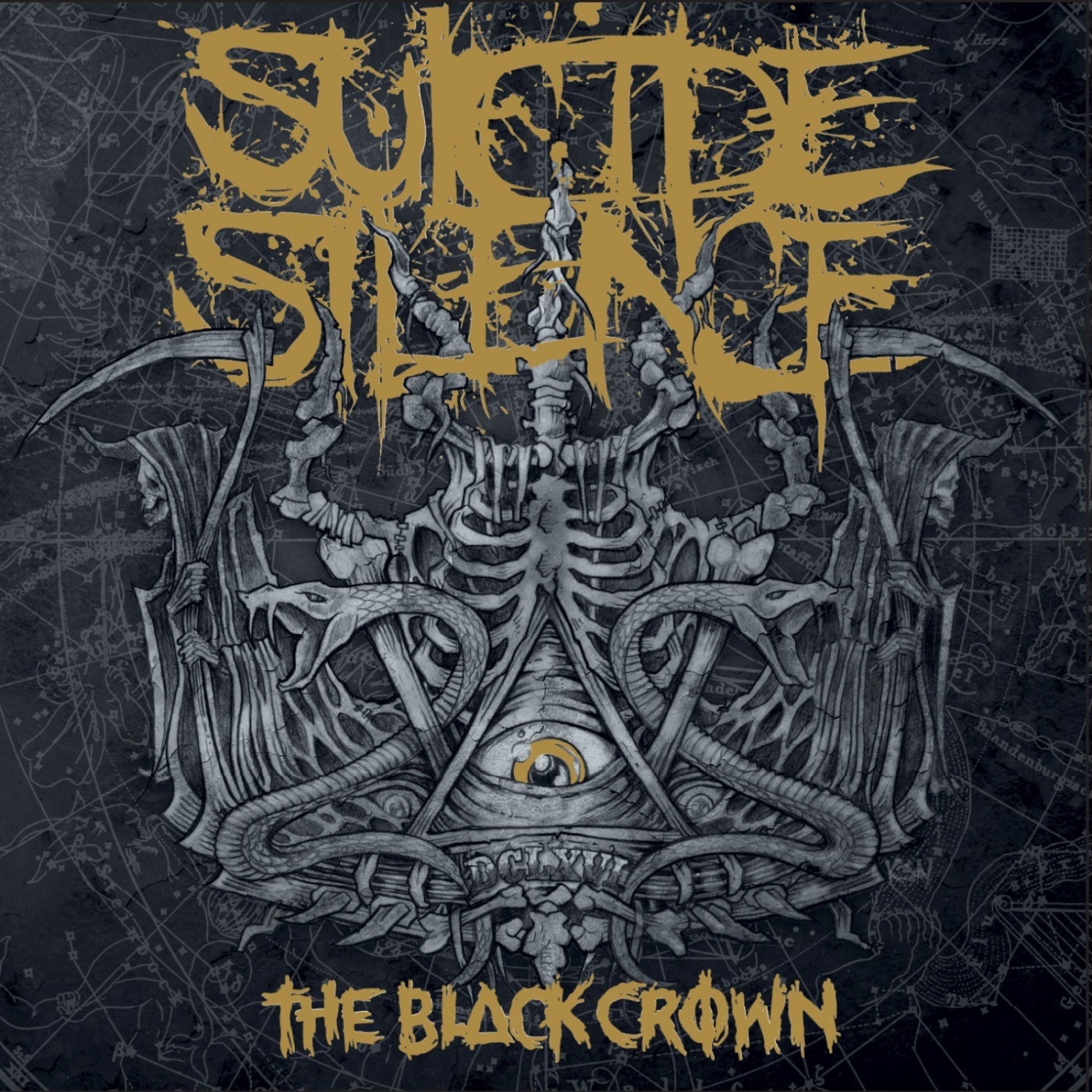
The new decade opened on a record that pulled the genre somewhere it had not been asked to go. Released on 12 July 2011 and entered on the Billboard 200 at number 28, the third album by Suicide Silence, The Black Crown, brought in Jonathan Davis of Korn as a guest, a nod toward nu metal that the genre would take up again a decade later.
Mitch Lucker, the singer of Suicide Silence, died on 1 November 2012 after a motorcycle crash in Huntington Beach, California. He was 28. The band played a memorial concert with guest singers in December 2012 and released it in 2014 as Ending Is the Beginning. In October 2013 the band named Eddie Hermida of All Shall Perish as its new singer.
The same years carried the genre into countries that had only ever heard it through a laptop. The Sydney band from Blacktown that put an extreme record into the Australian top 40 for the first time was Thy Art Is Murder, whose Hate reached number 35 on the ARIA albums chart in October 2012, while Whitechapel had answered at home that June with a self-titled record for Metal Blade.
"I, Dementia", the song Metal Blade put out with a video from that 2012 album, is a fair picture of where the first generation had arrived: three guitarists behind Phil Bozeman's growl, and, in guitarist Alex Wade's account, a clean break in the middle that sets up the riff after it and a solo near the end that he names his favourite on the record. The first wave had grown up. Its progeny were already somewhere else.
What happened next is the story of deathcore in the 2010s, and it is a story of splinters. The genre went through that decade like a rented house show whose floor gave way in the middle of a set, the slam riff dropping through the joists into the basement, the orchestra riding the plaster down onto the porch, the technical sweep out through a window and the crawl still bolted to the one beam left standing, and every band kept playing wherever it landed. It was less a decline than a schism, and every side of it kept selling tickets.
The split is the reason the deathcore subgenres exist at all, and each one changed a single part of the template. Rings of Saturn and Infant Annihilator piled technical death metal sweeps and impossible tempos on top of it; Ingested in Manchester and Signs of the Swarm in Pittsburgh hammered the slow, chromatic slam riff of slam death metal into the breakdown's place; Lorna Shore, on Psalms in 2015, and Carnifex, from Die Without Hope in 2014 onward, began tearing black metal into the sound; Winds of Plague and later Shadow of Intent laid an orchestral layer over all of it; and Born of Osiris and Veil of Maya drifted toward the progressive metalcore that was waiting next door.
The slowest splinter was the strangest. Out of Hull, Black Tongue released The Unconquerable Dark on Century Media in 2015, and with Traitors in Florida they built what got called downtempo deathcore: tuned low, slowed to a crawl, leaning on breakdowns, each one dragged forward like a dead van hauled up the ramp of a car trailer by a hand winch, one ratchet click per beat. Little in the genre had ever moved that slowly on purpose.
Not everyone stayed for the splintering. Bring Me the Horizon had long since gone, Job for a Cowboy belonged to death metal, and plenty of the MySpace class split up or slowed down. Despised Icon broke up in 2010 and was back on stage by 2014. The decade's loudest quarrel came in February 2017, when Suicide Silence put out a self-titled album full of clean singing and was met with a rout in the comment sections, the band's own fans tearing it down track by track. By the end of the decade magazines were asking whether deathcore was over. The answer arrived with a choir behind it.
The second wave, from 2020 onward
The turn came from somewhere nobody had looked. With clubs shut for most of 2020 and 2021, the music moved back onto screens, exactly where it had started, and the deathcore revival of the 2020s spread through the two formats the pandemic made universal: the short vertical video and the reaction video, in which a vocal coach with no metal background sits in front of a webcam and hears a pig squeal for the first time. Millions watched people listen. Then they went and listened themselves.
The clips did what the old profile pages had done, at a scale the old profile pages never reached. A breakdown filmed on a phone held up at the barricade, the screen cracked by a crowd surfer's boot and the microphone clipping into a solid wall of static, would travel further in a week than a whole 2007 tour had gone in a year. Lorna Shore's "To the Hellfire", released in June 2021, was the clip that broke loudest. It was not alone, and the second wave was never one band's.
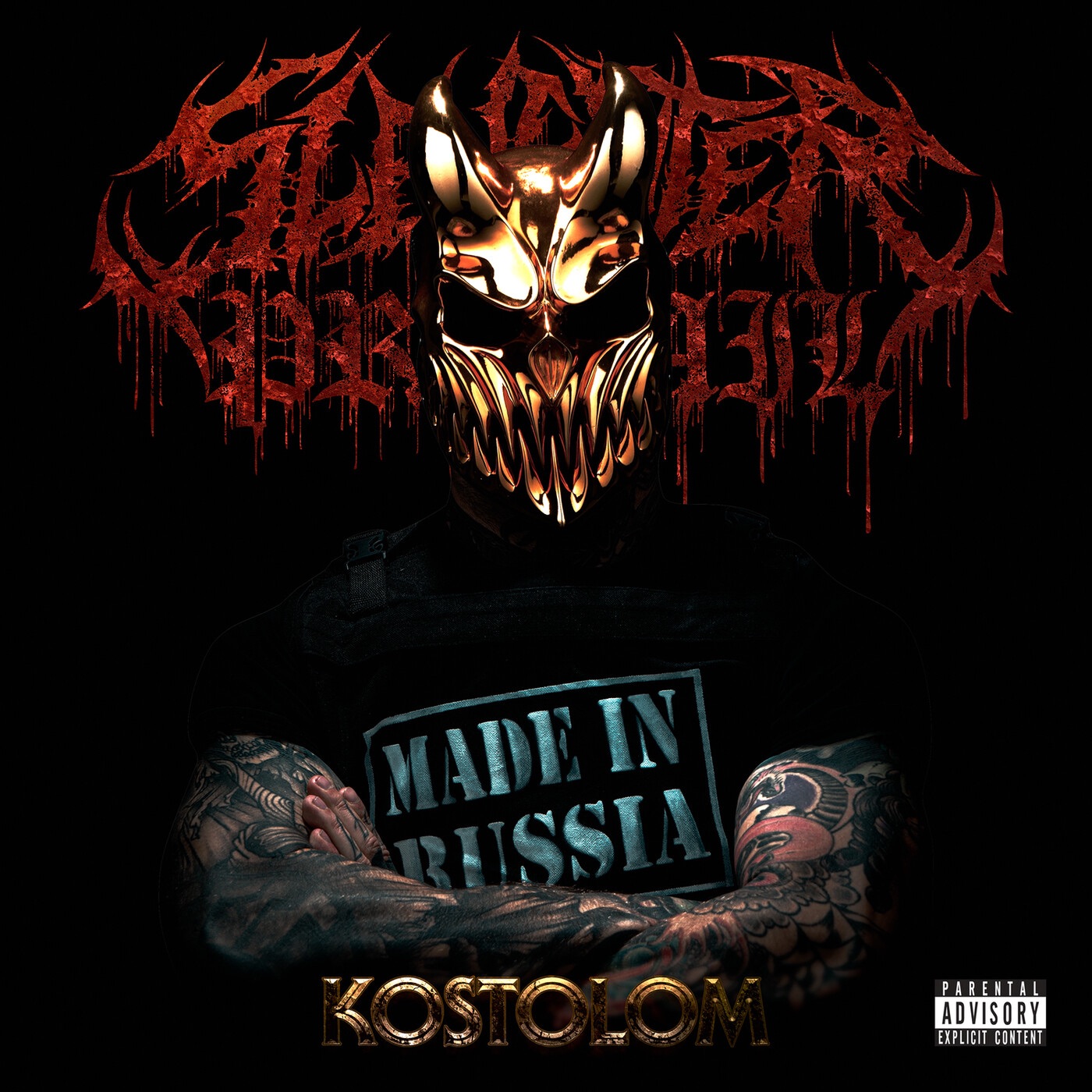
Formed in Yekaterinburg in 2014 and signed to Sumerian, the Russian band whose masked singer became one of the most watched vocalists in modern metal was Slaughter to Prevail, and their Kostolom arrived on 13 August 2021, its title the Russian word for a bone-breaker, its riffs bouncing between deathcore and nu metal.
"Agony", the single Sumerian put out in 2019 ahead of that record, is the shape of the second wave in under four minutes, a screeching guitar solo and Alex Terrible's vocals out front of a groove that does not let up. The old breakdown was still there. It had simply learned to swing.
Signed to Century Media and fronted since 2021 by Will Ramos, the New Jersey band that had spent the previous decade drifting from blackened deathcore toward a full orchestra was Lorna Shore, and Pain Remains, released on 14 October 2022, closed on a three part title suite and reached number 6 in Austria, carrying a symphonic deathcore record into charts the MySpace class had never troubled.

The orchestral splinter grew up in the same months. Self-released on 14 January 2022 and carried to the shops by Blood Blast Distribution rather than by any record label, Elegy laid strings and choirs over blast beats and melodic leads and proved that a band could fill rooms without ever signing to a label. The Connecticut band that started out writing about the Halo novels and built it was Shadow of Intent, and Worm Shepherd and Ov Sulfur, both formed in 2020, pushed the symphonic and blackened sides further still. In Toronto, Brand of Sacrifice took their name and much of their imagery from the manga Berserk and put out Lifeblood in 2021. Mental Cruelty released A Hill to Die Upon the same year, and Signs of the Swarm followed with Absolvere in September.
A breakdown filmed on a phone at the barricade would travel further in a week than a whole 2007 tour had gone in a year.
The founders did not watch from the side. Thy Art Is Murder released Godlike in 2023, Whitechapel put out Hymns in Dissonance in March 2025, Despised Icon came back with Shadow Work on 31 October 2025, and Carnifex signed to Sumerian in May 2026, two decades after their first EP. A newer generation filled out the festival posters, Fit for an Autopsy in New Jersey, AngelMaker in North Vancouver and Paleface Swiss in Zurich among them, and a small scene of young bands began deliberately recreating the 2007 production, thin snare and all, as if the MySpace years had been a style to be studied rather than a decade that happened. The revival was not a single band's comeback. It was the whole genre turning up at once.
What never changed: the parts deathcore is built from
Through every one of those stretches the parts underneath stayed in place, and that is the most remarkable thing about how deathcore is built. Tremolo picking, blast beats, double bass and the low growl were borrowed from the death metal shelf. Verses written to set up a breakdown, and the breakdown itself, palm-muted single notes on the lowest open string at half the tempo of everything around it, were borrowed from the hardcore one. The tunings went from C to B to A and below. The voice split into two and stayed split, and a deathcore singer still works the whole span in a single pull, like a garage door torn up its tracks by a van backing out too fast, the bottom panel grinding low against the concrete while the rollers shriek at the top of the frame. Everything else is negotiable.
Death metal gave it the alphabet and hardcore gave it the punctuation. Every argument since has been about who gets to finish the sentence.
Rafael Quintero, KaosMetal
Those same parts draw the borders, and the arguments about what deathcore is not are almost always arguments about one part. A sung chorus drags a band across the line toward metalcore. Shredding and seven-minute song forms drag it toward death metal. A record built on one slow groove riff ends up filed under slam. Mathcore, beatdown hardcore and djent all share a fence with the genre, and each of them has its own history on the other side of it. Keep the blast beat and the breakdown both, keep them fighting inside the same song, and you are back where the argument started in 1998.
Scenes, sleeves and sermons
The sound left North America early and never came back alone. Thy Art Is Murder and Make Them Suffer in Australia, Bring Me the Horizon, Ingested and Black Tongue in Britain, Mental Cruelty and We Butter the Bread with Butter in Germany, Slaughter to Prevail in Russia, Within Destruction in Slovenia and Paleface Swiss in Switzerland each built a local scene out of the same parts with a different accent, and deathcore around the world is a map of how a sound worked out on laptops from Montreal to Glendale turned into a dozen regional dialects in under twenty years.
Around the music grew a whole visual world, and deathcore culture and artwork is where the genre wears its history openly: the readable logos printed huge on black shirts, the hyper-detailed horror and science fiction sleeves, the swooped haircuts and snakebite piercings of the MySpace years, the masks of the 2020s, the pits built around the breakdown and the jokes the scene tells about itself, from the five-times-extra-large shirt to the barked syllable that announces the drop.
The words changed more than the music did. The first records sang about gore and misanthropy in the death metal manner and about betrayal and anger in the hardcore one; the 2010s brought anti-religious records, concept albums and science fiction epics; and the second wave added mythology, manga, video games and records about grief and mental illness. The question of what deathcore sings about has always tracked who was writing it, and who was writing it got older, and more of them read books.
The history of deathcore, year by year
| Year | What happened |
|---|---|
| 1998 | Embodyment, Embrace the Eternal (Solid State) |
| 1999 | Eighteen Visions, Yesterday Is Time Killed; Prayer for Cleansing, Rain in Endless Fall |
| 2002 | Despised Icon form in Montreal and release Consumed by Your Poison |
| 2003 | All Shall Perish, Hate . Malice . Revenge; MySpace goes live in August |
| 2005 | Despised Icon, The Healing Process; Job for a Cowboy, Doom EP (December) |
| 2006 | Bring Me the Horizon, Count Your Blessings; All Shall Perish, The Price of Existence |
| 2007 | Suicide Silence, The Cleansing (Billboard 200, number 94); Job for a Cowboy, Genesis |
| 2008 | Whitechapel, This Is Exile; Carnifex, The Diseased and the Poisoned |
| 2011 | Suicide Silence, The Black Crown, with Jonathan Davis of Korn as a guest |
| 2012 | Mitch Lucker of Suicide Silence dies on 1 November; Thy Art Is Murder, Hate (ARIA, number 35) |
| 2015 | Lorna Shore, Psalms; Black Tongue, The Unconquerable Dark |
| 2021 | Slaughter to Prevail, Kostolom; Brand of Sacrifice, Lifeblood; Lorna Shore, "To the Hellfire" |
| 2022 | Shadow of Intent, Elegy; Lorna Shore, Pain Remains |
| 2025 | Whitechapel, Hymns in Dissonance; Shadow of Intent, Imperium Delirium; Slaughter to Prevail, Grizzly |
Across those years the pattern is plain: no year belongs to one band, and no decade belongs to one city. The names that matter most change every five years, and the people who want to know where to begin should start with the deathcore bands you need to know, a list that runs from Montreal in 2002 to the newest names on this year's festival bills.
The records are a separate question from the bands, and the essential deathcore albums are spread across every stretch of the story, from the first Montreal full lengths to the self-released orchestral records of the 2020s. Some of them sold a few thousand copies. Some of them charted on three continents. Every one of them is still played.
Where does that leave you? A style that was written off as a passing fad in 2008, as finished in 2017 and as a novelty for vocal coaches in 2021 is now older than most of the people in its pits, and it has outlasted every obituary written for it by doing the one thing its critics said it could not: staying exactly as heavy as it started while letting everything around the heaviness change. Go and find a show this month. Stand near the back for the first song. You will not be at the back by the third.
