
The last load-out of a summer tour, one in the morning, the van backed up to the side door of a VFW hall, and a kid's boots set side by side on its floor. The steel toe caps are dented where a 4x12 cabinet slid off the lip of a stage at load-in and came down on them, and the caps held. The soles are another story: ground through to the midsole at the ball of the foot, the tread stamped flat by three months of landing on the first beat of every breakdown on the route, one heel torn half off by a two-step that met a monitor wedge. The steel is metal's. The wear is hardcore's.
A deathcore song is built the same way. Count the parts of a deathcore song and there are ten, and six of them were issued by metal: the blast beat, the tremolo riff, the guttural growl, the double bass drum, the chromatic riff crawling down the low strings, and the seven and eight string guitars tuned to A and below. Hardcore issued the other four. Six against four, and on this count of the parts alone deathcore is metal.
The argument never ends there, because the four hardcore parts decide what the six metal ones are for. A boot tells you what it is made of in one place and what it was made for in another.
The volunteer encyclopaedia that lets a band in only when it has released enough metal, and that files Whitechapel as deathcore and Lorna Shore as symphonic deathcore, is Metal Archives, and that is the honest shape of the question. It is not a verdict on a genre. It is a count, taken one band at a time.
How the two halves ended up inside one song, from the late-nineties records to the arena tours, is the story KaosMetal on deathcore follows. The borders are a separate matter, and every neighbour deathcore gets confused with sits across one of those ten parts: the breakdown, the song built in blocks to reach it, the high scream and the two-step groove on hardcore's side, the rest on metal's. You can hear each line without knowing a single genre name.
Deathcore is metal, six parts to four
Start with the charge, since it is older than most of the bands it is aimed at. The complaint that deathcore isn't real metal is a complaint about purpose rather than parts: it hears death metal's riffs put to work for a breakdown and calls the work beneath them. The parts themselves nobody disputes, and each one came off a shelf you can name.
| Part | Issued by | Its job in a deathcore song |
|---|---|---|
| Blast beat | Death metal and grindcore | The fast ground the drop is measured against |
| Tremolo riff | Death metal | A stream of pitch running over the blast |
| Guttural growl | Death metal | The low voice, set down on the breakdown |
| Double bass drum | Metal | Keeps the kick level with the guitar's chug |
| Chromatic low riff | Death metal | The build that makes the room want the drop |
| Seven and eight strings, drop A and lower | Metal, by way of Korn and Meshuggah | A low note that behaves like a drum |
| Breakdown | Hardcore | Where the song is going |
| Song built in blocks | Hardcore | Sections stacked toward the drop |
| High scream | Hardcore | The voice over the fast sections |
| Two-step groove | Hardcore | The mid-tempo floor between blast and drop |
Look at the job each part does and every metal part points the same way, at the breakdown. The blast is there so the drop feels deeper, the tremolo so the room is wound tight, the chromatic crawl so the build hurts. Not one of them is slag swept up off death metal's floor. They are the real ingots, cast from the same death metal and grindcore records that every other extreme band was melting down in the 1990s, poured into a mould that hardcore drew. Metal supplied the steel. Hardcore drew the floor plan.
Metal supplied the steel. Hardcore drew the floor plan.
That is why the label argument is so hard to settle and so easy to answer. Ask what the songs are built from and the answer is that deathcore is metal, by a margin no other core genre comes near. Ask what it is built to do and the answer is hardcore's, a floor of bodies landing together on one beat. If the room moves, you have your answer, and the filing is paperwork.
Metalcore has stood trial on the same charge for longer, and the case of heavy metal measured against metalcore turns on the same hinge: whether a hardcore blueprint disqualifies the metal parts built into it. Deathcore carries more of those parts than metalcore does, and the heavier ones, so whatever verdict metalcore earns, deathcore earns with interest.
Hardcore and beatdown: the blast beat is the border
Hardcore is the parent that gave deathcore its destination, so the border with it is the one most often crossed by accident. Beatdown hardcore, the slow and heavy strand of New York hardcore that strips a song down to the parts a floor dances to, keeps the breakdown and throws out nearly everything around it, and its own history belongs on the hardcore side of the fence. What a beatdown band does not carry is the metal half of the count. No blast beat. Seldom a tremolo riff. A shout where deathcore puts a growl.
Put a deathcore drummer behind the kit at a hardcore matinee and you hear the border before you see it. Clamp a double pedal onto a bass drum that was set up for one foot, count in a blast beat, and the drum starts walking: its feet skate on the plywood, it creeps forward an inch a bar toward the lip of the stage, and by the second breakdown it has pitched over the edge into the front row with the rug still snagged on its hooks. The hardcore stage was built for the breakdown. It was never built to take the blast that comes before it.
The bands on the line show it from both directions. Formed in Oldham County, Kentucky, in 2013, signed to Pure Noise Records and hauled onto ever bigger stages by breakdowns, the five-piece that stands closest to deathcore from the hardcore side is Knocked Loose.
"Counting Worms", a track of one minute and eleven seconds from Laugh Tracks, which Pure Noise released on 16 September 2016, is the test in a single song. The band behind it is filed as hardcore punk, as beatdown hardcore and as metalcore, and its vocalist Bryan Garris put its sound "sandwiched between hardcore and metalcore" at the record's release. Play it with the ten parts in hand and see which column fills first. Weight is not a genre. Parts are.
From the other direction, the Massachusetts band that Wikipedia files under metalcore and deathcore, and that AllMusic describes as a blend of hardcore punk, noise, death metal and doom metal, is The Acacia Strain, formed in 2001. Both bands land on the same floor. They take different roads to it, and the road is where the genre is decided.
Metalcore and death metal, the neighbours with the most in common
Metalcore is the sibling, raised on the same breakdown in the same rooms, and the border with it runs through the melody: harmonised leads and a sung chorus on one side, tremolo, blasts and a growl on the other. Bands cross it in both directions, sometimes on consecutive records, and the crossing is audible the moment a clean voice takes over the part of the song a growl used to own.
Death metal is the other parent, and its border is the strangest one, because every part death metal owns turns up in deathcore as the same part. Same blast flattening the same wall, same tremolo sawing through it, same growl rattling the rafters, same low chromatic riffing grinding underneath. What differs is where the song is headed once the parts are in place, and the full case for where death metal ends and deathcore begins is argued from the death metal side, riff by riff.
Every part death metal owns is in the room, and the songs still leave by different exits. That is the whole puzzle of the deathcore border in one line: the parts that make it metal are the very parts that make it easy to mistake for death metal, and the parts that make it hardcore are the ones nobody in a death metal room asked for.
Nu metal and djent: the bounce and the borrowed chug
Nu metal is the neighbour that lent deathcore its low strings before deathcore existed. Formed in Bakersfield, California, in 1993 and first recorded by Ross Robinson, the band that wrote a whole debut on seven-string guitars and put them in front of a mainstream audience was Korn, and the low string that later became deathcore's home note was sitting on a nu metal record, the 1994 debut, years before the word deathcore. Suicide Silence put Jonathan Davis, Korn's own voice, on The Black Crown in 2011, which tells you the debt was never hidden.
The border runs through the drums and the throat. A nu metal riff bounces: mid-tempo, syncopated, the weight landing just off the beat so the whole floor jumps instead of stamping, with the vocals rapped, sung and shouted in turn. A deathcore song keeps the low tuning and the groove and adds what nu metal mostly leaves out, the blast beat, the tremolo and the guttural. Slipknot share the low tuning and are rarely filed under deathcore, which shows the filing follows the whole count and not one part.
The overlap has its own bands, and the one that has lived there since 2003 is Emmure. Released by SharpTone on 3 March 2017, Look at Yourself keeps the chugging breakdowns and the screams and growls, and adds the Korn-like dissonant clean parts and the rap-style vocal patterns that reviewers heard in it. Run the count on that and the nu metal sits on top of the deathcore, which is exactly why the band gets filed under nu metal, metalcore and deathcore at once. Nobody is wrong. The count is just close.
"Smokey", the video SharpTone put out for that record, is the overlap at full volume: third on the album, two minutes and one second long, with an opening riff that one reviewer heard as straight out of Meshuggah's Chaosphere era. You can argue the label all night. The floor already decided.
Djent is a different kind of neighbour, a sound rather than a genre. It is the palm-muted, syncopated low chug, named for the noise it makes, that Meshuggah of Umeå, Sweden, are credited with, and deathcore, metalcore and progressive metal all play it. Djent is a rivet that three genres drive into their own steel, and a band can djent and be deathcore the same way a band can blast and be grindcore. The technique names a sound. The rest of the count names the genre.
Is deathcore emo? The MySpace filing error
No. But the confusion was real, and it came from where the music lived rather than from what it did. Between 2006 and 2010 deathcore bands, post-hardcore bands and the emo and screamo bands of the same years shared one platform, one tour circuit and a good part of one audience. MySpace music profiles showed a band's genre as a line of three categories at most, which left a band little room to say what it was. The Warped Tour of 2010 then parked Suicide Silence, Whitechapel, Emmure and Bring Me the Horizon on the same asphalt as the pop punk and screamo bands it had been carrying since the nineties.
Emo itself started as a breakaway sect of hardcore in the middle of the 1980s, in the Washington, D.C. scene, and it took hardcore's energy in the opposite direction from deathcore: toward melody, dynamics and a voice that sings its confessions straight at you. The screaming that the two genres seem to share is not one thing. In the post-hardcore and screamo of those years the scream usually sits beside clean, sung choruses. In deathcore it answers a growl over a chug tuned low, and the voice is seldom asked to sing.
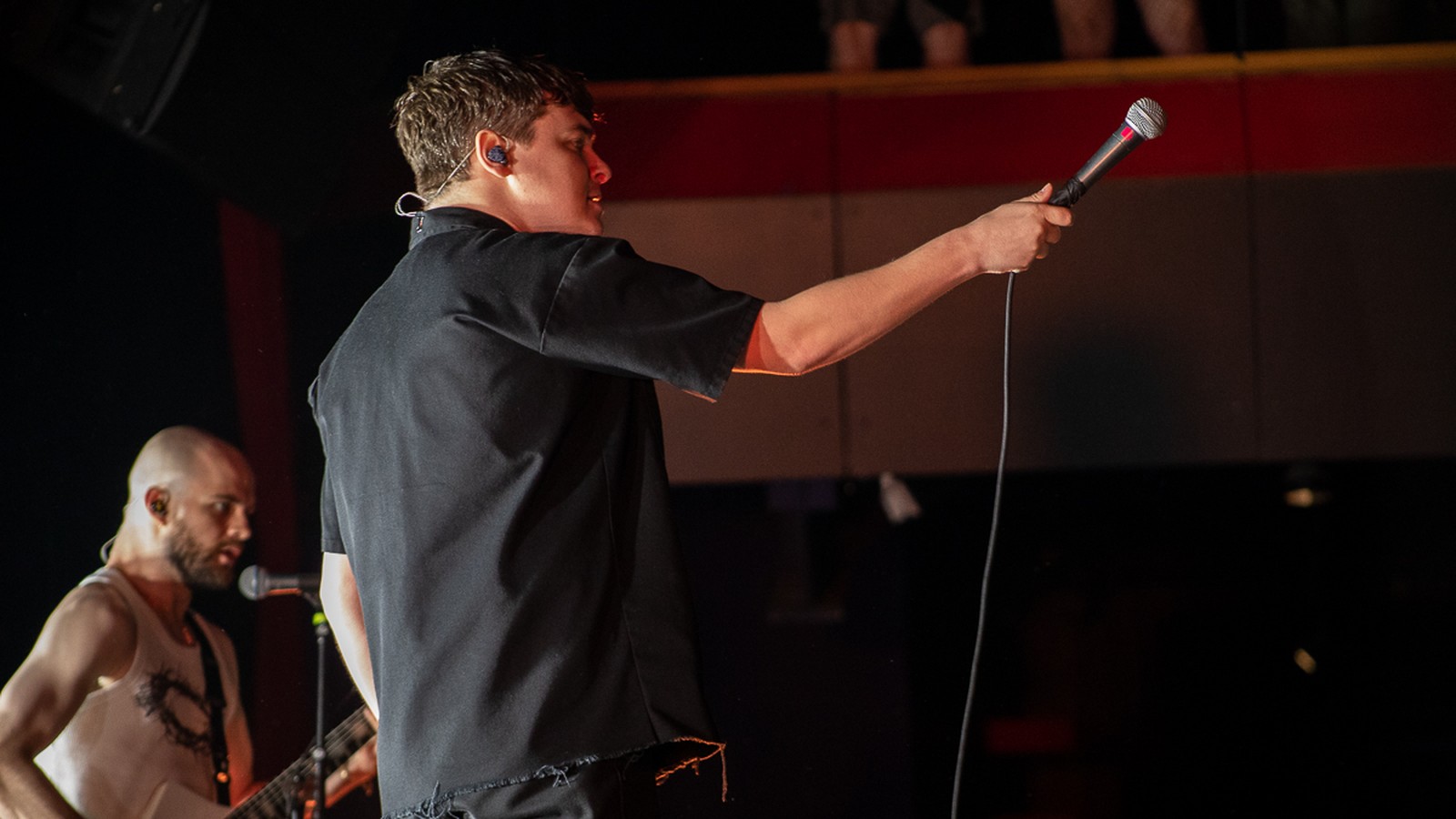
Watch what comes back up the microphone cable and the two genres separate themselves. At an emo show the singer leans out over the rail and holds the microphone into the front row, and the front row sings the whole chorus back into it, word for word. Try the same move at a deathcore show and what comes up the cable is a single roared syllable from two hundred throats on the drop, a fist bouncing off the grille, and a surge from behind that rips the microphone out of his hand and sends it skidding across the stage.
Emo hands the microphone to the front row for the words. Deathcore hands it over for one syllable.
The look was shared, the platform was shared and some of the bills were shared. The parts were not. Count them and an emo song comes up with none of the six metal parts, and what it kept from hardcore is the energy, not the breakdown.
The border bands, and the band with the orchestra
Every genre has bands that sit on its fences, and deathcore has more than most because it shares a fence with five neighbours at once. Some are filed in by habit, some are filed out by habit, and the count sorts most of them quickly.

Released by Metal Blade on 18 September 2007 and entered on the Billboard 200 at number 72, Nocturnal came from a young band on the same label as Whitechapel, and the Michigan five who made it were The Black Dahlia Murder. The band is filed as melodic death metal, not deathcore, and the record is the clearest case of a band filed beside deathcore for its company rather than its parts.
The opposite case is Infant Annihilator, which is filed under deathcore and technical death metal together, so the filing keeps it in deathcore however technical the playing gets. Waking the Cadaver sits on the line with brutal and slam death metal, a neighbour with its own history, and Chelsea Grin, formed in Salt Lake City in 2007, have spent nearly twenty years in deathcore's column, from a self-titled EP in 2008 onward.
The biggest border case of the decade is a band with a string section. Lorna Shore, which Metal Archives files as symphonic deathcore, stacked symphonic arrangements and black metal influence on top of the count and kept the core in the name. That is the rule the border bands keep proving. Adding parts does not move a band across a border. Removing one does.
Run a whole career through it and the answer stays steady. A band can add strings, sweeps, rapped verses, keyboards or a choir and remain deathcore, because the ten parts are still there underneath. A band that pulls out the growl and the blast beat has opened a breach in the count, and the people who came for the count notice within one listen.
Why the question keeps coming back
The backlash against deathcore measures its songs against death metal's form and finds riffs that stop short of a solo because the song is heading for a breakdown. The difference is real. What it shows is that the hardcore parts are in charge of the song, which nobody inside the genre ever denied, and that is a complaint about the blueprint rather than about the parts.
The clearest test of the question was run by a band on its own record. The Riverside band that took its fifth album toward nu metal, recording it with Ross Robinson, the producer of Korn's first record, and releasing it through Nuclear Blast on 24 February 2017 with Eddie Hermida singing clean through long stretches of it, was Suicide Silence.
"Doris", the first single, which Nuclear Blast sent out on 6 January 2017, carried the change out to the fans. Clean singing sat in the chorus, and the sound around it moved toward the 1990s nu metal of Korn and Deftones, as reviewers heard it. A Change.org petition started on 4 February 2017, calling for the album's release to be halted, gathered more than five thousand signatures. Run the count and the reaction makes sense: the growl is one of the six metal parts, and the record gave long stretches of its room to singing, so it slipped under a line the audience had been counting all along without ever writing it down.
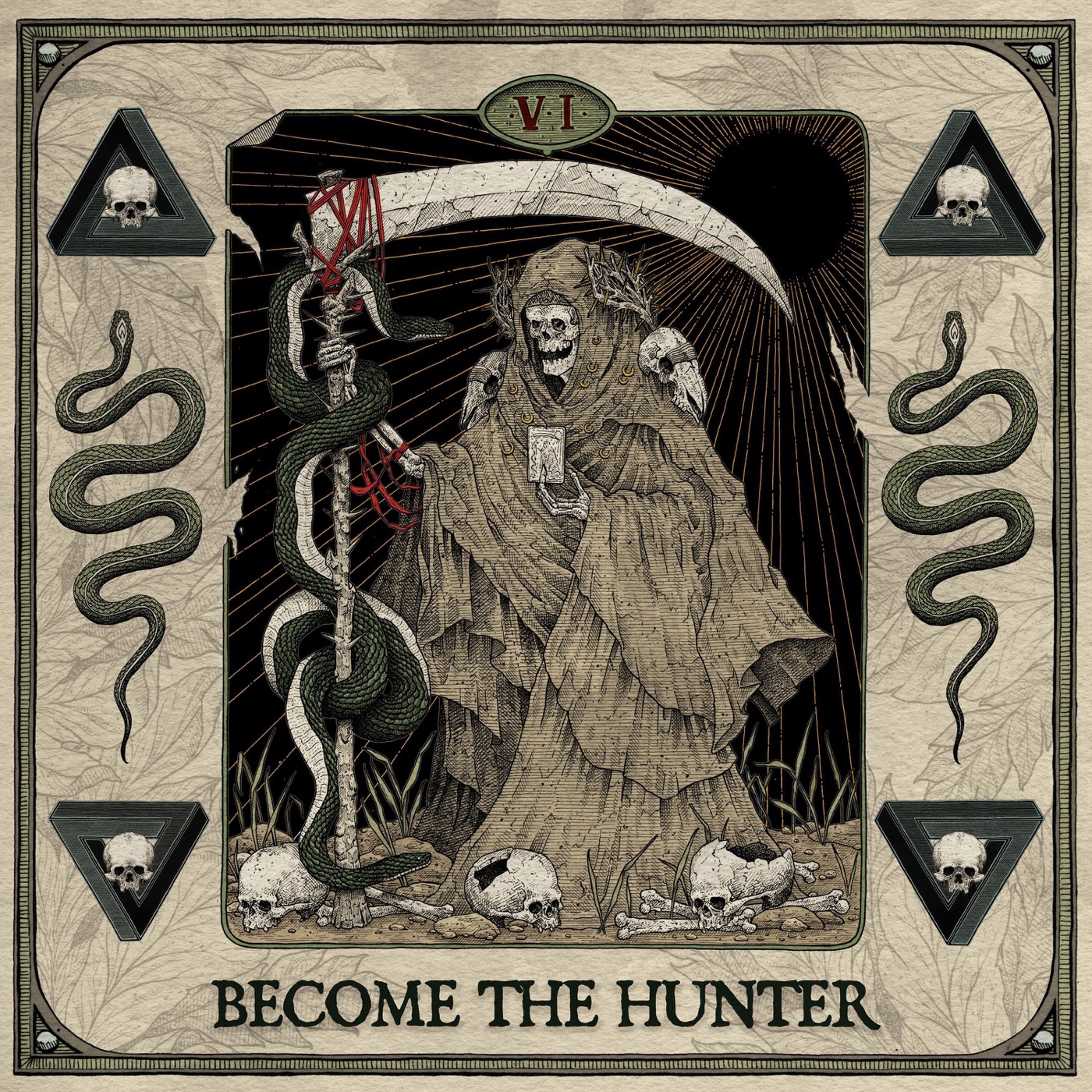
Released by Nuclear Blast on 14 February 2020, Become the Hunter brought the growl back into the songs, and reviewers read it as a return to the band's deathcore roots. The detour took one album and three years and showed, better than any argument could, that the genre lives in its parts, and that the audience knows exactly which ones.
So is deathcore metal? By its parts, yes, six of ten, and the six include the loudest ones in the song. By its purpose it belongs to hardcore, written for a floor of bodies moving together on one beat. Neither answer cancels the other, and twenty years of records have made the case that a song can be both at once. The quarrel over which side a band belongs to is older than the word deathcore. It started on the shared bills and in the shared record crates of the years before the name, when death metal and hardcore kids first stood in the same room and argued about what they were hearing.
