
Metalcore is not heavy metal, and the scream is not what separates them. The floor is. Born in the hardcore clubs of the American north east at the end of the eighties, fed on thrash riffs and straight edge vows, and carried onto the Billboard 200 by Massachusetts bands in the first years of the new century, metalcore took the downtuned guitars and eventually even the twin harmonies of heavy metal and aimed every one of them at a room full of moving bodies rather than at a stage. Heavy metal vs metalcore is a quarrel about where the song is pointed. The breakdown settles it.
The Cleveland band that fused the two first and roughest, ripping the guitar solo out of the thrash riff, hurling it off the front of the stage and nailing what was left onto hardcore's gang shouted choruses, was Integrity, and its debut album Those Who Fear Tomorrow went out on Overkill Records in 1991. Nobody called it heavy metal. Nobody who heard it called it punk either.
What came out of that splice is best described as a garment. Metalcore is a hardcore work jacket, heavy canvas cut loose across the shoulders for a room where elbows fly, with a line of gold embroidery run across the yoke by a different hand: the harmonised lead guitar, stitched on afterwards in a finer thread than the cloth was ever woven to carry. The canvas came from Cleveland and Syracuse. The gold thread came from Gothenburg, and before that from London.
Heavy metal vs metalcore: where the song is aimed
Heavy metal is written for the stage and for the man standing on it. Its singer reaches into the head voice and aims the note at the back of the hall, its guitarist steps forward for a solo that is the song's sermon, and its lyrics deal in wizards, war and the end of the world at a safe distance from the listener's own life. Everything in the arrangement points upward. The crowd looks up with it.
Metalcore points down, at the floor. The Syracuse five whose Firestorm EP came out on Victory in 1993 were Earth Crisis, and their songs about veganism, straight edge and the damage done by drugs were sermons of a completely different kind, delivered from inside the pit rather than from above it, with the guitars tuned low and the tempo built to be moved to rather than admired. The creed was personal. The riffs were built for the room.
"Firestorm" itself shows the method in under three minutes: a shouted verse over a riff with thrash in its descent, a gang vocal that the whole floor is expected to answer, and then the moment the song drops its tempo and the room changes shape. No solo arrives. No high note is attempted. The song asks the audience to move, not to listen.
What the breakdown does to a room
The breakdown is the single device heavy metal never had. The band cuts to half time, the guitars chug the lowest open string in a stop and start rhythm, often in drop tuning with the bottom string lowered well below standard, and the drummer leaves gaps big enough for bodies to fall into. On a surveyor's sheet the breakdown is the place where the contour lines crowd so close together that they almost touch, where the ground no longer slopes but falls away sheer, and everyone standing on the floor goes over the edge at the same moment.
In a club the effect is physical. The floor clears into a ring of swinging arms and stamping boots, the crowd mustered into it like a war party, the monitors at the lip of the stage get kicked out of line, and the steel crash barrier at the front is shoved and bent until the security crew straighten it again between songs. No heavy metal record of 1982 was built to do that to a room.
Heavy metal fills the same space in the song with the opposite gesture. Where metalcore halts, a heavy metal band accelerates into the solo or lifts into the chorus, the bass driving eighth notes under a guitar that climbs rather than drops. One is a cliff. The other is a staircase.
On a surveyor's sheet the breakdown is the place where the contour lines crowd so close together that they almost touch.
The Iron Maiden harmony, second hand from Sweden
The gold thread has a long pedigree. The twin lead guitars that Thin Lizzy and Iron Maiden set in harmony through the seventies and early eighties crossed the North Sea, and the Swedish band that sped them up, roughened the voice over them and packed them into songs of barely three minutes on Slaughter of the Soul, issued by Earache on 14 November 1995, was At the Gates. Gothenburg's melodic death metal became the direct source for the metalcore of the next decade.
The Massachusetts quintet whose The War Within Century Media issued in 2004, debuting the band at number 20 on the Billboard 200, turned out to be Shadows Fall, and its guitarists Jon Donais and Matt Bachand played those harmonised leads with more Iron Maiden in them than almost anyone in the scene, while the band kept a breakdown in the song for the floor. The embroidery was now nearly as large as the jacket.
"My Last Serenade", from Killswitch Engage's Alive or Just Breathing of 2002, is the template in a single song: a screamed verse, a harmonised guitar line lifted straight from the Swedish school, a clean chorus sung in a warm chest voice with none of Bruce Dickinson's reach for the rafters in it, and a breakdown placed where a heavy metal band would put a solo. Jesse Leach sang it. He left soon after the album came out.

The singer who replaced him and carried the band onto much larger stages was Howard Jones, and The End of Heartache, released by Roadrunner on 11 May 2004, put his baritone at the centre of the chorus. The title track was nominated for the Grammy for Best Metal Performance at the following year's ceremony, and lost to Motörhead's "Whiplash". The chorus had grown. The breakdown stayed exactly where it was.
The voice, and the solo that is not there
The clearest test is the singer. Heavy metal's voice is one voice, a trained tenor pushed into the head register, and the drama lives in how high and how long it holds. Metalcore splits the job in two, a scream for the verse and a clean melody for the chorus, and the melody comes out of emo and pop punk rather than out of Rob Halford. The scream is the hardcore half of the family. The chorus is the radio half. Neither is the opera singer heavy metal puts at the front.
Then there is the solo, or its absence. A heavy metal song treats the solo as its reason for existing, and a song without one comes close to heresy. Much metalcore leaves it out altogether, or reduces it to a few bars of harmony, because a solo asks a room to stand still and watch, and the whole art of the form is keeping the room in motion.
Heavy metal asks the crowd to look up. Metalcore asks it to move. Every other difference between them follows from that one.
Declan Rourke, KaosMetal
The bands that walked back across
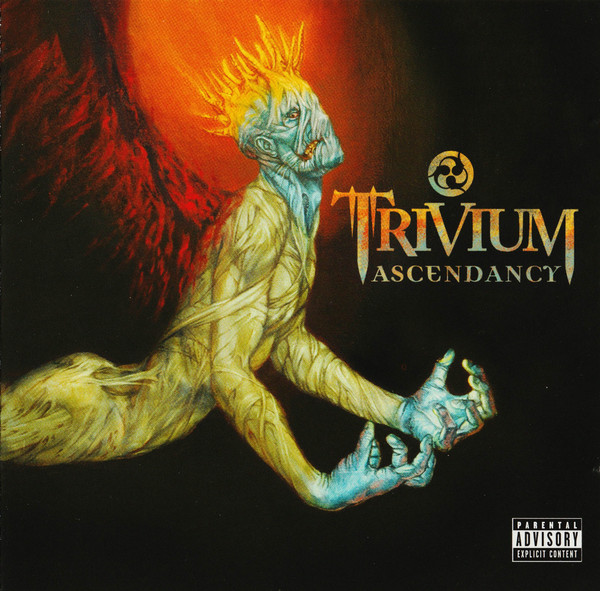
The border has been crossed from the metalcore side more than once. The Orlando four whose Ascendancy Roadrunner released on 15 March 2005, screamed verses and sung choruses in the house style of the day, were Trivium, and by October 2006 the same band had largely dropped the screaming and the breakdowns for thrash riffs and a clean lead voice modelled on James Hetfield's on The Crusade, a move much of its audience took for a betrayal. Matt Heafy said the band simply asked itself why it was screaming at all when none of its own members liked the bands that did.
"Pull Harder on the Strings of Your Martyr" shows both halves in one track, the scream, the gang chant and the breakdown of metalcore running straight into guitar solos Matt Heafy and Corey Beaulieu trade in the manner of the old heavy metal duets. It is the sound of a band standing on the line and deciding which way to step. Trivium stepped towards heavy metal. Most of its peers did not.
A metalcore band can play heavy metal; plenty now do, and the loudest of them tour with the old guard every summer. It becomes a heavy metal band only when the breakdown goes and the solo comes back. The wider frontier around the genre, hard rock, glam, grunge and the rest of the cousins, is drawn in the boundary chapter.
Metalcore's grandfather on the hardcore side was punk, and the older, simpler quarrel between the two traditions, the one that began with the Ramones throwing out the solo, is taken up in heavy metal vs punk. Watch the floor at the next show. If it stops moving for the solo, the band is heavy metal.
