
In January 1977 a London fanzine called Sideburns came up one page short, and its editor, Tony Moon, filled the gap with a felt pen: three chord shapes, A, E and G, and under them the order to go and form a band. The drawing has been credited for decades to the better known Sniffin' Glue. It settles the question of heavy metal vs punk better than most books. Punk handed out the chords. Heavy metal handed out homework.
Punk came into British rock in 1976 like a boy with a clasp knife working his way round the big top in the middle of the evening show, slashing the guy ropes one after another until the canvas dropped on the ringmaster, the elephants and the trapeze artist who had practised his triple somersault for eleven years. The arena circus of the seventies went down under that canvas. Heavy metal was the trapeze artist. It climbed back up the pole the next season and flew without the net.
The singer who turned up in the Sex Pistols' orbit wearing a Pink Floyd T-shirt with the words I Hate scrawled in marker above the band's name was John Lydon, soon to be Johnny Rotten, and the shirt was a whole creed in four words: the enemy was not the government but the long-haired musician across the record shop, with his scales, his gatefold sleeve and his twenty minute side. Bernard Rhodes had spotted Lydon wearing the shirt in August 1975, months before Steve Jones and Paul Cook asked him to front the band. Heavy metal was on that list. It took the insult personally.
Heavy metal vs punk: the question of the hands
Tempo is the wrong place to look. Punk and metal have traded speed back and forth since 1979, and a Judas Priest song of 1978 could outrun half the singles in the punk charts. The real line runs through the player's hands. In heavy metal, years spent practising are the offering laid on the altar; in punk, the same years are the proof that a guitarist has handed his afternoons to a teacher instead of a song, and the purest punk records of 1977 sound as if their players had learned the three shapes in Moon's drawing and taken a vow to go no further.
Some of them broke the vow in private. The guitarist who stacked his parts on Never Mind the Bollocks, Here's the Sex Pistols, released by Virgin on 28 October 1977, overdub on overdub until the wall of them stood as thick as anything on a hard rock record of the day, was Steve Jones, with Chris Thomas producing, and the album owes more to the heavy rock of the early seventies than its sleeve would ever confess. Bill Price shared the production credit and engineered the whole record, finishing several tracks alone once Thomas moved on. The attitude was punk. The guitar sound was borrowed from the enemy.
The subject matter is where the breach is widest. "God Save the Queen", released by Virgin in May 1977, climbed to number two in Britain in the week of the Silver Jubilee that June while the BBC kept it off the air, and it is a song about the country outside the window, this week, this street. Metal in 1977 sang about the end of the world and meant it on a cosmic scale. Punk sang about the end of the world and meant Tuesday.
Metal sang about the end of the world and meant it on a cosmic scale. Punk sang about the end of the world and meant Tuesday.
| Point | Punk | Heavy metal |
|---|---|---|
| The player | Learns in public, on stage | Learns in private, then performs |
| The format | The seven inch single on a small label | The album, then the tour behind it |
| The subject | The street, the dole, the news | Myth, war, history and the apocalypse |
| The guitar solo | Cut, or kept to a few bars | The centrepiece of the song |
| The dress | Safety pins, torn shirts, bondage trousers | Denim, leather, a jacket covered in patches |
| The crowd | The pogo | The headbang |
Two tribes, one bus shelter
In the towns the difference was worn, not argued. The long-haired boy in a denim jacket sewn with Priest and Rainbow patches and the boy with the dyed crop and the safety pin through his lapel waited at the same bus stops, drank in the same pubs and, for about three years, regarded each other with the settled contempt of two rival parishes sharing one church. Both wore leather. Neither would admit it came from the same shop.
The rooms moved differently too. A punk floor in 1977 ran like a dodgem track with the current left on after closing time, every car driven straight at every other car, the rubber bumpers smashing together from wall to wall and nobody steering for anything but the next collision, while a metal hall of the same year faced one way, every head turned towards the stage and going down together on the beat. Punk's crowd played against itself. Metal's crowd played along with the band.
The format split the tribes as much as the haircut. Punk's vanguard lived on the seven inch single, cheap to press and quick to sell, and the small labels that pressed it proved a band could reach the shops without a contract from a major. The metal fans who had spent two years reading that they were dinosaurs watched the trick carefully. They borrowed it within the decade, and the story of what they built with it sits with the British new wave.
The men who crossed the floor
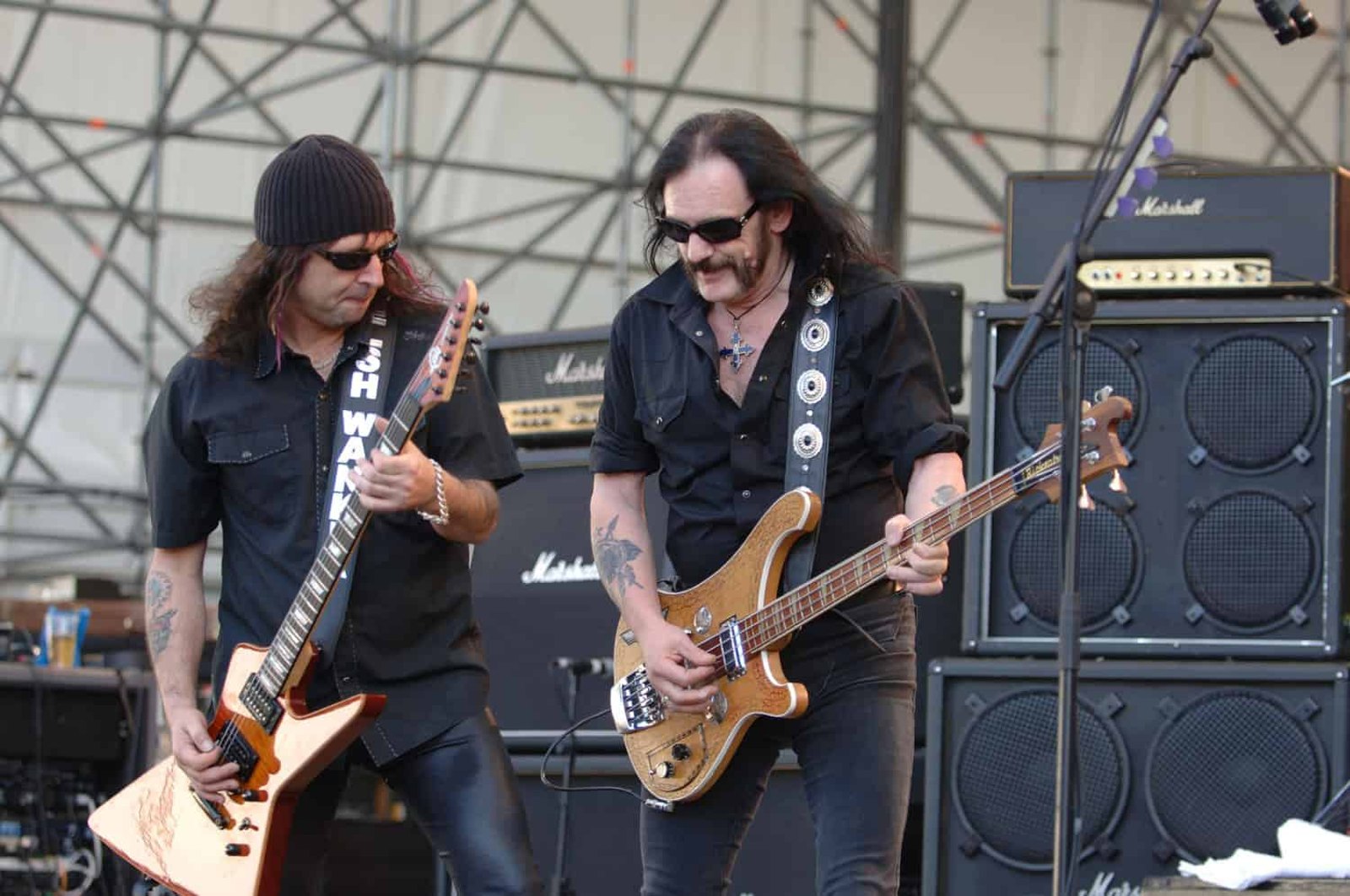
A few people never picked a side. The bassist who stepped in with the three remaining members of the Damned at the Electric Ballroom in Camden on 5 September 1978, when that band had split and was playing under the name Les Punks, was Lemmy, whose own trio Motörhead was already selling to punks and long-hairs out of the same box. Lemmy opened most Motörhead shows with the same line for the rest of his life: "We are Motörhead, and we play rock and roll." Both tribes ignored him and kept buying the records.
The schism did not last the decade, and the traffic that ended it ran mostly from punk into metal. The New Jersey horror punk band that Glenn Danzig fronted from 1977 to 1983, all skull make-up and choruses a pub could sing, was the Misfits, and its songs were barely two minutes long and built on the kind of three chord riffs Moon had drawn. Metal musicians loved them anyway. The loudest proof came four years after the band broke up.
The Bay Area quartet that closed its covers record The $5.98 E.P.: Garage Days Re-Revisited, released by Elektra on 21 August 1987, with a Misfits medley, "Last Caress" run straight into "Green Hell", was Metallica, and it played the punk songs at thrash speed without adding a single solo. The biggest metal band on the circuit had paid its respects to the enemy. It lost no fans doing it.
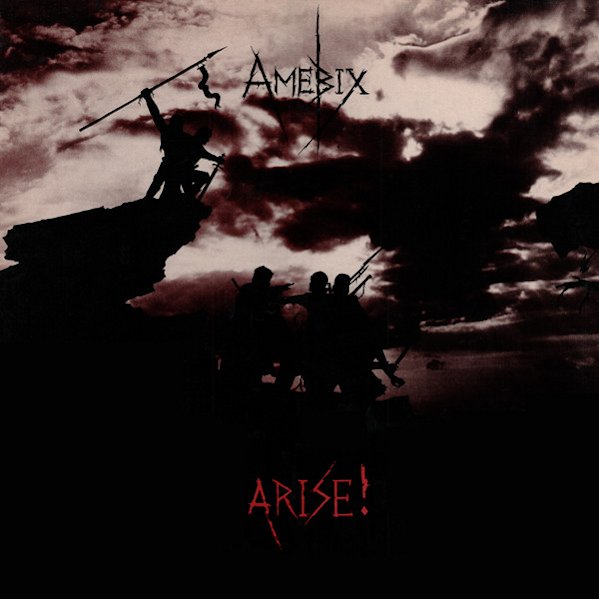
From the other side of the floor the crossing was more dangerous and more interesting. The crust punk band led by the brothers Rob and Chris Miller that slowed its songs down, thickened its riffs and let them run long enough to sound like a threat rather than a slogan was Amebix, and Arise!, released by Alternative Tentacles on 14 September 1985, is the point where a punk band's sound buckled under the tonnage of metal and stayed buckled. Rob sang and played bass as "the Baron"; Chris played guitar under the name "Stig". Purists on both sides called it a betrayal. The extreme metal bands of the next decade called it a model.
Where the line still runs
Four decades on, the two musics share players, festivals and a good deal of their record collections, and the line has thinned without disappearing. It is still the hands: a heavy metal band asks its players to be good before they are heard, and a punk band asks them to be heard before they are good. The question of which cousin stands closest, and where the lines get drawn against all the others, has a longer answer than punk alone.
The nearest border on the heavier side is a different quarrel entirely, one about voices and tunings rather than haircuts, and it is set out in heavy metal vs death metal. A punk band that learns to play does not turn into a metal band, and plenty of them, the Damned among the first, simply became better punk bands. Punk never wanted to be heavier. It wanted to be first.
