
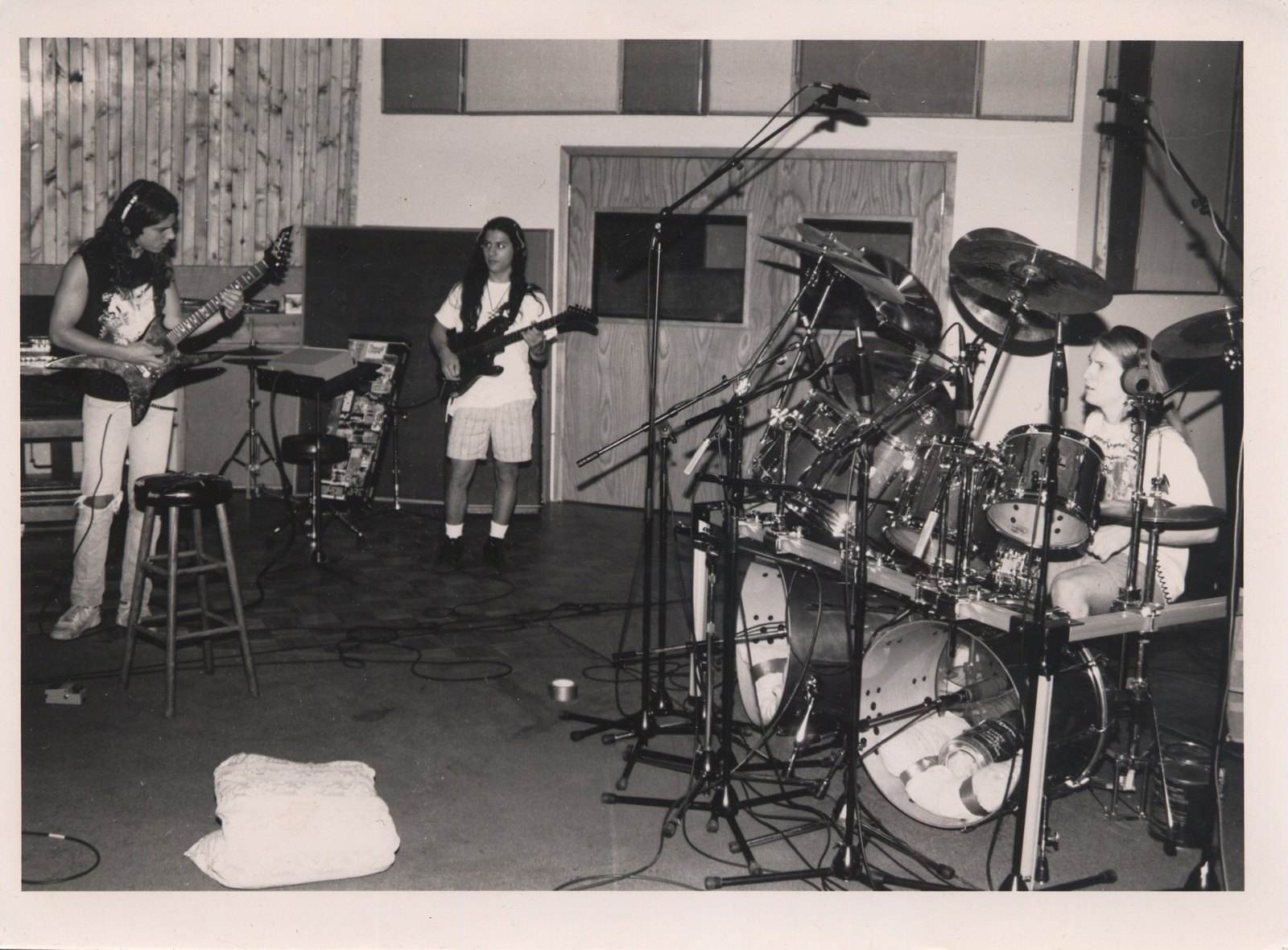
The Florida guitarist who did more than anyone to give death metal its riffs, its records and very nearly its name was Chuck Schuldiner, of Death. In a 1999 interview with Metal Rules he put the question aside himself: "I'm just a guy from a band, and I think Death is a metal band." He was half right. The other half is the whole argument.
On the question of heavy metal vs death metal the family likeness is real and the break is deliberate. The music that came out of thrash in the middle of the eighties, found its studios in Tampa and Stockholm and its labels in Earache, Roadrunner and Combat before the decade was out, kept the riff, the distortion, the minor keys and the long hair, then took a hammer to nearly everything a listener could whistle on the way home.
A mason who wants a polished stone step to stop throwing people down in the rain takes a bush hammer to it, a heavy square head faced with rows of pyramid teeth, and beats the mirror finish back, blow after blow, into a grey pocked surface that will never hold a reflection again and will never let a boot slide either. Death metal did that to the heavy metal voice. The stone is the same. The shine is gone.
Heavy metal vs death metal starts at the singer's mouth
Heavy metal puts a tenor at the head of the band and asks him for a melody. Rob Halford, Bruce Dickinson and Ronnie James Dio sing pitched lines in the head voice, the words land clearly enough to be shouted back, and the chorus is built to be remembered. Take the singer away and the song is missing its top storey.
Death metal moved the voice down into the chest and throat and let pitch go almost entirely, turning the singer into one more low instrument in the mix, a guttural layer that sits beside the guitars rather than above them and carries rhythm and grain far more than tune. The words mostly disappear without a lyric sheet. Nobody in the genre treats that as a flaw.
The singer who, on Obituary's debut Slowly We Rot, released by Roadrunner in 1989, favoured weight over sense, packing syllables against the riff like wet sand rammed into a box, was John Tardy of Obituary. He has since described his lyrics as "stuff that's cool things to say and go along with the music" rather than a message, chosen for how they sit against the riff. Heavy metal would call that a lost lyric. Death metal called it a method.
Lower strings, faster feet
Heavy metal mostly plays in standard tuning or half a step down, the open E or E flat under the riff. Death metal kept going, to D, to C sharp, to C and below, so that the lowest string stopped ringing like a note and began to land like tonnage, a thud felt in the stomach before the ear can name it.
The drums moved even further. A heavy metal drummer keeps a backbeat on two and four, or doubles the guitar's gallop, or marches, and the listener's body can follow him at every tempo he chooses. Death metal added the blast beat, the whole kit struck on every subdivision at once, and pushed it past the speed at which a body follows anything.
The drummer whose hands and feet on Altars of Madness, released by Earache in 1989, made the blast beat sound less like a stunt and more like the weather was Pete Sandoval of Morbid Angel. On "Maze of Torment" his playing does to the song what a bone-saw kept at one constant speed does to a joint, working through everything soft in a single pass until nothing clings to the part but its own shape. What stays is the riff. Everything decorative has been shaken off.
Twin leads against the chromatic riff
Heavy metal's riffs live in the minor modes and its lead guitars love the third, two players a third apart carrying a tune the crowd can hum. Death metal's riffs crawl chromatically, a semitone at a time, cluster around the tritone and are often tremolo picked into a blur, and its solos, in Trey Azagthoth's hands at Morbid Angel, abandon scale and key on purpose. He has described picking "an area on the guitar" and playing it "without really looking at it," connecting notes by feel rather than by any hummable line. The minor key survived. The hummable melody was excised.
The lineage accounts for the likeness. Death metal is heavy metal's grandchild rather than its child, with thrash standing between them, and by common consent the middle generation that handed Judas Priest's riffs down the line, darker and faster at every step, was Venom, Slayer and the Swiss trio Celtic Frost. The grandchild kept the grandfather's riff and threw out his manners.

The Liverpool band that had started out setting pages of medical vocabulary to grindcore turned out to be the one that walked furthest back towards the old house: Carcass, whose Heartwork, released by Earache in October 1993 with Colin Richardson producing, put Bill Steer and Michael Amott on harmonised leads that could have come off a Judas Priest record, over a voice that was still pure death metal. The title track has a chorus. It still does not have a singer.
Death metal kept every part of heavy metal that serves weight and cut every part that serves song.
What death metal kept, and what it left behind
The subject moved with the sound. Heavy metal keeps its horror at the distance of a story, a ghost in a mansion, a battle a century old, a beast from Revelation. The Buffalo quintet whose song titles and sleeves read like pages ripped out of a coroner's ledger was Cannibal Corpse, and from Eaten Back to Life in 1990 onwards it made the undoing of the body the entire subject, close up and without a narrator to stand between the listener and the table. The dragon had gone. The pathologist had arrived.
| Element | Heavy metal | Death metal |
|---|---|---|
| Voice | Pitched, often high, words clear | Growled, low, pitch mostly abandoned |
| Tuning | Standard or half a step down | D, C sharp, C and lower |
| Drums | Backbeat, gallop, march | Blast beat, double kick at speed |
| Riffs | Modal, minor key | Chromatic, tremolo picked |
| Lead guitar | Twin harmony, melodic solos | Atonal solos, rare harmony |
| Subject | History, myth, the road | The body, death, decay |
Read across the rows and the pattern is plain. Death metal kept every part of heavy metal that serves weight and cut every part that serves song. Where the two meet again, on a record like Heartwork, it is always the song half that comes back first.
The road back to the old house
Schuldiner's own records made the journey in public. Symbolic in 1995 and The Sound of Perseverance in 1998 grew longer, more melodic and more progressive, and the second closed on a cover of Judas Priest's "Painkiller", sung in his rasp at a pitch Halford had written for a tenor.
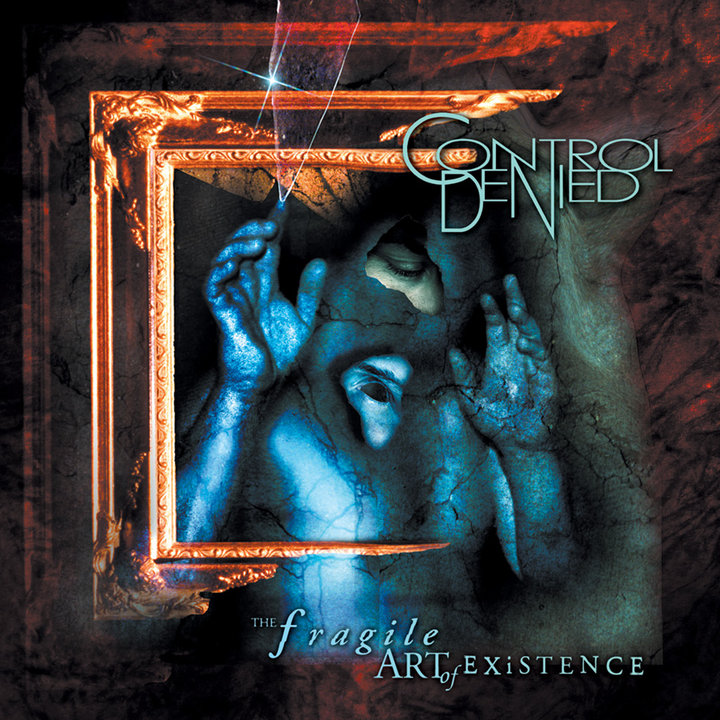
Then he crossed the line outright. The voice he set over his riffs on The Fragile Art of Existence, released by Nuclear Blast in 1999 under the name Control Denied, belonged to Tim Aymar, a clean heavy metal singer with a real range, and on "Expect the Unexpected" the guitars are recognisably Schuldiner's while the melody over them could sit on a Priest record. Change the voice and the genre changes with it. Nothing else had to move.
Schuldiner died on 13 December 2001, at the age of 34, after treatment for a brain tumour. The Control Denied album was the last record he completed.
The wider set of borders around the genre, from hard rock to grunge and the cores, is drawn in the comparisons chapter, and the verdict on death metal is simpler than the arguments around it suggest. Death metal is heavy metal with the singer's melody removed and the tuning, the tempo and the subject pushed past where the old style would follow. Put a tenor back over the same riffs and the border moves with him.
The other extreme cousin broke away over atmosphere rather than weight, trading the growl for a rasping scream and the low end for a cold, thin wall of guitar, and that quarrel is set out under heavy metal vs black metal. One style ends the night with three thousand people singing the chorus. The other ends it with them checking their fillings.
