
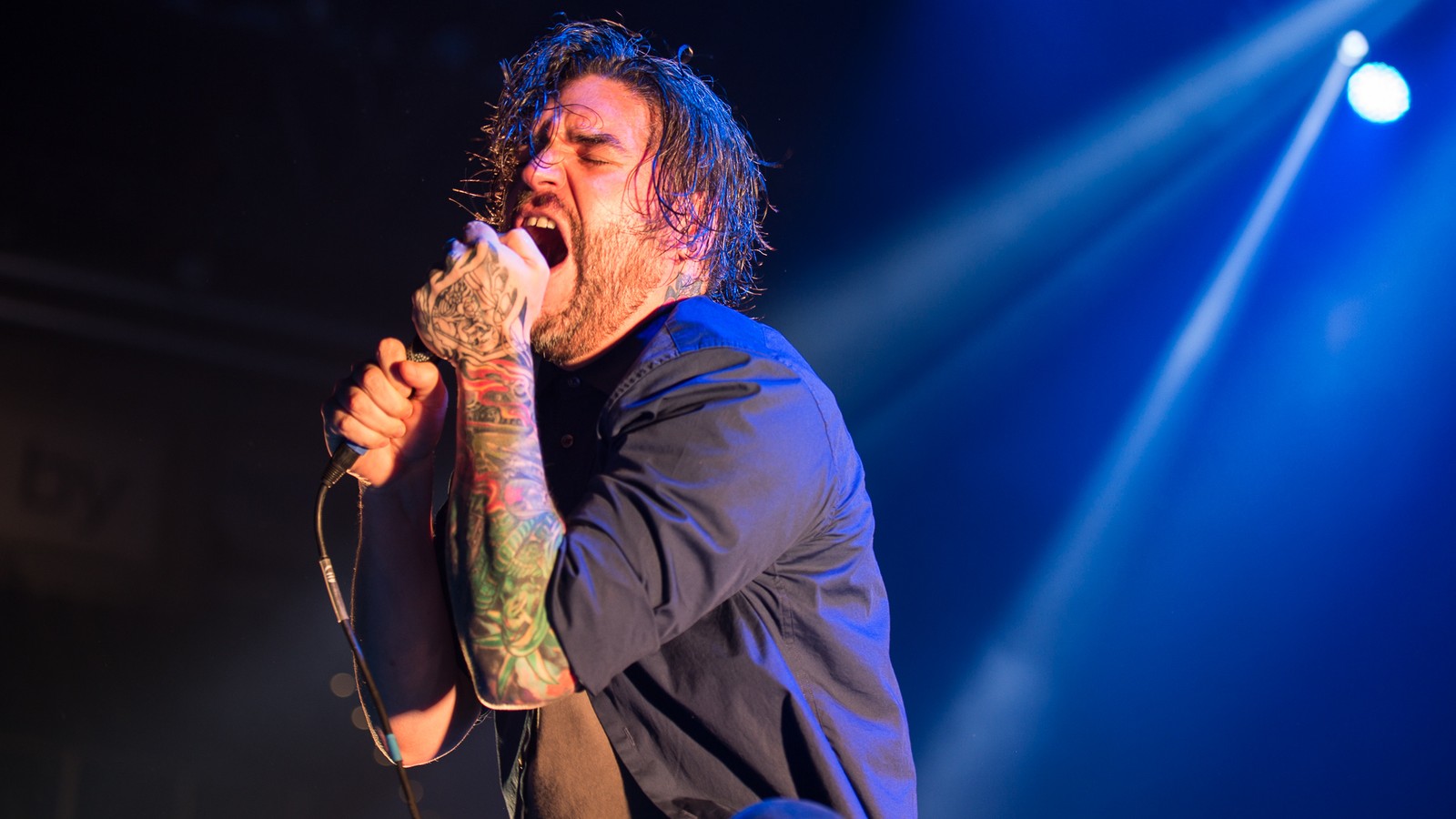
Stentor the strong, endued with brazen lungs,
Whose throats surpass'd the force of fifty tongues.Homer, The Iliad, Book V, translated by Alexander Pope
Split in two since the Montreal records of the middle 2000s and stretched further at both ends every year since, deathcore vocals are the one part of the genre a stranger recognises through a closed door: a low growl hauled up from somewhere under the ribs, a high scream ripped off the top of the throat, and the two traded inside a single bar, sometimes inside a single word, until the ear stops hearing two singers and starts hearing one instrument that can flatten a room from the floor and strip the ceiling tiles off it a beat later.
The Knoxville singer whose lows have held up every Whitechapel record since The Somatic Defilement in 2007 is Phil Bozeman. The masked Yekaterinburg vocalist who dragged the bottom of the range further down than most club PAs can carry is Alex Terrible of Slaughter to Prevail. And the New Jersey singer who stepped in on tour in 2020, joined in 2021 and later let a team of researchers feed a camera down his throat while he screamed is Will Ramos of Lorna Shore. Three throats. One vocabulary.
Think of a garbage truck working the alley behind a club at six in the morning, after the last band has loaded out. The compactor blade grinds the night's flattened boxes and a speaker cabinet somebody kicked in down into a solid block, in a register you feel in your fillings before you hear it, while above it the packer arm shrieks metal on metal every time it swings up, and both sounds come out of the one truck, in turns, without a gap between them, crushing whatever gets fed to it. That is the deathcore voice. The low does the crushing. The high tells you the next load is already on its way.
Everything the genre's singers have done since is a variation on that machine, from the hardcore shouts of the late nineties through the squeals that spread across MySpace to the full span of the 2020s, and it is the one element of the music that has changed more than the riffs underneath it. The guitars dropped a few steps. The voice went much further.
Deathcore vocals: the low, the high and the trade between them
Taken apart, deathcore vocals are three registers and a rule. At the bottom sit the gutturals and the growl, borrowed from death metal and pushed lower. At the top sits the scream, borrowed from hardcore and pushed higher. Somewhere off to the side sits the pig squeal, the sound outsiders remember and insiders argue about. The rule is that none of them is allowed to run for long before another one cuts in.
That rule is the genre's signature, and it is mechanical before it is anything else. A death metal singer usually holds one register for a whole verse, a low, even roar that sits under the riff like a second bass guitar. A deathcore singer cuts the verse into pieces and hands alternate pieces to the low and the high, so the voice keeps changing colour while the guitars hold still, which is why a riff that would sound static under one register sounds restless under two. The breakdown is where the trade stops and one register, usually the low, takes the whole bar.
Where the sound came from is part of the story the genre tells about itself, and the roots, the scene and the revival each left a layer in the throat: a hardcore bark from the first records, a squeal from the MySpace years, and the extended range of the 2020s on top of both. Before the breakdown, many singers drop in a single barked syllable that fans spell blegh. It is a cue, not a register.
The low does the crushing. The high tells you the next load is already on its way.
What the alternation does to a listener is simple to describe and hard to resist. The ear never settles, because the moment it has adjusted to one register the other arrives, and the body reads that constant change as speed even when the tempo has dropped by half. A breakdown with one voice on it is heavy. A breakdown with the low and the high answering each other across it is heavy and restless at once, which is exactly the double effect a floor of two hundred people is waiting for.
Gutturals, pig squeals and the bottom of the range
The lowest sounds in the genre carry the most names. Singers and fans talk about gutturals for the deep, almost toneless roar that sits below an ordinary growl, about gurgles for a wetter version of it, and about tunnel throat for a hollow, echoing variant in which the vowel seems to come from the far end of a pipe. None of these names is a medical term. They are the vocabulary of a scene describing what it hears.
Dropped into a breakdown, a guttural works the way a chest freezer works when two roadies drag it across the concrete floor of a VFW hall kitchen, a long scraping groan that shakes the steel shelving and buries every other sound in the room, and the whole song seems to slow down to the speed of the thing being dragged. The low does not carry a melody. It carries weight, and in the slam-leaning corners of the genre, where Ingested, Signs of the Swarm and Vulvodynia work, it is often pushed lower still with studio processing, a question the genre has never stopped arguing about.
The pig squeal is the stranger animal. It is a high, gurgling, often inhaled sound, closer to a squeal than to a scream, that singers place on the off-beats of a breakdown or at the end of a phrase like punctuation, and it is the sound that marks the genre out faster than any riff. The fans' own transliteration of it, bree, became a meme long before vocal coaches began reacting to it on camera. It was never meant to be pretty. It was meant to be unmistakable.
The squeal arrived in force with the MySpace generation, and the Glendale band that put out the Doom EP in December 2005 was Job for a Cowboy, with Jonny Davy squealing across the only record in its catalogue to carry the sound, and listeners on Metal Archives still single him out as the man who popularised it. The record travelled through profile pages. The squeal travelled with it.
Deathcore screams: fry, false chord and the highs
At the top of the range the vocabulary changes. Deathcore screams are usually described by singers with two terms borrowed from voice teaching, fry and false chord. Fry names a high, raspy scream built on the crackle of the lowest speaking register, the creak a voice makes at the end of a long sentence, amplified until it tears. False chord names a fuller, more distorted scream in which the false vocal folds, the pair of folds sitting just above the ones that make ordinary speech, are drawn into the sound. Both are names for sounds, and the singers who use them disagree about where one ends and the other begins.
The difference lives in the singer's monitor wedge on the last night of a month in the van, its grille stamped concave by every vocalist who planted a boot on it to lean into the front row. Push a scream through it and the cracked tweeter spits a dry, tearing crackle off the top of every word, the paper cone ripping a little further on each line, and that is fry. Drive the channel harder and the split woofer underneath joins in, the whole box buzzing and hammering against the plywood until the stage boards carry it into the pit, and that is false chord: the same tear with more of the machine dragged into it.
The words travelled into the scene through the coaches. The New York vocal teacher who put extreme singing on a DVD for anyone with a player and a bedroom mirror was Melissa Cross, whose The Zen of Screaming came out in 2005 after years of work with singers from Lamb of God, Shadows Fall and God Forbid, and the vocabulary it popularised spread through forums and the comment sections of the same profile pages that were carrying the bands. A generation of singers learned to name what it was already doing. The names stuck.
In deathcore the high scream is rarely left alone. Its job is to answer the low, and the classic MySpace-era verse is built as a dialogue between the two, the high shredding the end of one line and the low slamming in under the start of the next, so that the listener hears an argument inside a single throat. Fry and false chord each have their champions, and the trade between the low and the high is older than either name. What matters at the level of the whole genre is the trade. A scream on its own is hardcore. A scream answered by a guttural is deathcore.
A scream on its own is hardcore. A scream answered by a guttural is deathcore.
Clean vocals, and why they divide
The sung chorus is the one thing deathcore threw out when it took the breakdown from metalcore, and that makes clean singing the most dangerous move a deathcore singer can make. A clean vocal does not just add a colour. It moves a band toward the line that separates the genre from its melodic neighbour, and the faithful hear it as a heresy, a statement about which side the band means to stand on. Every band that drifted toward metalcore crossed exactly this line.
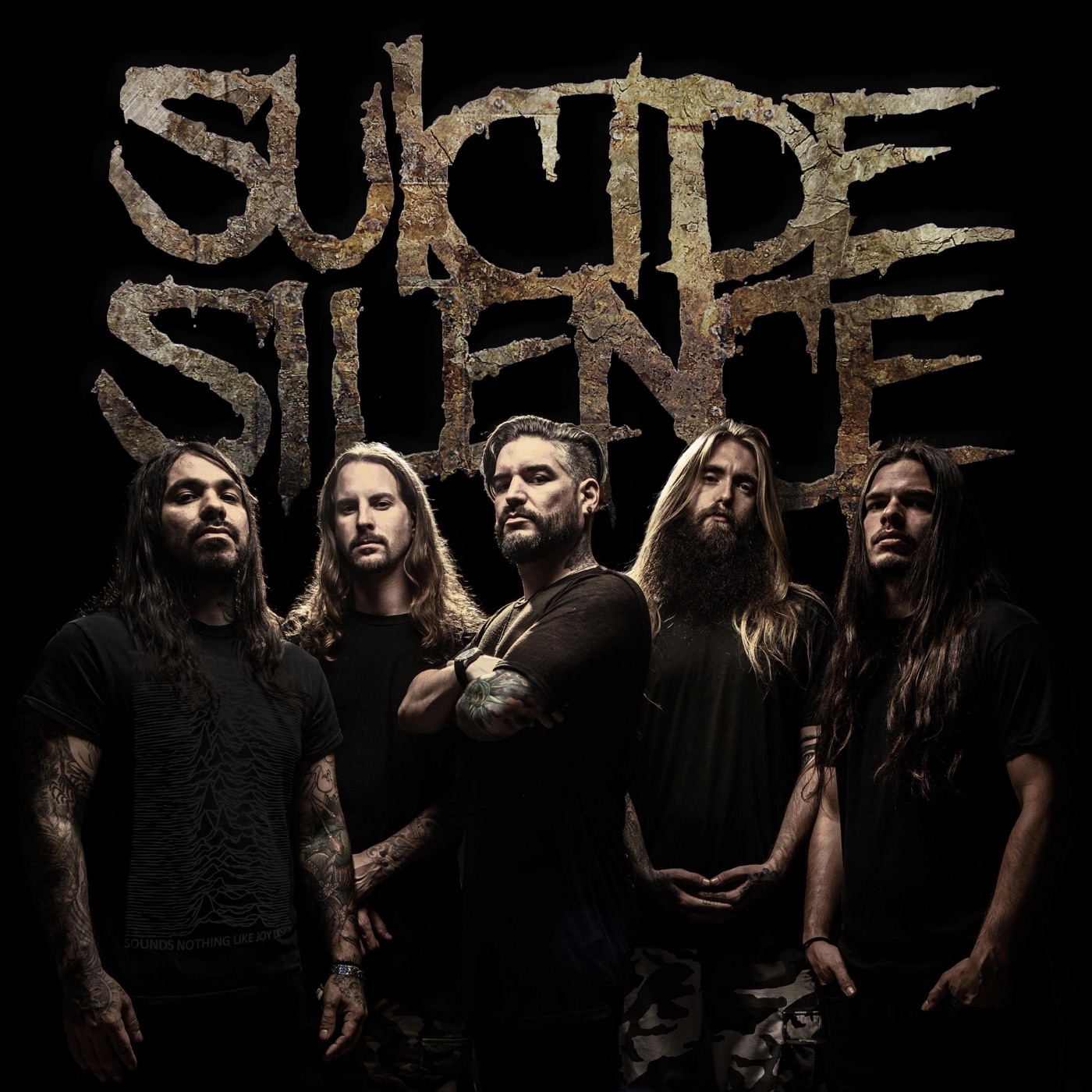
The sharpest case is a record from 2017. Produced by Ross Robinson, released by Nuclear Blast on 24 February 2017 and fronted by a lead single, "Doris", that carried some of the first clean vocals in the band's history, the self-titled fifth album of Suicide Silence walked toward a nineties nu metal sound and was met by a Change.org petition asking for the release to be stopped, reported at more than five thousand signatures. Eddie Hermida, who had sung for the band since October 2013, defended the change in interviews at the time. Mark Heylmun, who plays guitar in the band, later said the band had expected the reaction, and Become the Hunter in 2020 went back to the deathcore sound.

Two years later the same move landed differently. The Valley, released by Metal Blade on 29 March 2019, is a concept album built on Phil Bozeman's childhood, and Whitechapel put clean singing inside it, after first trying clean passages on Mark of the Blade in 2016.
"Hickory Creek", which Metal Blade released with an official video, is sung almost entirely clean, and the video closes with a dedication to Bozeman's mother. The song sits on a record whose other tracks keep the lows and the breakdowns. That placement is the difference. A clean song set among guttural songs reads as one more register in the singer's range; a clean chorus that replaces the breakdown reads as a change of genre. The singer is the same kind of singer either way. What the fans judge is where the clean voice sits in the song.
Plenty of bands keep the clean voice in a second throat, and in the Australian band Make Them Suffer the clean parts came from the keyboard seat between 2011 and 2022, first from Louisa Burton and then from Booka Nile, rather than from the lead vocalist. Splitting the job keeps the lead singer's register pure. The argument stays mechanical.
Is it real? Layering, pitch-shifting and the vocal cam
The question every newcomer asks, usually within a minute of hearing a guttural for the first time, is whether a human being can actually make that sound. The honest answer is yes, and sometimes the record helps. Studio vocals in this genre are routinely layered, a low take and a high take recorded separately and laid on top of each other so that one singer seems to growl and shriek at the same instant, and in the slam-leaning end of the genre pitch-shifting is used openly to drag a guttural down below where any throat sits. None of that is a secret. A layered take is a wheel brace and a tyre lever flung onto the same concrete floor from the same height, two pitches landing on one beat and the ear filing both as a single clang. It is not the whole story.
The proof arrived on camera. In the 2020s singers began filming themselves performing whole songs in one take, a fixed camera on the face and nothing to hide behind, and the format became the genre's answer to the doubters. You cannot layer a webcam.
Will Ramos filmed one for "Sun//Eater", the Lorna Shore single of May 2022, and the band's own channel carries it: the whole song goes past in a single take, with no edit to cut between the lows and the highs. Alex Terrible did the same for the Slaughter to Prevail song "Demolisher" on his own channel. The vocal cam does what a studio credit cannot. It shows the throat doing the work.
The medical version came in early 2022, when Ramos went to a University of Utah voice lab with Elizabeth Zharoff, a classically trained singer who runs the YouTube channel The Charismatic Voice, and screamed with a camera passed through his nose to the back of his throat, and the footage of his throat while he screamed went out on her channel. The camera settled the argument for anyone still having it. The sound is a throat. It is simply a throat used in ways a choir teacher never planned for.
Why the words disappear
The other question newcomers ask is what the singer is saying, and the honest answer is that most of it is not meant to be understood on first hearing. Words are carried by consonants, and the hard edges of consonants are the first thing a guttural or a fry scream grinds away; vowels are shaped by the mouth, and a singer chasing the lowest possible resonance opens the mouth and throat into shapes that turn every vowel into the same dark one. Put that voice under three tuned-down guitars and a triggered kick drum, mixed so the guitars sit on top, and the lyric survives as rhythm rather than speech.
The words are there, written down and often carefully. They reach the room the way a set list reaches the end of the night, taped to the stage at load-in in thick black marker and stomped on for an hour by boots, spilled beer and a singer's own sneakers until the song titles are a smear of ink that only the band can still read, the order of the night intact under the damage. The listener gets the shape. The lyric sheet gets the sense.
That is a choice, not an accident. A low or high sound with no recognisable word in it hits the body before the brain has time to decode it, and in a genre built around the moment a breakdown lands, a vocal that goes straight to the body is doing its job. The answer to why you cannot understand deathcore lyrics lives in the voice, not on the lyric sheet. Fans who want the words read them. Fans who want the impact already have it.
Two throats on one stage
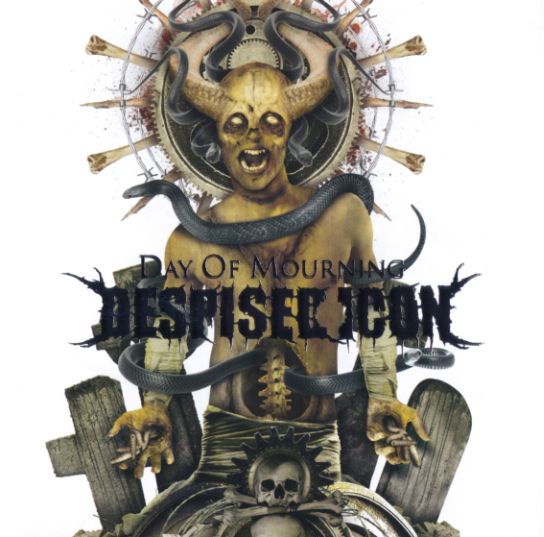
The cleanest way to get the low and the high into the same bar is to hire two people. The Montreal band that built its whole sound on that idea is Despised Icon, which from 2004 put two lead vocalists, Steve Marois and Alex Erian, on one stage, with Erian moving to the microphone from behind the drum kit he had played since the band's formation in 2002. Before him, Marie-Hélène Landry had sung in the band from 2002 to 2003. By Day of Mourning in 2009 the dual attack was the band's trademark, and when Despised Icon announced its split in April 2010 and its return on 4 February 2014, both singers came back together.
The title track of Day of Mourning, which Century Media put out with an official video, shows what two throats buy a band. One voice can only alternate. Two voices can overlap, hand off mid-word and keep a register running while the other singer breathes, and on stage that works like two drivers trading the wheel of a van at eighty miles an hour without ever lifting off the gas, one sliding over as the other grabs the rim, the engine never once dropping out of top gear. The trade becomes seamless. The listener never hears the breath.
Despised Icon stays the founding case, but the idea never became the norm, and the deathcore bands with two vocalists remain a minority, each worth hearing for what the second throat adds. Most of the genre's singers learned to play both parts alone, which is part of why the 2020s solo range impresses as much as it does. A two-singer band shares the load. A one-singer band carries it.
How deathcore vocals changed, from the hardcore shout to the lowest lows
The first records did not squeal. Released at the end of the nineties by bands with one foot in death metal and the other in the hardcore rooms, the proto-deathcore records carried hardcore shouts far more often than gutturals, a barked, mid-range voice that came straight out of the matinee shows and sounded like the man at the front of the pit rather than a monster under the floor. The low register arrived with the bands that took more from death metal, and by the time Despised Icon recorded The Healing Process in 2005 the low and the high were both in place.
The MySpace years added the squeal and fixed the trade. The young singers of 2005 to 2010 learned from each other through profile pages and live clips, and the low growl handed to the high scream inside one bar became the genre's fingerprint, along with the squeal dropped into the breakdown. The 2010s took the bottom lower, especially in the brutal and slamming branches, while the symphonic and blackened branches raised the top with long black metal shrieks that could sit over an orchestra.
The 2020s broke the ceiling and the floor at once, and singers such as Will Ramos of Lorna Shore and Alex Terrible of Slaughter to Prevail now rip gutturals, fry, false chord and squeals out of one throat inside a single song. The singers of the second wave use every register they own inside a single song, gutturals, fry, false chord, squeals and long sustained shrieks, and the clips that spread the genre through the pandemic years were very often clips of a vocalist doing exactly that. The change can be heard record by record. The direction is plain. Every generation took the range the previous one had and added an octave at one end.
Every generation took the range the previous one had and added an octave at one end.
Deathcore singers, from the shout to the full span
No single throat owns this music, and the singers who define it span every decade and most of the subgenres. No single singer owns the title.
Mitch Lucker sang for Suicide Silence from 2003. He died on 1 November 2012 after a motorcycle crash in Huntington Beach, California. He was 28.
Eddie Hermida sang on the three All Shall Perish albums from The Price of Existence in 2006 to This Is Where It Ends in 2011. He left that band in October 2013 to become the singer of Suicide Silence. He rejoined All Shall Perish in October 2015 without leaving Suicide Silence, called that reunion off in April 2020, and returned with the band for live dates in 2024. The records Suicide Silence made with Lucker are where much of the MySpace generation learned the trade between the low and the high, and Hermida has carried those songs on stage for more than a decade since.
The singer from San Diego County who has fronted Carnifex since 2005, apart from a break in 2012 and 2013, is Scott Lewis, and the voice on Die Without Hope in 2014 is the same one that had fronted the first EPs. Phil Bozeman has been the only singer Whitechapel has ever had, from 2006 to Hymns in Dissonance in 2025.
Chelsea Grin's line of succession runs through two singers and connects two bands. Alex Koehler, the founding vocalist of Chelsea Grin in Salt Lake City, left in 2018. Tom Barber, who had sung for Lorna Shore since 2010, left that band in April 2018 and became Chelsea Grin's singer the same year, after touring with them in 2017. Lorna Shore went through CJ McCreery between 2018 and 2019 before Will Ramos arrived.
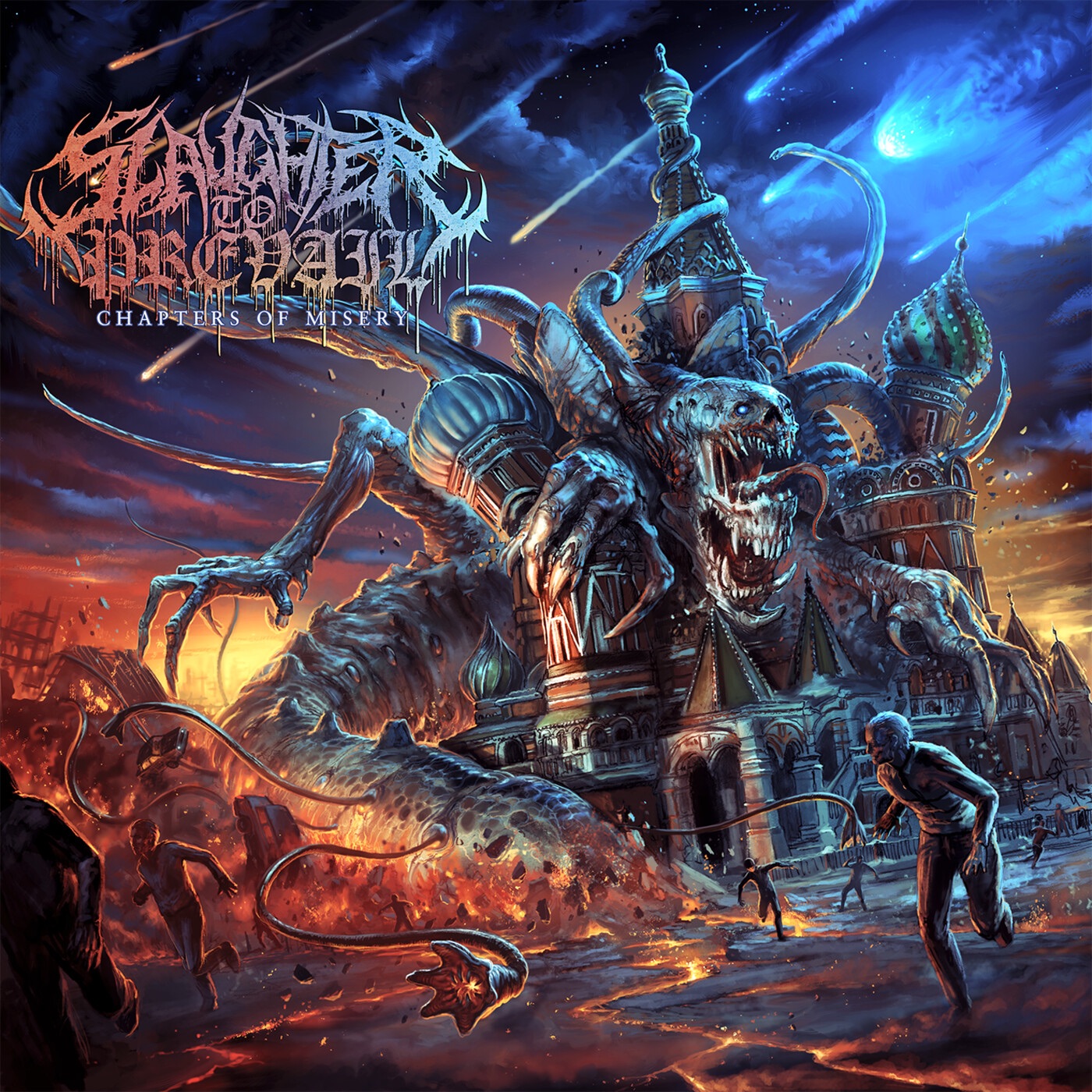
Formed in Yekaterinburg in 2014 around a singer whose stage name and mask became a brand of their own, Slaughter to Prevail put out its first EP, Chapters of Misery, in 2015, saw it reissued by Sumerian in 2016, and followed it with the full-length Misery Sermon in 2017, and the voice on both is Aleksandr Shikolai, known everywhere as Alex Terrible. In Connecticut, Ben Duerr has fronted Shadow of Intent since its formation in 2013, carrying the lows and the highs over an orchestral layer.
CJ McMahon is the voice on every Thy Art Is Murder album from Hate in 2012 to Human Target in 2019. In August 2023 he apologised after a backlash over posts he had shared online. On 22 September 2023, the day Godlike was released, the band announced that he was no longer a member and that his vocals on the album had been re-recorded by a new singer.
Women have been in the genre's microphones from its first Montreal band, and their history is longer than the scene's reputation suggests. Marie-Hélène Landry sang in Despised Icon in 2002 and 2003, the band's first years. Her records are not a footnote to anyone else's. They are part of the same span.
| Singer | Band | Years | Where to hear the voice |
|---|---|---|---|
| Steve Marois and Alex Erian | Despised Icon | 2002 to 2010, 2014 to now | Day of Mourning (2009) |
| Mitch Lucker | Suicide Silence | 2003 to 2012 | The Cleansing (2007) |
| Phil Bozeman | Whitechapel | 2006 to now | The Valley (2019) |
| Scott Lewis | Carnifex | 2005 to 2012, 2013 to now | Die Without Hope (2014) |
| Eddie Hermida | All Shall Perish, Suicide Silence | All Shall Perish until 2013, 2015 to 2020 and 2024 to now; Suicide Silence 2013 to now | The Price of Existence (2006) |
| Alex Koehler | Chelsea Grin | 2007 to 2018 | Desolation of Eden (2010) |
| Tom Barber | Lorna Shore, Chelsea Grin | 2010 to 2018, 2018 to now | Eternal Nightmare (2018) |
| CJ McMahon | Thy Art Is Murder | 2009 to 2015, 2017 to 2023 | Hate (2012) |
| Ben Duerr | Shadow of Intent | 2013 to now | Elegy (2022) |
| Alex Terrible | Slaughter to Prevail | 2014 to now | Kostolom (2021) |
| Will Ramos | Lorna Shore | 2021 to now | Pain Remains (2022) |
The pattern in those names is plain. The singers come from every coast of North America and well beyond it, they belong to every decade since the first Montreal records, and the line between a cult voice and a famous one is drawn mostly by when a clip happened to travel. The voice is the most portable part of the genre, which is why a singer from Yekaterinburg and one from Knoxville can be heard in the same breath. Where those voices grew up, and how each deathcore scene put its own accent on the same parts, is a story told city by city.
The voice is also the part of deathcore that has changed the most and given up the least. Every one of these singers still trades the low against the high, still saves the heaviest register for the breakdown, and still treats a word as something to be broken for the sake of the sound. The span keeps growing. The rule underneath it has not moved since 2005.

