
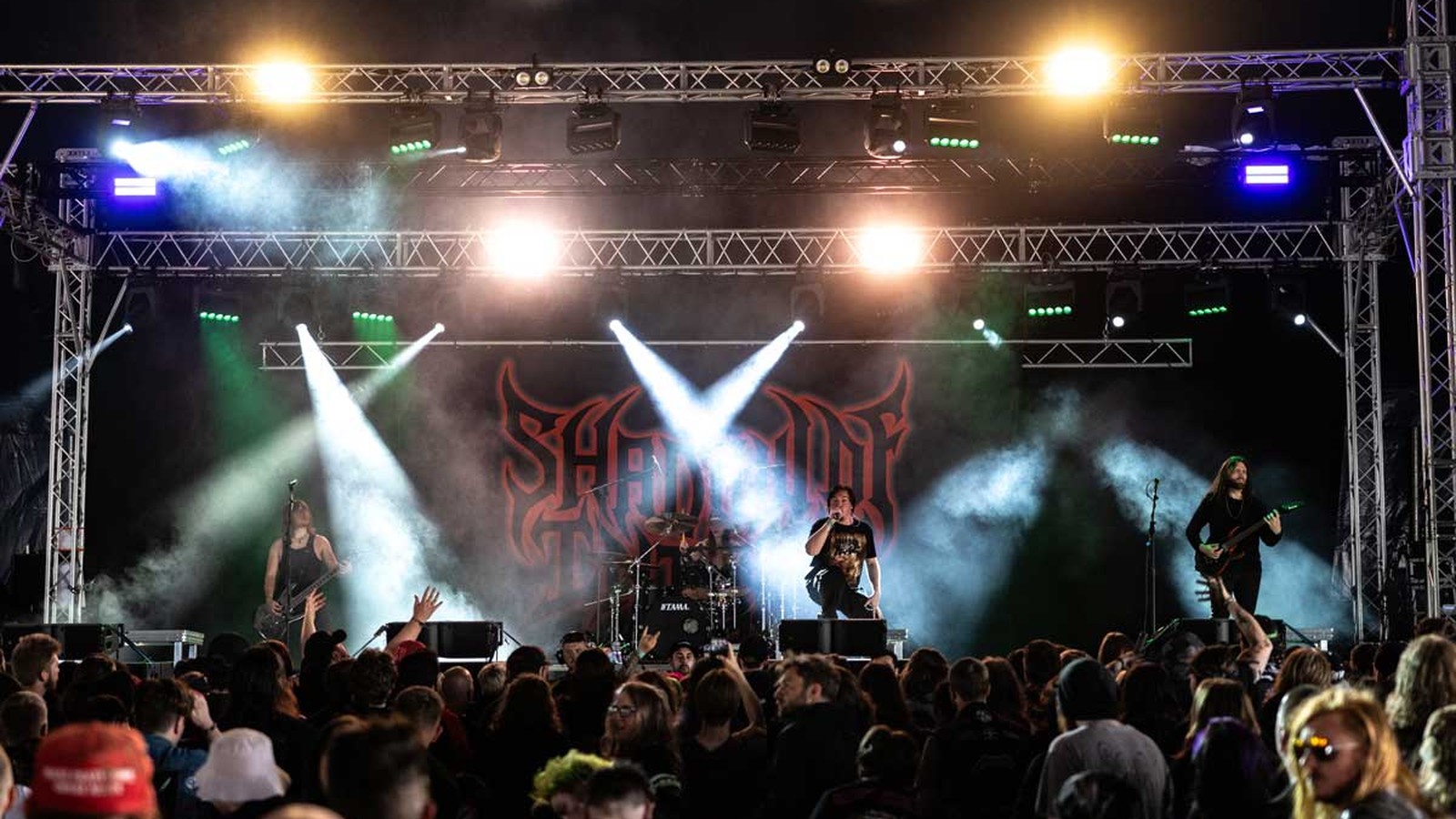
Locked out of the clubs from March 2020, written off more than once along the way, and thrown back onto the screens where it had first found its audience fifteen years earlier, the genre that came out of the pandemic louder than it went in was deathcore, and the deathcore revival of the 2020s kicked in the doors of rooms it had never been booked into, from the bills of the big European summer festivals to the theatre underneath Madison Square Garden.
Nobody planned it. A webcam did half the work.
The bands themselves had never left. Across the decade it splintered, deathcore had broken into slam, downtempo, technical, symphonic and blackened lines, and by 2019 each line had its own labels, its own package tours and its own core of the faithful, who drove two hours to stand in a club that held a few hundred. What the genre lacked was a door into the wider world. The door it got was a phone screen held upright, and the people who walked through it turned a scattered underground into a second wave that filled rooms many times the size.
Seen against the whole run of the genre, from the basements to the arenas, the 2020s are a stretch in which deathcore grew without a single new subgenre to explain the growth. The parts were the same parts. The audience was new, and it arrived through a format nobody in 2007 could have imagined. The singer whose six-minute single pried that door open widest, in June 2021, was Will Ramos, and a dozen bands walked through it behind him.
A webcam, a vocal coach and June 2021
With the venues dark and the tour buses parked, deathcore spent 2020 on the only stage still open, and two formats carried it there. The first was the reaction video, in which someone with no stake in heavy music sits in front of a camera and hears a song for the first time. The second was the vocal cam, one fixed shot of a singer's face and throat for the length of a song, with no cuts, no lighting rig and nowhere to hide a trick.
Slaughter to Prevail took the format up with "Demolisher", a single of 2020: the singer born Aleksandr Shikolai, who performs as Alex Terrible, posted a one take vocal for it on his own channel, and the player above carries the song itself. A vocal cam works like the front cloth ripped off a bass cabinet at the merch table so the crowd round it can watch the cone hurl itself in and out on every note. It takes the cover off the instrument and dares you to call it fake. Whether the voices are what they sound like is a fight of its own. The camera settled most of it.
The reaction video did the other half of the work. The opera singer turned YouTube vocal coach who carried a deathcore throat in front of a great many people who had never heard one was Elizabeth Zharoff, whose channel The Charismatic Voice took apart Lorna Shore's "To the Hellfire" in 2021. Her audience came for the analysis, and the band was the thing being analysed.
Released on 11 June 2021, the same day the New Jersey band named Will Ramos its permanent singer, "To the Hellfire" ran just over six minutes toward a closing breakdown, and on the short video apps that closing section, cut down to a few seconds of one man making a sound nobody had told the viewer a human throat could make, went round like a fire alarm pull station yanked in a dormitory corridor at three in the morning, every door on the floor banging open and the whole building out in the corridor to find out what it was. The clip did not explain anything. It did not need to.
Lorna Shore was not the only band riding the clips, and the clip was never the whole story. Slaughter to Prevail's singer had built his own following on the same screens, Brand of Sacrifice re-released the title track of Lifeblood with Ramos as a guest later that year, and the feeds that served one breakdown served the next band's breakdown straight after it. The song's own history is a Lorna Shore story. What it did for the genre was prove one thing: a pig squeal and a half-time drop, with no context at all, could stop a thumb scrolling past.
The people who arrived that way came in the way deathcore fans always had, through one song that sounded impossible and then a search for the next one. In 2006 the trail ran through a profile page and its list of eight favourite bands. In 2021 it ran through a recommendation feed. The vocal coaches got the clicks, and the bands got the listeners who stayed, bought the shirt, learned the words nobody can make out and turned up two years later when the tour finally reached their town.
What the deathcore revival kept from 2007, and what it changed
A short clip rewards extremes, and the parts of deathcore that make an extreme are the oldest parts it has: the lowest growl, the highest squeal, the blast beat at full speed and the moment the tempo halves and the floor drops out. The sung chorus that several bands had tried across the 2010s, and that Suicide Silence's self-titled album of February 2017 put front and centre, does none of that in eight seconds. So the deathcore revival leaned straight back onto the founding template, and the bands that grew fastest after 2020 were the ones that played the 2007 contract harder, not the ones that tried to rewrite it.
That is the mechanism. The orchestra, the black metal tremolo and the slam riff all stayed, because the 2010s had built them and they worked, but every one of them was arranged to make the old drop land harder. A string section climbing for sixteen bars is the fuse running out to a charge. A blast beat is the fuse burning faster. The breakdown is the charge under the chimney stack, and the second wave rigged every song to bring that stack down.
The second wave did not reinvent deathcore. It played the 2007 contract louder, in front of a bigger room.
The voice changed. Several founders had split the range between two throats, a low growl on one microphone and a high scream on the other, and the second wave's best known singers carried both ends and everything between in one throat, which is precisely what a vocal cam can prove and a studio record cannot. The low and high trade never went away. It moved inside one body, and the camera was there to watch it happen.
The business changed as well, and quietly. Shadow of Intent put out Elegy in January 2022 with no record label at all, only a distributor, and the band still filled rooms, while label rosters stayed busy with signings from the slam and blackened lines. A band no longer needed a manager to reach a sixteen year old on the other side of the world. It needed one good clip and a breakdown that held up when the sixteen year old went looking for the full song.
The second wave across six countries
No single band carried the revival alone. They come from Toronto and Yekaterinburg, from Zurich and Karlsruhe, from Connecticut, Pittsburgh, Las Vegas and a small town in Slovenia, and they arrived at roughly the same weight within the same five years.
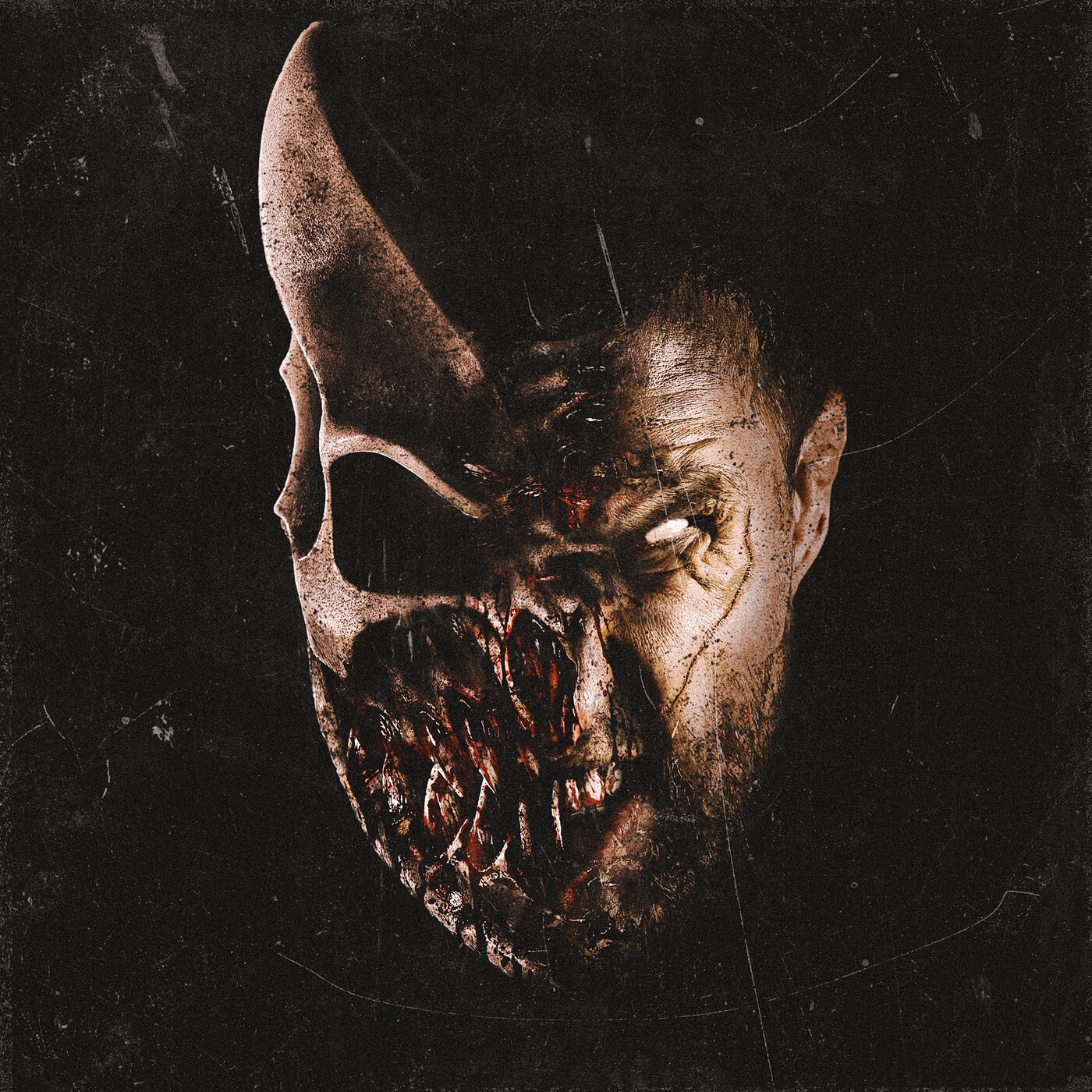
The Yekaterinburg band whose groove sits halfway between the founders' blast and nu metal's bounce was Slaughter to Prevail, and Kostolom in 2021 was the record that broke it wide. Grizzly, released on 18 July 2025, carried the same voice deep enough to rattle the coins out of a parked van's cup holders. By the spring of 2026 the band was headlining North America with Whitechapel and Attila under it on the bill.
Shadow of Intent came out of Connecticut in 2013 and self-released nearly everything, and its 2020s records are where the orchestral line grew up.
"Flying the Black Flag", a single of August 2024 that went onto Imperium Delirium, is the band in miniature: Ben Duerr's growl out front and the weight driven in beneath it like a fence post sledged into frozen ground, one blow per beat. Elegy had gone out the same way on 14 January 2022. The crowds were waiting for both.

Imperium Delirium arrived on 27 June 2025, and by that autumn Shadow of Intent was playing under Lorna Shore on a North American run that ended in New York, two bands from the same orchestral line sharing one stage and one crowd. That pairing is the second wave on one stage. Neither band needed the other. Both drew.

Formed in Pittsburgh in 2014, the band that carried the slam riff out of the underground and onto the big package tours was Signs of the Swarm, whose Absolvere arrived on Unique Leader on 24 September 2021 with every bass drop on it heavy enough to shake the cover off a manhole in the alley behind the venue, and which then moved to Century Media for Amongst the Low & Empty in July 2023 and To Rid Myself of Truth in August 2025.
The Toronto band that took its name and much of its imagery from the manga Berserk was Brand of Sacrifice, and it brought Lifeblood out in 2021. The Karlsruhe band that tore itself out of brutal deathcore and into the symphonic and blackened line, from A Hill to Die Upon in 2021 to Zwielicht on Century Media in June 2023, was Mental Cruelty. The Brockton, Massachusetts, band formed in 2020 that self-released In the Wake ov Sòl on Christmas Day 2020 was Worm Shepherd, and it had Ritual Hymns out by 14 January 2022.

The Las Vegas band that came together in 2020 around a singer who had screamed through the MySpace years was Ov Sulfur, with Ricky Hoover, once of Suffokate, out front of The Burden ov Faith, released on Century Media on 24 March 2023. A band only the second wave could have made, with a voice from the first.
Further out, the bounce came back. Paleface Swiss from Zurich bolted nu metal groove onto deathcore weight and released Cursed in January 2025, and Within Destruction from Jesenice, Slovenia, travelled from early slam toward nu metal across Yōkai in 2020, Lotus in 2022 and Animetal in 2025. The North Vancouver band formed in 2011 that now runs two lead vocalists, Casey Tyson-Pearce and Ian Bearer, and put out This Used to Be Heaven on 20 November 2025 is AngelMaker. Behind all of them a muster of bands formed after 2018, Synestia among them, is still finding its feet, and the newest names on the 2026 posters had not released a record when "To the Hellfire" came out.
| Band | From | Record | Year |
|---|---|---|---|
| Lorna Shore | New Jersey, US | Pain Remains | 2022 |
| Slaughter to Prevail | Yekaterinburg, Russia | Kostolom | 2021 |
| Shadow of Intent | Connecticut, US | Elegy | 2022 |
| Signs of the Swarm | Pittsburgh, US | Absolvere | 2021 |
| Brand of Sacrifice | Toronto, Canada | Lifeblood | 2021 |
| Mental Cruelty | Karlsruhe, Germany | Zwielicht | 2023 |
| Worm Shepherd | Brockton, US | Ritual Hymns | 2022 |
| Ov Sulfur | Las Vegas, US | The Burden ov Faith | 2023 |
| Paleface Swiss | Zurich, Switzerland | Cursed | 2025 |
| Within Destruction | Jesenice, Slovenia | Lotus | 2022 |
The spread is the point. Six countries, ten records, and no record that the others orbit. Lorna Shore became the best known. The rest did not wait for permission.
Playing 2007 on purpose: the MySpace revival
The strangest strand of the 2020s looked backward on purpose. A handful of bands formed since 2020, most of them too young to have owned a MySpace page, set out to rebuild the sound of the 2006 to 2008 records from scratch: dark tremolo riffs, sub-bass drops under every breakdown, horror film samples, a snare tuned up high and thin, and screams stacked over gutturals the way the first class did it. It is not a new style. It is the old style chosen, with the date of formation as the only thing that separates it from the original.
The Indianapolis band at the front of that revival, by the reckoning of The Harvard Crimson's metal column, is Mauled, with a self-titled EP in April 2025 and When Your Eyes Are Shut on 12 March 2026, and around it sits a small circuit of bands with demos, singles and show listings rather than albums: katywentmissing out of San Antonio with a demo in 2024, The Queen Guillotined from Buffalo, formed during the lockdowns of 2020, and Girl of Glass from Houston, with a self-titled EP in 2024.
Their production is the giveaway. Reviewers of the Houston band write of a raw, abrasive mix, and a band in 2025 can afford a mix as clean as anything on a major label, so the rawness reads as chosen, like taking a ball-peen hammer to the doors of a brand-new pickup until it wears the exact dents of the one their older brother drove to shows in 2007. Some of the critics who grew up on the originals hear a tribute. The listeners in the room hear a sound that is new to them. Both are right.
The founders return, to play and to write
A genre old enough to have nostalgia is a 2020s fact, and the founders walked back into the rooms they had left. Despised Icon, who had split in 2010 and came back to the stage in 2014, released Shadow Work on 31 October 2025, two decades after The Healing Process. Job for a Cowboy, gone from the stage since 2016, announced a first show in seven years for the Blue Ridge Rock Festival of September 2023 and followed it with Moon Healer on Metal Blade on 23 February 2024, a death metal record from a band whose first EP had helped build deathcore.
Reunions are only half of it. The anniversary run became a format of its own, and it plays like a crowbar driven under the lid of a plastic tub of unsold 2008 shirts that had sat in a parent's garage since the band split, the lid cracking off in one piece. All Shall Perish took The Price of Existence round three Texas dates in May 2026 to mark its twentieth year, and Whitechapel reached its own twentieth year in 2026.

The founders did not only replay. The Knoxville sextet with three guitarists in the front line was Whitechapel, and after the clean singing of The Valley in 2019 it went back to full-speed death metal riffing and tore through Hymns in Dissonance, released by Metal Blade on 7 March 2025, which reviewers called the heaviest record of its career, and Alex Wade on guitar agreed in his own words. It was not alone: Thy Art Is Murder released Godlike in September 2023, and Carnifex signed to Sumerian in May 2026, two decades after its first EP. The first class was not a museum. It was still on the road, in the same bills as bands that had been born after its first records came out.
From the barricade to the big rooms
The clearest measure of the second wave is the size of the rooms. Lorna Shore spent June 2025 on the bills of Download in Britain, Hellfest in France and Rock am Ring and Rock im Park in Germany, then headlined a North American run that opened in Pittsburgh on 17 September and closed on 30 October at the theatre underneath Madison Square Garden, with The Black Dahlia Murder and Peeling Flesh also on the bill. By the summer of 2026 the band had an arena headline tour of Australia and New Zealand booked for October, opening at the John Cain Arena in Melbourne, with The Acacia Strain on every date and Whitechapel on the Australian ones.
Now put that breakdown in an arena. The half-time drop that used to rain plaster off the rafters of an all-ages hall now goes out through a line array flown forty feet up on chain motors, a ton of loudspeakers hung from the arena roof by steel shackles, and when the tempo halves and thousands of feet land at once the whole hang shudders on its shackles and the chain motors groan, the arena's roof steel taking the blow the old hall's rafters used to take. That is the second wave at full size. The riff is the same riff that was written for a room of three hundred.
The breakdown written for three hundred people turned out to work for an arena. Nothing had to be rewritten.
The other bands climbed the same ladder at their own pace. Slaughter to Prevail headlined rooms like the Hollywood Palladium in 2026, Signs of the Swarm and Paleface Swiss opened Lorna Shore's spring run of that year, which took in the Welcome to Rockville and Sonic Temple festivals. A genre that had spent 2008 in VFW halls was booking the same weekends as the biggest names in metal.
The vocal cam goes to a laboratory
The camera that proved the voices were real led to a laboratory. In early 2022 Elizabeth Zharoff and Will Ramos went to the University of Utah's otolaryngology department, where a camera went in through his nose and down his throat while he ran through the range of his screams, and the footage and the research around it reached a general audience when Science Friday reported on it in April 2025. A technique that deathcore fans had spent years defending as real ended up, unarguably, on a public radio science programme, filmed from the inside.
Where the second wave stands in 2026
By the summer of 2026 the second wave is no longer new. Lorna Shore and Slaughter to Prevail headline in their own right, Shadow of Intent and Signs of the Swarm fill the bills beneath them, the founders tour their anniversaries next to bands half their age, and a deliberate MySpace revival plays small rooms. The offensive that started on a phone screen in 2021 now holds ground on festival posters across Europe, North America and Australia, and it holds it with the parts the genre was built from in the first place.
Nobody in the genre is waiting to be rediscovered anymore. The disciple who found one band through a vocal coach in 2021 went looking for Shadow of Intent, then for Despised Icon, then for the band from Indianapolis making records that sound like 2007, and that search, repeated by a great many people at once, is the whole of the revival. The redoubt was never one band. It was the habit of always looking for the next one.
Where that search leads now is the list of deathcore bands, from the Montreal founders of 2002 to the names booked onto this summer's festival posters. Start anywhere on it. You will end up everywhere on it.
