
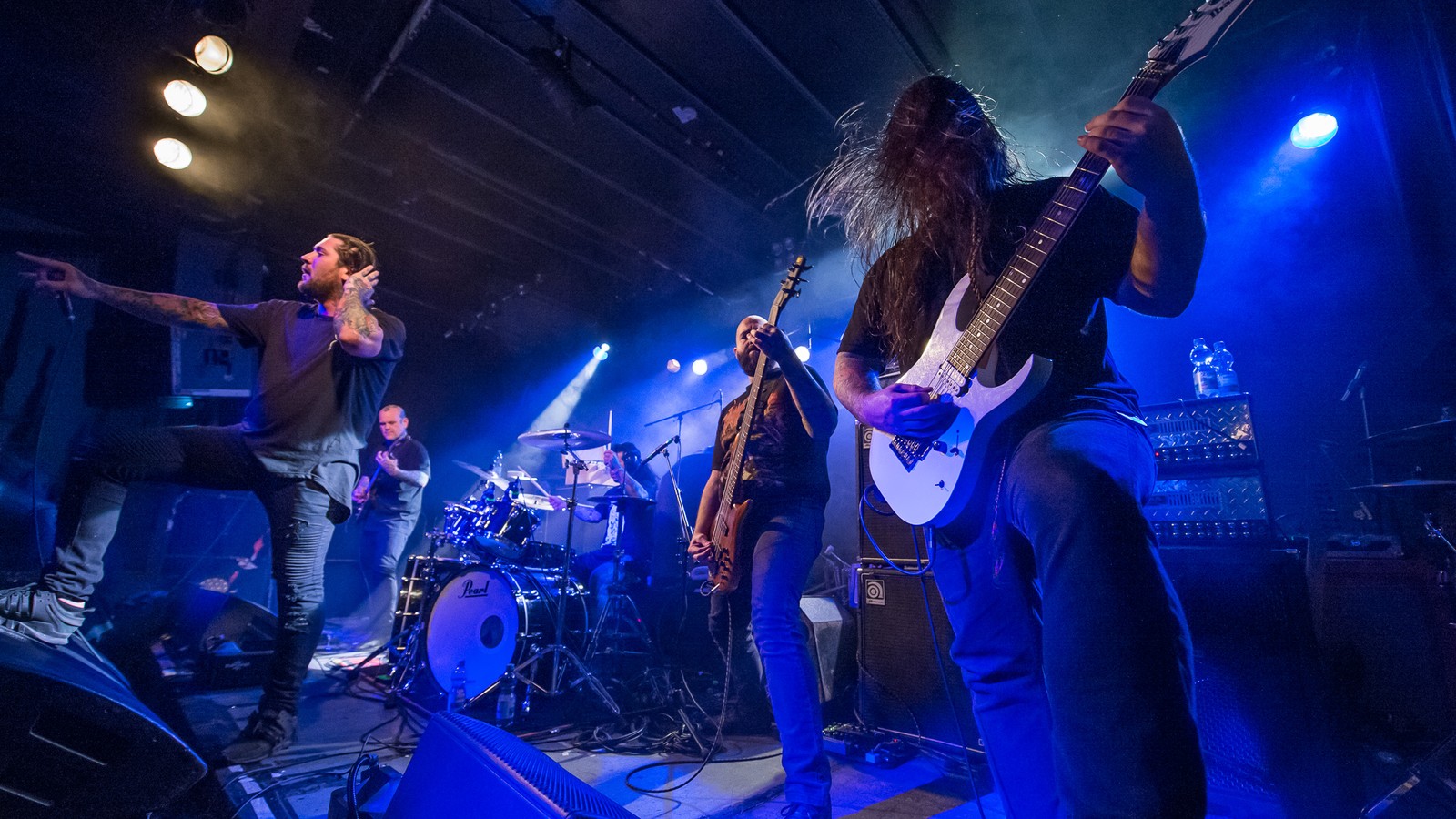
On 29 April 2014 Metal Blade released Our Endless War by Whitechapel, and in its first week it entered the Billboard 200 at number 10, the highest chart entry of Whitechapel's career.
It was the exception that proves the decade. Deathcore evolution in the 2010s ran in every direction at once, and between the spring of 2010, when the Montreal pioneers announced their break-up, and the autumn of 2019, when a New Jersey band with three EPs and two albums behind it signed to Century Media, the founders lost a singer, two of the best known bands walked out of the genre, the big European metal labels arrived with contracts, and a new generation in Blacktown, Jersey City, Yekaterinburg and Connecticut tore the 2007 template off its hinges and bolted the pieces back together in rooms of its own.
The band from Sydney's western suburbs that smashed a deathcore record through the ceiling of the Australian top ten in 2015 was Thy Art Is Murder. The Connecticut pair who built a whole catalogue on a video game's interstellar war without a record deal behind it through 2019 were Ben Duerr and Chris Wiseman of Shadow of Intent. And the Russian singer who had built a following with vocal covers on YouTube was Alex Terrible of Slaughter to Prevail. None of the three had an album out in 2009.
Picture the maple dance floor of an Elks lodge, the kind of hall a band could rent for two hundred dollars and a promise to sweep up afterwards, pounded by five straight years of breakdowns until the boards split along the grain and the splinters drove up into the treads of every boot on the floor, so that the kids carried them home in their soles to Sydney, to Hull, to Pittsburgh, to the Urals, and each one pried a shard loose and laid it down as the first board of a floor of its own. That is the decade. Not one board went back.
Deathcore evolution, 2010 to 2013: the floor gives way
The MySpace class ended the old decade on the Billboard 200 and started the new one in pieces. The story of how deathcore became a scene closes on a profile page going quiet. What happened next was louder, and it was not one story.
Released by Century Media on 12 July 2011, with Jonathan Davis of Korn guesting, The Black Crown took Suicide Silence to number 28, while Whitechapel answered on 19 June 2012 with a self-titled record for Metal Blade that went in at number 47 and kept all three guitarists in the line-up. Two founders, two directions, inside eleven months. The split had started at the top.
Below the top it was already a stampede. Self-releasing Embryonic Anomaly in 2010 before Unique Leader took them on, the Bay Area band that piled sweep-picked arpeggios on the breakdown until the guitar sounded like a string trimmer chewing through a chain-link fence, wire flying off in every direction faster than the eye could follow, was Rings of Saturn, and Dingir followed on that label in 2013. In New Jersey, a band that had put out an EP called Triumph in October 2010 and Bone Kingdom in February 2012 let black metal in on Maleficium in 2013, and that band was Lorna Shore. Each of those records chose a road. None of them came back to the junction.
The founders were not all keeping up. Carnifex announced in October 2012 that it was going on indefinite hiatus after three last California shows, was back by June 2013 and signed to Nuclear Blast in July, and Job for a Cowboy put out Demonocracy on Metal Blade in April 2012 to number 87, a death metal record through and through.
Mitch Lucker, 1 November 2012, and what Suicide Silence did next
Mitch Lucker, the singer of Suicide Silence, crashed his motorcycle in Huntington Beach, California, on the night of 31 October 2012. He died the next morning, 1 November 2012. He was 28.
The band and its friends answered with a concert. On 21 December 2012 Suicide Silence played the Fox Theater in Pomona with a different guest singer on each song, among them Phil Bozeman of Whitechapel, Randy Blythe of Lamb of God, Max Cavalera, and Eddie Hermida of All Shall Perish, and the proceeds went to an education fund for Lucker's daughter. The show was released on 18 February 2014 as Ending Is the Beginning: The Mitch Lucker Memorial Show. In October 2013 the band confirmed Hermida as its new singer.
What the continuation proved was practical. Suicide Silence was a band with a catalogue, a label and a crew, and the decision to keep playing was the band's own.
The first record of the new line-up came out on 15 July 2014. Recorded for Nuclear Blast, which had signed the band in September 2012, and selling about 15,000 copies in its first American week to enter the Billboard 200 at number 16, You Can't Stop Me put Hermida's voice in front of the same band, with the breakdowns in the places they had held on the first three albums.
The title track, which Nuclear Blast released with an official video, took its title from a set of lyrics Lucker left behind, and it was sung by a man who had spent the MySpace years at the microphone of All Shall Perish. Continuity was the whole statement. It would not last the decade.
Who went where, branch by branch
Read the decade by its dates and the split stops looking like chaos and starts looking like a migration. The technical road opened first, with Rings of Saturn in 2010 and Infant Annihilator, formed in 2012; the black metal road opened in 2013 and 2014, through Maleficium and Carnifex's Die Without Hope, which Nuclear Blast released on 4 March 2014; the slam road ran through Ingested in Manchester and then Signs of the Swarm, formed in Pittsburgh in 2014; and the downtempo road reached its first album in 2015, when Century Media released The Unconquerable Dark by Black Tongue. The same five years sent Born of Osiris, Veil of Maya and After the Burial drifting out of the blast and toward progressive metal.
Each branch changed one part of the song, and the longer deathcore history follows every one of them to the present. The order they opened in is the part that belongs to the decade. Nobody voted on any of it. Bands followed the riffs they liked best, and the riffs led away from each other.

The founder that refused to splinter climbed highest. Recorded for Metal Blade with the same line-up of guitarists the band had carried since 2007, Our Endless War put the Knoxville band's three guitarists, Ben Savage, Alex Wade and Zach Householder, into the American top ten, their three-guitar attack hitting the way a stacked trophy case in a high school gym rattles off its brackets when the whole bleacher section stamps at once. Whitechapel had not changed parts. It had tightened the bolts.
Bands followed the riffs they liked best, and the riffs led away from each other.
Even Whitechapel moved in the end, and it moved by addition. On Mark of the Blade, released on 24 June 2016, Phil Bozeman sang clean for the first time, on "Bring Me Home" and "Decennium", and The Valley in March 2019 carried more of it, without the guitars giving up a note of their weight. That is the quiet half of the decade's story. Most of the bands who stayed changed one part and kept the rest.
| Release | Record | Label | Chart |
|---|---|---|---|
| July 2011 | Suicide Silence, The Black Crown | Century Media | Billboard 200, number 28 |
| June 2012 | Whitechapel, Whitechapel | Metal Blade | Billboard 200, number 47 |
| October 2012 | Thy Art Is Murder, Hate | Halfcut | ARIA, number 35 |
| April 2014 | Whitechapel, Our Endless War | Metal Blade | Billboard 200, number 10 |
| June 2015 | Thy Art Is Murder, Holy War | UNFD, Nuclear Blast | ARIA, number 7; Billboard 200, number 82 |
| February 2017 | Suicide Silence, Suicide Silence | Nuclear Blast | Billboard 200, number 163 |
| August 2017 | Thy Art Is Murder, Dear Desolation | Nuclear Blast | ARIA, number 5 |
| August 2019 | Shadow of Intent, Melancholy | Self-released | Billboard Heatseekers, number 2 |
The bands that walked out
Some bands did not take a branch. They left the tree. Job for a Cowboy went furthest by the slowest route: Sun Eater, released by Metal Blade on 11 November 2014 and entering the Billboard 200 at number 91, was progressive death metal, and then the band went silent for nine years. The teenagers of the Doom EP were grown men by then.
The British five went the other way, toward the arena. Formed in Sheffield and signed to RCA in July 2012, the band whose first album had been squealed and broken down in 2006 put out Sempiternal in April 2013, with electronics and choruses, and That's the Spirit in 2015 entered both the UK chart and the Billboard 200 at number 2, and that band was Bring Me the Horizon. Its early fans did not lose a band. They lost a sound, and the band gained a far bigger audience.

The quietest exit was the most musical. Formed in San Francisco in 2007 and signed to Unique Leader for The Harvest Wombs in November 2011, Fallujah poured clean guitars, ambient passages and a guest female voice into the Nomadic EP in April 2013, released The Flesh Prevails on 22 July 2014 to number 115 and number 2 on the Heatseekers chart, and by Dreamless on Nuclear Blast in April 2016 was filed under technical death metal. Nobody marched them out. They followed their own lead guitar.
Then came the record that turned leaving into a quarrel. Led by the single "Doris" on 6 January 2017 and released by Nuclear Blast on 24 February, recorded with Ross Robinson, the producer of Korn's first two albums, the self-titled fifth album by Suicide Silence set Hermida's clean singing through long stretches of the record and ran a nu metal current from the Korn and Deftones end of the shelf under the riffs. A Change.org petition started on 4 February 2017 asked Nuclear Blast and the band not to release the album, and gathered more than 5,000 signatures. The record sold just over 4,600 copies in its first American week, less than a third of the 15,000 that You Can't Stop Me had sold, and entered the Billboard 200 at number 163.
The argument against it was mechanical, and it deserves to be heard that way. A Suicide Silence song had been a contract: a riff built to set up a drop, a drop placed where the floor could plan for it, a vocal that stayed in the low and high registers the genre had made its own. The 2017 record broke the contract at the microphone, and listeners who had paid for four albums of drops heard a band handing the scream they had come for to a sung chorus. The band heard a record that was raw, live and all its own, in Mark Heylmun's words. Both descriptions stand, and the sales measured which one the old audience held. The decade had found its apostasy, and it came from a band that never left the label, the stage or the name.
A Suicide Silence song had been a contract. The 2017 record broke the contract at the microphone.
Nuclear Blast, Century Media and the upload channel
While some bands walked out, the big metal labels walked in. Nuclear Blast, the German label Markus Staiger had built from a mail-order business in the late eighties into one of the largest in metal, signed Suicide Silence in September 2012, Thy Art Is Murder in January 2013, Carnifex in July 2013, the Brisbane band Aversions Crown in August 2014, Fallujah in January 2015, a reunited Despised Icon in April 2016 and Fit for an Autopsy in May 2018. Century Media took Black Tongue in June 2014 and Lorna Shore in October 2019, and Sumerian took Slaughter to Prevail in 2016. In practice it meant something simple: a genre that had been sold on a website was now shipped to record shops across Europe by the same trucks that carried death metal.
The bedroom route did not close behind them. When MySpace emptied, the music moved to two places at once: YouTube channels run by fans and small labels, which uploaded whole EPs from unsigned bands over a single still of the cover art, and Bandcamp, launched in 2008, where a band could sell a download straight to a listener for a few dollars without asking anyone. A one-man project in a spare room could reach a few thousand listeners a week that way, and plenty did. The upload channel became the new Top 8. It recommended without asking permission.
Despised Icon came back through the same door the labels were opening. The Montreal band announced on 4 February 2014 that it would reunite for a run of shows, played the Impericon Festival tour in Europe that April and Amnesia Rockfest in Montebello, Quebec, in June, signed to Nuclear Blast in April 2016 as a permanent band again, and released Beast on 22 July 2016. The founders were not finished. They had simply been outnumbered.
Blacktown and Brisbane: the Australian wave
The loudest proof that the splinters had taken root came from the other side of the Pacific. Formed in Blacktown in 2006, the band that put an extreme metal record into the Australian top 40 for the first time with Hate at number 35 in October 2012, signed to Nuclear Blast three months later, and then hammered Holy War into the ARIA chart at number 7 on its release in June 2015, was Thy Art Is Murder. A deathcore band had a top ten record in its own country.
"Holy War", the title track the band released with an official video, is the calling card of the record that took it to number 7, and the Australian chart took the hit the way a gravel car park takes a shipping container sliding off a tilted deck, in one blow that lifts every parked car on its springs. Will Putney produced the record around Andy Marsh's guitars and CJ McMahon's growl. The record also reached number 82 on the Billboard 200, a long way from Blacktown.
McMahon left the band in December 2015, saying he could not afford to keep touring and wanted to be with his family, and he was back on stage with Thy Art Is Murder at the Unify festival in Victoria on 14 January 2017. Dear Desolation followed that August and reached number 5 on the ARIA chart, the band's highest. On any honest reading, by 2017 the standard-bearer of the whole genre's sales was an Australian band.
Out of Perth, the band that put Neverbloom on Roadrunner in 2012 was Make Them Suffer, and out of Brisbane, with three guitarists in the line-up, the band that put Tyrant on Nuclear Blast in November 2014 was Aversions Crown. The Australian circuit, which had once imported the sound through a laptop, was now exporting it.
The class of the 2010s: Connecticut, Jersey City, Yekaterinburg
The generation that grew up on the MySpace records started its own bands in the early 2010s, and it did not wait for anyone's permission either. The roll call of the decade's new bands runs to dozens; four of them sat at opposite corners.
Formed in Jersey City in 2008 around the guitarist and producer Will Putney, who also produced Thy Art Is Murder's Hate and Lorna Shore's Psalms, and fronted from early 2015 by Joe Badolato, the band that turned mankind's chaotic relationship with the world into breakdowns on The Great Collapse, released by eOne on 17 March 2017, was Fit for an Autopsy. It signed to Nuclear Blast in May 2018 and released The Sea of Tragic Beasts in October 2019.
"Black Mammoth", from The Great Collapse and released with an official video on the band's own channel, was Putney's answer to the pipeline protests in North Dakota that the band had followed while it recorded.

Shadow of Intent showed what the bedroom route could build. Formed in 2013 as a studio project, the Connecticut band self-released Primordial in January 2016 and Reclaimer in April 2017, and then Melancholy on 16 August 2019, with Francesco Ferrini of Fleshgod Apocalypse credited with the orchestrations and a concept that left the Halo novels behind. It reached number 2 on the Heatseekers chart and number 17 on the Independent Albums chart without a label anywhere on the sleeve.
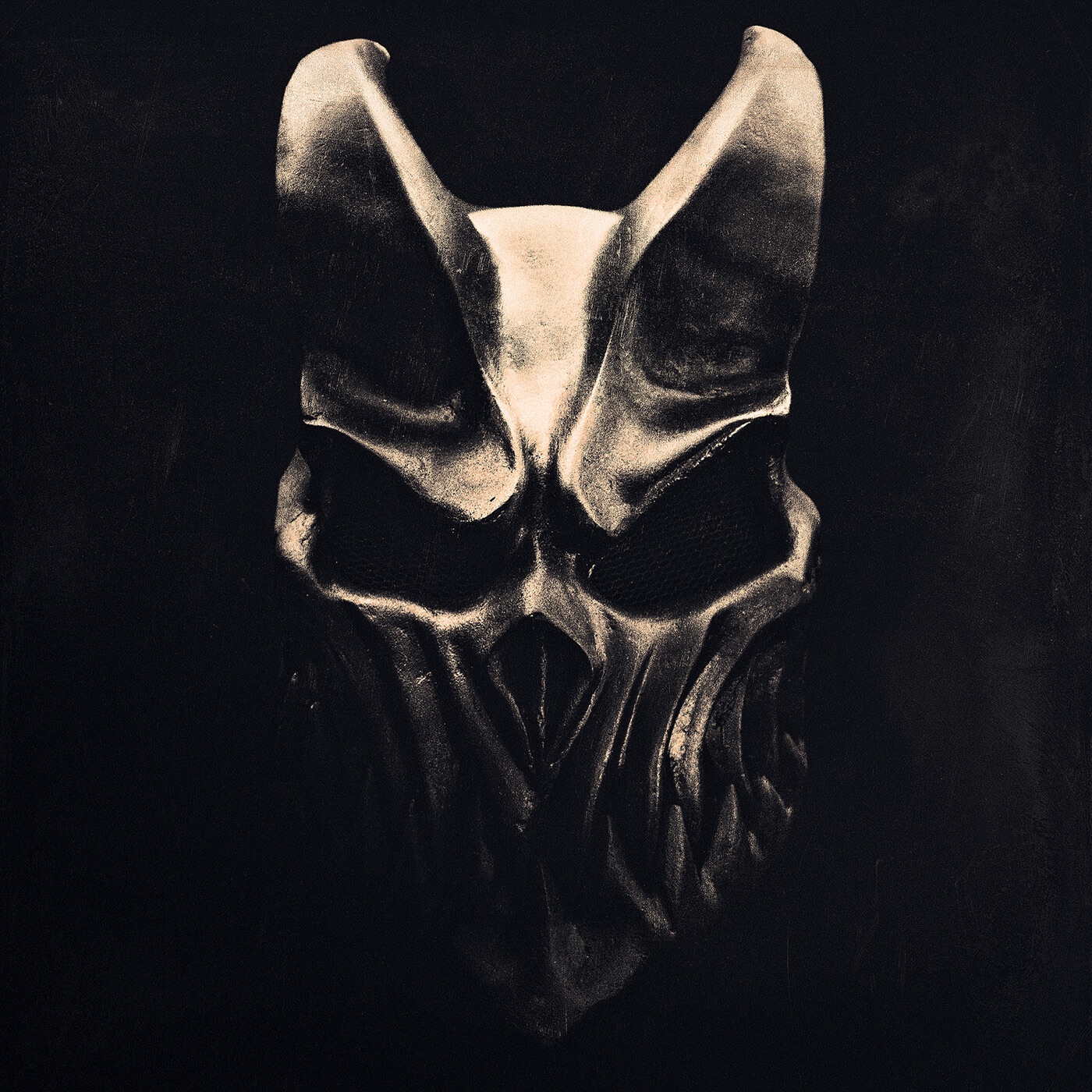
The Russian entry came through the screen. Formed in Yekaterinburg in 2014 by Alex Terrible, who had already built a following on YouTube with vocal covers, and the British guitarist Jack Simmons, Slaughter to Prevail released the Chapters of Misery EP in 2015, signed to Sumerian in 2016 on the strength of how far it had travelled, and put out Misery Sermon in May 2017. Terrible's lowest register comes in like a diesel generator behind an outdoor stage turning over on a cold morning, coughing twice and then catching with a roar that shakes the bolts in the lighting truss. In 2018 it toured North America with Whitechapel, Chelsea Grin and Oceano on the Ten Years of Exile tour.
Lorna Shore spent the decade looking for itself in public. After Maleficium, the New Jersey band released Psalms through Density Records in June 2015 with Will Putney producing, and Flesh Coffin through Outerloop in February 2017. Its singer Tom Barber left in April 2018 to join Chelsea Grin, and in October 2019 the band signed to Century Media. The records of those years are rough drafts of what came next: the black metal tremolo and the technical riffing were already on them, waiting for a singer and an orchestra.
The founders were not finished. They had simply been outnumbered.
Is deathcore dead? The decade's running argument
The question came up every couple of years, and it was always asked with numbers. The MySpace class had charted on first-week sales of ten and fifteen thousand; by 2017 Suicide Silence was selling under a third of that, Job for a Cowboy had stopped releasing records, Despised Icon had needed seven years to follow Day of Mourning, and Bring Me the Horizon was filling arenas with choruses. Measured on the founders, the genre was in retreat. Measured on the founders, it always would be.
Measured on the whole field, the same years looked like the opposite. Whitechapel reached number 10 in 2014, Thy Art Is Murder number 7 and then number 5 in Australia, Shadow of Intent number 2 on the Heatseekers with no label, and the European labels kept signing deathcore bands all decade. What shrank was the first class's share of a market that had grown wider, spread across more countries and more branches, each with fewer sales and more bands. The death notices were counting one rampart and ignoring the field around it. The argument was a war of attrition between two ways of counting, and neither side ever conceded.
The decade closed with the genre spread across more branches than ever, and every one of them still on tour. The orchestral branch had a self-released number 2, the blackened one had Lorna Shore signed to a major metal label, the slam and downtempo branches had their own tours, and Suicide Silence had announced a sixth album, Become the Hunter, for early 2020. Then 2020 shut the halls, and what the branches did next is the story of the deathcore revival of the 2020s.
