
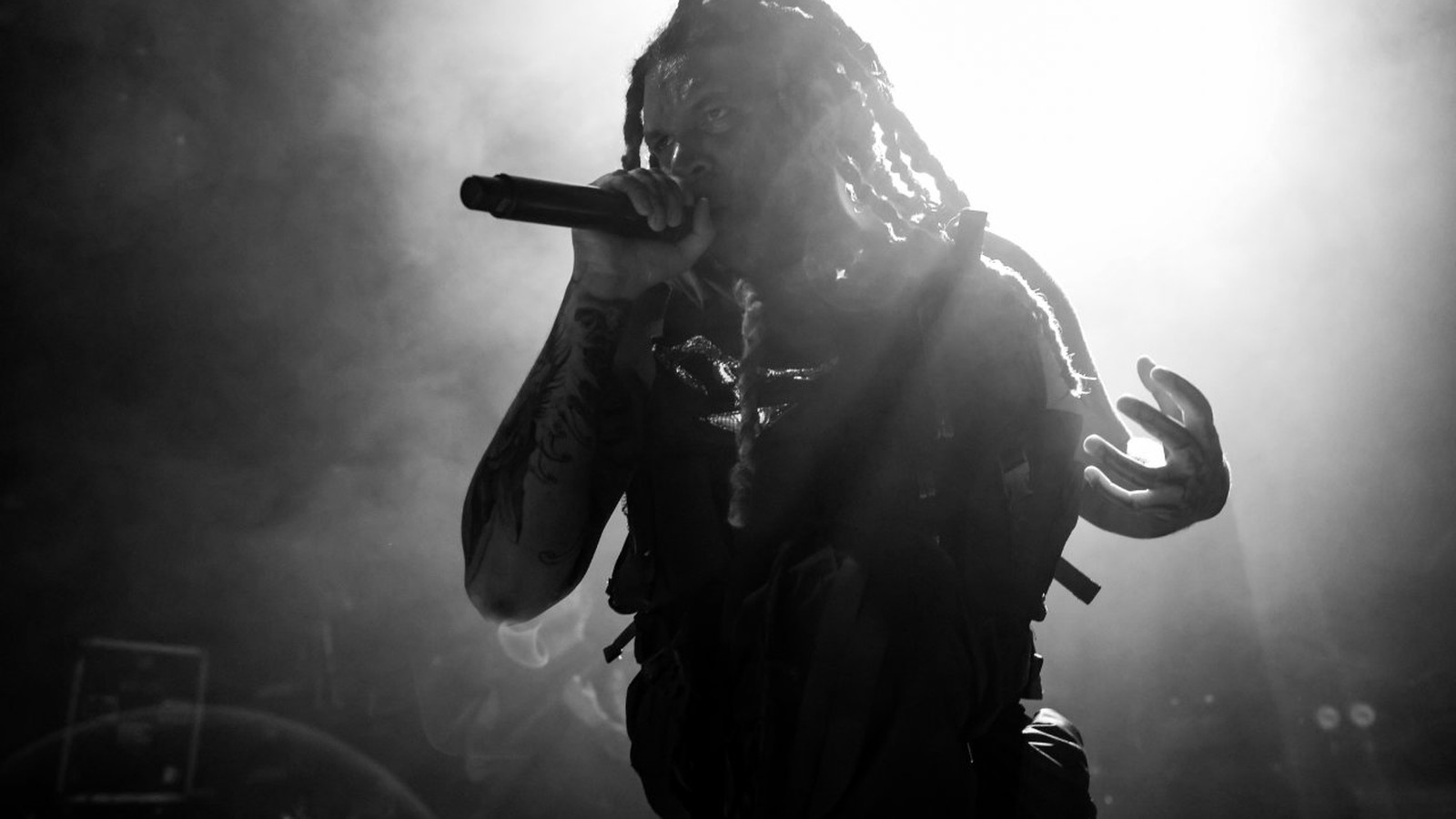
The breakdown is the law in this music, and the lyric sheet has never had one. Deathcore lyrics have covered slasher films and the church, ex-girlfriends and a mother's diaries, an oil pipeline in North Dakota and a swordsman out of a Japanese manga, all screamed over the same half-time drop on the same open string, and nobody in twenty years has managed to write a rule for the words that the next band did not tear up before the ink was dry.
The Knoxville band that took its name in 2006 from the East London district where Jack the Ripper killed in 1888, wrote its debut as a mostly Jack the Ripper concept record, and then turned in 2019 to a record built out of the singer's childhood and his mother's diaries, is Whitechapel. One band, two ends of the sheet. The whole genre took the same road, and most of it took it in public.
Picture the door frame of a practice room in a drummer's parents' basement, the one where his mother pencilled his height every birthday from the age of four. Every rehearsal since 2005 the breakdown has slammed that door against the jamb so hard the wood split along the grain, and the boots of three guitarists have scuffed the same black stripe into the paint at ankle height, never an inch higher or lower. Above the scuffs the pencil marks keep climbing, and beside each new mark somebody has written in marker what the songs were about that year: a horror film, a girl, a landlord, a war, a starship. The scuff at the bottom is the music. The marks climbing the frame are the words.
The riff stayed where it was. The writers kept moving.
Deathcore lyrics, territory by territory
Read straight through, the lyric sheets sort into a handful of territories, and each one belongs to a period without being locked inside it. Gore and horror came first, from the death metal half of the family. The heartbreak lyric came with the MySpace years and the metalcore half. The confessional lyric, about a hard childhood, addiction and grief, grew through the 2010s. Politics and religion run through the whole story, with bands from Sydney and New Jersey among those who wrote about them most plainly. Science fiction, myth and pop culture came in with bands who wrote about video games and manga. And under all of it sits the question every parent of a fourteen-year-old fan has typed into a search bar at midnight.
None of these territories is fenced. A single album can cross four of them, and a band can spend a decade in one and then walk out of it on the next record. What the map shows is where the weight sat at a given moment, and the moments line up with who was holding the pen. The chronology underneath, from the hardcore matinees to the arena bills, is told in deathcore, in order.
There is one complication that runs under every territory at once. Many listeners never hear the words clearly. The voice grinds consonants to dust and the guitars sit on top of it in the mix, so the lyric reaches the floor as rhythm and reaches the brain later, if it reaches it at all, through a booklet, a lyric video or an interview. Deathcore lyrics are therefore read more than heard, and the bands know it. A band that wants its subject understood says it twice, once into the microphone and once to the press.
The riff stayed where it was. The writers kept moving.
| Territory | Where the weight sat | Records that carry it |
|---|---|---|
| Gore and horror | 2000s | Whitechapel, The Somatic Defilement (2007) |
| Heartbreak | mid to late 2000s | Bring Me the Horizon, Count Your Blessings (2006); Emmure, Goodbye to the Gallows (2007) |
| Childhood, addiction, grief | 2010s to now | Whitechapel, The Valley (2019) and Kin (2021) |
| Politics, religion, society | All through; the plainest records from 2015 | Thy Art Is Murder, Holy War (2015); Fit for an Autopsy, The Great Collapse (2017) |
| Aliens, gods, myth | 2008 onward | The Faceless, Planetary Duality (2008); Vulvodynia, Entabeni (2024) |
| Pop culture | 2007 onward | Shadow of Intent's early records; Brand of Sacrifice, God Hand (2019) |
Gore, horror and the shock lyric of the 2000s
Inherited from the death metal shelf along with the blast beat, the gore lyric was the opening salvo of the young bands of 2004 to 2008: the autopsy table, the slasher in the woods, the body in the basement, the charnel catalogue that Cannibal Corpse had been refining since the end of the eighties.
On a fast song the story never survives the trip. The gore lyric of 2006 rode the blast beat the way a slasher tape rides the dying VCR in the back lounge of a borrowed tour bus, the heads chewing the ribbon to shreds and spitting it out through the flap in loops and knots, the picture gone and only a jagged noise left where the plot used to be. The listener caught a word here and there.
Heartbreak on the MySpace page
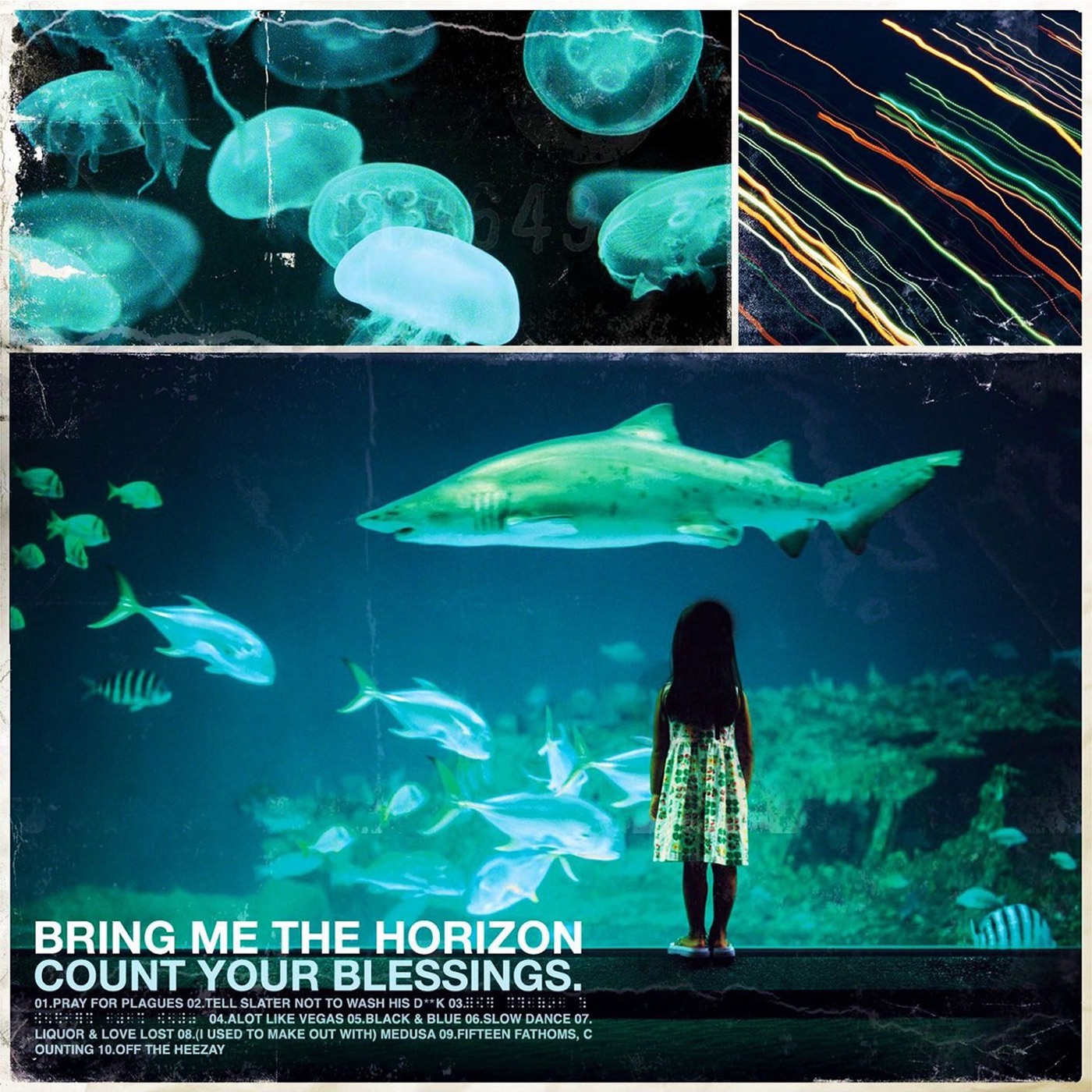
Released by Visible Noise in Britain on 30 October 2006 and by Earache in America the following August, Count Your Blessings was the debut of the Sheffield band whose singer told Drowned in Sound in November 2006 that it was a lot about girls or just growing up, Bring Me the Horizon. Nobody on that record was hunting zombies.
That was the metalcore half of the family speaking. Hardcore had always written about betrayal, the friend who sold you out, the scene that let you down, and when the MySpace generation wrapped that complaint in tuned-down guitars, the friend became a girlfriend and the betrayal became a breakup. The genre's youngest writers wrote about the thing that was actually happening to them, which, for the MySpace generation, was heartbreak.
The Victory Records band that put a single called "10 Signs You Should Leave" out ahead of its Victory debut Goodbye to the Gallows in March 2007 was Emmure, and its titles read like a bedroom wall of the period, the breakup and the grudge next to film quotes and sketch comedy. Under the onslaught of the voice, the song titles still told you the subject.
The heartbreak lyric over a breakdown works like a flip phone thrown at the cinder block wall of a basement show at the exact moment the drop lands, the battery cover, the keypad and the cracked screen flying off in three directions while the room bounces, the text message that started the whole thing still glowing on the floor. It was never subtle. It was not trying to be.
The confessional turn: childhood, addiction and grief
The confessional lyric is the territory where the people in the songs are real, and the facts about them are stated plainly.
The clearest case is a pair of Whitechapel records. The Valley, released by Metal Blade on 29 March 2019, is a concept album about Phil Bozeman's childhood in Hardin Valley, Tennessee. Alex Wade, who plays guitar in the band, told Blabbermouth in April 2019 that a lot of the lyrics were taken straight out of a diary Bozeman's mother kept during those years, that her husband got her addicted to drugs and that this is what ultimately led to her death, and that Bozeman lost both of his parents at a very young age.
Kin followed on Metal Blade on 29 October 2021. The band's debut had been mostly about Jack the Ripper. Here the singer was writing about his own house.
"When a Demon Defiles a Witch", the opener of The Valley, takes its subject from a journal entry in which Bozeman's mother recorded a demon she saw by her fireside, material that guitarist Ben Savage told Dead Rhetoric in April 2019 came from her old journals. Whitechapel had been playing club floors since 2006, and here the words came out of a family drawer.
Further along the wave, the confessional lyric turned inward and got stranger. Will Ramos, the singer of Lorna Shore, built Pain Remains (Century Media, 14 October 2022) as a ten-song concept album, and told Wall of Sound in October 2022 that it is about somebody who lucid dreams, a person who hates their reality and escapes into their dreams. A story told through dreams is a long way from the slasher in the woods.
The songs that began with the slasher in the woods had, by 2019, arrived at a childhood and a mother's diary, and the drop under them did not change.
Holy war, a pipeline and the human target
Released on 26 June 2015 through UNFD in Australia and Nuclear Blast in Europe, reaching number 7 on the Australian albums chart and taking animal rights, religion, politics and war for its subjects, Holy War put religion at the front of the Sydney band's argument, and the band behind it was Thy Art Is Murder. The title was the creed. The breakdowns were the barrage.
Four years later the same band looked outward. Human Target, released by Nuclear Blast on 26 July 2019, put a title track about human organ harvesting at the front of the record, a subject guitarist Andy Marsh said had been brought to his attention as a serious matter that was not receiving much coverage, and carried a song called "Make America Hate Again" further down the list. The breakdown under a song about organ harvesting carries no costume and no joke. Holy War argued with a church. This one keeps a record of what is done to people.
We aren't a politically charged band up on a podium yelling at people … But we absolutely raise important questions in the lyrics.
Will Putney, Fit for an Autopsy, Blabbermouth, 19 January 2017
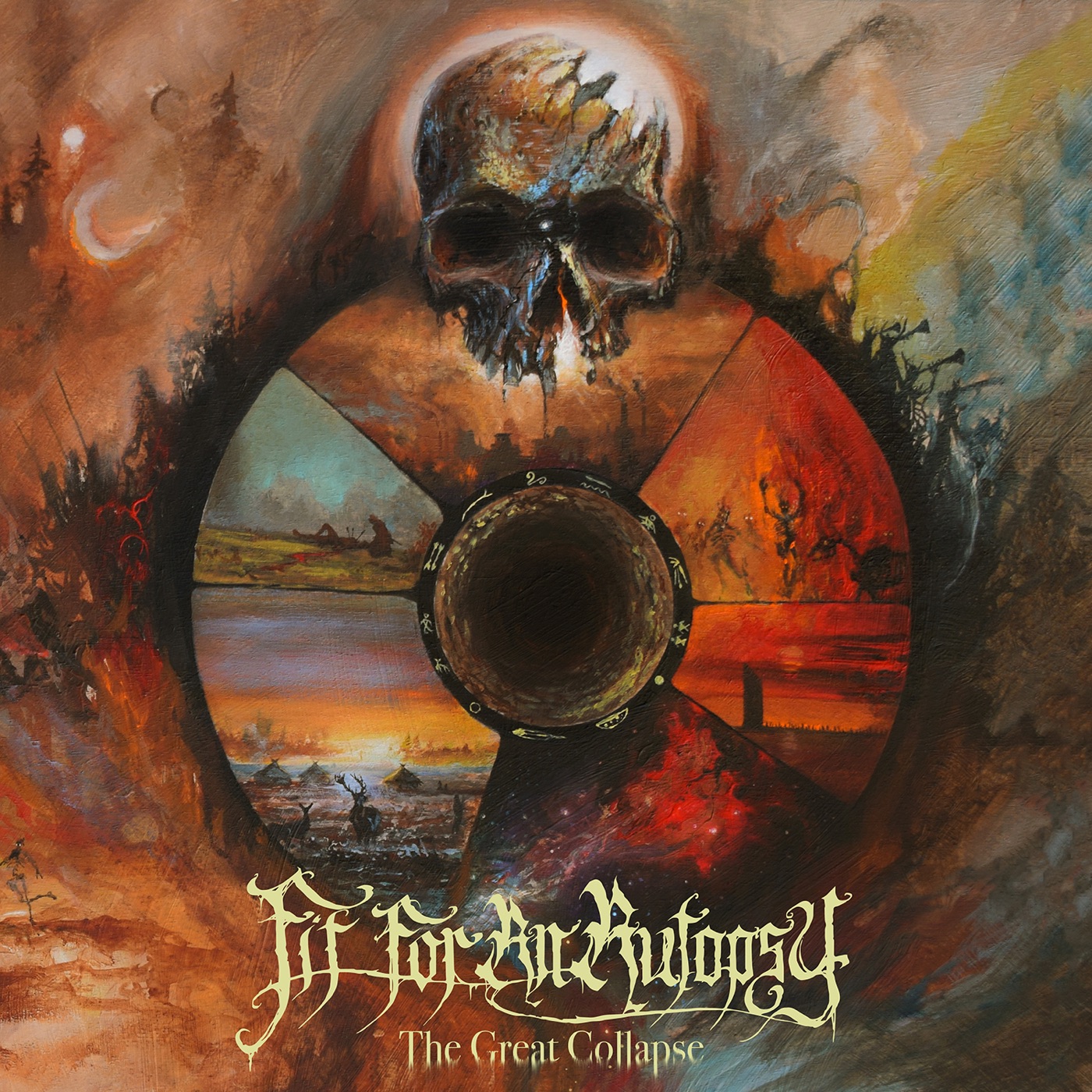
Putney's line deserves an argument. Put out on 17 March 2017 through eOne and Good Fight in North America and announced as a reflection on the chaotic state of mankind's relationship with the world, The Great Collapse came from the New Jersey band that wrote "Black Mammoth" while it was in the studio and the protests against the Dakota Access Pipeline were breaking out at Standing Rock, and that band was Fit for an Autopsy. The profits from a CD and shirt bundle sold with the single went to the Standing Rock Sioux Tribe's pipeline fund. That is not a podium. It is closer to a collection tin at the merch table.
The two bands bracket the political lyric between them. Thy Art Is Murder writes as a prosecutor, naming religion, politics and war as the accused. Fit for an Autopsy writes as a witness, setting down what it sees and leaving the verdict to the listener. Both records, the prosecutor's and the witness's, still turn on the breakdown, and in both cases the band said what the songs meant in interviews, because the voice alone would never have carried it.
Aliens, gods and the old stories
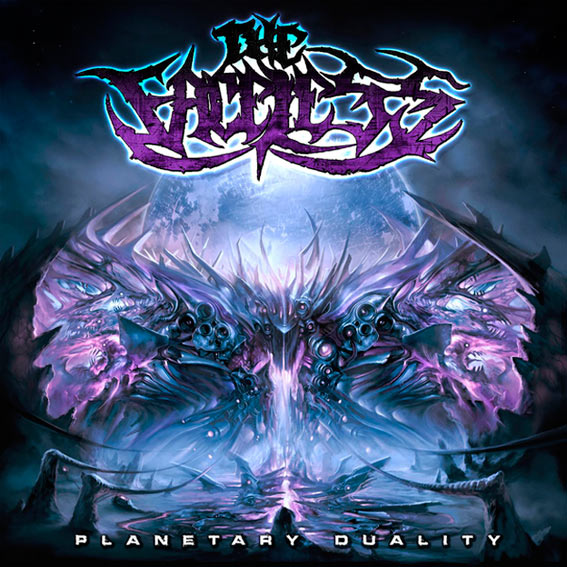
Science fiction got into the lyric sheet through the technical end of the family. Released by Sumerian on 11 November 2008, entering the Billboard 200 at number 119 with around 5,600 copies sold in its first week and built as a concept about an extraterrestrial race controlling the world, Planetary Duality came from the Los Angeles band The Faceless. It handed the next wave a subject as big as the riffs.
Rings of Saturn took the hint and ran with it. The Bay Area band built its music on themes of alien life and outer space, and space became a corner of the genre.
The myth lyric came later and came from home. In the 2020s the bands began reaching into old stories: Slaughter to Prevail put the witch of Slavic folklore in the title of "Baba Yaga" in 2021, Vulvodynia said it built Entabeni (Unique Leader, 5 July 2024) on African folklore, from old stories in poems, books and the spoken memory of the vocalist's family, and Mental Cruelty described "Nordlys", a single from Zwielicht (Century Media, 23 June 2023), as about ancient sagas of the northern lights. Extraterrestrial rulers in 2008, a hut on chicken legs in 2021. The genre's pantheon kept widening; the drop under it stayed exactly as wide as it always was.
Berserk, Halo and the films the songs borrowed
The pop-culture lyric is the most distinctly deathcore habit on the whole sheet, and it started earlier than its reputation. The track list of Emmure's 2007 debut already took titles from Taxi Driver, from a Dragon Ball film and from Chappelle's Show. The difference in the 2020s is that the references stopped being in-jokes and became whole worlds.
Shadow of Intent took its name from an assault ship in the Halo games and began by writing strictly Halo-themed music. By Melancholy, released on 16 August 2019, the band had left that behind for stories of its own, but the habit it had shown the genre was already loose: a deathcore record could be built from one fictional world, and the floor learned the whole canon.
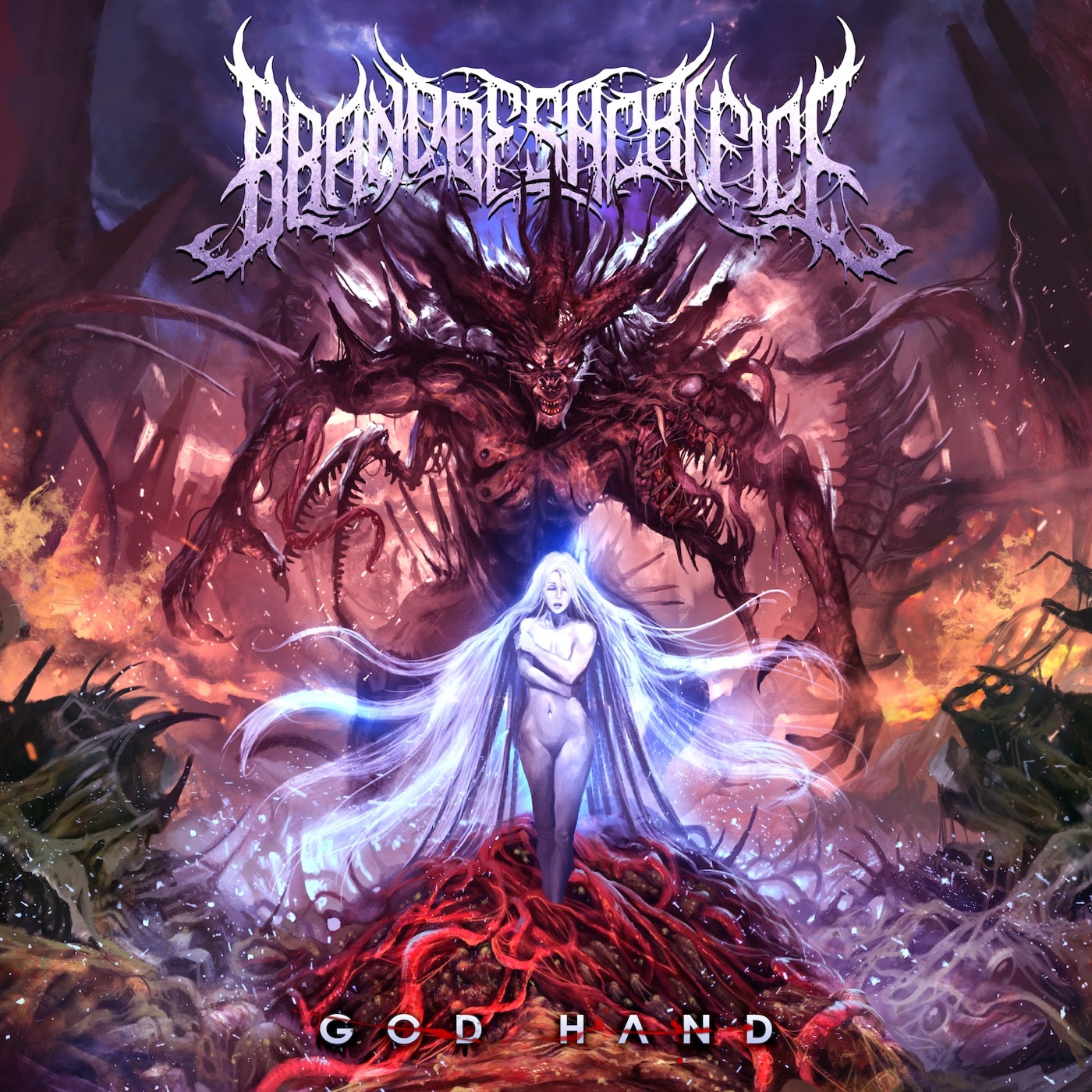
Formed in Toronto in 2018 after the dissolution of The Afterimage, inspired by the work of the manga artist Kentaro Miura and above all by his series Berserk, and debuting in 2019 with God Hand on Unique Leader, the band that turned one comic into a whole catalogue's worth of lyric sheets is Brand of Sacrifice. Kyle Anderson, its singer, told Exclaim in March 2021 that the series' themes can be applied to everyday life in a human capacity outside of its fantasy world.
"Lifeblood", the closing title track of the band's second album, released independently on 5 March 2021, was reworked later that year with Will Ramos of Lorna Shore as a guest. The pairing says something about the 2020s: the singer of Lorna Shore guesting on a song from a band whose lyrics draw largely on a manga. The source does not matter to the floor. It matters to the kid who recognises the reference on the shirt.
Records built from start to finish as one story, from Planetary Duality and The Valley to Pain Remains, have become a shelf of their own.
A deathcore record could be built from one fictional world, and the floor learned the whole canon.
Is deathcore satanic?
No, not as a genre, and the records make the answer easy to check. The question gets typed into search bars by people who have seen a pentagram on a shirt or heard a black metal shriek over a breakdown, and the honest answer is that deathcore contains a few bands that use occult imagery, some that attack religion, and a scene of bands who are openly Christian.
The Christian side is not a footnote. Impending Doom calls its style gorship, a blend of gore and worship that the band says means worshipping God through gore-sounding music, and the Christian label Facedown Records signed it in January 2007 and released The Serpent Servant in 2009. At the other end, Holy War is an argument against religion, not a hymn to its enemy. To the faithful, a song that attacks a church is heresy. It is still not devotion to the devil.
The occult corner is real and small. Released by Nuclear Blast on 6 October 2023, Necromanteum by Carnifex takes its idea from the psychomanteum, a mirrored room built for contacting the dead, and asks what would happen if a man used one to speak with death itself, a death the band pictured as an intellect rather than a monster. It is a ghost story with a philosophy degree. It is not a black mass.
Even Lorna Shore built Pain Remains on a story about a lucid dreamer escaping his reality, by its singer's account, rather than anything to do with a devil.
The lyric sheets prove one more thing along the way. A genre that can carry gore, heartbreak, grief, protest, aliens, manga and scripture over the same riff is not defined by any of them, and that is the strongest evidence for the boundary argument that deathcore is metal, a style defined by what the band plays rather than by what the singer believes. The words follow the people writing them. The music decides what the genre is.
That is where the subject ends up. Twenty years of lyric sheets show a genre that started by borrowing its subjects from the horror shelf and the breakup, and kept going until its writers were putting their own families, their politics and their reading on the page. What stayed fixed was everything underneath the words. What changed was everything the words were about.
