
In 1799 a dried skin reached London from New South Wales with the bill of a duck, the fur of an otter and webbed feet, and the naturalist who examined it at the British Museum, taking a pair of scissors to the pelt at the base of the beak and cutting in search of the stitches a prankster must have used to sew two animals into one, was George Shaw. He found no stitches. There were none to find.
The weird metal subgenres get the same scissors from nearly everyone who meets them for the first time. The listener goes in along the seam between the riff and whatever has been sewn onto it, an accordion, a horsehead fiddle, a pop idol's microphone, a Christmas carol, hunting for the thread that proves the whole thing a joke, and the styles worth an evening are the ones where the blade finds no thread at all.
The trio of Japanese teenagers set before a band playing at power metal speed, with choreography taken from the idol business and a producer who had planned the whole collision on paper before a single riff was taped, went out under the name Babymetal, formed in 2010 as a unit of the idol group Sakura Gakuin. Six years later it was headlining Wembley Arena. Nobody has found the stitches since.
Weird metal subgenres, and the test they have to pass
Weird is a description, not a verdict, and it says nothing against the people who pack the halls for these bands. The test that matters is harder than strangeness. The foreign part has to carry weight inside the song rather than decorate the sleeve, and the style has to outlive its first stunt, either on a second record that meant it or in a second band that took it up. Plenty of novelties fail. A handful pass.
Every one that passes keeps at least one part of the old engine running under the strange bodywork, a pair of guitars in harmony, a drummer on double kick, a chorus built for a hall. That is what makes them branches of the family rather than visitors to it, and how the family came to divide in the first place is the business of the subgenres of heavy metal. The narrower question is how far a branch can bend before it breaks.
Idols, trolls and a village dance band
"Gimme Chocolate!!", from the debut album Babymetal of 2014, is the song that carried the project out of Japan, and its method is a collision nobody had tried at that scale: three voices trained for pop choreography over a backing band, the Kami Band, playing riffs heavy enough to strip the paint off any idol stage set in Tokyo. The joke reading lasts about one listen. The drummer does not play like a joke.
The Helsinki band that took humppa, the brisk two-step of Finnish dance halls, and fed it into black metal the way a farmer feeds a hawthorn hedge into a woodchipper, whole limbs going in at one end and spraying out of the other as green splinters at twice the speed, called itself Finntroll. Formed in 1997, it sang in Swedish, gave its keyboards the wheeze of a village accordion and built its whole mythology on the troll.
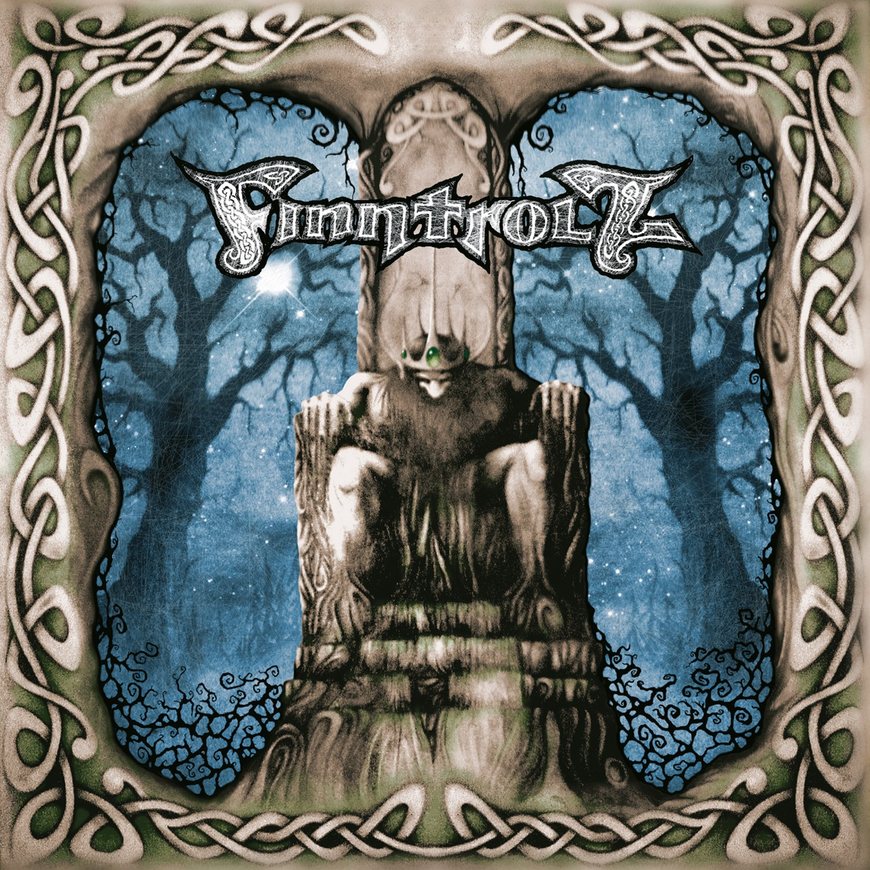
Released in April 2004 by Spinefarm in Finland and by Century Media abroad, Nattfödd is where the woodchipper ran flat out, and its advance single "Trollhammaren" set a bouncing dance floor beat under a rasp dragged up from the black metal cellar and took it onto the Finnish singles chart. The dance halls and the black metal crowd both took it.
The Lahti band that followed with a real accordion and a fiddle on the stage and a catalogue of songs about beer and vodka was Korpiklaani, and between the two of them folk metal found its loudest dance floor. That branch keeps its own history on the folk metal shelf.
Horsehead fiddles and a swing band from Sweden
The Ulaanbaatar four who put a horsehead fiddle and a three-string lute where the rhythm guitars would normally stand, and sang over them in the throat style of the steppe, one voice holding a drone while a whistle of overtones rides above it, are The Hu, assembled in 2016 by the producer Dashka. They call the result hunnu rock, after the Huns. "Wolf Totem" and "Yuve Yuve Yu" went up as videos late in 2018 and ran to tens of millions of views within months.
The Gereg, the debut album released by Eleven Seven on 13 September 2019, holds the argument that settles the weirdness question. Take the fiddles away and the songs are mid-tempo stomps built on a riff and a chant, heavy metal's oldest skeleton; leave them in and the skeleton gets up and walks. The bow rasps across the horsehair like a whetstone dragged down a scythe blade before the first cut of the summer. Nothing about it sounds borrowed.
The Swedish ensemble that hired a trained soprano and a cellist, set both over distorted guitars and then taught the whole machine to swing like a dance orchestra of the 1930s, turned out to be Diablo Swing Orchestra. The Butcher's Ballroom, its debut of 2006 with AnnLouice Lögdlund singing and Johannes Bergion on cello, marches a waltz into a riff and a riff into a tango without once stopping to explain itself. Avant-garde metal is the name on the shelf.
Carols, cartridges and a skull on a flag
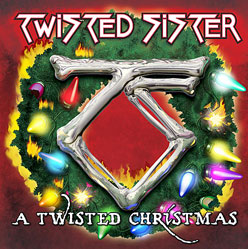
The Long Island five who took a Christmas carol and bolted it onto the frame of their own most famous hit were Twisted Sister. Recording A Twisted Christmas for Razor & Tie in 2006, they set "O Come, All Ye Faithful" to the arrangement of "We're Not Gonna Take It", a song Dee Snider has admitted the carol helped shape in 1984, and by his own account the two still had to be shoehorned together.
Christmas metal sounds like the cheapest gimmick on the list, and its pedigree says otherwise. Rob Halford put out Winter Songs in November 2009, and Trans-Siberian Orchestra, the project that grew out of the Savatage camp in the nineties, turned seasonal metal into one of the largest touring operations in North America. It is a salvo fired once a year. The shells are always the same half dozen carols.
Some jokes stay jokes, and the fairest judge is the band that made one. The singer who coined the word Nintendocore for his band's keyboards, which chirp and bleep like a games console dropped into a bath with the power still on over a metalcore rhythm section, was Nathan Winneke of Horse the Band, and the band spent years afterwards trying to shake the word off. The sound stuck. The name stuck harder, and the rest of that story belongs to metalcore.
Pirate metal is the joke that grew a fleet. Running Wild in Hamburg raised the skull and crossbones on Under Jolly Roger in 1987 and meant every inch of it, and Alestorm in Scotland took the flag back to sea twenty years later with a keytar, a shanty chorus and a grin, a voyage logged in full on the power metal shelf.
What the strange branches prove
| Style | The foreign part | The heavy metal part kept | Where to start |
|---|---|---|---|
| Kawaii metal | Idol pop voices and choreography | Speed metal drumming, twin shred leads | Babymetal, Babymetal (2014) |
| Trollmetal | Finnish humppa dance beat | Black metal rasp and tremolo guitar | Finntroll, Nattfödd (2004) |
| Hunnu rock | Horsehead fiddle, lute, throat singing | The riff and the chant at a march | The Hu, The Gereg (2019) |
| Swing metal | Swing jazz, soprano, cello | Distorted riffs | Diablo Swing Orchestra, The Butcher's Ballroom (2006) |
| Christmas metal | Carols | Twin guitars and the hall chorus | Twisted Sister, A Twisted Christmas (2006) |
| Nintendocore | Eight-bit keyboard sounds | A metalcore rhythm section | Horse the Band, The Mechanical Hand (2005) |
| Pirate metal | Sea shanties | Speed and power metal riffs | Running Wild, Under Jolly Roger (1987) |
Put the list together and a pattern comes out of it that purists rarely admit. Every strange branch grew from the most conservative wood in the family. Babymetal borrowed speed metal's drumming and power metal's twin leads, The Hu borrowed the oldest skeleton of all, the Christmas records borrowed the hall chorus, and even Finntroll kept the black metal rasp intact while everything underneath it danced. The heresy is always on the surface. Underneath runs the old machine.
Every strange branch grew from the most conservative wood in the family.
The faithful have met most of these bands with a sneer at some point, and the sneer rarely survives the first live show. A spectacle built on a gimmick lasts a season, while one built on a band that can play lasts a decade, and Babymetal and Finntroll are both well past that mark.
The opposite instinct, to bring nothing foreign in at all and push the old subjects of swords, kings and lost kingdoms as far as they will go, produced a branch that looks conventional and runs stranger than it sounds: epic heavy metal, where a single song can take ten minutes and the oddest thing in the room is that nobody in it is joking.
