
On 2 February 2025 the Grammy for Best Metal Performance went to a recording that sets an opera mezzo-soprano and a French Revolutionary street song over down-tuned guitars, and the band that had first played it from the windows of the Conciergerie at the Paris Olympic opening ceremony, its kick drums hammering at the walls of the old prison, was Gojira, with Marina Viotti and Victor Le Masne beside it. Nobody in the hall asked whether it counted. Outside the hall, plenty did.
What counts as heavy metal today is not decided by any single witness. It is decided the way a contested painting is decided, by four kinds of evidence heard together: what the record sounds like, whom the band learned its trade from, who turns up to hear it, and what the band calls itself. The four rarely agree. When they split they do not carry equal weight, and the order of that weight is the whole argument.
In 1937 the most respected Vermeer scholar alive, Abraham Bredius, looked at a Supper at Emmaus nobody had seen before and hailed it as a masterpiece, and the painter who had made it, grinding his pigments into Bakelite, baking the canvas in an oven until the paint set hard as enamel and rolling it over a cylinder to crack the surface into three centuries of age, was Han van Meegeren. The brushwork convinced the expert. The signature was on the canvas. Rotterdam queued to see it.
What finally brought it down was the evidence nobody could paint: a history of ownership that led nowhere, and after his confession in 1945, a resin in the paint layers that did not exist in seventeenth century Delft. Style, signature and crowd had all been counterfeited. Ancestry could not be. The borders between the types of heavy metal were drawn by the same four witnesses, and they fool a listener in the same order.
What counts as heavy metal, starting with the sound
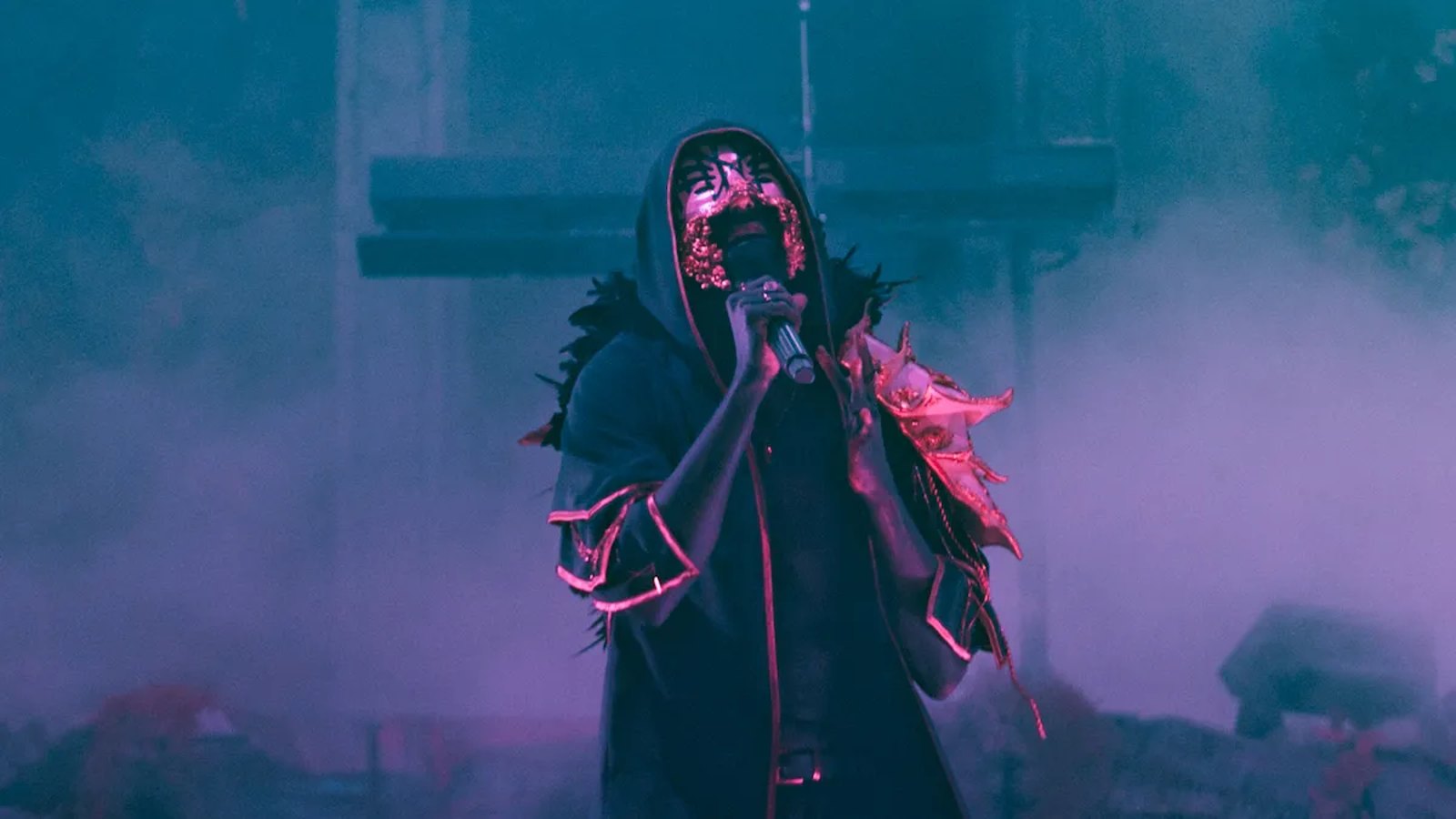
The sound is the first witness and the loudest, and it is the easiest to hire. The masked London band whose Even in Arcadia went to number one on the Billboard 200 in May 2025, a record that moves from a falsetto ballad to a djent riff that comes down on it like a power station cooling tower dropped by its charges, a hundred metres of concrete folding onto its own feet, is Sleep Token, and "Emergence" does it inside a single song, a saxophone included.
A riff like that proves the band owns the equipment. It does not prove much more. Metalcore bands, pop producers and film composers all own the same drop-tuned guitars now, and a sound can be rented for four bars and handed back before the chorus. Sound is necessary. On its own it has never been enough.
The part of the sound that does hold up is a subtraction. Take away the voice and the production and ask whether the riff still carries the song. On Even in Arcadia it carries some songs and not others, which is exactly why the record is argued over; on "Mea Culpa" it carries the whole performance, opera singer included.
Who taught whom

The Swedish singer who sang in a death metal band called Repugnant before he invented a papal character and dressed a group of anonymous musicians around him was Tobias Forge, and Ghost has since made records that owe as much to the radio rock of the seventies as to anything heavy. Meliora, released by Loma Vista in August 2015, carried "Cirice" to the Grammy for Best Metal Performance the following February.
Ancestry is why nobody has ever needed to fight that verdict out. The riffs on Meliora are hooks as often as they are blows, but the pedigree behind them sits in plain view, Blue Öyster Cult and the first two Mercyful Fate albums and the Swedish underground Forge came up through. The same witness works in reverse. A young band can get every sound right with no ancestry behind it, and within a year it reads as a costume.
A band can mislead about what it is for one album. Its teachers cannot mislead about it at all.
Declan Rourke, KaosMetal
Gojira's case turns on this witness as well. The brothers Duplantier came up through death metal, and Joe Duplantier played bass on Inflikted, the 2008 debut of Cavalera Conspiracy, the band the two brothers who founded Sepultura put together after years apart. An opera singer on one single does not undo that. She is a guest in the house, not its new owner.
The audience, and the field that votes with its feet
The audience is the slowest witness and the one that ratifies the rest. A band belongs, in the end, where its listeners carry it, and the listeners of 2025 carried Sleep Token to the Saturday night headline slot at Download in June, the weekend Donington Park, the motor racing track that has hosted hard rock and metal festivals since 1980, handed its main stage to a band many of the faithful would not file as metal at all. The field decided. The regulars argued.
The trouble with the audience is that it overlaps. A festival crowd holds the fans of five genres at once, and the teenager who bought a Ghost ticket in the spring may have bought a pop ticket the month before. Audience evidence counts only over years, when a band's listeners keep buying its records from the metal rack and keep turning up at the metal weekends after the fashion has moved on. The largest crowd any metal band has ever faced, the television audience for the Paris ceremony, proved nothing at all about the genre, because almost none of it had chosen to be there. An audience testifies only when it bought the ticket. One sold-out tour is a rumour. Ten years of them is attested.
An audience testifies only when it bought the ticket.
What a band calls itself
The weakest witness is the band's own word, because it costs nothing and moves with the market. The American singer who began as a deadpan pop act on YouTube and then set that pop voice over riffs heavy enough to crack the plaster off a studio wall was Poppy, and "Bloodmoney" earned her a nomination for Best Metal Performance at the Grammys of 2021, the first for a solo woman since the category was created in 1990. An entry form for an awards category, a genre tag on a streaming service and a line in a publicist's handout are the same witness, written by the same interested party. The entry was a claim. The riff backed it.
Self-description cuts in both directions. Bands have spent half a century disowning the word when it hurt airplay and wearing it when it sold tickets, and the same band can do both inside one decade. Taken alone, a band's word proves only what it wanted that year. Taken with the other three it is the tiebreak of last resort, and it rarely has to be used.
When the witnesses disagree
| Evidence | What it proves | How it misleads | A case from the 2020s |
|---|---|---|---|
| Ancestry | Who taught the band its trade | Rarely; it cannot be invented after the fact | Ghost, Gojira |
| Sound | The band owns the riff and the weight | Anyone can rent it for four bars | Sleep Token, Even in Arcadia (2025) |
| Audience | Where the listeners file the band | Crowds overlap across genres in any one year | Sleep Token headlining Download (2025) |
| Self-description | What the band or its label claims | It moves with the market | Poppy, "Bloodmoney" (2020) |
Ranked, the four come out in a plain order: what a band was taught, what it plays, who stays for it, and what it calls itself, in that order of weight. A record with the first two on its side counts, whatever its singer calls it.
By that reckoning Gojira counts without a hearing, Ghost counts on ancestry against a sound that often leans toward the radio, and Sleep Token is metal in the family sense and not yet heavy metal in the narrow one, a heresy its own audience will settle long after the critics have gone home. The plainer, practical side of the same question, one first record for every branch, is laid out as different types of heavy metal, explained.
