
Eleven years lie between the earliest date anyone defends for power metal and the latest, from a Munich basement in February 1976 to a Hamburg studio in the spring of 1987, and every year inside that span has a pressing date behind it, a label behind the pressing date and somebody willing to print it as the answer. So when did power metal start? The question has four answers. Three of them date something other than the music.
Dating is a physical business before it is a critical one. A genre handed a birth year is a violin sawn open across the belly so that the growth rings in the spruce can be counted at the joint, and the number that comes back gives the year a tree stopped growing on a mountainside, never the year a maker carved the scroll from a maple block, glued the top down and put the thing into a player's hands. The parts carry one date. The instrument carries another, and the distance between them is the whole argument.
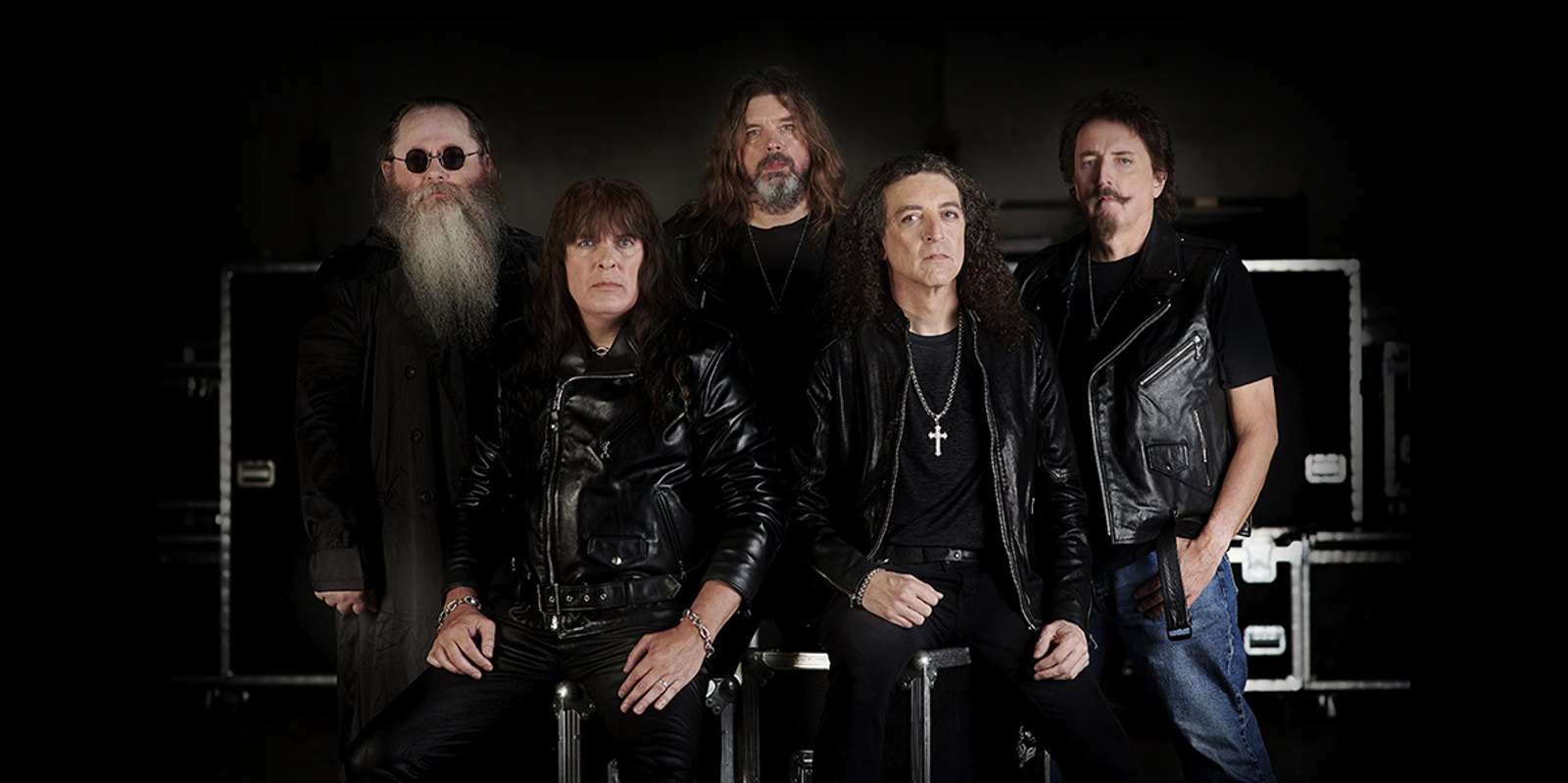
The four men whose debut album is cited more often than any other record when the year is fought over, a Hamburg quartet whose lead guitarist was also, for one album only, the man at the microphone, were Helloween. Their record is not the only candidate. It is the only one that passes more than one test at a time.
Where each part of this music came from, and out of whose hands, belongs to the years before the genre had a name. Dating is the narrower job. It asks which single year survives being held against a person holding one of the other three.
When did power metal start, and what a date has to survive
Four tests do the work, and they are almost never named out loud. The first dates the genre from the first circulation of the words. The second dates it from the first record on which every element of the style sounds at once. The third dates it from the record that everything after it was cut to match. The fourth dates it from the year the style stopped belonging to a single band. Each is defensible, and the four return years from 1982 to 1990.
One of them collapses the moment any weight is put on it.
The dates that belong to the ingredients

Rainbow released Rising on 17 May 1976, and the case is stronger than it looks: Cozy Powell's drum figure under "Stargazer" marches instead of swinging, Ritchie Blackmore builds his solos out of broken chords borrowed from the baroque, and Ronnie James Dio sings a wizard, a stone tower and an enslaved army in a register tenors spent the next decade trying to reach. Three of the genre's parts sit on that record. The tempo does not, and neither does the unbroken double kick the style would later stand on.
Two years later the men who had spent a decade sanding the blues off heavy rock put "Exciter" at the head of Stained Class, released in February 1978, and supplied the two parts Rainbow had not: Les Binks driving a continuous double bass pattern at a speed almost nothing in rock had tried, and Rob Halford holding the top of his range for five and a half minutes without coming down. That band was Judas Priest. Accept added the precision in 1982 with "Fast as a Shark".
A genre handed a birth year is a violin sawn open across the belly so that the growth rings can be counted at the joint.
None of which makes 1976 or 1978 a start date, and the record shows why. Those albums supply timber. A sound whose elements have never been gathered into one band has no birthday, and both dates fail the second test, because on neither record does everything sound at once.
A name with nothing under it
Metallica circulated a demo tape in 1982 under the title Power Metal, taken from a business card the bassist Ron McGovney had printed for club promoters, and through those same years American writers used the phrase loosely for anything faster and heavier than the radio would carry. Nobody was naming a style. They were reaching for a compliment.

In America the phrase settled on the riff-first, keyboard-free school of Jag Panzer and of Manilla Road, whose Crystal Logic came out of Kansas in December 1983 with a guitarist writing the words, singing them and playing every lead himself. Nothing about that record predicts a tenor.
Which makes the name test worse than useless. The words in 1982 pointed at a music sharing almost nothing with the one they name now: no tenor, no keyboard, no major chorus built to be sung back by a field. Dating a genre by its label is a concert bill printed weeks in advance and pasted across every hoarding in town, the programme swapped at the interval, the paper still shouting a work nobody played that night. The bill gets torn down eventually. The date on it dates the printer.
1985, when the parts arrived in one band
Noise Records, the Berlin label Karl-Ulrich Walterbach founded in 1983, spent 1984 signing German bands raised on all of the above. Grave Digger put out Heavy Metal Breakdown on 20 October 1984 and Running Wild released Gates to Purgatory that December. Both are fast. Both are melodic. Neither is power metal, and the descent is audible in what they still sound like, the New Wave of British Heavy Metal played by German hands at speed, with the singer kept well below the roof.
Then, on 29 April 1985, the same label issued a five-track EP called Helloween, and its opening song "Starlight" runs the whole apparatus past a listener in five minutes: sixteenth notes on two kick drums under a riff that never slows to meet them, twin guitars harmonised in thirds, a chorus in a major key that lifts instead of grinding, and a guitarist singing it because nobody else in the room would.
The full debut followed on 18 November 1985, a date attested on the original Noise pressing. Walls of Jericho is where the second test is passed, because every element of the style is present on it and audible together, and it still carries one hole wide enough to argue through: Kai Hansen is a fine singer of his own songs and he is not a tenor. The voice the genre would end up requiring was not in the band yet.
1987, and the year the genre stopped being one band
Michael Kiske had joined by the time Keeper of the Seven Keys Part I was released by Noise on 23 May 1987, and "Future World", its second song, does in three minutes what the whole argument turns on: the same tempo, the same harmonised leads and the same major chorus as eighteen months earlier, with a clean tenor sitting on top of them where a guitarist used to stand. A Japanese pressing on Victor beat the German original into shops by a month, on 21 April, but the record the German press and the band's own label call the release is the Noise LP. That is the hole filled. The third test dates the genre here, and by common consent it is the record the style was measured against afterwards.
That third test is the strongest of the four, because it measures consequence rather than intent. An organ voicer builds one pipe of a rank first, gets its speech right, then works down the row nicking the mouths and snipping the metal of every other pipe until each one answers in the same voice, and the Keeper records are that first pipe. Hundreds of bands were cut to match them. Nobody was cut to match a business card.
Then the fourth test, the one that turns a band into a genre. Rage had put out Reign of Fear on Noise on 12 May 1986, Blind Guardian released Battalions of Fear on the small German label No Remorse on 18 May 1988, and Gamma Ray arrived on 26 February 1990 with Heading for Tomorrow, recorded after Kai Hansen left the Hamburg band. By the end of the decade the thing had the shape of a brass band contest, four bands at one hall playing the same test piece, the adjudicator behind a shuttered screen so that nothing but the sound can be judged, the windows going out along the side of the room as each takes it at the marked tempo. A style with one exponent is a band. A style with four is a genre, and where those rooms stood is the subject of where did power metal originate.
| Date | Record or event | What it fixes | Does it hold? |
|---|---|---|---|
| 17 May 1976 | Rainbow, Rising | The fantasy libretto and the neoclassical solo | No: no tempo, no double kick |
| February 1978 | Judas Priest, Stained Class | Double bass speed and the top-register voice | No: two parts, in another band |
| 1982 | Metallica's demo tape Power Metal | The first circulation of the words | No: the words named other music |
| 18 November 1985 | Helloween, Walls of Jericho | Every element inside one band at once | Yes, with the tenor still missing |
| 23 May 1987 | Helloween, Keeper of the Seven Keys Part I | The record the genre was cut to match | Yes |
| 1988 to 1990 | Blind Guardian, Gamma Ray | The style in more than one band's hands | Yes, as confirmation rather than a start |
Two dates survive, and they are not in competition. 18 November 1985 is when the parts stopped being separate. 23 May 1987 is when the finished thing acquired the voice every later band copied, which is why most arguments about the year are really arguments about whether a genre starts when it exists or when it is recognised. Anyone who wants one year should take 1985 and say what it means. Everything earlier dates an ingredient. Everything later dates the imitation.

