
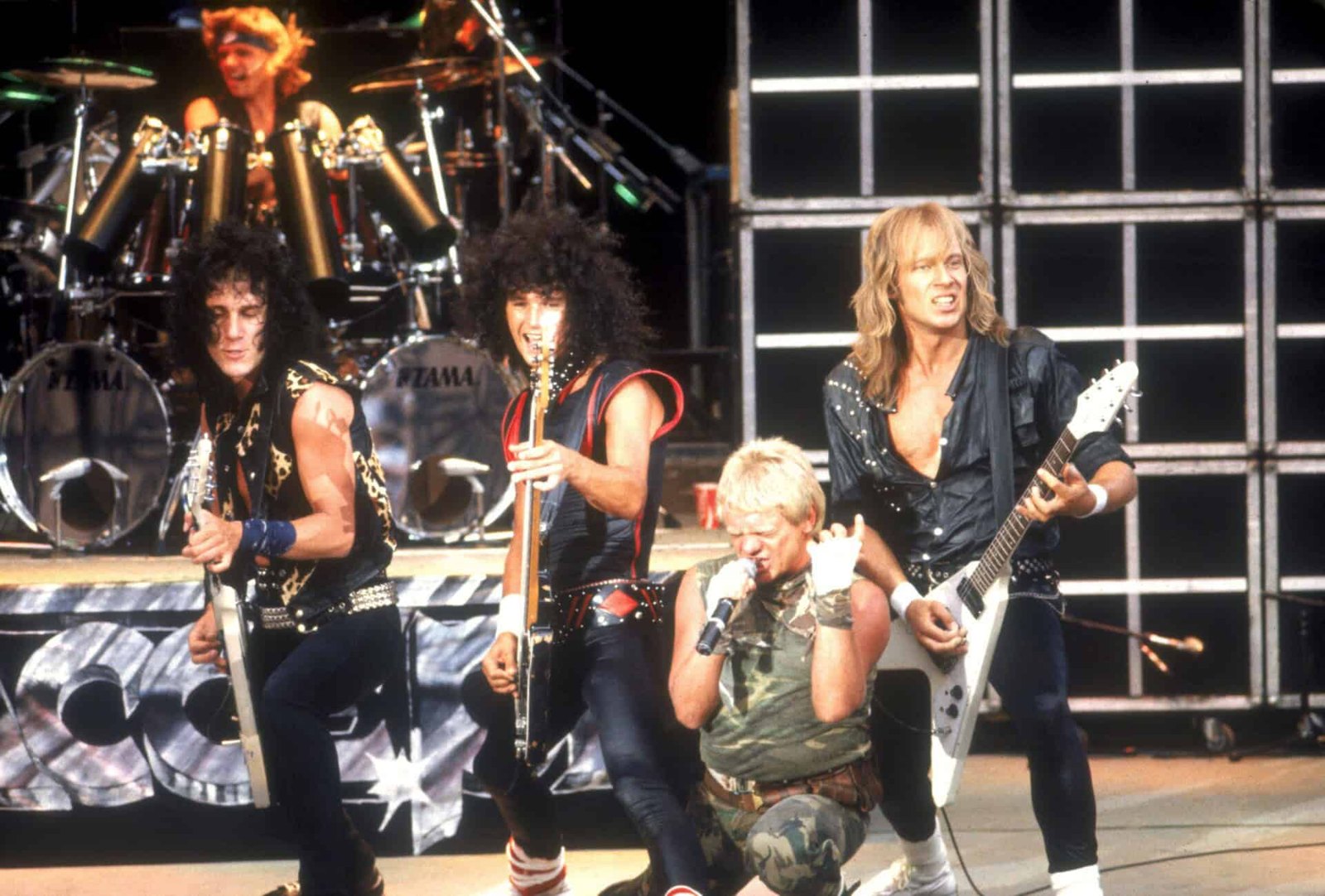
Between November 1986 and January 1987, in a hired room in Hannover through a north German winter, four men from a port city about 150 kilometres up the road finished the album every later band in the style would be cut to match, and the band was Helloween.
The players lived in Hamburg. The room, Horus Sound Studio, stood in Hannover. The label paying for the tape, Noise Records, kept its office in West Berlin, roughly 290 kilometres east of the band's front doors. Three cities, one triangle, and inside it a genre picked up the sound it has never put down since.
So where did power metal originate? Two answers, and they sit on different continents. The phrase is American and it was in print before the music existed. The music that now answers to it was assembled in the north of Germany between 1985 and 1988, inside a few hours of road, and the reason is a matter of distance rather than of taste.
A style can belong to a building the way a peal belongs to its tower. In the basilica on the Venetian lagoon two organ lofts face each other across the nave, and the choirmasters who held the post there wrote for that argument, voices and brass answering from opposite galleries at a span no other church in Europe could offer, battering the vault until the gold tesserae worked loose from the mortar and came down into the stalls. Nobody wrote that music anywhere else. There was nowhere else to write it.
What this music is made of, bar by bar, belongs to the power metal definition, and the parts are not in dispute. Where they lay about, who had all of them in one room at once, and why that room stood in Lower Saxony rather than in Kansas is the harder question, and a map answers it.
Where did power metal originate: the name and the music have separate addresses
The words were loose in American metal circles years before anything in Germany sounded like this, and how they got fixed to a tenor and a double bass drum is the business of why is it called power metal. The music never followed the phrase across the Atlantic. It grew up on the other side and took the name down off the shelf second hand.
America had the name and a map nobody could cross
Working in the early eighties without ever meeting, the American bands whose records first wore the phrase came out of towns that share nothing except a national border: Manilla Road in Wichita, Jag Panzer in Colorado Springs, Omen and Warlord in Los Angeles, Savatage in Tarpon Springs on the Florida gulf coast, Metal Church in Aberdeen on the Washington coast after starting out in San Francisco, Fates Warning in Hartford and Helstar in Houston.
Road distances between those addresses run from under 800 kilometres to more than 4,500. A quartet whose four players live that far apart works from four different engravings of the same part, the parcels arriving cut open and rain ruined, the bowings inked over by a hand nobody in the other towns can identify, and no player ever hears the other three bow a phrase. That is what a continent does to a style.
Only one company on that map could gather any of it. The Los Angeles label that grew out of a shop counter and a compilation series, and that released Battle Cry in 1984 with "Death Rider" at its head, was Metal Blade Records. A band within reach of southern California could land on that catalogue. A band in Kansas started its own label to do the job, Roadster Records, incorporated by the players themselves and run out of Wichita.
No American label specialised in this sound. No studio recorded more than two of those bands. No promoter could put four of them on one bill without buying air tickets, and no band heard a rival's mix in time for it to change its own. The style existed in eight towns at once and in no single building.
Nobody in Wichita could hear what was being played in Colorado Springs. Nobody in Hamburg could avoid hearing what was being played in Herne.
Hamburg, West Berlin, Hannover, and a morning's drive
Germany had the opposite problem, which is to say it had none. Running Wild and Helloween rehearsed in the same port. Grave Digger had formed in Gladbeck in 1980, Rage in Herne in 1984 under the name Avenger, Blind Guardian in Krefeld the same year, and Accept in Solingen before any of them. Gladbeck and Herne stand about twenty kilometres apart. A van did that run before lunch and came home the same night.
Three parish towers within an hour's walk of each other hear every peal that goes up over the hedges, and each band of ringers alters its method because of what came across the fields, chasing a faster course until the stays crack in the frames and the whole tower has to be told to stop. The Ruhr worked like that, tower answering tower across a coalfield. Hamburg listened north, and the coalfield listened back.

Execution Guaranteed reached the shops in May 1987, and the year after it the same band recorded Perfect Man at Sky Trak in West Berlin across February and March 1988. The men were from Herne. The tape was cut about 500 kilometres from their rehearsal room, in a city their label had chosen, and that is the ordinary shape of a German record of those years rather than an exception.
| Record | Band's home | Studio | Label's office |
|---|---|---|---|
| Walls of Jericho (1985) | Hamburg | Music Lab, West Berlin | West Berlin |
| Keeper of the Seven Keys Part I (1987) | Hamburg | Horus Sound Studio, Hannover | West Berlin |
| Battalions of Fear (1988) | Krefeld | Karo Studios, Münster | Gelsenkirchen |
| Perfect Man (1988) | Herne | Sky Trak, West Berlin | West Berlin |
| Angels Cry (1993) | São Paulo | Hamburg | Germany |
| Legendary Tales (1997) | Trieste | Gate Studio, Wolfsburg | Hamburg |
| Silence (2001) | Kemi | Tico-Tico, Kemi | Helsinki |
Blind Guardian's debut was taped at Karo Studios in Münster across October and November 1987 with Kalle Trapp at the desk, a fifth German town on a list that already held four. No Remorse, the small label that put the record out, worked from Gelsenkirchen, in the same coalfield as the Ruhr bands themselves.
Why the port and not the prairie
Beyond dispute, every ingredient had been available in America first, and most of them sat on American records years before a German band picked them up. What the country could not supply was a bridgehead: one town where a guitarist heard a rival's finished mix on the Tuesday and changed his own arrangement on the Thursday, with a label, a studio and four bands inside the same weekend.
One hire library lends a single set of parts out, takes them back with the last orchestra's bowings still inked across the staves, and lends them again until the paper tears along the folds, so that every player reading from them inherits somebody else's markings. A catalogue cut by the same few engineers in the same few rooms behaves that way, and the inheritance is audible on those German records in the guitar sound and in the tempo. Same rooms, booked one after another.
The addresses multiply
Once the thing could be written down it travelled, and for a decade it travelled in one direction. The Italian band that wrote a baroque libretto in Trieste and went over a thousand kilometres north to record it was Rhapsody of Fire, under the shorter name it used then. Legendary Tales was made at Gate Studio in Wolfsburg in the spring of 1997 with Sascha Paeth and Miro producing, and released that October on a Hamburg label.
The band that had done the same four years earlier from nine thousand kilometres further out was Angra, who carried a debut written in São Paulo to Hamburg in July and August 1993 and cut it there with Charlie Bauerfeind and Sascha Paeth. Angels Cry is a Brazilian record with a German address on the tape box, and "Time" is where both halves of that are audible at once.
Finland stopped travelling. Stratovarius recorded Visions at Finnvox in Helsinki between October 1996 and February 1997 with Timo Tolkki producing, and "Black Diamond" opens it at the tempo the Germans set ten years earlier, played by practitioners who never had to leave their own city to learn it. Visions reached number four on the Finnish albums chart that spring.
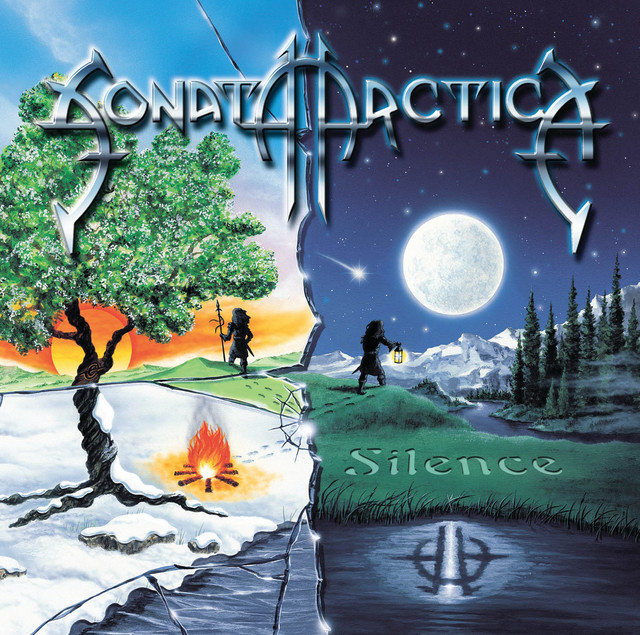
Then the map went further up the coast than any German label would have driven. The small town at the head of the Gulf of Bothnia with a working studio in it was Kemi, and Sonata Arctica made Silence there with Ahti Kortelainen across the winter of 2000 and the spring of 2001, sending it down to Finnvox only to be mixed. No van crossed a border.
What each country then did with the pattern, and why a Finnish record and a Brazilian one built from the same parts do not sound remotely alike, is the work of the scenes chapter.
The short answer to where did power metal originate fits in two sentences. The name originated in America, in a dozen towns too far apart to become a scene, and it still means something harder and drier there. The music originated inside a triangle of Hamburg, West Berlin and Hannover between 1985 and 1987, reached the Ruhr within a year, and then went wherever a tape machine could be booked. The succession runs through studios rather than through countries.

