
In 1997, inside a single year, three records from three different countries fixed three national sounds for the decade that followed, and not one of them was German.
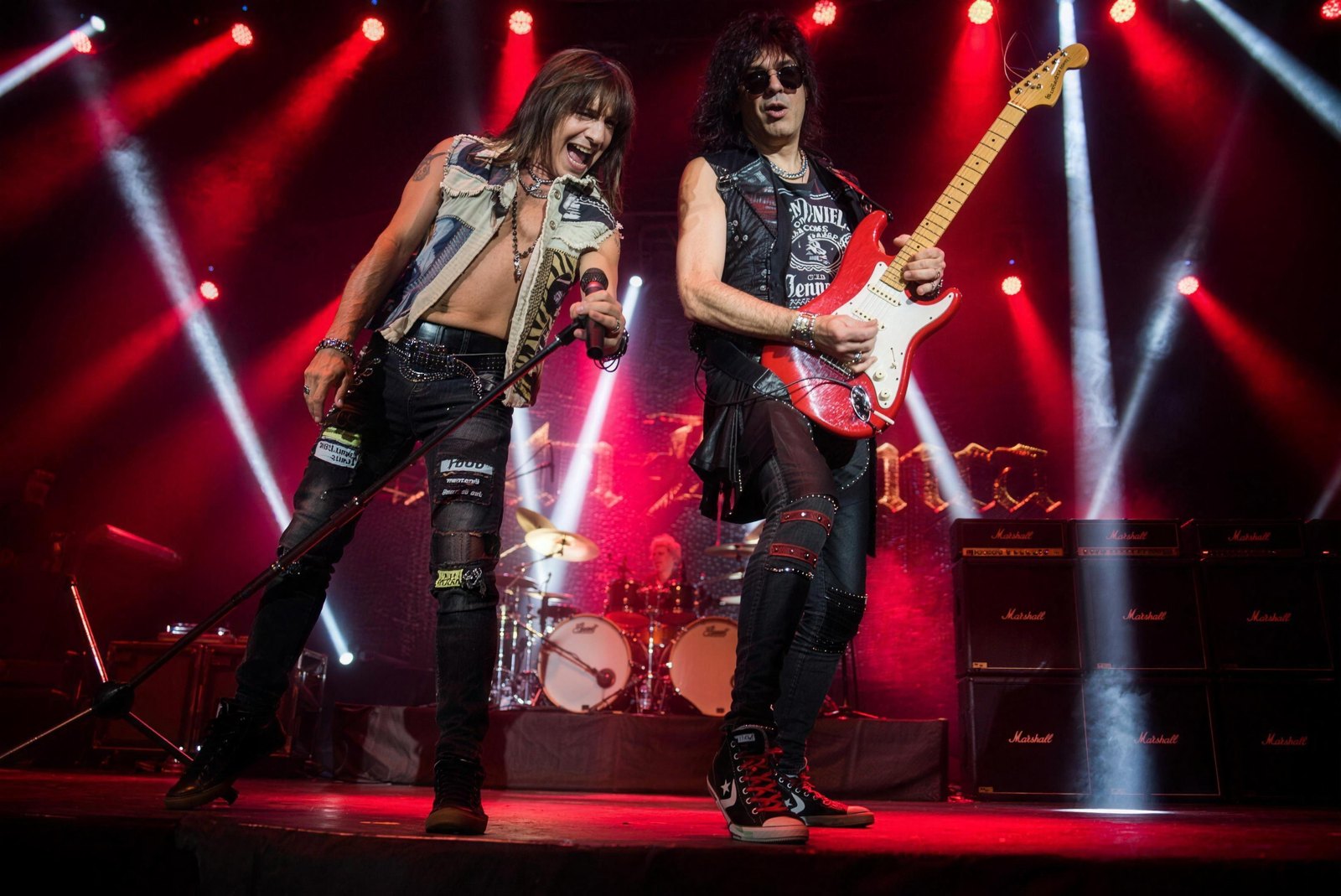
Assembled in Gothenburg by musicians from the city's melodic death metal bands, signed to Nuclear Blast and launched on 27 June 1997 into a market that had spent five years hearing the style was finished, the Swedish quintet with a hammer in its name was HammerFall, and its debut Glory to the Brave ripped down the closing notice grunge had nailed over the power metal rack of every northern European record shop.
It did not arrive alone. That April the Helsinki band with a Swedish keyboard player, Stratovarius, had released Visions, and in the autumn the Trieste duo of guitarist Luca Turilli and keyboard player Alex Staropoli put out Legendary Tales on the German label Limb Music, under the name Rhapsody that Rhapsody of Fire kept until 2006. Hamburg had lost its monopoly.
Every one of the power metal scenes that grew up after that point began from the same instrument. The template Helloween built in the second half of the eighties went abroad the way a church organ goes abroad, pried apart pipe by pipe with a crowbar, packed in straw and rebuilt in a foreign loft by local hands, who then revoiced every pipe to the stone of their own nave until the same stops answered in a different tone in each country that took delivery.
The chronology, from the Hamburg rehearsal rooms of 1985 to the festival stages of today, belongs to the whole story of power metal. Geography asks a different question. What did each country change once the template arrived, and why does a Finnish record sound nothing like a Brazilian one built from the same parts?
| Scene | What it sounds like | Where to hear it |
|---|---|---|
| Germany | Speed metal roots, bright major keys, choruses written for the whole hall | Helloween, Blind Guardian, Gamma Ray |
| Finland | Keyboard and guitar duels, neoclassical runs, melancholy under the major key | Stratovarius, Sonata Arctica, Battle Beast |
| Sweden | Riff first, mid-tempo, heavy metal ahead of keyboards | HammerFall, Falconer, Sabaton |
| Italy | Film score arrangements, fantasy sagas spread across several albums | Rhapsody, Labyrinth, Vision Divine |
| Brazil | Brazilian percussion and classical themes under European speed | Angra, Viper, Shaman |
| Japan | Neoclassical shred, the largest export market for European bands | Galneryus, Concerto Moon, Versailles |
| Spain | Sung in Spanish, rooted in eighties heavy metal | Avalanch, WarCry, Saratoga |
| United Kingdom | Extreme tempos, video game melody, open comedy | DragonForce, Power Quest, Gloryhammer |
| Canada | American riffing with a thrash edge | Unleash the Archers, Striker |
| France | Keyboard-led, leaning toward the symphonic | Heavenly, Fairyland, Kerion |
| Greece | Epic, slower, modelled on the American cult bands | Firewind, Battleroar |
| Eastern Europe | Russian-language, built on a heavy metal base | Aria, Kipelov, Epidemia, Catharsis |
| Latin America | Spanish-language, schooled on Rainbow-era neoclassical guitar | Rata Blanca, Beto Vázquez Infinity |
The German template and the first power metal scenes
Built in Hamburg on the speed metal of the early eighties, carried out of the country by the Berlin label Noise Records and codified between 1985 and 1988 on Helloween's Walls of Jericho and the two Keeper of the Seven Keys records, the German template fixed the parts list every later scene would work from: double kick drums, harmonised lead guitars, major keys and a clean, high tenor.
Germany kept the parts and kept multiplying.

The Krefeld quartet that had started out under the name Lucifer's Heritage became Blind Guardian in 1987, and by Tales from the Twilight World in 1990 it had found its own answer to the Hamburg sound, with Hansi Kürsch multitracking his voice into massed refrains that turned the speed metal riff into the scaffolding under a song rather than its point. Running Wild took the same Hamburg base out to sea, Rage and Grave Digger kept it close to thrash, and Gamma Ray, founded by Kai Hansen after he left Helloween in 1989, kept the original formula running at full pressure.
The second German generation widened the palette without leaving the house. Edguy brought the humour, Primal Fear bolted the tenor to a Judas Priest chassis with Ralf Scheepers at the microphone, Iron Savior and Freedom Call held to the bright end, and Powerwolf, formed in Saarbrücken in 2004, dressed the whole mechanism in cassocks and put a church organ at the front of the mix. Orden Ogan carried it into the 2010s. The country also exported the machinery around the music: Noise, then Nuclear Blast and AFM signed bands from every scene on this map, and Wacken Open Air, first held in 1990, became the field where the regional scenes met each other every summer. Across four decades the German scene has produced more power metal bands than any other country, and its exponents still set the tempo the others measure themselves against.
Finland and Sweden, one gulf and two tempers
The Gulf of Bothnia separates two scenes that share a festival circuit, several labels and almost nothing in temperament.
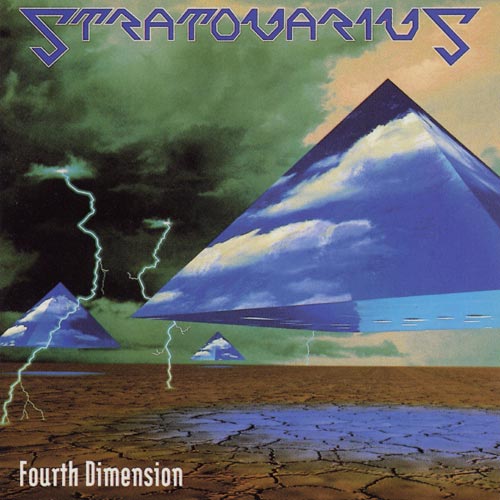
Formed in Helsinki in 1984, rebuilt around guitarist and songwriter Timo Tolkki, joined by the singer Timo Kotipelto for Fourth Dimension in 1995 and by the Swedish keyboard player Jens Johansson, fresh from Yngwie Malmsteen's band, a year later, the Finnish quintet that settled into its classic line-up on Episode in 1996 was Stratovarius, and it put the keyboard on equal terms with the guitar for the first time in the genre.
What followed was a duel. Tolkki and Johansson trade solos like two pianists forced onto one bench for a sonata for four hands, each elbowing the other off the stool at every modulation, and the neoclassical runs that result became the signature of Finnish power metal. Underneath the bright keys sits a melancholy the German records rarely allowed themselves. The major chord is there. It simply sounds colder.
Eagleheart, the single from the 2003 album Elements Pt. 1, shows the whole Finnish method in under five minutes: a keyboard figure that states the melody before the guitar can reach it, a chorus in a major key that never quite shakes off its sadness, and a double kick that stays out of the way. From Kemi, far up the coast, Sonata Arctica answered with Ecliptica on Spinefarm in 1999, written by a singer who had begun as a keyboard player, and the melancholy grew heavier. Nightwish, from Kitee, borrowed the keyboards and went on to other things. Battle Beast and Beast in Black later pushed the Finnish sound toward eighties synth pop without losing the speed.
Sweden took the opposite road. Riff first, keyboards low or absent, tempos held at a march rather than a sprint, the Swedish scene descends from Accept and Judas Priest more than from Helloween, and its riffs land like a fist brought down on the lowest octave of a concert grand, again and again, until the felt on the hammers goes flat and the strings rattle against the iron frame. HammerFall set that pattern. Falconer added folk melody, Nocturnal Rites and Dream Evil kept it hard, Sabaton slowed it further, and Twilight Force later dressed it in fantasy robes and restored the keyboards. The contrast between the two countries is sharp enough to have its own argument, and it runs through every record either side of the water.
Tolkki and Johansson trade solos like two pianists forced onto one bench for a sonata for four hands.
Italy and the cinema organ
The Italians did not revoice the template. They built a picture palace around it.
Rhapsody called their music Hollywood metal, and the phrase was a manifesto rather than a joke: the albums were arranged like film scores, with the guitars and double kick placed underneath choirs, harpsichord, narration and orchestral themes, and the lyrics followed a single fantasy saga from record to record. The sound rises out of the speakers like a cinema organ coming up on its lift out of the orchestra pit, every rank of pipes open, shaking the plaster off the ceiling before the film has even started, with the drummer reduced to a percussion roll beneath the main title. The detail of how the orchestra itself is built belongs to symphonic metal. What Italy contributed to power metal was the idea that an album could be a screenplay.
Dawn of Victory in 2000 is the record where that screenplay runs at full tilt, sprinting through the saga at tempos no German band had tried with an orchestra on its back. Christopher Lee narrated the band's Symphony of Enchanted Lands II in 2004, which says enough about the ambition.
Around them grew a scene with a technical streak the Germans never had. Labyrinth released Return to Heaven Denied in 1998 and pulled the style toward progressive metal, Vision Divine, Secret Sphere and DGM followed the same instinct for complicated arrangements, and Elvenking and Wind Rose later drifted toward folk. Italian power metal is the only national scene whose pantheon includes more keyboard players than guitar heroes.
Brazil and the rhythm under the double kick
Formed in São Paulo in the mid eighties, the quintet that recorded Theatre of Fate in 1989 with the young singer Andre Matos was Viper, and when Matos left to found Angra with guitarist Rafael Bittencourt in 1991 he took the European template to the southern hemisphere and stripped the German accent off it on the way.
Carry On, from Angels Cry in 1993, is the Brazilian entry ticket. It follows an introduction adapted from Schubert's Unfinished Symphony, and its speed, its high tenor and its chorus are pure Hamburg, which explains why the record found its first large audience in Japan and Europe before it found one at home.
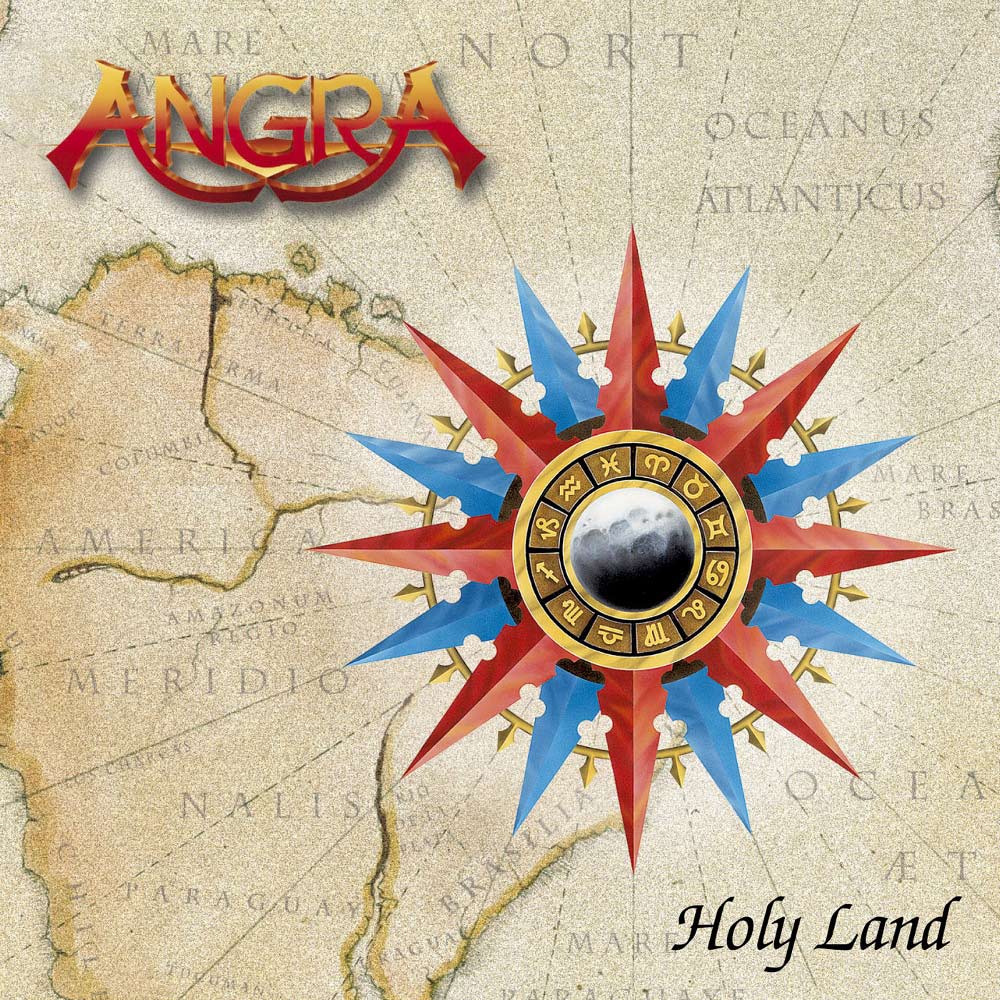
The break with Europe came three years later. Holy Land in 1996 is a concept album about the arrival of the Portuguese in Brazil, and it hauled Brazilian percussion into the arrangements as if a surdo had been carried in off a carnival parade, bolted underneath the double kick and struck until its skin split, so that the fastest passages sway where European power metal only gallops. Carolina IV, the long centrepiece, opens on hand percussion and returns to it between the riffs. No other scene changed the rhythm section itself.
That is the Brazilian difference, and it survived every split in the band. Shaman, founded by Matos after he left Angra in 2000, kept the rhythms and the classical themes; Hibria from Porto Alegre went harder and faster; and Angra's guitarist Kiko Loureiro took the neoclassical Brazilian technique into Megadeth in 2015.
Japan, the market that became a scene
Japan entered power metal as a buyer. The monthly magazine Burrn!, published since 1984, championed European melodic metal when the Anglo-American press had stopped listening, and Japanese pressings arrived with bonus tracks, translated lyrics and liner notes that turned the domestic edition into the one collectors wanted. For much of the nineties Stratovarius, Angra, Helloween and Rhapsody sold and toured on a scale in Japan they could not match at home. The records paid for themselves in Tokyo.
The domestic scene grew out of that market and took the neoclassical side furthest. Galneryus, formed in 2001 around the guitarist Syu, and Concerto Moon, built around the guitarist Norifumi Shima, write solos that rake through the arrangement like a steel comb dragged across every string of a concert harp, each glissando faster than the last and not one string spared, and they make the Finnish duels sound conversational. Meanwhile Versailles fused symphonic power metal with the costume and theatre of visual kei, the Japanese scene in which the look of a band is part of the music. Why the style took hold there at all is a question with a long answer of its own.
Spain and Latin America, sung in Spanish
Spain answered from its own record collection. Descended from the Spanish heavy metal of Barón Rojo and Obús in the eighties rather than from Hamburg, the Asturian band formed in 1993 and built by guitarist Alberto Rionda was Avalanch, and it sang its melodic power metal in Spanish, a choice that decided the scene's whole character.
The language did more than any arrangement. WarCry, founded by former members of Avalanch in 2001, Saratoga and Tierra Santa all sing in Spanish, which gave the Spanish scene a home audience it did not have to share with anyone and a second one across the Atlantic. Dark Moor, singing in English with a keyboard-heavy sound closer to Italy, is the exception that proves the rule, and Mägo de Oz belongs more to folk metal than to this family.
That second audience had its own bands. Founded in Buenos Aires in 1986 by guitarist Walter Giardino, a player schooled on Ritchie Blackmore's neoclassical phrasing, the Argentine band whose second album Magos, Espadas y Rosas reached a mass audience in 1990 was Rata Blanca, and it remains the foundation stone of Spanish-language power metal in the Americas. Its ballad Mujer Amante, from the same record, sold past a million copies on its own and is still the song a Rata Blanca crowd sings back whole, three decades on. Beto Vázquez Infinity took Argentina toward the symphonic in 2001, with the guest singers Tarja Turunen, Candice Night and Fabio Lione carrying an album built for export, and the scenes of Chile, Colombia and Mexico grew along the same Spanish-language touring routes.
The fastest Brazilian passages sway where European power metal only gallops.
Britain, Canada and France, the late arrivals
The country that invented the twin guitar attack took almost fifteen years to answer Helloween, and when the answer came it came at double speed.
Formed in London in 1999 under the name DragonHeart, signed to the same Noise Records that had launched Helloween and pressed into service with the debut Valley of the Damned in January 2003, the London sextet with two guitarists raised on video game soundtracks was DragonForce, and it blew the German tempo limits apart until the guitar solos sounded like an arcade machine shaken off its mountings. The title track runs past seven minutes and treats the guitar solo as the chorus, a reversal no German band had risked. Power Quest ran beside them, and in Scotland Gloryhammer, founded by Christopher Bowes of Alestorm, turned the fantasy saga into open comedy. British power metal is the only scene that laughs at itself on purpose.
Canada leans south. Unleash the Archers, from Vancouver, built their records around Brittney Slayes's voice and riffs heavier than anything in Finland, and Abyss, the title track of their 2020 album on Napalm Records, carries a thrash edge the Europeans sanded off long ago. Striker from Edmonton and Three Inches of Blood from Vancouver kept the same North American weight, closer to the United States than to Hamburg.
France went the other way, toward keyboards and the orchestra. Heavenly, signed to Noise, Fairyland, with its fantasy saga Of Wars in Osyrhia in 2003, and Kerion all lean symphonic, while Nightmare, active since the late seventies, and Manigance kept the heavy metal base closer to the surface.
Greece and the East, epic metal and a post-Soviet stage
Greece picked the other parent. Where the continent followed Hamburg, the Greek audience kept faith with the American cult bands, Manilla Road and Cirith Ungol above all, and the Up the Hammers festival in Athens became a place where those bands played to crowds they never drew at home. The result is an epic power metal, slower and darker than the European strain, in which the guitars sound like the drone of a Byzantine chant held under a funeral drum, bass voices grinding one note into the floor of a ruined temple, the old myth kept and the brightness burned off it. Battleroar is its clearest exponent. Firewind, built around the guitarist Gus G., sits nearer the European mainstream, with Between Heaven and Hell in 2002 as its starting point.
East of the old border the base was heavy metal, and the language was Russian. Formed in Moscow in 1985 and modelled on Iron Maiden, the band whose singer Valery Kipelov became the most recognised metal voice in the Soviet Union was Aria, and when the state record system collapsed after 1991 its scion bands swept the official brass band arrangements off the music stands and set Maiden tablature where the marches had been. Kipelov, the singer's own band from 2002, Epidemia, with its fantasy metal operas, and Catharsis, also from Moscow, built a Russian-language power metal that sells to a home market larger than most European scenes can reach. The schism with the West is linguistic, not musical. The template is the same one Hamburg drew.
Set the scenes side by side and the differences come from three places. The first is the parent each country chose: Hamburg for Finland and Italy, Judas Priest and Accept for Sweden, the American cult bands for Greece, Iron Maiden for Russia. The second is language, which gave Spain, Argentina and Russia home audiences that never needed the English-speaking press. The third is the market, and Japan proved that a country could shape a genre simply by buying it, rewarding the neoclassical and melodic records until the bands wrote more of them. Tempo, keyboards and percussion follow from those three decisions, not the other way round.
No scene on this map is an epigone of the others, and none of them is the German original in a new accent. Each took the parts, kept some and threw the rest out, and the names that crossed every border in the process are gathered among the power metal bands that still headline the festivals from Wacken to Tokyo.
