
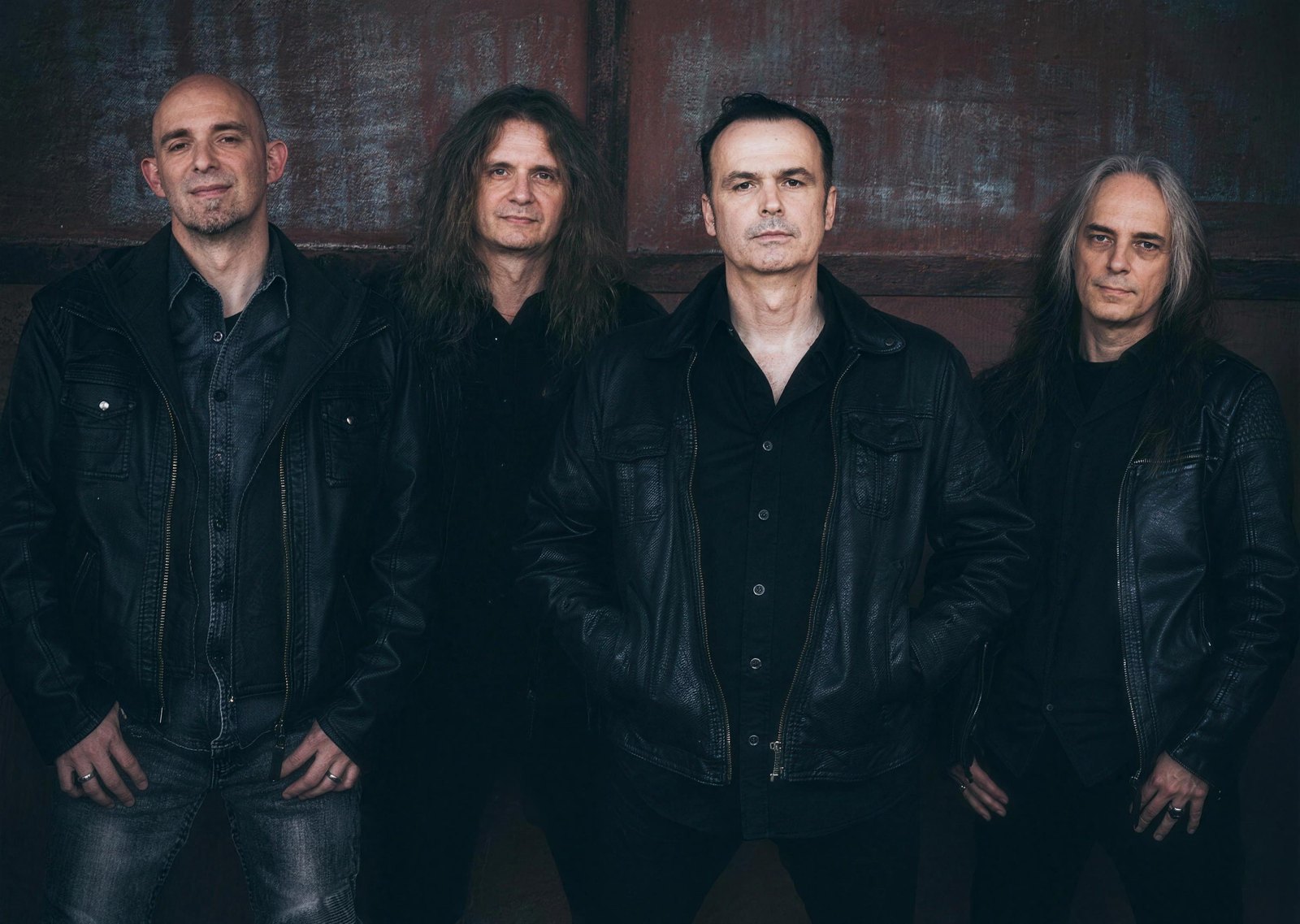
On 18 November 1985, Noise Records put out Walls of Jericho, the first full-length album by a Hamburg band not yet two years old, and inside its opening minutes stood nearly everything the power metal bands of the next four decades would need.
Built on two kick drums running sixteenth notes under a pair of guitars harmonising like a string quartet taken at double speed, and fronted in those first years by the guitarist Kai Hansen until Michael Kiske took the microphone in 1986, the Hamburg quintet with a jack-o'-lantern for a mascot was Helloween, and by 1988 its two Keeper of the Seven Keys records had set down a grammar the genre still speaks.
Then came the paraphrases.
The genre did not grow out of those records. It was paraphrased from them, the way Liszt would lift an aria off the opera stage and rebuild it for a single piano, pounding the keys in recital until the strings snapped and a second instrument had to be wheeled on, and every school since has made its own paraphrase, the Finns and Swedes for keyboards, the Italians for a full orchestra, the stadium bands for one chorus shouted by a field.
The Americans never needed the theme. They had been writing their own, heavier one since 1983, and it reads differently from the first bar.
What counts for any band in this music is what it added to forty years of the high chorus, not how many line-ups it wore out or how many farewell tours it announced. A school is a way of writing, not a passport, which is why a Florida band with a Norwegian singer files with the Americans and a London band assembled from half a dozen countries files with the stadium generation.
| School | Took shape | First exponents | What it added |
|---|---|---|---|
| German founders | 1984–1990 | Helloween, Running Wild, Blind Guardian, Gamma Ray | Double-bass speed, harmonised guitar melody, the high clean tenor |
| US branch | 1983–1990 | Manilla Road, Jag Panzer, Omen, Vicious Rumors, Crimson Glory | Heavier riffs, darker fantasy, few keyboards |
| Nordic wave | 1989–2000 | Stratovarius, Sonata Arctica, HammerFall | The keyboard as a second lead, neoclassical duels, the late-nineties revival |
| Italian symphonic | 1997–2002 | Rhapsody, Labyrinth, Vision Divine | Orchestral arrangement, narration, film-score ambition |
| Stadium generation | 2005 onward | Sabaton, Powerwolf, DragonForce, Gloryhammer | Mid-tempo stomp, the chorus as the centre of the song, extreme speed |
The German founders and the first power metal bands
Hansen walked out after Keeper of the Seven Keys Part II, and in 1989 he started Gamma Ray, which proved within one record that the Hamburg sound belonged to a songwriter rather than to a band name. From then on the city ran two lines side by side: Helloween's lighter, almost pop instinct for a tune, and Gamma Ray's harder drive, which its first singer, Ralf Scheepers, later carried into Primal Fear, a band built so close to Judas Priest that the comparison follows it everywhere.
Older than Helloween and never quite its relation, the Hamburg crew led since the late seventies by Rolf Kasparek is Running Wild, which hoisted a skull and crossbones over Under Jolly Roger in 1987 and handed the genre one of its most durable costumes, a pirate ship where the other bands kept their dragons, sailing on riffs more four-square than anything Hansen wrote.
The band that listened hardest to the opera house came out of Krefeld. Blind Guardian released Battalions of Fear in 1988, and through the nineties its singer Hansi Kürsch built his choruses from dozens of overdubbed takes of his own voice, a habit that reached its limit on Nightfall in Middle-Earth in 1998, a concept album that took Tolkien's Silmarillion as its libretto, and Mirror Mirror, put out as a single that February, months ahead of the album itself.
Around those three the German school filled in fast. Rage, Peavy Wagner's trio from Herne, took the style into the concert hall on Lingua Mortis in 1996 with the Prague Symphony Orchestra; Grave Digger turned Scottish history into a concept record with Tunes of War the same year; and Iron Savior, Freedom Call and Masterplan each wrote their own variations on the Hamburg theme, sometimes with Hamburg's own musicians in the line-up.
The Hamburg sound belonged to a songwriter rather than to a band name.
The scion of the school arrived at the end of the century. Tobias Sammet, singer of Edguy from Fulda, conceived Avantasia as a metal opera with a cast of guest voices, and The Metal Opera in 2001 gave Michael Kiske and Andre Matos character roles, the forebears of the style summoned back as soloists in a work written by a man who had grown up on their records.
The American branch, heavier in the hand
The first great American exponent of the style was not a coastal band at all but a trio from Wichita, Kansas, Manilla Road, which under the guitarist and singer Mark Shelton had been setting sword-and-sorcery stories to long, winding riffs since the late seventies and by 1983 had a record, Crystal Logic, that the American underground still treats as scripture.
Where the Germans polished the melody, the Americans snapped the bridge off the violin and wedged a block of oak in its place, so that the bow grinds all four strings at once and no single line can sing clear of the others, and that harder attack is the whole difference between the schools: heavier guitars, sparse keyboards, a darker and more violent fantasy.
From Colorado Springs, the band with the most argued-over debut in the branch is Jag Panzer, whose Ample Destruction came out on Iron Works in 1984 with Harry Conklin, called the Tyrant, singing over it, a record whose pedigree grew in the decades after its release far more than it did while the band was touring it.
The coasts answered quickly. Los Angeles had Omen and Battle Cry on Metal Blade in 1984; Connecticut had Liege Lord; the San Francisco Bay Area had Vicious Rumors, the twin-guitar band that never went thrash when its neighbours did; and Florida had Crimson Glory, five men in silver masks whose singer went by the name Midnight and whose Transcendence came out on Roadracer, the label later renamed Roadrunner, in 1988.

Seattle, a few years before the city became shorthand for something else entirely, gave the branch Fifth Angel, whose self-titled debut came out on Mike Varney's Shrapnel label in 1986 and was reissued by Epic in 1988, and Queensrÿche, whose first EP appeared independently in 1983 and was picked up by EMI America the same year, belongs to the same prehistory whatever the band later became.
Florida then produced three bands that took the American school somewhere the others did not. Savatage gave it theatre and a piano, most famously on Hall of the Mountain King in 1987; Iced Earth, led by the guitarist Jon Schaffer, gave it the heaviest right hand in the branch from Night of the Stormrider in 1991 onward; and Kamelot, founded in Tampa by Thomas Youngblood, hired the Norwegian singer Roy Khan in 1998 and became the most European band America has produced.
Almost none of it sold. Squeezed between the thrash bands that took the independent labels' money in the second half of the decade and the hair metal bands that took the majors', the branch spent the late eighties on small labels and smaller tours. Grunge then swept the last of those bands off the club stages, and the records waited to be rediscovered at German festivals such as Keep It True, running since 2003.
The Nordic wave and the keyboard as a second lead
The Helsinki group that turned the keyboard into a second lead guitar is Stratovarius, founded in the mid eighties and rebuilt in the mid nineties around the guitarist Timo Tolkki, who brought in Timo Kotipelto to sing in 1994 and the Swedish keyboard player Jens Johansson, formerly of Yngwie Malmsteen's band, in 1995.
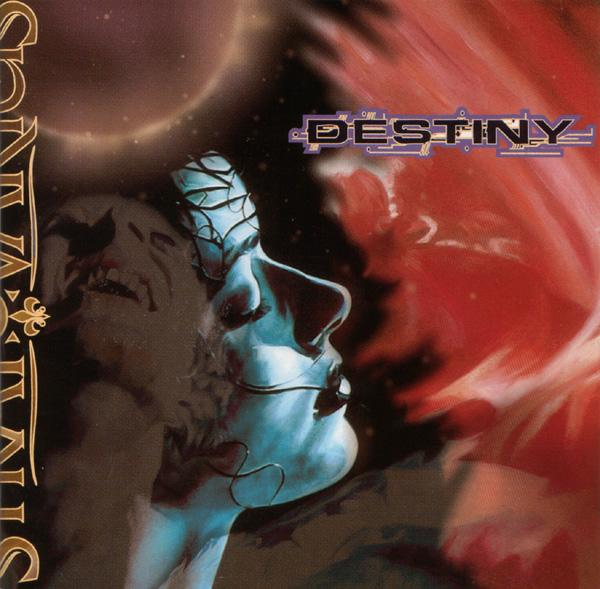
Fourth Dimension in 1995 was Kotipelto's first record with the band. By Destiny, released on Noise in 1998, the Finnish formula was fixed. It is a duel. Tolkki and Johansson trade solos bar for bar like two players sharing one cimbalom, each hammering the strings the other has just struck until the wire snaps, and the fight itself is the arrangement.
Stratovarius' fastest disciple was Sonata Arctica from Kemi, led by the singer and songwriter Tony Kakko, whose Ecliptica on Spinefarm in 1999 ran the template at a higher tempo and in a more lovelorn mood, and whose Wolf and Raven, from Silence in 2001, is the Finnish school at its most breathless, a chorus arriving before the verse has finished clearing its throat.
Sweden supplied the revival. In 1997, in Gothenburg, the city that had just become the capital of melodic death metal, HammerFall released Glory to the Brave on Nuclear Blast, and the band started by the guitarist Oscar Dronjak sheared the growl off the Gothenburg riff, handed the melody back to Joacim Cans' clean tenor and, by common consent, reopened a door the grunge years had nailed shut.
Behind HammerFall came Nocturnal Rites from Umeå, Falconer, which set Swedish folk melody over double-bass drumming, and Dream Evil, put together by the producer Fredrik Nordström. In Finland, Nightwish's Oceanborn in 1998 put Tarja Turunen's classically trained soprano on top of a power metal rhythm section, the combination the symphonic metal of the next decade grew from.
Italian symphonic power metal and the crowded rehearsal room
The two Trieste musicians who wanted to score a fantasy film and settled for a metal band were the guitarist Luca Turilli and the keyboard player Alex Staropoli, and Rhapsody of Fire, known until 2006 simply as Rhapsody, launched on the German label Limb Music with Legendary Tales in 1997, Fabio Lione singing, under a description of its own coinage, Hollywood metal.
The phrase is exact. The Italians marched a choir and a string section into a rehearsal room built for four, jammed the music stands against the drum riser until the violin bows struck the cymbals on every upstroke, and kept a power metal drummer pounding double kicks underneath the whole crowd, so that the result sounded less like a band with an orchestra than an opera company that had hired a drummer.
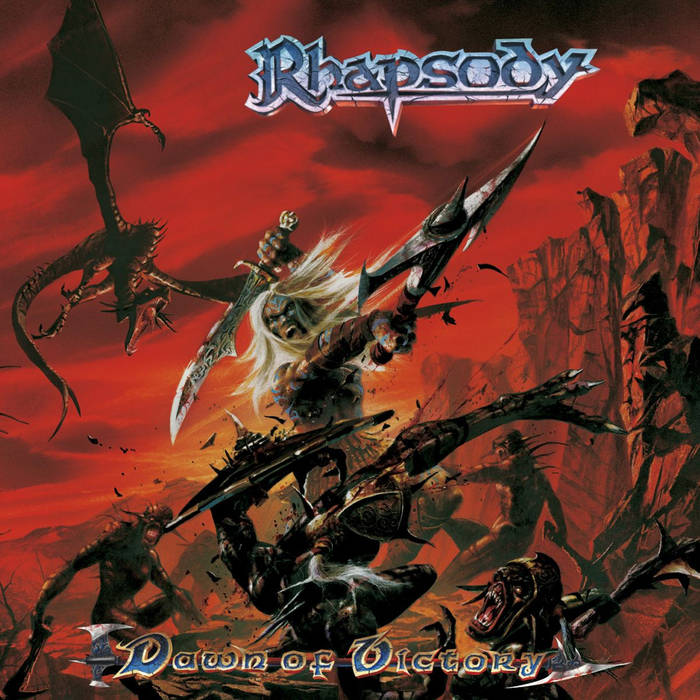
Dawn of Victory, released in 2000, is the third chapter of the Emerald Sword Saga, the five-album story the band told across its first records, and its title song carries the whole method in a single track: choir, neoclassical guitar runs, keyboards doubling the lead and a chorus pitched high for Lione.
Around Rhapsody the peninsula grew a school of its own. Labyrinth released Return to Heaven Denied in 1998, lighter on orchestra and heavier on keyboards; Vision Divine and Secret Sphere followed; after the split of 2011 Turilli ran a Rhapsody of his own with a still more cinematic bent. A newer generation, Frozen Crown from Milan and Wind Rose from Pisa, carried the school into the streaming years, Wind Rose with a 2019 cover of Diggy Diggy Hole, a tune first improvised years earlier by a member of the online group the Yogscast, that travelled far outside metal.
Power metal groups from outside the four homelands
Fronted by Andre Matos, classically trained on piano from childhood and later in composition, who brought piano and Brazilian rhythm into the arrangements, the São Paulo band that answered Hamburg from across the Atlantic is Angra, whose Angels Cry opened in 1993 with an introduction built on Schubert's Unfinished Symphony before Carry On broke in at full speed.
Japan produced Galneryus, whose guitarist Syu pushed the neoclassical duel further up the neck than the Finns had taken it. Spain produced Dark Moor, Warcry and Avalanch, the last two singing in Spanish for a home audience big enough to keep them. Greece produced Firewind, the band Gus G. founded in 1998, Denmark Manticora, Canada Unleash the Archers, and America's own late revival Seven Kingdoms.
A school is a way of writing, not a passport.
None of those power metal groups copied a single school's creed whole. Angra took Helloween's speed and set it beside Brazilian percussion, Galneryus carried the Finnish duel into Japan's long devotion to the guitar virtuoso, and the Spanish bands took the Italian taste for grandeur and rewrote it in their own language, which is how a style born in one German port became a grammar spoken on four continents.
The stadium generation
The Falun band that stamped the genre's sprint down to a march is Sabaton, formed in 1999, whose history-book lyrics and mid-tempo stomp from Primo Victoria in 2005 onward moved power metal from the afternoon slot of a festival bill to the top line of the poster. In 2019 the band opened a YouTube channel of its own to tell the history behind the songs, which is how a metal band came to double as a history teacher.

Dressed in corpse paint and cassocks, led by Attila Dorn's operatic baritone over Falk Maria Schlegel's church organ and formed in Saarbrücken in 2003, the werewolf congregation of the Saarland is Powerwolf, which wrenched the Latin Mass out of the missal, set it to double kicks and took Preachers of the Night to the top of the German album chart in 2013. The Sacrament of Sin did the same on Napalm Records in 2018.
At the far end of the tempo dial, the London band with the fastest songs in the genre is DragonForce, whose guitarists Herman Li and Sam Totman play at tempos past 200 beats a minute like two percussionists sprinting on one xylophone with snare sticks until the rosewood bars split along the grain, and whose Through the Fire and Flames reached a whole American generation through a video game rather than a record shop.
The rest of the generation took the fantasy either as the joke or as the point. Gloryhammer, started by Christopher Bowes of Alestorm, told a space opera about a Scottish prince and an evil wizard with a straight face and a wink from Tales from the Kingdom of Fife in 2013 onward, and Universe on Fire, from the 2015 album Space 1992: Rise of the Chaos Wizards, dresses a synth-pop hook in a cape. Twilight Force from Sweden plays elves and means every note of it, and Orden Ogan from Germany kept the choirs and the gravity.
Finland added the last new wrinkle. The guitarist Anton Kabanen founded Battle Beast in 2008, left it in 2015, and started Beast in Black, which married the Nordic school to the synthesisers of eighties pop, while Battle Beast, with Noora Louhimo at the microphone, carried on without him.
The man that hath no music in himself, nor is not moved with concord of sweet sounds, is fit for treasons, stratagems and spoils.
William Shakespeare, The Merchant of Venice
The arguments that never close
Every one of these power metal bands has its partisans, and the partisans do not agree. The shortlists of the best never match; the full list by country and decade runs to hundreds of names; the popularity count, taken in streams and chart weeks, puts the stadium generation well ahead of the founders; and the question of a big four, borrowed from thrash, has never produced four names everyone accepts.
Other quarrels run along other lines. Power metal with a woman at the microphone reaches from Noora Louhimo to Brittney Slayes of Unleash the Archers and Visions of Atlantis; an openly Christian strand runs through Narnia in Sweden and Theocracy in America; the heaviest end runs from Iced Earth and Primal Fear to Mystic Prophecy; and the underrated end is where Heavenly, Persuader and Liege Lord still wait for their due.
The commonest question starts from one band and asks for the next one: what to play after Sabaton, after DragonForce, after Powerwolf, after Blind Guardian. Each of those four has a family of neighbours, and none of the families lines up exactly with the schools.
The records are a separate matter. A band can be essential and owe its place to a single album, and the long quarrel over the best power metal album is fought sleeve by sleeve, not name by name.
Forty years on, more voices sing the high chorus than ever. Most of them have never heard Walls of Jericho. They sing it anyway.
