
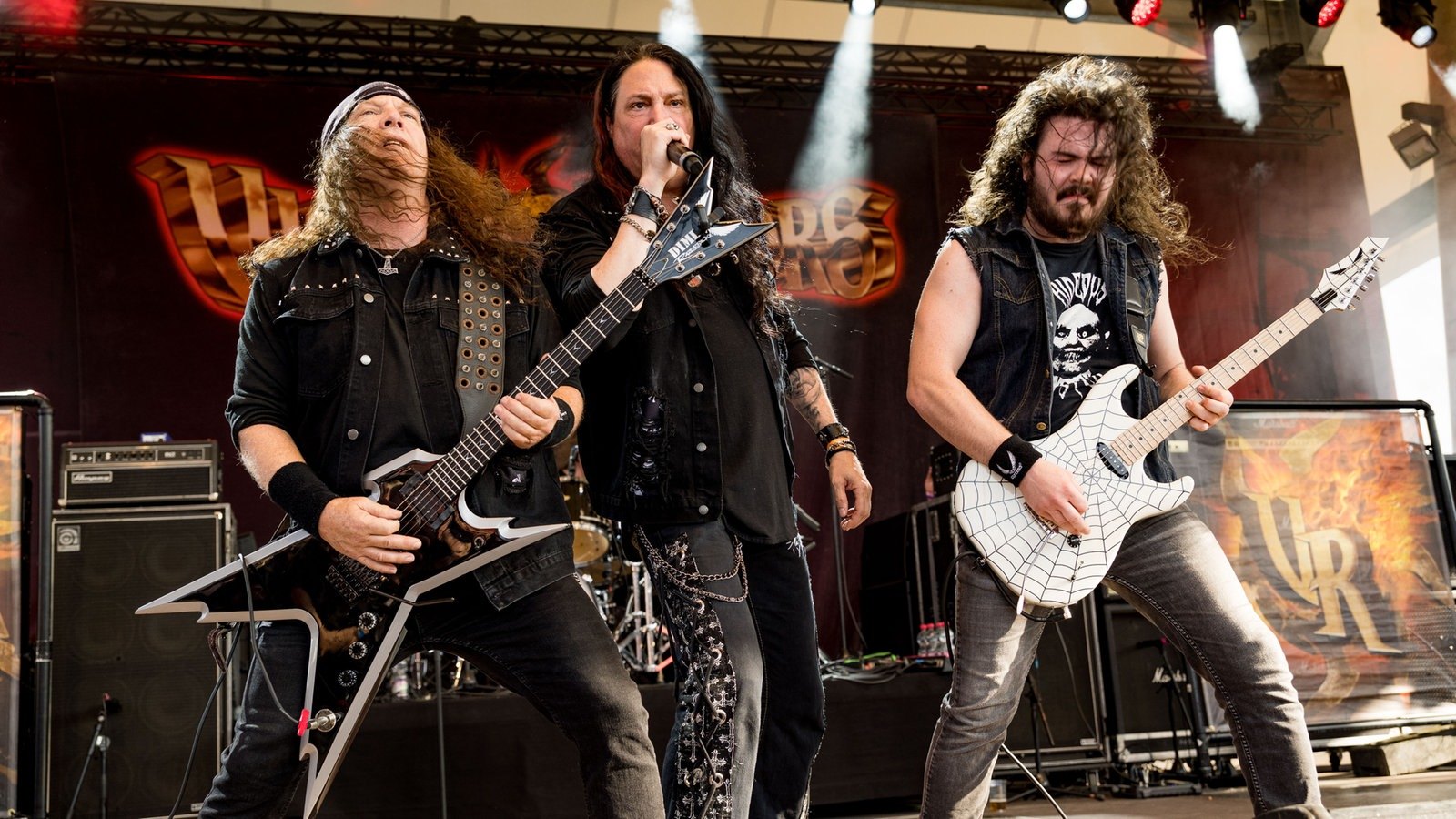
Five hundred thousand copies. That is what an American record needs for a gold disc, a line drawn by people who never heard the music, and in this style it has been crossed in America about once in forty years, by DragonForce in 2017.
A pier ballroom's band is not paid to be admired. It is paid by the floor, and the man counting couples at the back of the hall settles the repertoire, so whatever empties the boards comes out of the leader's book that night, the sheets torn away at the stitching and shoved into the stove behind the bandroom, and nobody is ever asked what the piece was worth. A number pitched four notes above what a stranger can hum burns beside one too fast to dance to. Twenty seasons of that, and a visitor leafing through the book will swear the town wants nothing else.
Put plainly, why is power metal not popular in America is a question about four gates, and a listener's taste stands behind the last of them. In front of taste sat a radio format with a clock, one television slot, a wholesale rack ordered by the ton, and the arithmetic of a major label contract. The quartet from Los Angeles that put a heavy metal album at the top of the American chart for the first time, in November 1983, was Quiet Riot.
The clock on American rock radio
American rock radio does not play records. It plays a format. From 21 March 1981, when Billboard introduced Rock Albums and Top Tracks to measure what album rock stations were actually putting in rotation, the trade had a weekly instrument for reading that format back to itself, and the programmers worked to a clock and a tight rotation sold by a small circle of consultants, lopping off any record that would not fit the hour. A record was added at the reporting stations or it was nowhere.
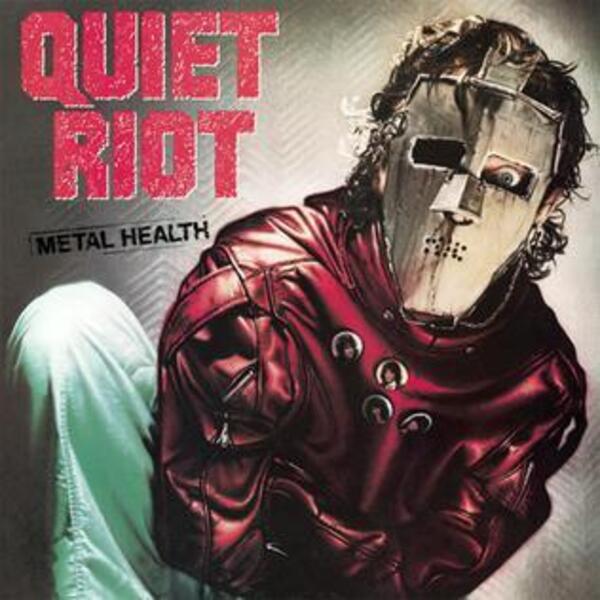
Metal Health took number one that November, the first heavy metal album to manage it and in time six times platinum, and what carried it there was a ten year old Slade song, which went to five on the Hot 100. That is the shape of the door. A label often broke a metal act at American radio with a mid-tempo singalong or a ballad, then sold the heavy album standing behind it.
The title track did the rest, a chorus a crowd could shout back at a tempo it could clap, and the European build handed a programmer little of that kind. Songs often run five and six minutes. Tempos run fast, an instrumental middle can stretch to a solo duel, the voice lives high in the register where no stranger follows it, and the last chorus often climbs a key rather than repeating. Every one of those is a virtue on the record and a fault at the gate.
The same clock shut out the home side. The Houston band whose debut ended its first side with a song six minutes and thirty eight seconds long was Helstar, and Burning Star, out on Combat in March 1984, set a tenor at full stretch over riffs of no radio length at all. A decade of american power metal reached its listeners through flyers, tape trading and the post, because the other route closed before the first pressing.
Why is power metal not popular in America: the rack answers first
The largest record wholesaler in the United States by 1980 was the Handleman Company, which racked the music departments of the mass merchants, served Kmart as its only music supplier for decades, drew 41 per cent of its sales from that one chain in the late eighties with Walmart at 15, and watched those merchants take 30 per cent of the whole American music market by 2002. A rackjobber buys by tonnage and culls from the fixture whatever the scanner says has not moved.
In most of the country the record was never refused. It was never carried.
That is the part the story of American indifference leaves out. A buyer in a town with a discount store and no specialist shop could not have turned this music down if he had wanted to, because the title was not in the fixture and no clerk there could order it in. What existed instead ran through fanzine small ads, mail order lists and the import bins of a few specialist shops, which is a distribution system for a cult.
What the country was carrying to the counter instead
Appetite is the other half, and it can be counted. Through the eighties the American metal buyer took Los Angeles hard rock and thrash home by the million, and Def Leppard sold Hysteria into double figures of platinum with singles engineered for exactly that clock. After 1991 the money went to the alternative turn, and from there to a heavier music built on the opposite axis from this one. In October 2000 Limp Bizkit shifted 1,054,511 copies of Chocolate Starfish and the Hot Dog Flavored Water in seven days.
| Gate | What it admitted | What this music brought to it |
|---|---|---|
| Album rock radio, from 1981 | A mid-tempo track of radio length, a ballad to open with | Five and six minute songs at a gallop, a tenor high in the register |
| Headbangers Ball, 1987 to 1995 | One programme a week, late on Saturday night | Clips paid for out of a recoupable advance, when there was one |
| The mass merchant rack | Titles chosen from the scanner and restocked by tonnage | Few American sales for a scanner to read |
| A major label option | Sales on a gold scale, five hundred thousand copies | Records that earned their keep on an independent's scale |
Down the whole run, from the drop tunings of the nineties to the half time breakdowns of the metalcore years, the American word for heavier has pointed downward. Lower tunings, slower middles, a voice driven out of the chest and across a room, never up. A clean high tenor over a major chord reads in that market as something softer, a misreading no European audience has made, and the one American record that put the words power metal on its sleeve just before the axis turned is the business of Pantera's power metal and what the phrase meant in 1988.
The arithmetic a European record had to beat
An opera house with ninety players on its payroll will bolt its doors for a whole season and let the damp bring the plaster down off its own ceiling before it opens for six hundred seats, because the wages run whether the curtain goes up or not. A band of fourteen in a market hall will play anything once. The room costs nothing and a failure costs one evening.
That gap is the whole difference between a major label contract and a European independent. On a major the advance, the video and the tour support were all recoupable against the band's royalties, so a modest American success could stand on the books as a debt, while the same sales across a continent of small houses could pay for the next record and a tour behind it.
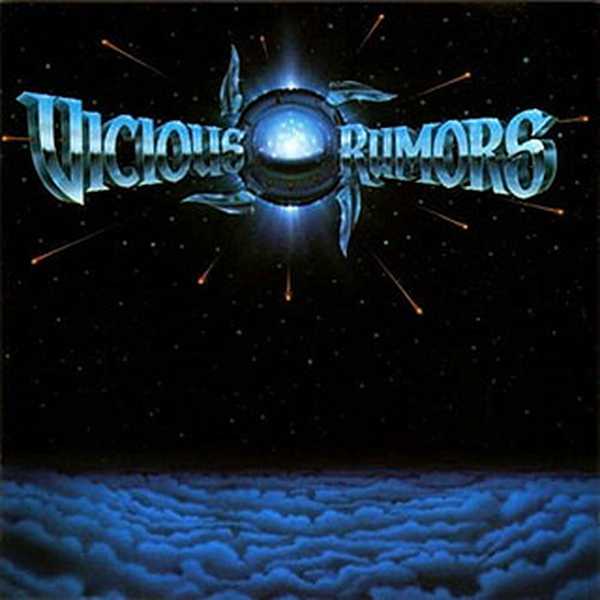
The Bay Area band that signed to Atlantic in 1989, made two albums there and came out the far side with a Japanese tour and a European contract was Vicious Rumors. Vicious Rumors appeared in 1990 and Welcome to the Ball in 1991, surgery on the guitarist's hands stalled everything, the label let the contract go, and what followed was paid for by audiences on two other continents. That is the ordinary shape of it rather than the unlucky one.
The television pipe was narrower still. Fates Warning put a clip behind "Through Different Eyes", from Perfect Symmetry on Metal Blade in August 1989, and it took some airplay on Headbangers Ball: one programme, late on Saturday nights from April 1987, cancelled in 1995. One slot a week, for every metal band on earth.
Crossing the water cost money of its own. An American run was an orchestra shipped across an ocean and paid for before a ticket was sold, with a work visa to be won for every member of the band before the first date.
The shelf went away and the habit stayed
Streaming demolished the rack. Every record in this style now sits in every country at once, no chart decides what a shop stocks, and the United States with Canada still produced 38.7 per cent of global recorded music revenue in 2025, so the market that stayed shut to this music is the largest there is.
An ophicleide in a museum case is kept in playing order, every key sprung, and nobody on the staff has the fingering, so the lid comes up for visitors who hear nothing while the leather on the pads goes hard and the keys seize in their guides. A catalogue open to a country is not an audience inside it. Little that used to carry music to Americans has been rebuilt for this one: no format built for it, no weekly slot, no run of mid sized halls for a band to climb.
So the country did not turn its back after a hearing. Four gates were shut for forty years, Americans learned the music they were handed, and by the time the shelf stopped mattering the habits a shelf builds were forty years old themselves. Every serious answer to why is power metal not popular in America ends in a fixture list and a balance sheet, and neither is a verdict on anybody's ears. What is left is a bill, and European bands have been paying it down one van and one visa at a time.

