
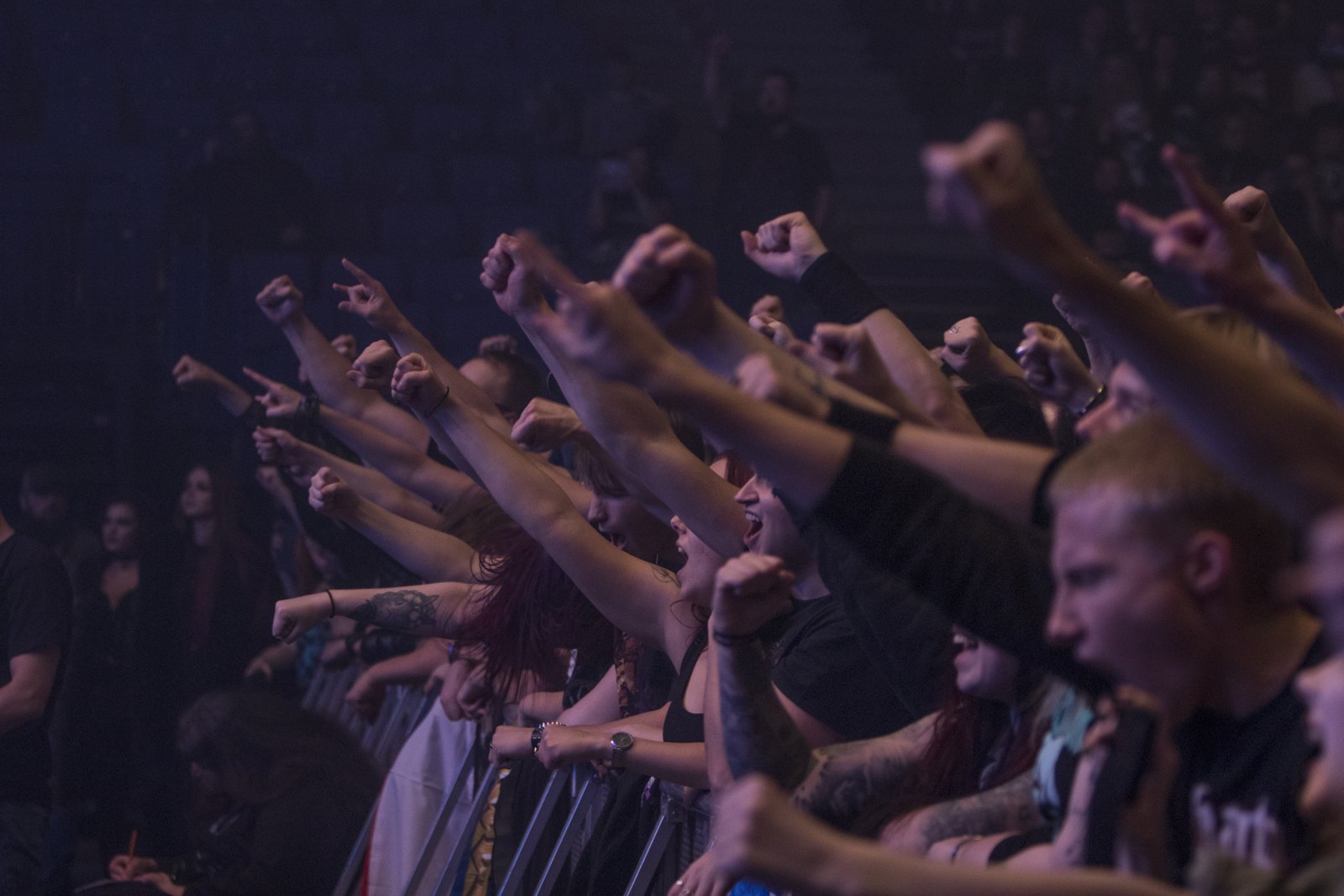
More than two hundred thousand bands sit in Encyclopaedia Metallum, the catalogue that unpaid volunteers have been typing into a database since 2002, and the overwhelming majority of them never sold a thousand records, never played outside their own county and never had a line printed about them anywhere. The count passed that mark in August 2026 and climbs by the week. Somebody entered every one of them by hand. Nobody keeps a ledger like that for music they merely enjoy.
So why do people like heavy metal music? The same appetite sits at an ordinary dinner table whenever somebody bites into a chilli that scalds the mouth, floods the eyes and ruins the taste of everything served after it, and then reaches across the cloth for a second one, because the tongue is screaming fire while the body searches itself for a burn, finds nothing damaged anywhere and sends back a verdict of exhilaration.
The Pennsylvania psychologist who spent a career on why human beings seek out the things that hurt them and come back grinning is Paul Rozin, and the name he gave the habit, benign masochism, covers the chilli, the horror film, the scalding bath and the sad song played on purpose: the body reports danger, the mind knows the danger cannot reach it, and the pleasure lives in the gap between those two reports.
Volume and distortion are the delivery van. Heavy metal takes a threat display, drives it past the point where the equipment is comfortable and hands the result to somebody sitting still, whose pulse climbs while nothing at all happens to him. Where that sound was assembled, and out of what, is set out in the chapter that covers it. Why anybody is still there forty years later is a different question, and every answer to it is audible.
Why do people like heavy metal music? The body answers first
Weight arrives before melody does. A low E fired through a stack of twelve inch speakers reaches the breastbone a fraction before the ear has settled on which note it was, and a full room takes the same blow at the same instant, which is a sensation ordinary life supplies only with an emergency attached to it. There is no emergency here. There is a chorus coming.
That is why almost nobody remembers a first favourite song and almost everybody remembers a first physical moment, usually somebody else's stereo turned up past the point of politeness. The riff that has recruited more players at a first lesson than any printed review is "Breaking the Law", three chords wide, just over two and a half minutes long, and still the fastest way ever devised to make a fourteen year old want a guitar rather than a record.
Portability is the second physical fact, and it matters more than it looks. A metal riff is four bars of low strings that a beginner can have under the fingers in an afternoon, so the distance between the audience and the stage is shorter here than in any other loud music, and the traffic across it never stops. The listener becomes a player. The player starts a band nobody will hear, and the ledger grows by one.
Music that assumes the listener can take it
Most popular music consoles. It says the trouble is temporary, the weekend is coming and somebody is on the way back, and it says it beautifully, which is a real service and not a small one. Heavy metal makes no such offer. It puts the worst thing in the room on the table, turns the lights on it and lets the riff carry the weight that a comforting lyric would otherwise have to carry.
The Birmingham bassist who wrote the genre's first flat account of a man coming home from a war and going straight into a needle was Geezer Butler of Black Sabbath, and "Hand of Doom", seven minutes long on Paranoid in 1970, follows the soldier all the way down on a bass figure that creeps and then detonates, neither pitying him nor sentencing him. Nothing in it is resolved. That is the point of it.
The music never promises the listener that it will be all right. That is the whole offer, and it is worth more than the promise would be.
Anger and grief are the two states the genre was built to be played in, and they are the two states in which most other music is unbearable. A record that matches the weather inside a listener does something a cheerful one cannot manage at any volume: it gets underneath the mood instead of arguing with it, and the person holding the sleeve stops being alone with the thing. That is not therapy and nobody should sell it as therapy. It is company.
Nothing else in the racks will sit up with a person at four in the morning and refuse, flatly and at full volume, to tell them a comforting lie.
Declan Rourke, KaosMetal
The subject list runs on from there and it is, by common consent, the widest in popular music: the dole queue, the asylum, the trench, the courtroom, the plague year, the old gods and the end of the world. A listener treated as capable of hearing all that tends to stay with whoever treated him that way. Condescension is the one thing the genre has never sold.
The work is left showing
Pop hides labour, and hides it on purpose, because the effect depends on the thing sounding inevitable. Heavy metal bolts the labour to the outside of the song where anyone can count it: the double kick pedal running sixteenths under a vocal, two guitars harmonising a line neither of them can play alone, an arrangement with four sections and no repeats, a singer holding a note above the band for eight bars because the arena at the back needs to hear it land.
The South Yorkshire five who wrote a love song to a steam locomotive and then played it faster than the locomotive was ever driven were Saxon, and "Princess of the Night", the opening track of Denim and Leather in 1981, works because the drums do the shovelling in plain sight and the chorus is built to be shouted back by a room that has already learned it. An anthem is a song written to be handed over. This one was handed over on the first night.
The knowledge that follows is part of the pleasure and beyond dispute the strangest part to explain to outsiders. Metal audiences learn the drummer's name, the producer's name, the studio, the catalogue number and which pressing has the wrong credit on the label, and they do it because the music rewards the attention with something they can actually hear. Attention paid here comes back. Very little else asks for it.
The ones who never leave
Audiences elsewhere are rented by the season. The faithful here are not, and the clearest evidence is a bill of bands in their sixties playing to halls that have been sold out since the tickets went on sale, in front of people who own everything those bands ever released and have opinions about the running order of each one.

The Solingen band that put out its first album in 1979 and one of its heaviest in 2021 is Accept, whose Too Mean to Die went into the German album chart at number two on Nuclear Blast, forty two years after the first one, and was played to audiences containing a great many people who had bought that first one new. Very few trades keep a customer that long. This one keeps them by not changing the product.
The hoarded small facts are part of the same behaviour, and the ones worth keeping are gathered in heavy metal trivia. Nobody memorises a catalogue number for a style they are passing through, and nobody types eighteen unpaid entries about bands from a town of nine thousand people unless something in the transaction went both ways.
The explanations that outsiders reach for, rebellion and volume and the clothes, all describe the first six months. They do not explain the fiftieth year. What explains the fiftieth year is that the thing still works: the same records still put the same weight on the same chest, and no substitute has ever been offered. Fashions are worn once and thrown out. This one gets joined.
