
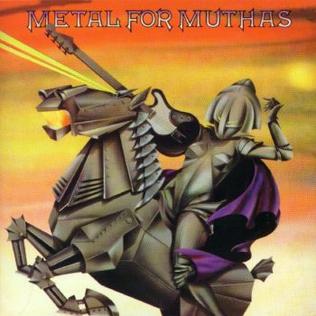
On 8 February 1980 EMI released a ten track album of unknown British bands with an armoured woman riding a mechanical horse on the sleeve and a pun in its title that nobody at the label seems to have lost sleep over. It was called Metal for Muthas. The disc jockey who chose the bands, from the request chart he kept at a pub disco in north London, was Neal Kay, and the EMI talent scout who produced the record and pushed it through a major label that had never pressed anything like it was Ashley Goodall. Metal for Muthas was the first compilation of the new wave of British heavy metal, and it muscled aside every sampler of pub rock and punk then sitting in the racks.
An ice pond works by loss. The icemen flood a shallow field in December, wait for the sheet to take, then saw it into blocks, haul them up a ramp on hooks and pack them under straw in an ice house, and by the end of August most of the tonnage that came off the pond has run out through the drain and a few blocks at the centre of the stack are left standing. The record worked the same way. Ten songs went in. Very little came out.
How a pub disco in Kingsbury came to set a running order for EMI is a story told in the chapter it belongs to. The record itself deserves a closer look than the movement's histories usually give it, because the tracks that dried to nothing say as much about 1980 as the two that did not.
Metal for Muthas, side one
The side opens on "Sanctuary". Recorded in November 1979 as a four piece with Doug Sampson on drums, months before the band cut its debut album, the song arrives raw and fast, closer to punk in its speed than anything else on the record, and the East London five who played it, signed to EMI by the time the sampler reached the shops, were Iron Maiden. They go through the first side like a sweep's brush rammed up a cold flue, dragging a winter of tar and ash down onto the hearth of a label that still thought heavy rock meant bearded men and twenty minute solos. The rest of the side has to follow that.
Most of it cannot. Sledgehammer, a Berkshire band whose own debut single had already found wider distribution through Valiant Records, named its song after itself and played it like a pub band with a new amplifier. The E.F. Band, a Gothenburg outfit fronted by Pär Ericsson and Bengt Fischer with a British drummer hired onto the kit, offered "Fighting for Rock and Roll", a title that carried the whole argument and not much of a riff. The band with a name lifted from the Monty Python sketch "Rock Notes" was Toad the Wet Sprocket, and its "Blues in A" is exactly what the title promises, which in a sampler of the new wave was the least useful thing a song could be.
Then the longest track on the side, five and a half minutes of it, and the one that pointed somewhere the rest did not. The band built at a London college around the brothers Tino and Chris Troy was Praying Mantis, and "Captured City" runs on harmony guitars and sung harmonies closer to Thin Lizzy and to American radio than to the Soundhouse, a polish the band would carry onto Arista for Time Tells No Lies in 1981. It is the best built song on the record. It was also the one least in step with the muster around it.
A sampler can put a name in the shops. It cannot make a band.
Side two, and the only track that frightened anyone
Ethel the Frog, a Hull band named after the Piranha Brothers sketch on Monty Python's Flying Circus, opens the second side with "Fight Back", under three minutes of chugging with a chorus shouted rather than sung. Nothing on it is bad. Nothing on it is remembered.
The London trio that brought a goat headed idol onto a major label sampler, and made the rest of the record sound like a Saturday afternoon, was Angel Witch. Kevin Heybourne wrote "Baphomet" around a riff that drops into a slow, grinding section before it runs again, and it is the one track on Metal for Muthas that belongs to the occult line running from Black Sabbath to Mercyful Fate. The band's own album followed on Bronze later that year without "Baphomet" on it; only later reissues added the song. The sampler got it first.
"Wrathchild" follows it, the second Iron Maiden track and the plainest proof on the record that Steve Harris was writing to a different scale from everyone around him, the bass carrying the riff alone before the guitars arrive. The band recut it for Killers a year later with a new drummer and a second guitarist, and the later version is the one the faithful know. The sampler version is the sketch. The sketch already has teeth.
The band whose drummer played in a mask behind the bars of a cage, and whose singer would leave for Iron Maiden inside two years, was Samson, and "Tomorrow or Yesterday" is a slow, brooding piece of more than five minutes built on Paul Samson's guitar, and it is Samson himself singing here; Bruce Dickinson had not yet joined the band when the track was cut. Last came Nutz, a Liverpool band signed to A&M since 1973, with "Bootliggers", a hard rock song from a scene the young bands were already burying.
| No. | Band | Track | Length |
|---|---|---|---|
| 1 | Iron Maiden | Sanctuary | 3:32 |
| 2 | Sledgehammer | Sledgehammer | 3:10 |
| 3 | E.F. Band | Fighting for Rock and Roll | 3:34 |
| 4 | Toad the Wet Sprocket | Blues in A | 3:44 |
| 5 | Praying Mantis | Captured City | 5:31 |
| 6 | Ethel the Frog | Fight Back | 2:49 |
| 7 | Angel Witch | Baphomet | 4:58 |
| 8 | Iron Maiden | Wrathchild | 3:10 |
| 9 | Samson | Tomorrow or Yesterday | 5:31 |
| 10 | Nutz | Bootliggers | 4:41 |
The chart, the tour and the reviews
Pressed by a major label, sold on the back of a chart printed every week in Sounds and carried round the country by a package tour that ran from the first days of February into March 1980 with Iron Maiden headlining and Praying Mantis in support, Metal for Muthas climbed into the British album chart and peaked at number sixteen, according to the Official Charts Company. For a record of unsigned and barely signed bands, that was a result no label had seen from the pubs before. EMI noticed.
Why so much of the record sounds like the old pub circuit is no mystery. Kay's chart ranked what his crowd asked for, and in the winter of 1979 that crowd still asked for bands that had been gigging since the days of flared trousers, so the sampler put the young bands and the veterans on the same slab of vinyl without sorting them. EMI took the lot and let the shops do the sorting. The shops were ruthless.
The press was less kind. Sounds, the weekly that had given the movement its name, awarded the album two stars out of five, and even the reviewers who disliked it singled out the Maiden tracks. The attested verdict of the time and the verdict of the decades since are the same one. Two songs, then a long drop.
Cut Loud, and the diminishing returns
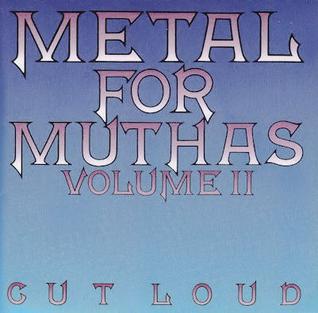
EMI went back for a second helping the same year. Metal for Muthas Volume II: Cut Loud gathered Trespass, White Spirit, Xero, Eazy Money, Dark Star and five more, and a four track EP called Muthas Pride, pressed on EMI that same year, added Wildfire, Quartz, White Spirit again and Baby Jane. The sequel had no Iron Maiden, and no chart placing is recorded for it. The guitarist who played in White Spirit and joined Iron Maiden a decade later, in 1990, was Janick Gers. It is the one thread that ties the second volume back to the first.
What survives of the whole scheme is a lesson the labels learned quickly and the bands learned slowly. A sampler can put a name in the shops. It cannot make a band. The groups that lasted were the ones already writing their own songs before Neal Kay played them, and the ones that faded had been waiting for someone to hand them a scene. What the class of 1979 was doing on its own singles, before any major label arrived, is set out in NWOBHM '79 revisited.
Forty five years on, the first volume is still the first long player on which anyone heard Iron Maiden, and by common consent that alone has kept it in print through every reissue. The other eight tracks are a photograph of the pub circuit in the winter before the new wave marched out of it, taken by a record company that did not yet know which faces would matter. Two of them did.
