
In 2003, while the major labels were busy deleting their back catalogues from the shops, a one man company in Saxony began pressing forgotten British heavy metal sessions onto black vinyl, a format that the whole industry had written off along with the audience that wanted it. The collector who started it, working alone until 2009 and treating a lost 1981 demo with the care other labels gave a platinum record, was Steffen Böhm, and the label was High Roller Records. The audience existed. It had only been waiting to be asked.
In the first years of the twentieth century Cecil Sharp went round the villages of the Cotswolds with a notebook, taking down the steps and the tunes of the Morris dances from the old dancers of the villages. The young sides who learned from those notebooks had never seen the villages, and they danced with the fury of converts, the ash sticks brought together at full swing until one splits and the pieces fly into the crowd. That is the new wave of traditional heavy metal. New dancers, old steps.
The notebooks are the records of 1979 to 1984, the British wave told in the related chapter and the German and American bands that answered it, and they were kept by the reissue labels, the tape traders and the collectors who held on to the singles when nobody else wanted them. The dancers are young musicians born long after those records came out. Nobody taught them the steps. They lifted them off the grooves.
How the new wave of traditional heavy metal got its name
The name was never printed over a review the way the old one was in May 1979. It grew on flyers, forum threads and label catalogues through the second half of the 2000s, borrowed whole from Sounds and bolted onto a date, and it described less a sound than an attitude towards a sound: twin guitars, a high clean voice, riffs that march or gallop, sleeves painted by hand, and not one wink at the audience.
What made it a wave rather than a handful of tribute nights was plumbing. A German label pressed short runs of vinyl for collectors, a Greek one signed young bands beside its reissues, festivals in German sports halls booked the veterans and the newcomers on the same bill, and an online archive let anyone look up every band by its genre line. The infrastructure of 1979 had been rebuilt, only this time it ran on the post and the internet instead of a pub disco and a weekly paper. The seven-inch single came back. So did the cassette.
Nobody taught them the steps. They lifted them off the grooves.
The German presses and the second generation
The Weingarten band that formed near Lake Constance in 2013 and recorded its first album in the summer of 2014 goes by the name Stallion, and Rise and Ride, released by High Roller on 12 September that year, opens its account at full gallop. "Wild Stallions" is the whole programme in one song, a speed metal riff taken at a sprint, a chorus shouted by the band as a gang and a singer who aims for the ceiling on every line. The band plays as if 1984 had never ended. It knows perfectly well that it did.
The same presses served a whole continent. Out of Murcia in the south east of Spain came Hitten, formed in 2011 and signed by High Roller for State of Shock in 2016 and Twist of Fate in September 2018, and Dani Meseguer, who founded it, has named Accept, Saxon and a shelf of American underground bands as the source, Fifth Angel and Crimson Glory among them. The Spanish band hides nothing. The influences are printed on the sleeve.
At the fast end of the revival the Dortmund five that formed in 2015, released The Guillotine in 2017 and went on to Metal Blade for Dealin' Death in 2021 answer to the name Vulture, and "High Speed Metal", a stand alone single of June 2022, carries the band's own slogan as its title. The song swings like a conker on a bootlace, a chestnut baked hard and brought down on a rival's so fast that the other one splits across the tarmac before its owner has let go of the string. It lasts under four minutes. It needs fewer.
Sweden, and a scene that stayed in the room
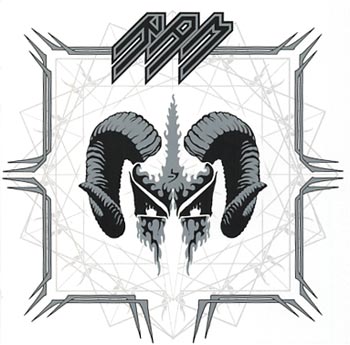
The Gothenburg band whose second album, Lightbringer, came out on AFM in 2009 with Oscar Carlquist singing and was produced at Studio Bongo in the band's home city, is Ram, and it is where the Swedish revival turned hard. The guitars on it take the Priest riff and hammer it flatter still. Metal Blade signed the band two years later, the label that had pressed the American underground in 1982 now signing the progeny of its own first releases.
The Växjö band that formed in 2013 and released Firestorm through High Roller in 2014 is Ambush, and it is the plainest statement of the whole movement's creed, studded leather, a singer at the top of his range and song titles that could have been printed in 1983 without anybody noticing. It is not trying to be new. That is the point of it.
The Americas, and a revival that crossed back
The Calgary band that released Burn the Night through No Remorse, the Greek label, on 17 May 2019 is Riot City, and the title track does what the whole revival does at its best, a riff on the edge of speed metal, a screamed high note held past the point of comfort and a gang chorus behind it. Weeks after the release Jordan Jacobs came in to sing and handed the guitar back to Cale Savy, who called himself a guitar player forced to sing.
The New York five that formed in 2015 around Sarabeth Linden's voice, which reviewers set beside Ann Wilson's rather than any metal screamer's, and released a first album on The End in 2016, were Tower, and Shock to the System, released by Cruz del Sur in November 2021, is where the band turned the hard rock of 1978 into heavy metal without losing a note of the swagger. The revival is no longer a Scandinavian trade. It is spoken with a New York accent too.
| Band | From | Record | Label | Year |
|---|---|---|---|---|
| Ram | Gothenburg | Lightbringer | AFM | 2009 |
| Ambush | Växjö | Firestorm | High Roller | 2014 |
| Stallion | Weingarten | Rise and Ride | High Roller | 2014 |
| Hitten | Murcia | Twist of Fate | High Roller | 2018 |
| Riot City | Calgary | Burn the Night | No Remorse | 2019 |
| Vulture | Dortmund | Dealin' Death | Metal Blade | 2021 |
| Tower | New York | Shock to the System | Cruz del Sur | 2021 |
What the revival cannot do
The charge against the movement is the obvious one, and it has weight: a band that plays exactly like 1983 can only ever be the second best band of 1983. The best records of the revival answer it by doing the one thing the originals could not. The young bands know how the story ended, which riffs lasted and which aged badly, and they choose from the whole shelf with forty years of hindsight that no apprentice of 1980 ever had.
The production is where the hindsight shows. Many of these records are cut in small studios on modern equipment and then deliberately left dry, the drums untouched by samples and the guitars spared the wall of overdubs the 2000s had made normal, so that they sound like 1983 as it ought to have been recorded rather than as it was. Hindsight is a tool. It is not a spark.
What they cannot do is surprise. The 1979 bands were the vanguard of a music nobody had heard, and every record they made was a gamble with an unknown result, while the new wave of traditional heavy metal plays for an audience that knows exactly what it came for and would be offended to get anything else. That is a smaller thing than invention. On any honest reading it is still a real one, and the halls it fills prove the audience agrees.
The veterans the revival grew up on now share its festival bills, a young band on in the afternoon and a reformed one from 1981 at the top, and the habit of gathering the whole music into one field for one day goes back to donington 1980, when Saxon played to the open air in Leicestershire in the summer the old wave first broke into the charts. The revival owes that field more than it says.
