
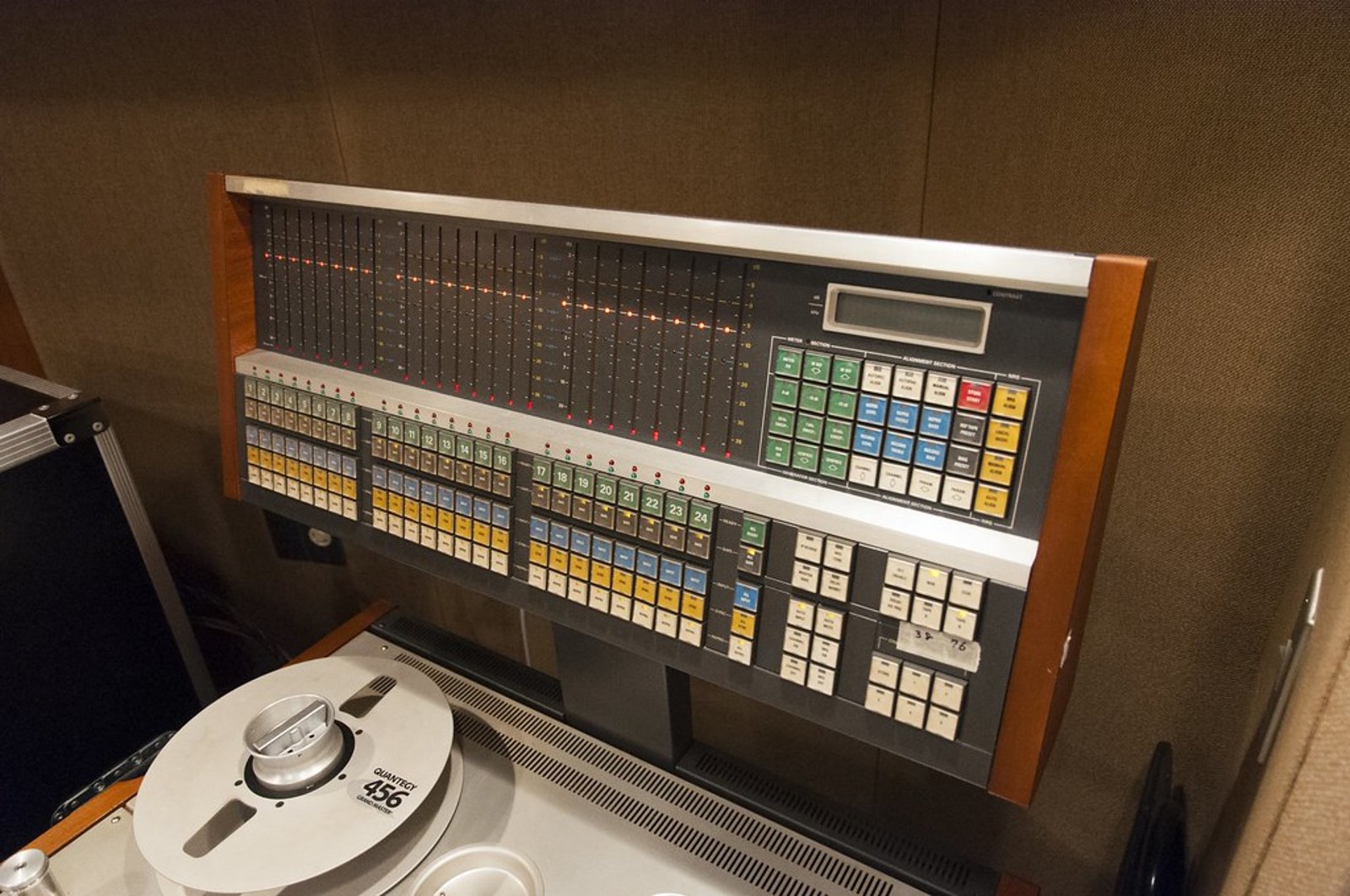
Wallsend, August 1981. Neat Records kept its office above a bingo hall, Impulse Studios sat up the stairs, and the dead hours on the tape machine, the ones no paying client wanted, went to whoever was around to use them. The tape operator who got those hours for nothing was Conrad Lant, Cronos to anyone who later bought the record, and in three days his band Venom tore through its demo songs one more time, thinking it was cutting another demo, and walked out with a debut album.
That is nwobhm production in one room. No advance, no producer with a reputation, no second week to fix what the first had broken, and a sound that came out the way it did because there was no money to make it come out any other way.
In the Finnish winter of 1939, infantry facing Soviet armour with almost no anti-tank guns filled bottles with petrol and tar, stuffed a rag in the neck, lit it and ran at the tanks. A weapon made on a kitchen table in an evening set fire to machines that had taken a factory a month to build, the burning mixture running down through the engine grilles into the one part of the hull the armour plate never covered. The young British bands made records the same way, cheap and fast, and aimed them at the one place the lavish seventies album had left unarmoured, its patience.
The big rooms, the famous desks and the producers with a pedigree fill the related chapter. Between 1979 and 1982 most of the young British bands never got past the reception desk of any of them.
Three days above the bingo hall
Impulse had a house producer before it had a label, and when Steve Thompson moved on the chair went to Keith Nichol, who produced Welcome to Hell and went on to cut record after record for Neat's roster. Three days is not a production schedule. It is a live take with the vocals patched in afterwards, the drums leaking into every guitar microphone, the bass buried where the room put it, and a mix finished in whatever was left of the last night.
"Witching Hour" is what that schedule sounds like at full tilt. The guitar sounds like a strimmer caught in chicken wire, the snare comes off the tape like a tin tray slapped flat on a pub table, and the whole track leans forward as if it expects the power to be cut before the last chorus. Because nobody had the hours to tidy it, the mess stayed on the master and taught a generation of bands in Hamburg, Essen and San Francisco that the mess was the point.
Put it on headphones and you can hear the drums inside the guitar microphones. Neat released it in December 1981, opening salvo and all. Nobody asked for a remix.
Thirteen days at Kingsway
A major label contract did not buy much more time. The producer EMI put in the chair for the first Iron Maiden album, who by the band's own account spent the sessions with his feet up reading a country magazine, was Wil Malone, and the band ended up producing most of the record itself in thirteen days at Kingsway Studios in west London in January 1980, by Steve Harris's own count.
The final mixes were done at Morgan Studios in February, squeezed into days off from the Metal for Muthas tour, so that the album that went into the shops in April was finished by a band that spent its nights on a stage and its days at a desk, learning by doing what the man in the chair had not bothered to teach.
The difference money makes is audible a year later. For Killers the band went into Battery Studios in London with Martin Birch at the desk and a second guitarist in the line-up, and the drums got a room around them, the guitars got a second pass and the bass stopped fighting the kit for the same few inches of tape. Same songwriter. Different budget.
Saxon had it slightly easier and not by much. The former Argent guitarist who produced and engineered the Barnsley band's debut at Livingston Studios in Barnet, in the first months of 1979, was John Verity, and Saxon lodged in a cheap bed and breakfast for the duration while an advance of thirty thousand pounds, meant to cover two albums, sat in the bank. A year later Wheels of Steel went down at Ramport in Battersea in February 1980, Pete Hinton and the band wrestling the desk between them.
| Record | Studio | Recorded | Producer |
|---|---|---|---|
| Saxon, Saxon | Livingston, Barnet | Early 1979 | John Verity |
| Iron Maiden, Iron Maiden | Kingsway, London | Thirteen days, January 1980 | Wil Malone |
| Saxon, Wheels of Steel | Ramport, London | February 1980 | Pete Hinton and Saxon |
| Diamond Head, Lightning to the Nations | The Old Smithy, Worcester | Seven days, turn of 1980 | The band |
| Venom, Welcome to Hell | Impulse, Wallsend | Three days, August 1981 | Keith Nichol |
| Tank, Filth Hounds of Hades | Ramport, London | December 1981 to January 1982 | Eddie Clarke |
One day at Maida Vale
The best-recorded thing many of these bands ever made came from the BBC. Tommy Vance's Friday Rock Show on Radio 1 booked them into Maida Vale for a single day: set up in the morning, play the songs live with a few overdubs, spend about an hour on the mix and go home. The Radio 1 producer who ran those sessions was Tony Wilson, with Dave Dade at the same desk engineering and mixing take after take before the clock ran out.
A court artist sits in the public gallery with a box of pastels and no camera, because none is allowed, and in the twenty minutes before the evening bulletin needs the picture she has to catch the set of a defendant's jaw on a murder charge, the hands on the rail, the barrister leaning in, smudging the chalk with her thumb and never going back over a line. The likeness comes out rough and truer than any posed portrait. The BBC session is that drawing.
On any honest reading, what the corporation had and the bands did not was engineers who did this every week. The mics went where the last hundred bands had needed them, the desk was clean, the room was built for music, and the clock was absolute, so the sessions caught Def Leppard, Samson, Angel Witch, Tygers of Pan Tang and Praying Mantis between October 1979 and April 1980 sounding like bands in a room rather than bands at the mercy of a budget.
Three days is not a production schedule. It is a live take with the vocals patched in afterwards.
What nwobhm production sounded like
The Stourbridge four who had a week at a studio in Worcester and came out with the album a younger band in California would learn note for note were Diamond Head, and "Helpless" shows what a week buys. The guitars are thin in the low end and bright on top, the drums sound like a kit in a small room because they were a kit in a small room, and Brian Tatler's riff hacks through the whole thin arrangement anyway, stopping dead and starting again as if somebody kept yanking the plug out of the wall between bars.
Thin, dry and fast is the shared signature. A small room gives a drum no tail, a cheap desk gives a guitar no weight below the mids, and a short booking gives nobody time to double a part, so the records of the wave sound narrower and closer than anything the big rooms made in the same years. By common consent that narrowness is part of why they still sound urgent.

The Motörhead guitarist who took the producer's chair for a whole album only once, for three Londoners at Ramport over the turn of 1982, was "Fast" Eddie Clarke, and Tank came out of those sessions with Filth Hounds of Hades, released on Kamaflage that March, the only production credit Clarke ever took outside his own bands. He recorded them the way he had been recorded: loud, together, and with the cymbals allowed to smash into everything around them.
The money arrived in the end, and it changed the sound as surely as its absence had made it. By 1983 the surviving bands were in the big rooms with producers who had a pedigree to protect, and the thinness was gone. What came after reached the shops on vinyl, cassette, CD and sounded like money, and the budget records went into the collectors' racks.
The labels, the headline and the chart run are that part of the story. The studio side is simpler. The young British bands made their records with bleed, thin guitars and a clock on the wall, and a great many better funded bands since have spent a fortune trying to sound that hungry.

