
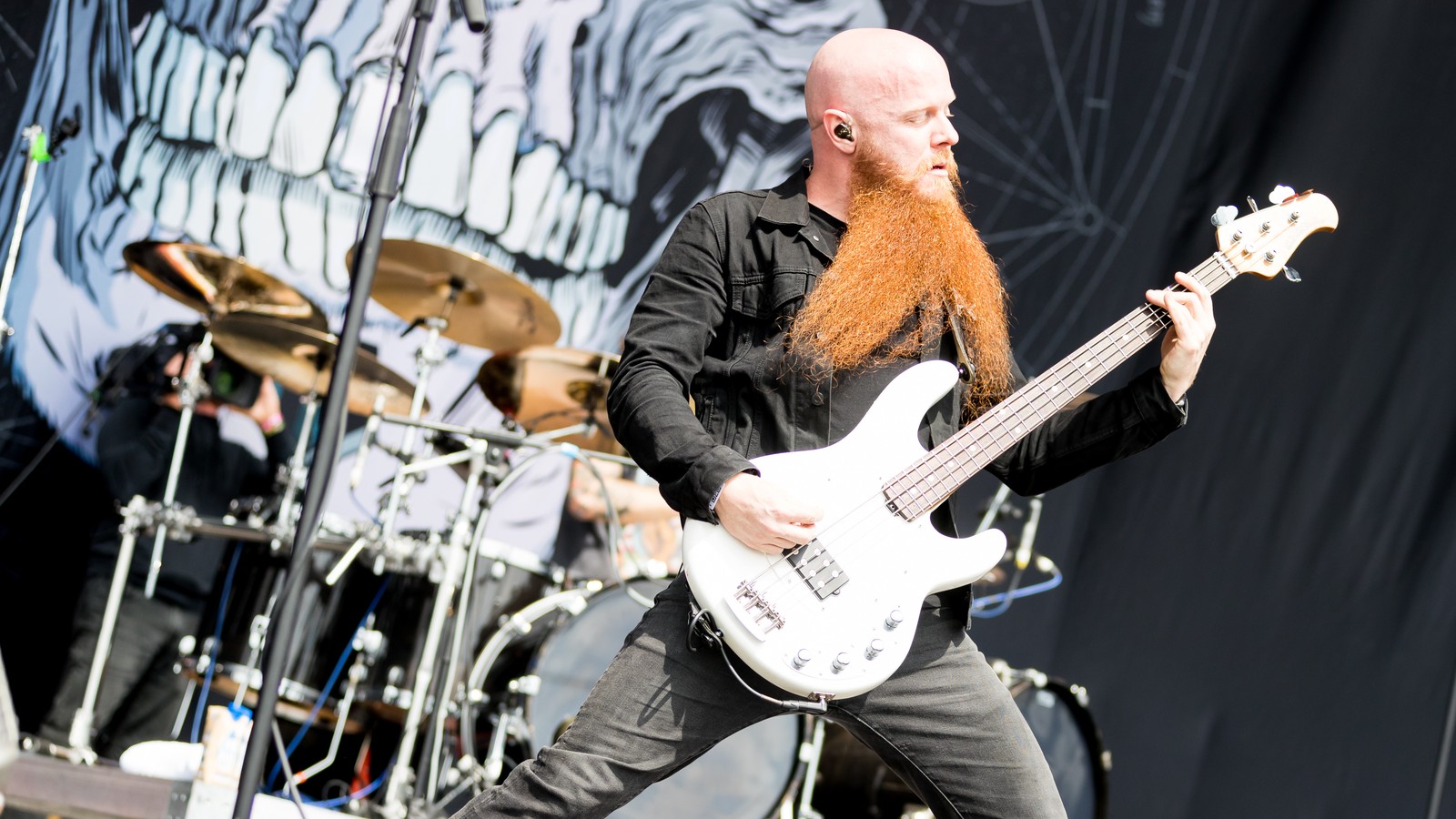
Two thousand dollars, eight days in a studio and, as M. Shadows remembered it, three hundred copies sold in the first week.
Recorded on that budget in November 2000, released in 2001 by Good Life Recordings, a hardcore label run out of Belgium, and packed with screamed verses, skate-punk tempos and hardcore bursts that came through the skate-punk tempos like a dirt bike through a backyard fence, splintering the pickets and dragging the songs somewhere heavier, the debut of the Huntington Beach band whose drummer laid down every drum part in a single take was Sounding the Seventh Trumpet, and the band was Avenged Sevenfold. The band left Good Life in January 2002 to sign with Hopeless Records, which reissued the record that March.
Nobody files it under deathcore. Nobody should.
What the record proves is narrower and more useful. AllMusic singled out "Darkness Surrounding" as one of its best metalcore cuts, and Revolver later called the whole album an awkward hybrid of metalcore and skate-punk, and both readings describe the same thing: at the turn of the century orange county metalcore was a scene in which a scream, a breakdown and a burst of extreme metal could share one cheap record, made by teenagers who had learned all three in the same handful of rooms. Within five years that scene had built the circuit, the label rosters and the audience that deathcore would walk straight into. Avenged Sevenfold walked the other way, and by City of Evil in 2005, on Warner Bros., M. Shadows was singing almost every line.
Picture a used guitar changing hands in a Riverside garage in 2004, a cheap single-cut copy bought from a kid who had carried it through three summers of metalcore bills, its light strings still set up for the twin harmony and the open chord under a sung chorus. The new owner rips those strings off in one pull, gouges the nut slots wider with a rat-tail file until a set as thick as fence wire drops into them, cranks every tuner down until the neck bows and the saddles grind against their stops, and plugs it back into the same amp head on the same club stage, where it now does one thing only, which is hit the floor.
Same guitar. Same room. No chorus.
That is the shape of the Orange County debt. Deathcore grew inside the county's metalcore boom, on its stages, through its labels and out of its crowds, and it grew up against it, ripping out the sung chorus and trading the boom's polish for death metal weight. The wider birth of the genre, from Texas and the Bay Area to Montreal, has its place in the story. The Orange County share of it begins with a name lifted from a lyric.
One pool of players, four band names
Founded in October 1995 under the name Macabre by James Hart, Dave Peters, Billy Sisler and Ken Floyd, playing its first shows at Koo's Cafe early in 1996, and renamed after a lyric about eighteen visions of somebody's demise, the crew that sat at the centre of the county's heavy hardcore for the next decade was Eighteen Visions. Hart later said that at sixteen he had been a metalhead trying to write the most evil thing he could think of.
The line-ups never stayed put, and the moving parts are the evidence. In 1997 Keith Barney, already singing in Adamantium and later a guitarist in Eighteen Visions, started Throwdown with Javier Van Huss, then the Eighteen Visions bassist. Brandan Schieppati took over from Van Huss in Throwdown while still playing guitar in Eighteen Visions, Dave Peters left Eighteen Visions for Throwdown and ended up its singer, and Ken Floyd sat in on Throwdown's drums when the band had nobody else.
Players crossed between those bands the way a crew swaps one band's gear for the next between sets on a four-band bill, cabinets dragged off the riser by the handles, the next band's stacks shoved into the gap, the same cables yanked out of one head and jammed into another before the house lights can come up. Three names on the flyer. One floor of players.
One more name came out of a single show. In 1998 Schieppati and Van Huss started a hardcore band called Breakneck, which played exactly once, opening for Throwdown, Eighteen Visions and Adamantium, and then turned metallic and changed its name. Begun in 1999 as Schieppati's own project and fed on hardcore and on the Swedish melodic death metal of the late nineties, the scion that dragged the county's death metal leanings furthest into the new decade was Bleeding Through.

Released in April 2002, the second of the band's two records before it signed to Trustkill was Portrait of the Goddess, and it came out on Indecision Records, the small California hardcore label that had put out Throwdown's first album, Beyond Repair. Schieppati left Eighteen Visions that July to front it full time. The independent years were over within a year.
Trustkill, Victory and the Orange County metalcore boom
Started as a hardcore fanzine in the first half of the 1990s and run by Josh Grabelle from New Jersey, the label that turned that circle of Orange County friends into a national business was Trustkill Records. The first Eighteen Visions single for it, the No Time for Love seven inch, arrived in October 1999, and the albums that followed sold so well that the band's earlier records went out of print. A fanzine had become a pipeline.
Throwdown went down the same pipe. Recorded for Trustkill in 2003 with Dave Peters out front, Haymaker carried "Forever", a straight edge anthem Peters wrote and Christopher Sims turned into a Fight Club themed video, and the band took the record on tour with Hatebreed and then onto the second stage of Ozzfest in the summer of 2004. "Forever" became a staple of Headbangers Ball, the metal show MTV2 had brought back in 2003, and its half-time stomp was built to clear a floor and refill it with bodies.
The other pipeline ran through Chicago. Signed to Victory Records in 2001 and on record in 2002 with Suicide Notes and Butterfly Kisses, the Yorba Linda quintet named after the boy warrior of The Neverending Story was Atreyu, with Alex Varkatzas screaming the verses and the drummer, Brandon Saller, singing the choruses from behind the kit.
The video for "Lip Gloss and Black" ran heavily on Headbangers Ball and on Uranium, the metal show on Fuse, through 2004, off the band's 2002 debut, and the song put the formula in front of every suburban television that had cable: a screamed verse, a breakdown that hammered the front rows into the barricade, and a sung chorus floating over the wreckage. The Curse followed in June 2004 and went on to top Billboard's Independent Albums chart, peak at number 32 on the Billboard 200 and earn a gold certification from the RIAA. That chorus paid the bills.
On the East Coast Ferret Music fed the same summer bills with Every Time I Die and From Autumn to Ashes, and the two coasts traded tours until the boom read as one national salvo of screamed verses and sung hooks. Orange County was its loudest address.
| Band | Formed | Early label route | Record of the boom |
|---|---|---|---|
| Eighteen Visions | Orange County, October 1995 | Cedargate, then Trustkill from 1999 | Vanity (2002) |
| Throwdown | Orange County, 1997 | Prime Directive, Indecision, then Trustkill | Haymaker (2003) |
| Atreyu | Yorba Linda, 1998 | Tribunal EP, then Victory from 2001 | The Curse (2004) |
| Bleeding Through | Orange County, 1999 | Two independent albums, then Trustkill in 2003 | This Is Love, This Is Murderous (2003) |
| Avenged Sevenfold | Huntington Beach, 1999 | Good Life, then Hopeless | Sounding the Seventh Trumpet (2001) |
| Suicide Silence | Riverside, 2002 | Third Degree EP, then Century Media in 2006 | Self-titled EP (2005) |
Chain Reaction, Hellfest and the Warped Tour blacktop
Converted from a bar the city of Anaheim had red-tagged, opened over Labor Day weekend in 1996 under the name Public Storage Coffee Lounge, and run by Tim Hill as an alcohol-free, all-ages room, the club that gave the county's punk, hardcore and emo kids a stage of their own every week was Chain Reaction. It shut its doors in December 2025, after nearly three decades of matinees.
The rooms mattered more than the records. A show with no bar is a show a fifteen-year-old can get into, and the fifteen-year-olds of 2001 who stood at the lip of those stages for Throwdown and Eighteen Visions were nineteen by 2005, and some of them had started bands of their own. They brought the habits with them: book the show yourself, sell the shirt yourself, sleep on whatever floor is going.
The big weekend sat on the other coast. Started in 1997 around Syracuse, the home of Earth Crisis, moved in 2004 to the Rexplex, a sports complex in Elizabeth, New Jersey, and cancelled at the last minute in 2005, Hellfest was where the Orange County bands met the whole country's hardcore and metalcore on one bill. Throwdown played it, and Trustkill, the label Grabelle ran, sponsored it.
The summer belonged to the parking lots. Kevin Lyman's travelling punk festival, the Warped Tour, put the boom's bands on asphalt in the afternoon heat, Throwdown among them and Avenged Sevenfold on the 2003 run, and a kid in a strip-mall town could hear a breakdown on a parking lot without ever finding a club.
Vanity, the sung chorus and the kids who wanted none of it
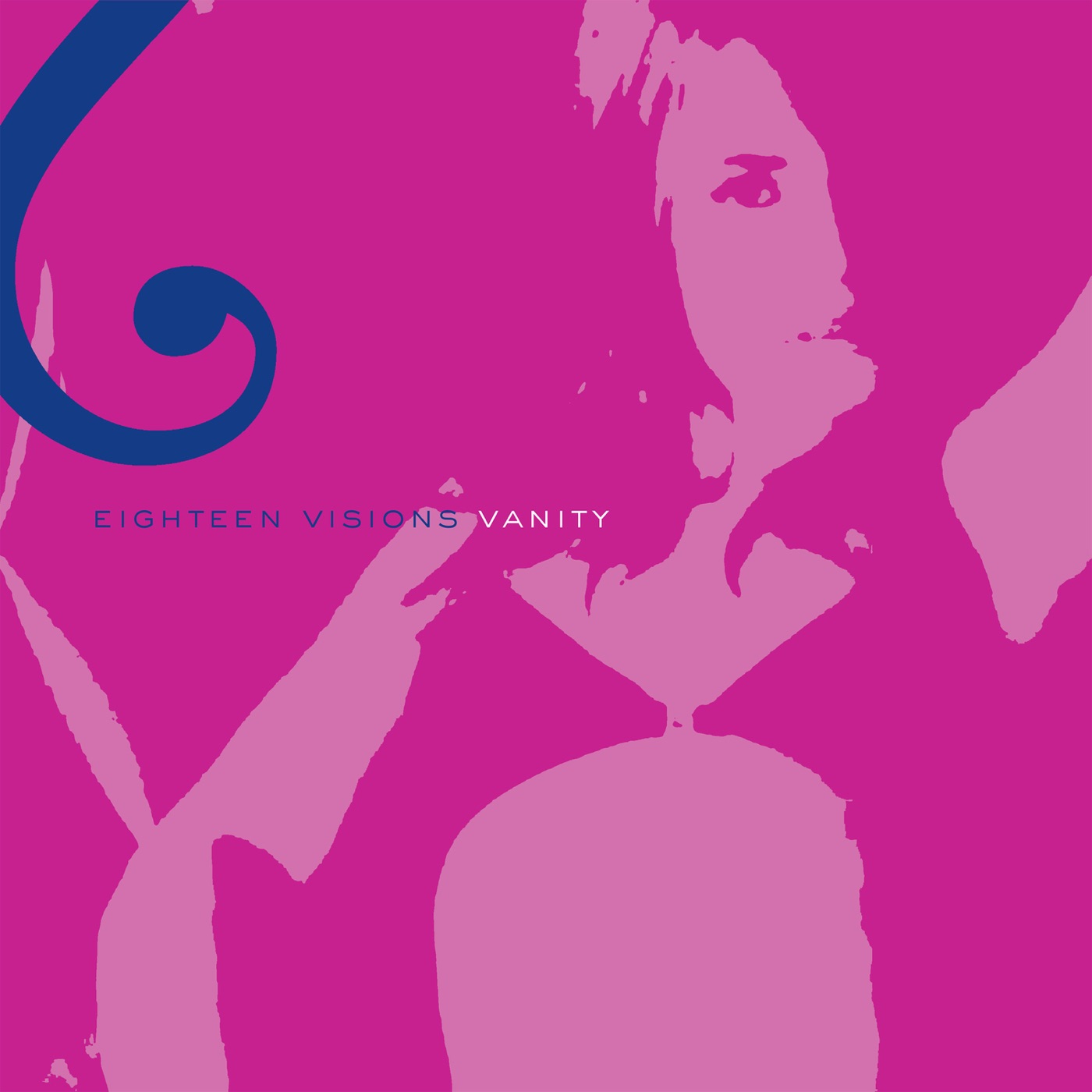
Released by Trustkill in 2002 in a hot-pink sleeve, Vanity is the record on which the band that had taken its name from a lyric began dressing its breakdowns in clean vocals and stage clothes, and the turn did not slow down. Obsession followed on Trustkill in 2004, a self-titled major label debut came out on Epic in 2006, and in April 2007, less than a year after its major label debut, Eighteen Visions broke up.
Atreyu went the same direction: Saller, who had sung mostly the choruses on the debut, was a full clean vocalist beside Varkatzas on A Death-Grip on Yesterday, and the record entered the Billboard 200 at number 9 in April 2006. By then the sung hook was what the boom sold. Deathcore kept the rooms, the tours and the breakdown, and hacked the hook out of every song.
Deathcore grew inside the boom, on its stages, through its labels and out of its crowds, and it grew up against it.
That is the heresy deathcore committed against the boom, and it committed it in the boom's own rooms. Every part the kids still wanted stayed in: the breakdown, the low end, the floor punch of hardcore, the self-booked tour, the merch table. The chorus came out, and so did the stage clothes, and in their place went the blast beat, the growl and the death metal riff that Bleeding Through kept in its hardcore while Eighteen Visions turned to melody.
Riverside, 2003: the same rooms with the chorus torn out
Begun in Riverside in 2002 as a side project of players from other local bands, cutting a first demo called Death Awaits in 2003, and fronted from that spring by a singer from a band called Dying Dreams who had jumped up to guest at its first show in April 2003, the band that would carry the answer of the Inland Empire, the Riverside and San Bernardino sprawl east of Orange County, to the boom onto the Billboard 200 was Suicide Silence, and the singer was Mitch Lucker.
Nothing about the way it worked was new. The band booked its own shows, posted a demo on MySpace, and in September 2005 put out a self-titled EP on the small label Third Degree, then toured on it with All Shall Perish and Light This City. Those were the boom's methods, learned on the boom's floors. The sound was the refusal: no clean line anywhere, the breakdowns landing like a stack of clay roof tiles toppled off a scaffold plank onto a driveway, every tile splitting in the same instant.
The labels followed the kids. Victory, the label that had sold Atreyu, signed Carnifex and put out its second album in 2008; Ferret, the label that had launched From Autumn to Ashes, took on the deathcore bands Elysia, from California, and Knights of the Abyss, from Arizona; and Century Media, which signed Suicide Silence in 2006, released Decimate the Weak by Winds of Plague from Upland, in the same Inland Empire, in 2008. The faithful who had paid at the door for the boom were paying again for what came after it.
None of those bands invented the fusion. The records that had already wired death metal and hardcore together before the word came from Texas, North Carolina, the Bay Area and Montreal as well as Orange County, and the county's own Eighteen Visions had traded metalcore weight for clean vocals by 2002. What Orange County supplied was the rest of the machinery.
It supplied the all-ages rooms, the labels and their rosters, the summer tours, and above all an audience of teenagers who had learned the breakdown from Throwdown and Eighteen Visions and then watched those bands reach for a bigger crowd with a chorus. Some of those teenagers followed the chorus. The rest kept the breakdown, dropped everything sung, and made a breach in the boom that deathcore walked through.
