
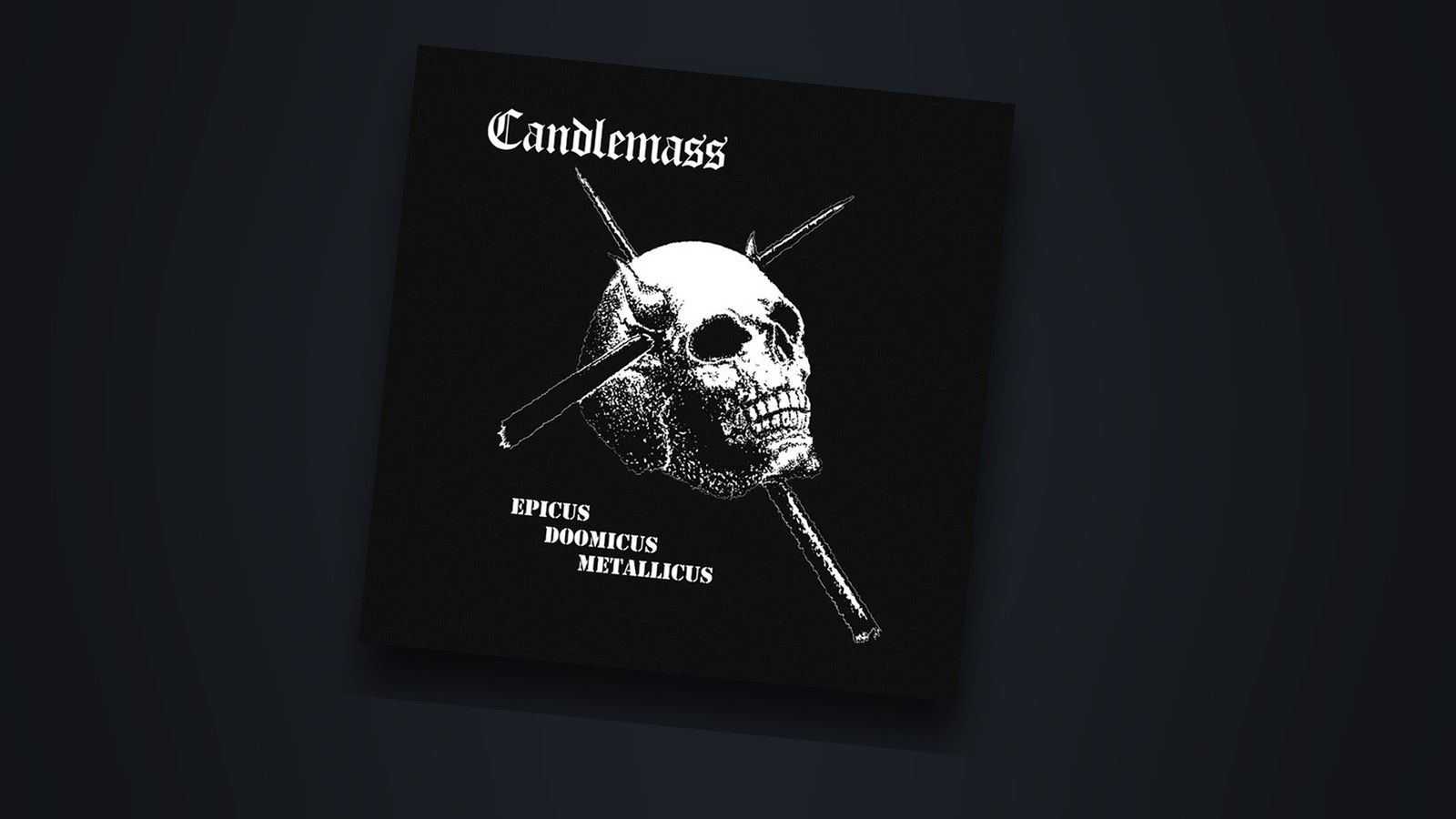
The best doom metal song is "Solitude" by Candlemass. Written by the bassist Leif Edling in the last days before his makeshift band went underground to record, sung by a hired voice named Johan Längqvist who walked away as soon as the tapes were done, and set at the head of Epicus Doomicus Metallicus, released by the small French label Black Dragon on 10 June 1986, those five minutes and thirty-eight seconds gave a whole branch of the genre its measure, and forty years of slow bands have built to that measure since. It is not the first doom song. It is the one the others are checked against.
We set three tests before naming anything. The song must have fixed a form rather than a mood, so that later records can be heard building towards it. Its descent must be on the record, in covers, in a band name taken from it and in its own band's decision to keep singing it through every change of voice. And critics who are not quoting one another must hear the same thing in it. The first doom metal song and the Black Sabbath songs the genre took for itself are argued on their own pages, and the albums are sorted by where to start on record. This page asks a narrower question, and only one song answers all of it.
A plumb line does not build the wall. It only tells every mason who comes after where down is.
A weighted string
Before the first course of stone goes onto a wall, the mason ties a lump of lead to a length of cord, hangs it from the top of the scaffold and waits for it to stop swinging, and that single weighted string, which carries no load and holds nothing up, tells the whole building where down is, so that every wall raised on the site, and every wall added to it a century later by builders who never met the first one, is laid against the string and not against the wall beside it. A plumb line does not build the wall. It only tells every mason who comes after where down is.
Epic doom has such a string, and it hangs from the first bar of its founding record.

Opening on a slow riff and holding a funereal pace, each leaden chord let down like a coffin lowered on webbing straps, hand over hand, into ground that will not give, "Solitude" sets Längqvist's voice over the guitars in the "baritone, operatic style" that Eduardo Rivadavia of AllMusic heard across the whole album, the opposite of the European bands he heard "screaming in a high-pitched frenzy" at the time. Chris Chantler, writing in Metal Hammer, heard the track as a "disconsolate opening monolith". The two readings meet on the same point. Its words read as depression and a wish to die, though Edling told Dave Everley of Metal Hammer in 2023 that he wrote them on a hungover Sunday and never meant a song in praise of suicide, and the music carries that weight the way its riff treats time, slowly and without relief, to the last bar.
Written last, played first
Carrying a line-up in which both the singer and the lead guitarist, Klas Bergwall, had been brought in for the record and were gone once it was finished, the band Edling had built after the collapse of his earlier group Nemesis spent five days at Thunderload Studios, three floors below ground under the Universitetet metro station in Stockholm, a room run by Styrbjörn and Ragne Wahlquist of the Swedish band Heavy Load with Ragne producing, and played in fur coats, woollen gloves and long underwear because the radiators did not work. Edling told Malcolm Dome that Längqvist sang in layers of clothing, jumping on the spot to keep warm, with steam rising off him. The opening song had been written only just before the session.
We wrote Solitude just before we went into the studio. Of the others, only A Sorcerer's Pledge and Under The Oak had been on demos. The rest were brand new tracks.
Leif Edling of Candlemass, interviewed by Malcolm Dome, Metal Hammer issue 172, October 2007
Written last and placed first, the song reached almost nobody. The album sold so badly that Black Dragon let the band go, and Edling recalled that the larger magazines slammed it while a few small fanzines loved it, before the underground found the record on its own with no hype behind it. The string had been hung in an empty building. In the same conversation Edling named the Norwegian black metal bands who later cited the record, Satyricon, Immortal and Emperor among them, a lineage stranger than any doom band's and a truer measure of how far down the lead had pulled.
Checked against the string for forty years
Singers came and went through Candlemass, and "Solitude" stayed where it hung. Messiah Marcolin, who joined in 1987, sang it at the youth and concert centre Fryshuset on 9 June 1990 for Live, released by Music for Nations on 3 October 1990, and again at the reunion concert of 31 August 2002 released as Doomed for Live, where it had stretched to seven minutes and thirty-nine seconds. Robert Lowe, the singer of Solitude Aeturnus, sang it in Athens on 30 September 2007, one of the nine live tracks that make up most of the Lucifer Rising EP, issued by Nuclear Blast on 6 October 2008.
When the band announced on 3 September 2018 that Längqvist, the hired voice of 1986, was back after thirty-two years, the rehearsal video it released shortly afterwards was of him singing "Solitude". A band that has changed singers again and again has never once taken down the line it hung first.
| Year | Performer | Release | Label | Note |
|---|---|---|---|---|
| 1986 | Candlemass | Epicus Doomicus Metallicus | Black Dragon | Johan Längqvist, studio, opening track |
| 1990 | Candlemass | Live | Music for Nations | Messiah Marcolin, recorded 9 June 1990 |
| 2001 | Anorexia Nervosa | New Obscurantis Order | Osmose Productions | Cover, limited editions only |
| 2003 | Candlemass | Doomed for Live | Powerline Records | Messiah Marcolin, recorded 31 August 2002 |
| 2005 | Swallow the Sun | Forgive Her... | Firebox Records | Cover, with Albert Witchfinder singing |
| 2008 | Candlemass | Lucifer Rising | Nuclear Blast | Robert Lowe, recorded 30 September 2007 |
Outside the band the descent is just as plain. When the guitarist John Perez formed a doom band in Texas early in 1987 he called it Solitude, in homage to the Candlemass song and to the Black Sabbath ballad of the same name, and the band was later made to change its name to Solitude Aeturnus. The French black metal band Anorexia Nervosa recorded a cover for the limited editions of New Obscurantis Order, released by Osmose Productions on 23 November 2001, and the Finnish band Swallow the Sun recorded one for the single Forgive Her..., released by Firebox Records in April 2005 with Albert Witchfinder of the Finnish doom band Reverend Bizarre singing, a single that climbed to number four on the official Finnish chart and stayed on it for six weeks. Black metal from two countries and death doom from a third all came to the same string.
The other strings
Two rivals deserve the same tests. "Born Too Late", the title song of the Saint Vitus album released by SST in October 1986, four months after Epicus Doomicus Metallicus, is the genre's anthem, but its hold on later bands runs through what it says about the people who play slow music rather than through a form they build to, and a verdict on a song's music should not rest on its words. "Funeralopolis", one of only three songs written before the sessions for Dopethrone, released by Rise Above on 25 September 2000 and named album of the decade by Terrorizer in 2009, carries the stoner doom revival, yet Electric Wizard hung that record from an older line, and Greg Kot of the Chicago Tribune heard early 1970s Black Sabbath in it. The Sabbath songs fail the first test from the other side. They are not a string hung inside one branch of the site. They are the ground the whole site stands on.
Where down is
Nobody on a building site looks at the plumb line once the walls are up. It hangs in a corner, a weighted cord tied to a scrap of lead, and when the work is finished the eye goes to the straight walls and never to the string that made them straight. "Solitude" has hung at the head of epic doom since June 1986, written in the last days before a session in a freezing basement, sung by a man who left the band after it and came back to it thirty-two years later, and every band since that has let a slow chord fall under a baritone voice has laid its course against it, whether it knew or not. What that record looked like on the shelf, and how doom learned to dress its music, belongs to the Doom Metal Album Cover. The song is settled. Down is where it points.
