
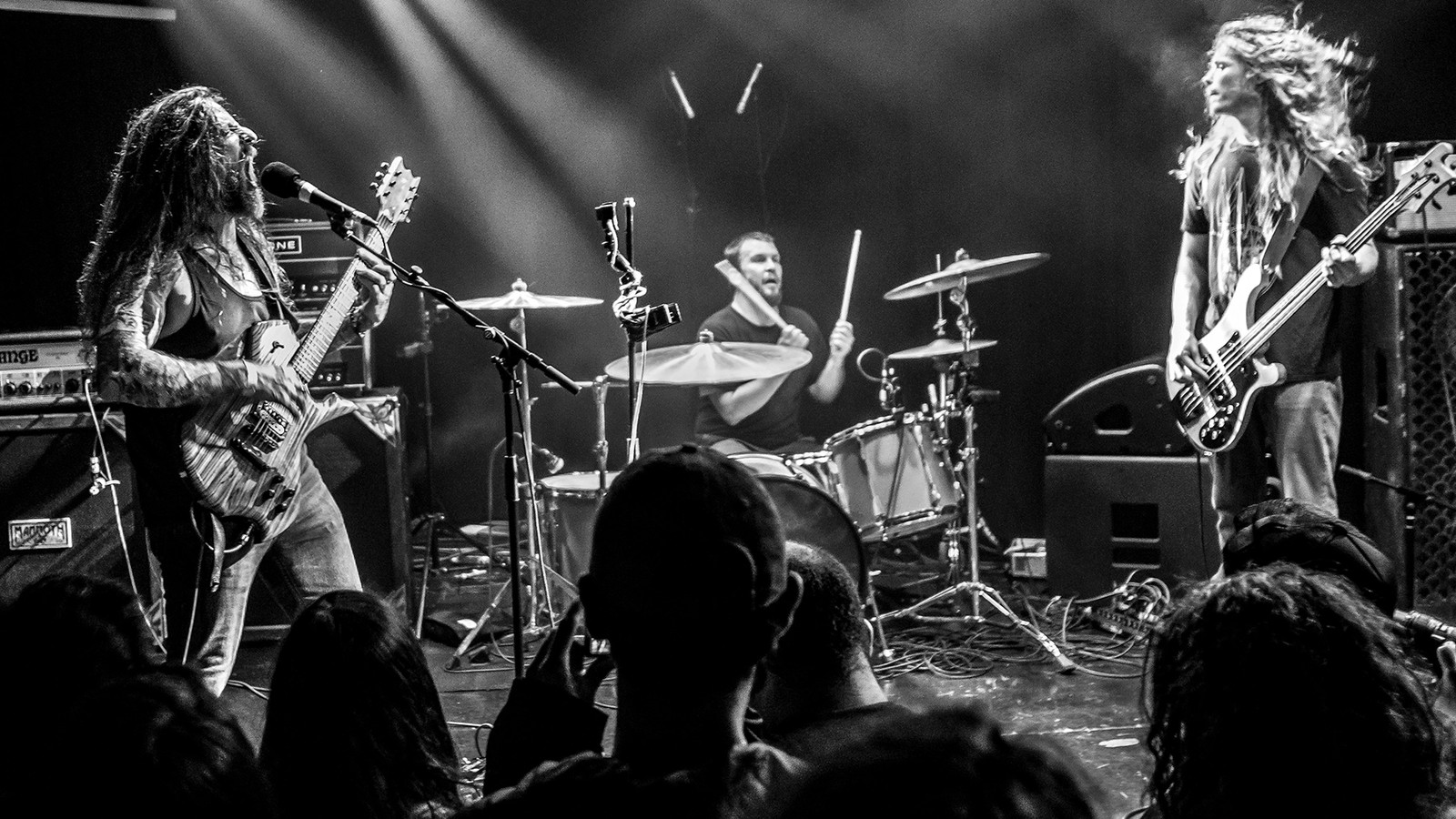
The best funeral doom metal band is Skepticism, the second best is Esoteric, and the only band formed this century with a claim on the top three, Bell Witch, stands third. We reached that order the way a household comes to trust the long-case clock on its stairwell landing, the tall oak case whose pendulum takes so long to cross from one side to the other that the people on the stairs and the whole dim house seem to wait for it before they move again: not by admiring the carving on the case, but by listening to how evenly it has kept its interval, and for how many years.
The founding years of the style, the early 1990s of Thergothon and Skepticism in Finland, belong to its history; this page is a verdict, and three measures decided it. The first is a band's best record, judged against the one law funeral doom never bends, that the tempo is the structure and not a mood laid over it. The second is the shelf behind that record, how many albums held the same level and for how long. The third, what the band brought into the style that nobody had played before, breaks ties. Funeral doom rewards the band that can hold one tempo for decades, not the one that holds it for a single album, which is why Thergothon, whose only record wrote the grammar of the whole style, stands sixth and not first.
| Rank | Band | Country | Deciding record | The shelf behind it |
|---|---|---|---|---|
| 1 | Skepticism | Finland | Stormcrowfleet (1995) | Lead and Aether, Farmakon, Alloy, Ordeal, Companion |
| 2 | Esoteric | England | The Pernicious Enigma (1997) | Epistemological Despondency, The Maniacal Vale, Paragon of Dissonance, A Pyrrhic Existence |
| 3 | Bell Witch | United States | Mirror Reaper (2017) | Four Phantoms, Future's Shadow Part 1, Stygian Bough I and II |
| 4 | Evoken | United States | Antithesis of Light (2005) | A Caress of the Void, Atra Mors, Hypnagogia, Mendacium |
| 5 | Mournful Congregation | Australia | The Book of Kings (2011) | The Monad of Creation, The Incubus of Karma |
| 6 | Thergothon | Finland | Stream from the Heavens (1994) | None |
| 7 | Ahab | Germany | The Divinity of Oceans (2009) | The Call of the Wretched Sea, The Giant, The Coral Tombs |
| 8 | Worship | Germany | Dooom (2007) | Terranean Wake |
| 9 | Loss | United States | Despond (2011) | Horizonless |
| 10 | Shape of Despair | Finland | Angels of Distress (2001) | Illusion's Play, Monotony Fields |
First place: Skepticism and the interval kept since 1995
Holding the same four players, Matti Tilaeus, Jani Kekarainen, Eero Pöyry and Lasse Pelkonen, since 1993, two years before its first album, the Finnish quartet has released six full-length albums in twenty-six years, Stormcrowfleet in 1995, Lead and Aether in 1998, Farmakon in 2003 and Alloy in 2008 through Red Stream, then Ordeal in 2015 and Companion on 24 September 2021 through Svart Records, and not one of them has lowered the level set by the first or traded the organ at the centre of the sound for anything more fashionable. Decibel inducted Stormcrowfleet into its Hall of Fame in 2014.
Esoteric have made the longer records and Bell Witch the more celebrated one, and neither fact moves the Finns off the top, because what separates first from second is not the size of one achievement but the evenness of the interval across a career. The clock on the stairwell landing is trusted for exactly that reason: its pendulum crosses the oak case so slowly that anyone on the stairs pauses mid-step for the next beat, and in thirty years it has never once swung early or late, until the house has set its own pace by it. Skepticism are that clock. From 1995 to 2021 the organ has set the interval and each drumbeat has fallen tolling only once the last chord decayed, and a band that could have lived off its founding record has added album to album without tearing down what stood before. Nobody else has kept time that long.
Half-way up the stairs it stands,
Henry Wadsworth Longfellow, "The Old Clock on the Stairs", The Belfry of Bruges and Other Poems
And points and beckons with its hands
From its case of massive oak,
Like a monk, who, under his cloak,
Crosses himself, and sighs, alas!
Second to fourth: Esoteric, Bell Witch and Evoken
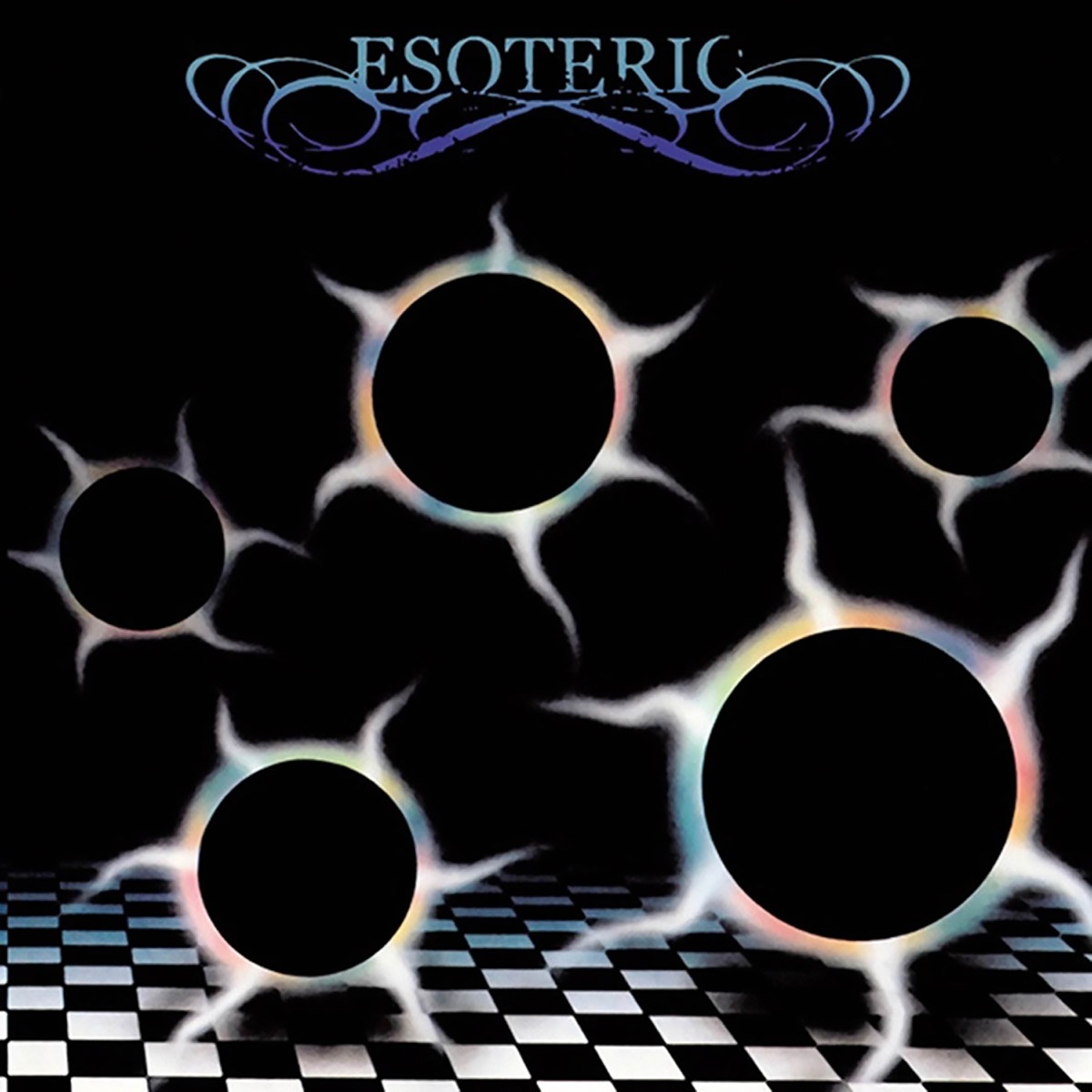
Formed in the English Midlands in 1992 around the singer Greg Chandler, the collective that turned funeral doom into a psychedelic endurance test released The Pernicious Enigma through Aesthetic Death in April 1997, a double album of some 115 minutes on which three guitarists piled effects, synthesiser and samples over riffs dragged to the pace of a dirge, sweeping aside any notion that a funeral doom record had to fit on one disc. Writing for Metal Injection in March 2016, Cody Davis called it a huge moment for funeral doom and death doom alike. The shelf behind it runs to A Pyrrhic Existence in 2019, by way of Paragon of Dissonance, ninety minutes released by Season of Mist on 11 November 2011. What holds the band at second is the interval rather than the weight: eight years between the last two albums, and a line-up rebuilt around Chandler more than once, most recently with Mathew Barnes on guitar in 2022.
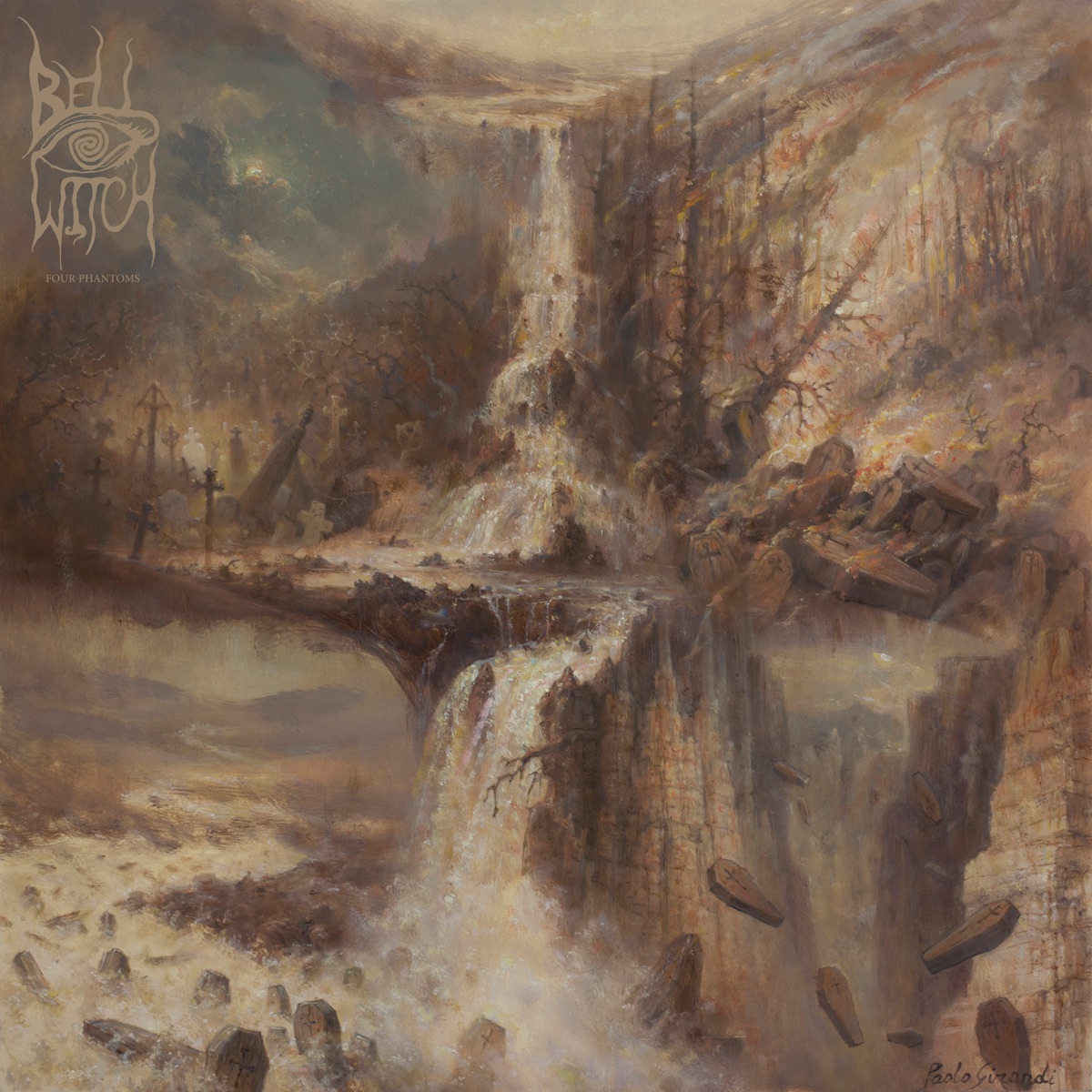
The American duo that took the guitar out of funeral doom altogether, founded in 2010 by Dylan Desmond on six-string bass and vocals and Adrian Guerra on drums and vocals, earned its place with two records made two years apart. Four Phantoms, released by Profound Lore on 28 April 2015 and produced by Billy Anderson, is four pieces across sixty-six minutes, and in Pitchfork Grayson Haver Currin heard the slim line-up leave every part sculpted and framed, with Desmond drawing guitar-like leads out of the six-string bass, each one cut across the piece like a line scored into wet plaster. Guerra left the band in 2015, and Jesse Shreibman took over the drums and added a Hammond organ. Guerra died in May 2016, at the age of 36, and Profound Lore announced his death on 18 May.
Mirror Reaper, released by Profound Lore on 20 October 2017, is a single composition of eighty-three minutes. In its press release the band said it had reserved a brief section of the piece for Guerra, built from vocals he had recorded for the previous album and never used, and described that section as a point of reflection. PopMatters placed the record first among the metal albums of 2017, and in Pitchfork Sasha Geffen wrote that on it "mourning overwhelms the mourner". Since then have come Future's Shadow Part 1: The Clandestine Gate on 21 April 2023 and two volumes of Stygian Bough with Erik Moggridge's Aerial Ruin, in 2020 and on 14 November 2025. Third and not second, because a shelf begun in 2012 is shorter than one begun in 1994.
Funeral doom rewards the band that can hold one tempo for decades, not the one that holds it for a single album.
Fourth is the New Jersey band that has outlasted nearly every American group it started out beside. Founded in April 1992 and held together ever since by Vince Verkay on drums and, from 1994, John Paradiso on guitar and vocals, Evoken released Antithesis of Light through Avantgarde Music on 28 February 2005, then A Caress of the Void in 2007, Atra Mors and Hypnagogia through Profound Lore in 2012 and 2018, and Mendacium in 2025, seven albums in twenty-seven years of the same interminable, leaden tread, grinding down every passing fashion without once changing step. It loses on the third measure, having added less to the style than the three above it, and takes fourth outright on the second.
Fifth to tenth: the records that carry the rest
Fifth is Mournful Congregation, the Australian band built since 1993 around the guitarist and vocalist Damon Good, whose The Book of Kings in 2011 Michael O'Brien of The Metal Forge called a mature and very nearly flawless album, and whose shelf runs from Tears from a Grieving Heart in 1999 to The Incubus of Karma in 2018.
Sixth is Thergothon, the plainest application of the second measure on this page. Stream from the Heavens, released in 1994 after the band had already split, may be the most influential single record in funeral doom, but a band with nothing on the shelf behind its one album cannot be set above bands that kept the pace for three decades.
Seventh is Ahab, the German quartet that took its name from Melville and its later subjects from William Hope Hodgson and Jules Verne, with five albums on Napalm Records from The Call of the Wretched Sea in 2006 to The Coral Tombs on 13 January 2023, a record that reached number 9 on Billboard's Top New Artist Albums chart and number 14 on its Current Hard Music Albums chart. Eighth is Worship, the Munich band that the guitarist and vocalist known as The Doommonger re-formed in 2004, three years after the death of its drummer and vocalist Mad Max, releasing Dooom through Endzeit Elegies on 19 October 2007 and Terranean Wake through Weird Truth Productions on 28 October 2012; two albums is the whole reason it stands no higher.
Ninth is Loss, the Nashville band around the vocalist and guitarist Mike Meacham, whose Despond in 2011 and Horizonless, released by Profound Lore on 19 May 2017, are its only two full-lengths, which is exactly what holds it back. Tenth is Shape of Despair, the Finnish band that set Natalie Koskinen's voice beside Pasi Koskinen's lead vocals on Angels of Distress in 2001 and returned with Monotony Fields in 2015, eleven years after Illusion's Play. It enters the ten on the third measure and stays at the bottom on the second.
The band left at the door
The band that came closest to the ten is Funeral Moth, the Tokyo quartet formed in the autumn of 2005 around the guitarist and vocalist Makoto Fujishima, whose self-titled EP of 2008 was followed by two full-lengths at the style's geological pace, Dense Fog through Weird Truth Productions on 22 February 2014 and Transience, issued digitally by Throne Records in February 2016. It misses on the second measure and on nothing else. Fujishima founded Weird Truth Productions himself in 1999, and it was that label which issued Mournful Congregation's The Monad of Creation on 16 March 2005.
The Japanese scene around that label, with its own funeral and death doom and its own long silences between records, is the subject of doom Metal in Japan.
