
On Sunday 17 November 2002 the promoter Smash brought the fifth volume of its Extreme the Dojo package to Shibuya Club Quattro in Tokyo, and all three bands on the poster were foreign: High on Fire from Oakland, Darkane from Sweden, and Mastodon, a quartet from Atlanta six months past its first album on Relapse Records. No Japanese name was printed on it. In the same city a band built in 1995 around a bass player who had been reading books about serial killers since he was a boy already had an album out on an American label, and the poster did not carry it. Its name was Church of Misery.
That poster is the early history of doom in Japan pressed onto a single sheet of paper. The music reached the country the way it reached most places, on imported records, and it settled into a few rehearsal rooms as a sediment laid down by other nations' albums, one layer of Black Sabbath, then one of Melvins, then one of Kyuss, long before any Japanese doom band had a name abroad; the young players who formed these groups in the early 1990s were answering the riff that had carried doom from the first record on, and two of them said so outright by taking their names from American songs.
Counted by founding date, the first generation fits inside six years. Eternal Elysium began in Nagoya in 1991, Boris in Tokyo in 1992, Corrupted in Osaka in 1994, Church of Misery in 1995, Greenmachine in 1995 and Coffins in Tokyo in 1996. That is close to the whole founding roster of a style in a country of more than a hundred million people, and the bass player left off that poster put the scale of it plainly to Decibel ten years later.
What doom became in Japan follows from that scale. A handful of bands cannot build an industry, and none of these tried; they built catalogues instead, out of splits, demos and licences to small foreign labels, and they kept at it for decades while one Western trend after another rose and burned out. Patience was not a virtue in Japanese doom. It was the method.
Well, Japan is very small. There are only three big cities.
Tatsu Mikami of Church of Misery, interviewed by Justin Norton, Decibel, 4 June 2012
Nagoya, Tokyo and Osaka: the first rooms
Formed in Nagoya in 1991 and led from the start by the guitarist and singer Yukito Okazaki, the oldest of these bands, Eternal Elysium, released its debut Faithful on Cornucopia Records in 1996 and then found its way abroad through the stoner label MeteorCity, which issued Spiritualized D in 2000 and Share in 2002. Greenmachine, the trio that took its name from a Kyuss song, sent D.A.M.N. and The Earth Beater out on Frank Kozik's label Man's Ruin Records in 1997 and 1999.
The Tokyo quartet that became a trio, Boris, lost its first drummer, Nagata, in 1996, and the reshuffle that followed, Atsuo moving from lead vocals to the kit, Wata taking the lead guitar and Takeshi the bass, fixed a line-up that has not changed since; on Absolutego in 1996 it let a single track run for some sixty-five minutes, so slowly that the music stopped behaving like a song and began to behave like a hillside giving way by inches, the whole slope moving at once and nothing standing below it left upright, and Amplifier Worship followed in 1998. In Osaka, Corrupted took an even longer road, through a run of split records and the albums Paso inferior in 1997 and Llenándose de gusanos in 1999, to Se hace por los sueños asesinos and El mundo frío on HG Fact in 2004 and 2005, then Garten der Unbewusstheit in 2011, and after that a geological thirteen years before the next album.
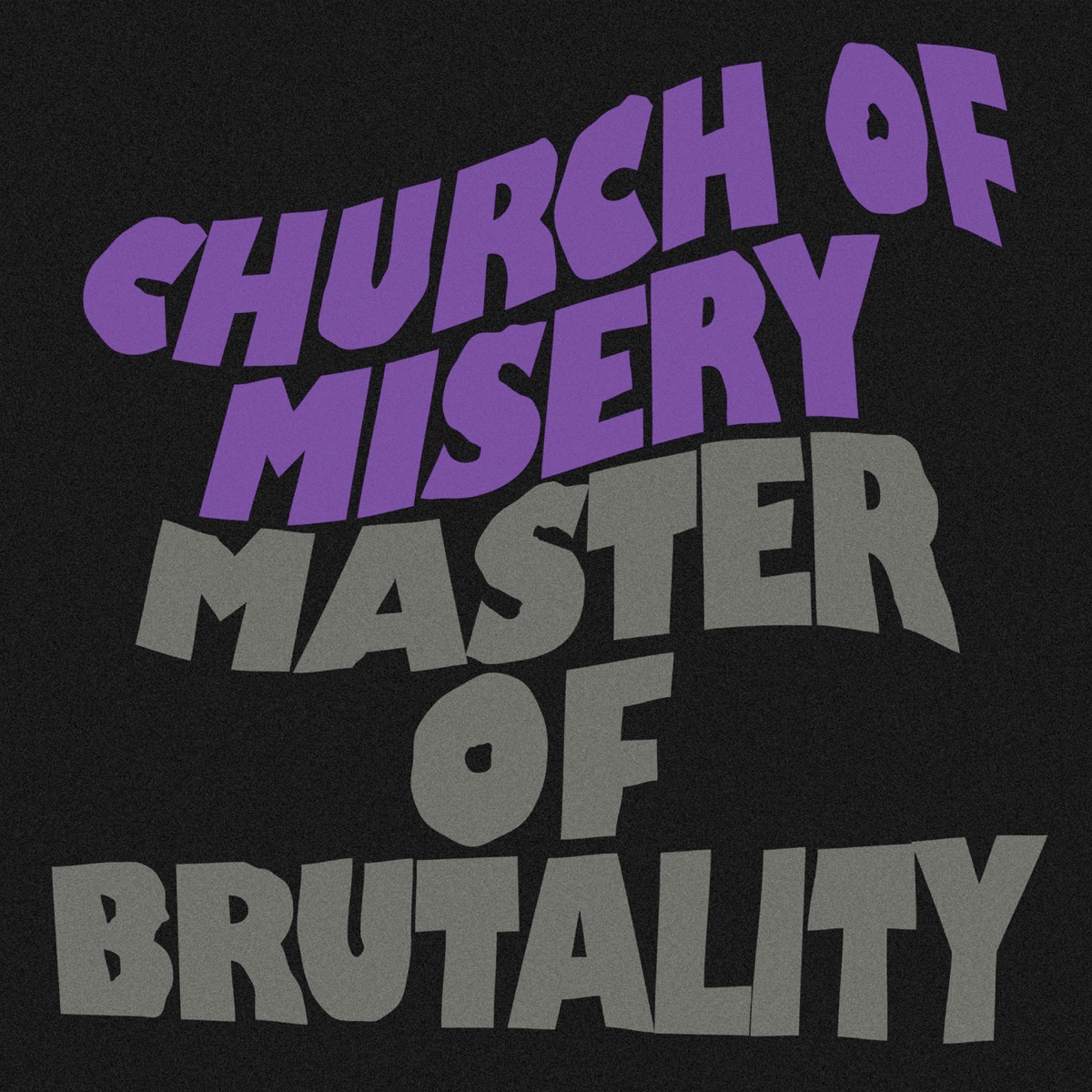
Released by Southern Lord in 2001, Master of Brutality set out what Tatsu Mikami's band would be for the next quarter century: a title that bends Black Sabbath's Master of Reality, a cover of Blue Öyster Cult's "Cities on Flame with Rock and Roll", and five original songs taken from the cases of real serial killers. "Killifornia" is about Edmund Kemper, "Ripping Into Pieces" about Peter Sutcliffe and "Megalomania" about Herbert Mullin, the instrumental "Green River" was drawn from the Gary Ridgway case, and the title track is about John Wayne Gacy. Asked by Justin Norton of Decibel in June 2012 where the fixation came from, Mikami said he had read books and watched videos about serial killers since he was young, and that it was not a fixation, only something he did for fun.
Diwphalanx, Rise Above and the road abroad
Released in June 2005 by the Japanese label Diwphalanx, the live DVD Wizard's Convention put four of these bands on one disc, Boris, Church of Misery, Eternal Elysium and Greenmachine, and it is the nearest thing the scene has to a group portrait. The same label issued Boris's Pink in Japan on 18 November 2005, and when Southern Lord reissued it in America the following year, Blender and Pitchfork both put it on their lists of the best albums of 2006. Greenmachine, which had split in 1999 and re-formed in 2003, broke up for good in 2007. The others went abroad and kept going back.
The bass player missing from that 2002 poster took his band to the English label Rise Above Records for Houses of the Unholy in 2009 and Thy Kingdom Scum in 2013, and in the summer of 2012, after seven tours of Europe, crossed to the United States for the first time, for Maryland Deathfest and seventeen American dates after it. On 3 November 2014 the band announced that every member except Mikami had left. He carried on: And Then There Were None..., released by Rise Above in 2016, was recorded in Maryland with session players, among them Scott Carlson, formerly of Cathedral, Eric Little of Earthride and Dave Szulkin of Blood Farmers, and Born Under a Mad Sign followed in 2023. Kazuhiro Asaeda, the band's singer in 1995 and 1996, rejoined in November 2022, and on 5 May 2023, at the Electric Ballroom in London, he played his first show with Church of Misery since 1996.
Coffins: seventeen years to Relapse
The Tokyo band that took Japanese death doom onto Relapse Records, Coffins, was formed in 1996 and spent the next seventeen years paid in the underground's slowest currency, demo tapes, split records and small foreign pressings: Mortuary in Darkness in 2005, The Other Side of Blasphemy in 2006, Buried Death on the American label 20 Buck Spin in July 2008, and around the albums splits alongside Stormcrow in 2010 and Sourvein in 2012. In 2010 the band played Maryland Deathfest in Baltimore. Its sound grinds death metal down to the pace of a dirge and leaves the crust on, which is why Decibel has filed the band as death doom in one piece and as death crust in another.
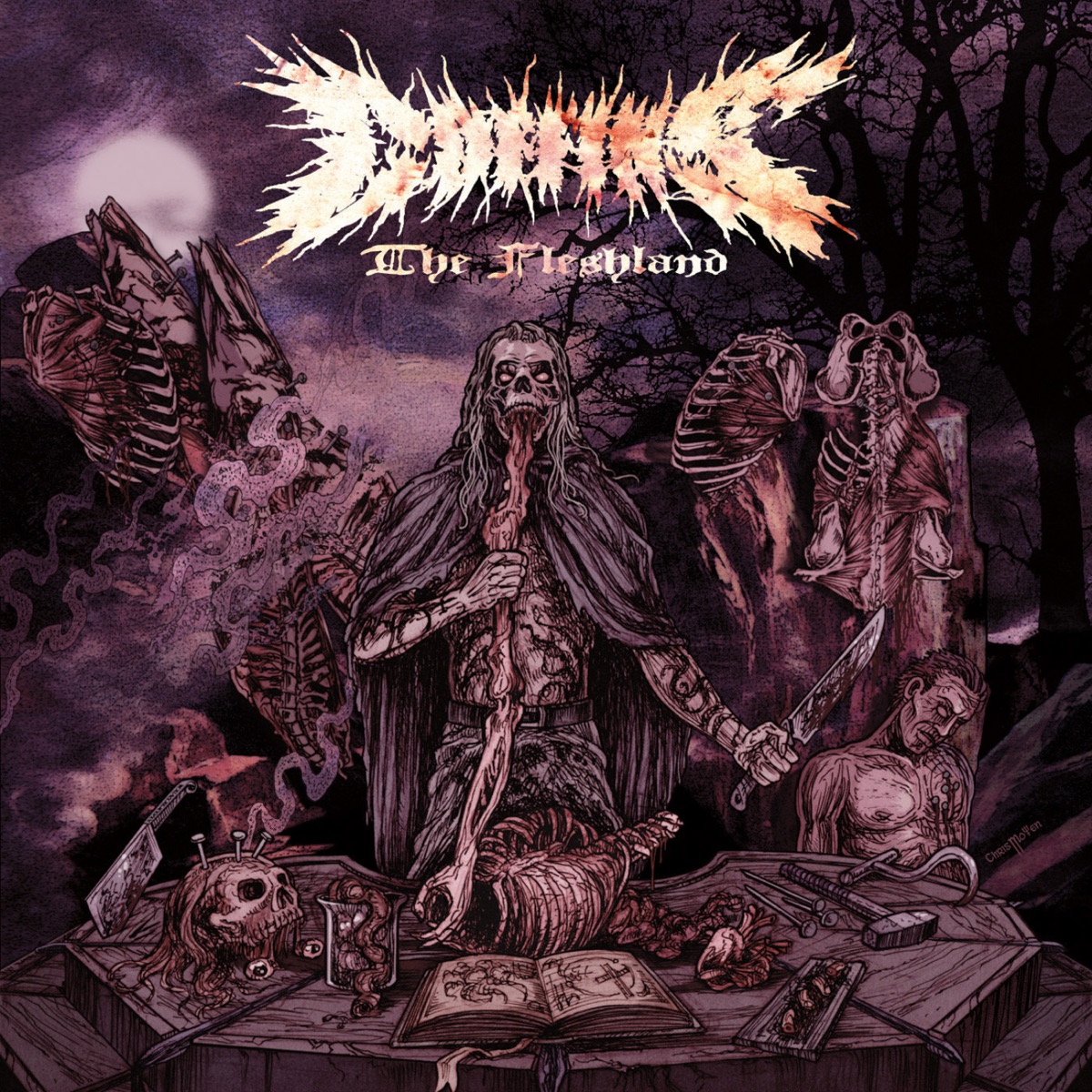
Recorded at Noise Room Recording Studio in Tokyo between November 2012 and January 2013 with the engineer Shigenori Kobayashi and produced by Bungo Uchino, The Fleshland was released by Relapse on 9 July 2013, the fourth Coffins album and the first for the label that had put out Mastodon's debut eleven years earlier. Uchino on guitar and vocals, Koreeda on bass, Ryo on vocals and Satoshi on drums made nine tracks across forty-six minutes, from "Here Comes Perdition" through "Hellbringer" to "The Colossal Hole", all under a sleeve by the artist Chris Moyen.
The long firing is the right way to see it. A potter banks a kiln for stoneware and then holds the heat, not raising it in a rush but keeping it for days at a temperature no hand could come near, because the glaze only forms once ash and clay have been left together long enough to fuse into a surface harder than either of them; Japanese doom was fired the same way, in a few rooms and by a few people, for the best part of two decades before a Relapse catalogue number arrived, and what came out of Noise Room in 2013 carried a hardness that no quicker heat could have given it. Nothing in it was hurried. Nothing could have been.
Patience was not a virtue in Japanese doom. It was the method.
Relapse kept the band. On 26 February 2016 the label released a split with the Washington, D.C. band Ilsa, and that month Coffins played Saint Vitus Bar in Brooklyn on the 15th and Netherlands Deathfest at 013 in Tilburg on the 28th. Beyond the Circular Demise, again made at Noise Room and again under a Chris Moyen sleeve, followed on 20 September 2019 with eight tracks, "Forgotten Cemetery" and "Impuritious Minds" among them, and Sinister Oath, with a sleeve by Axel Hermann, came out on 29 March 2024.
Weird Truth and the slowest branch
The slowest branch of the family reached Japan through a label rather than a band. Weird Truth Productions, run by the guitarist and singer Makoto Fujishima, issued Mournful Congregation's The Monad of Creation on CD in 2005 and kept its door open to Japanese bands chasing the same music at walking pace, releasing records on which every chord seems to sink into tar before the next is allowed to fall.
Fujishima's own band, Funeral Moth, formed in 2005, re-recorded songs from its demo The Moth Flying to the Funeral Sky for a self-titled EP in 2008, then released Dense Fog on Weird Truth in February 2014 and Transience on the same label in March 2016, the second with Tomohiro Kanja on guitar, Ryo Amamiya on bass and Yuichiro Azegami on drums, and Polar followed in 2019. Begräbnis, formed in Sendai in 2011, released its full-length album Izanaena on Weird Truth on 28 October 2020. These two bands are the ones that stand beside the Finnish, American and Australian founders on any roster of the Funeral Doom Metal Bands.
The older bands are still at work. Corrupted self-released Pray for the Hollow Sun in 2024. Eternal Elysium took Resonance of Shadows back to Cornucopia in 2016, and Yukito Okazaki played guitar as a session musician on Church of Misery's Born Under a Mad Sign. In November 2002 no Japanese band made the poster at Shibuya Club Quattro. Twenty-four years later Relapse, Rise Above and Southern Lord have all put their names on Japanese doom records, and the long argument over the Best Funeral Doom Metal Bands no longer has to stop at the Baltic.
