
Thirty CDs, each numbered by hand, went out on 15 April 2005 at the doom festival Doom Shall Rise as The Oath, the first EP of a German band called Ahab, with its first song, "The Stream", among the tracks. Eighteen months later, on 10 October 2006, the Austrian label Napalm Records sent The Call of the Wretched Sea into shops across Europe: sixty-six minutes of funeral doom whose lyrics, on most of its songs, were taken from Herman Melville's Moby-Dick. Thirty CDs to an international release in eighteen months. That is how this music moves.
It has never moved by crowds. The founding records of the style, the ones told in our chapter on Thergothon and Skepticism, came out of Finland in the early 1990s. What came after them is the subject of this page: a roster of six bands from six countries, founded between 1995 and 2008, each entered here with a label, a year, a record and the songs that do the heavy work on it, and none of them a retelling of the Finnish beginning.
Consider what happens when a ship lets go its anchor over deep water. The brake on the windlass is released, the anchor drops out of sight, and the chain follows it over the side link by link, every iron ring dragged through the hawse pipe not by any sailor on deck but by the weight of the links already underwater, so that the last metres of chain tear out of the locker with a force nobody aboard applied. Funeral doom spread the same way. No movement pushed it outward. The records already lying on the bottom hauled the next bands down after them, one link at a time.
Nobody on deck pays out the last of the chain. The iron already in the water does it for them.
Ahab and the long pull of the sea
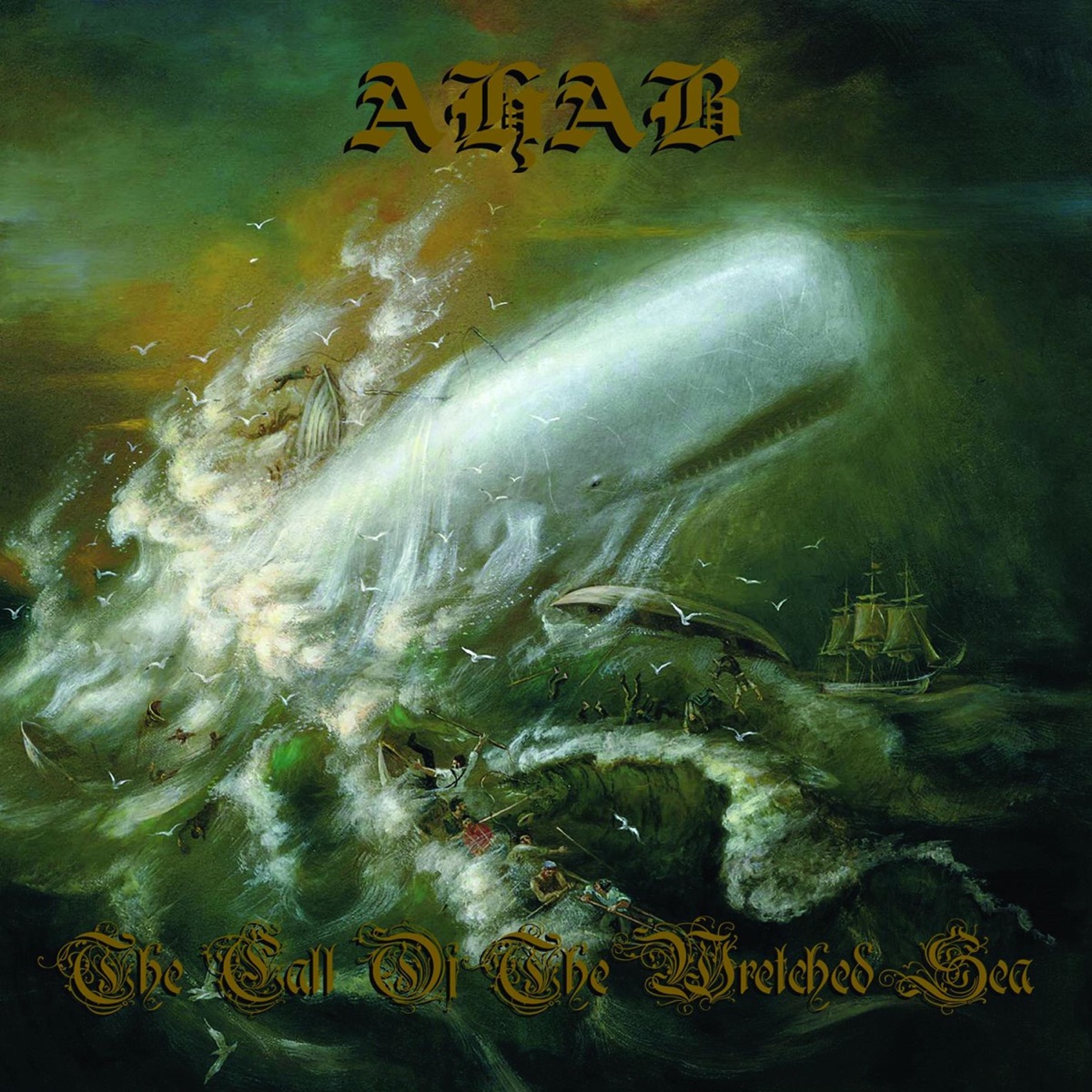
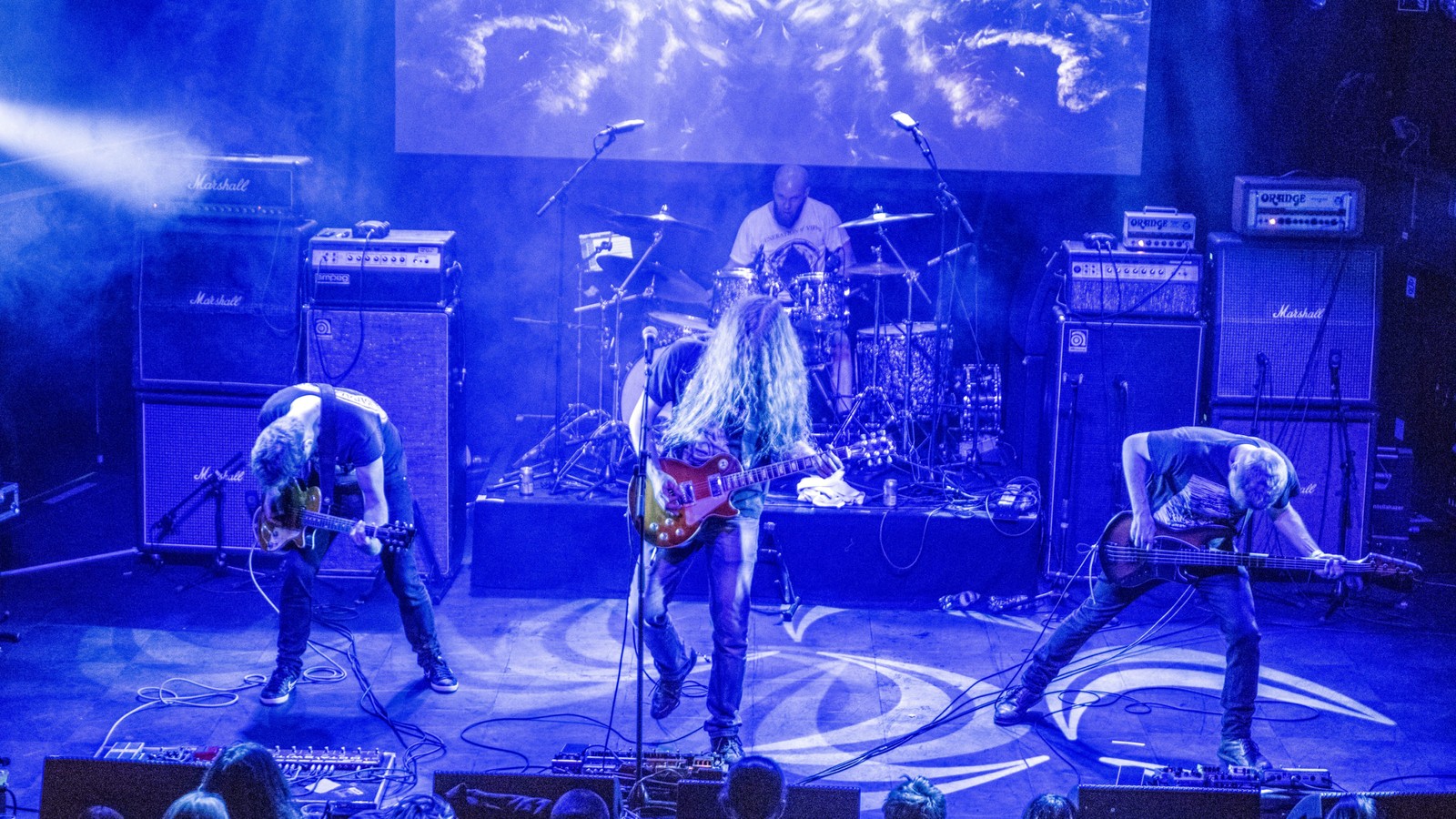
Founded at the end of 2004 by the guitarists Christian Hector and Daniel Droste, both then members of Midnattsol, and completed for the debut by the bassist and producer Stephan Adolph and the drummer Cornelius Althammer, who came from the brutal death metal band Mortified, the quartet that took the name of Melville's captain chose the sea as its only subject and has never once come ashore. "Below the Sun" opens The Call of the Wretched Sea at close to twelve minutes, and "The Hunt", eleven more, drags the whaleboats out behind the wounded animal at the pace of an exhausted crew. AllMusic gave the record four stars out of five and Blabbermouth eight out of ten, and the band gave its music a name of its own: nautik doom.
In 2008, shortly after a set at the Summer Breeze festival, Adolph left over what the band called personal differences, and Stephan Wandernoth, who played with Althammer in the technical death metal band Dead Eyed Sleeper, took the bass. The Divinity of Oceans, released by Napalm in July 2009, turned from the novel to the event behind it, the sinking of the whaleship Essex in 1820, with Théodore Géricault's painting of the raft of the Medusa on the sleeve, "Yet Another Raft of the Medusa (Pollard's Weakness)" opening the album at twelve minutes and forty seconds, and "O Father Sea" lowering the survivors toward the water.
Recorded live in an analogue studio early in 2012 and released on 25 May that year, The Giant took its story from Edgar Allan Poe's The Narrative of Arthur Gordon Pym of Nantucket, and "Further South" and "Antarctica the Polymorphess" steer that doomed voyage into the polar ice. On the headlining tour of Central Europe that followed, the support came from Ophis and from Esoteric, the English band that Droste would later name as one of the reasons he and Hector had founded a doom band at all. Then came The Boats of the "Glen Carrig", released by Napalm on 28 August 2015, William Hope Hodgson's lifeboat horror carried by "The Isle" and "Like Red Foam (The Great Storm)".
Belgium and France: one song for a whole album
Formed in Belgium in 2000 by the Greek singer and keyboard player Kostas Panagiotou, at first as a solo project, Pantheist released O Solitude through the Finnish label Firebox Records in 2003, five funereal pieces in which "Don't Mourn" runs fourteen minutes and "Curse the Morning Light" more than eighteen, each dirge stretched until the song itself becomes the slow procession of a single afternoon. In 2004 Panagiotou moved the band to the United Kingdom, and the chain tightened at once: on Amartia, in 2005, the bass and the drums were played by Mark Bodossian and Andy Semmens of Esoteric, hired as session musicians.
The French project Monolithe, launched in 2001 by the guitarist Sylvain Bégot, took the long form of funeral doom to its logical limit and tore the track list down altogether. Monolithe I, recorded in March 2003 and released that June, is a single composition of almost fifty-two minutes for a voice, three guitars, bass and programmed rhythm, and Monolithe II, issued by Candlelight Records in 2005, obeyed the same rule of one title per album. One song. One hour. Black Hole District, released on 15 November 2024, alternates five songs of exactly ten minutes, "Sentience Amidst the Lights" and "Those Moments Lost in Time" among them, with interludes of exactly one.
Russia and Denmark: seventy-five minutes and one man
Formed in Moscow in 2003, the Russian band Comatose Vigil made its debut in 2005 with Not a Gleam of Hope, four tracks on Marche Funebre, a sublabel of Stygian Crypt Productions, and signed in September 2006 to the Moscow label Solitude Productions. Fuimus, Non Sumus..., released on 12 September 2011 and mastered in England by Greg Chandler of Esoteric, is three tracks and seventy-five minutes: "Autophobia" runs twenty-three of them, "The Day Heaven Wept" twenty-four and the title track almost twenty-eight, three leaden slabs of sound laid side by side like stones on a catafalque, each too heavy for the next to shift. The band announced its split on 7 March 2012 and came back together in 2014.
The Danish musician who records as Nortt, alone since he founded the project in 1995, brought the corpse paint and the nihilism of black metal to the pace of funeral doom, one of the most direct crossings between two branches that sit far apart in any account of the genre in full. He calls what he plays "pure depressive black funeral doom metal". After four demos between 1997 and 1999, a first full-length, Gudsforladt, in 2003 and Ligfærd in 2006, he signed to the Italian label Avantgarde Music for his third, Galgenfrist, released on 28 February 2008, an album whose two longest pieces, "Havet hinsides havet" and "Over mit lig", both past ten minutes, take that description at its word. After Endeligt in 2017, Avantgarde released Dødssang on 28 March 2025, his fifth album, "Dødsengel" and "Bøn til døden" among its eight tracks.
| Band | Country | First album | Latest record |
|---|---|---|---|
| Pantheist | Belgium, then United Kingdom | O Solitude (Firebox, 2003) | Kings Must Die EP (2024) |
| Monolithe | France | Monolithe I (2003) | Black Hole District (2024) |
| Nortt | Denmark | Gudsforladt (2003) | Dødssang (Avantgarde Music, 2025) |
| Comatose Vigil | Russia | Not a Gleam of Hope (2005) | Fuimus, Non Sumus... (Solitude Productions, 2011) |
| Ahab | Germany | The Call of the Wretched Sea (Napalm, 2006) | The Coral Tombs (Napalm, 2023) |
| Lycus | United States | Tempest (20 Buck Spin, 2013) | Chasms (Relapse, 2016) |
Lycus and the American road back
Formed in California in 2008, the band Lycus was built around the guitarist and vocalist Jackson Heath and the drummer and vocalist Trevor DeSchryver. Tempest, released on 9 July 2013 by the label 20 Buck Spin, holds only three tracks, and the arithmetic is the argument: "Coma Burn" runs eleven minutes and thirty-eight seconds, and the title track, at twenty minutes and thirty-five, swallows nearly half the record.
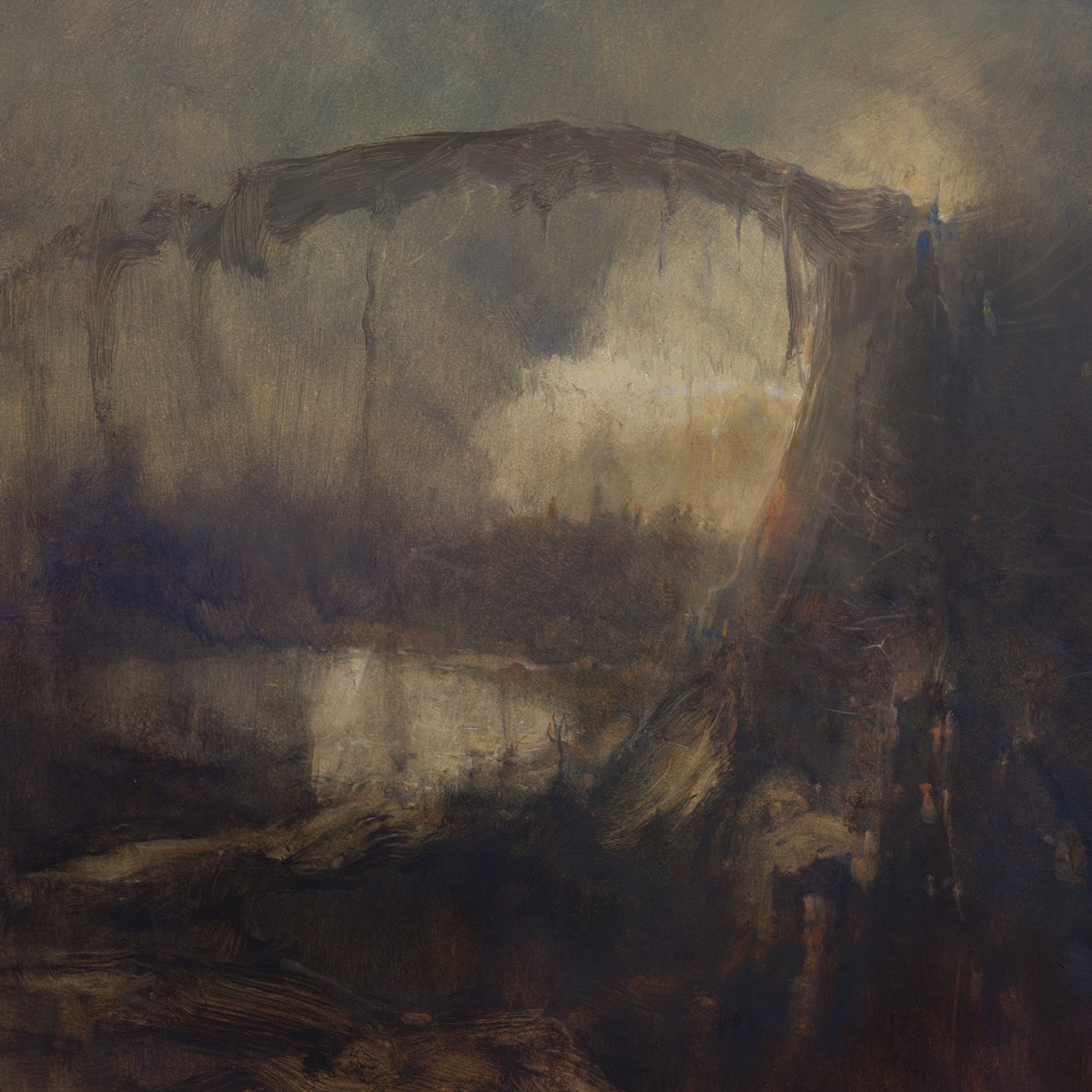
Moved up to Relapse Records for Chasms, released on 15 January 2016 and produced by Jack Shirley at Atomic Garden Studios, the quartet of Heath, DeSchryver, the bassist Bret Tardiff and the guitarist Dylan Burton brought in the cellist Jackie Perez Gratz, and the record's four tracks descend from "Solar Chamber" through the thirteen-minute title track to "Obsidian Eyes". It was the second album of a band that never made a third.
The Coral Tombs: the chain pulls from both ends
Eight years separated The Boats of the "Glen Carrig" from the next Ahab album. Droste gave the reason plainly to Gavin Brown of Echoes and Dust in April 2023: almost everyone in the band had become a parent in those years, and each of them had stepped back from Ahab for a while. The Coral Tombs, released by Napalm on 13 January 2023, took its story from Jules Verne's Twenty Thousand Leagues Under the Sea, and Gary Davidson, reviewing it for Echoes and Dust the day before, heard the band finding new ways to press the listener under the weight of nautik doom. The singer of Ultha shares the opener, "Prof. Arronax' Descent into the Vast Oceans", with Droste, and on the closing "The Mælstrom" the guest voice belongs to Greg Chandler, the singer of Esoteric.
His band was a huge inspiration for us and one of the reasons we decided to found a doom metal band.
Daniel Droste of Ahab on Greg Chandler of Esoteric, interviewed by Gavin Brown, Echoes and Dust, 14 April 2023
That closing track is the chain seen whole. A band that took Esoteric as one of its reasons to exist in 2004 ended its fifth album, nineteen years later, with the voice of the man who sang on those records, and in between Esoteric's own players had sat in on the second album of a band that began in Belgium, Chandler himself had mastered a Russian band's seventy-five minutes, and a French guitarist cut whole records out of a single block of sound. Not one of the bands on this page was pushed. Each was pulled down by the weight of what was already underwater, and which of them now lies deepest is the separate question we take up in the Best Funeral Doom Metal Bands.
