
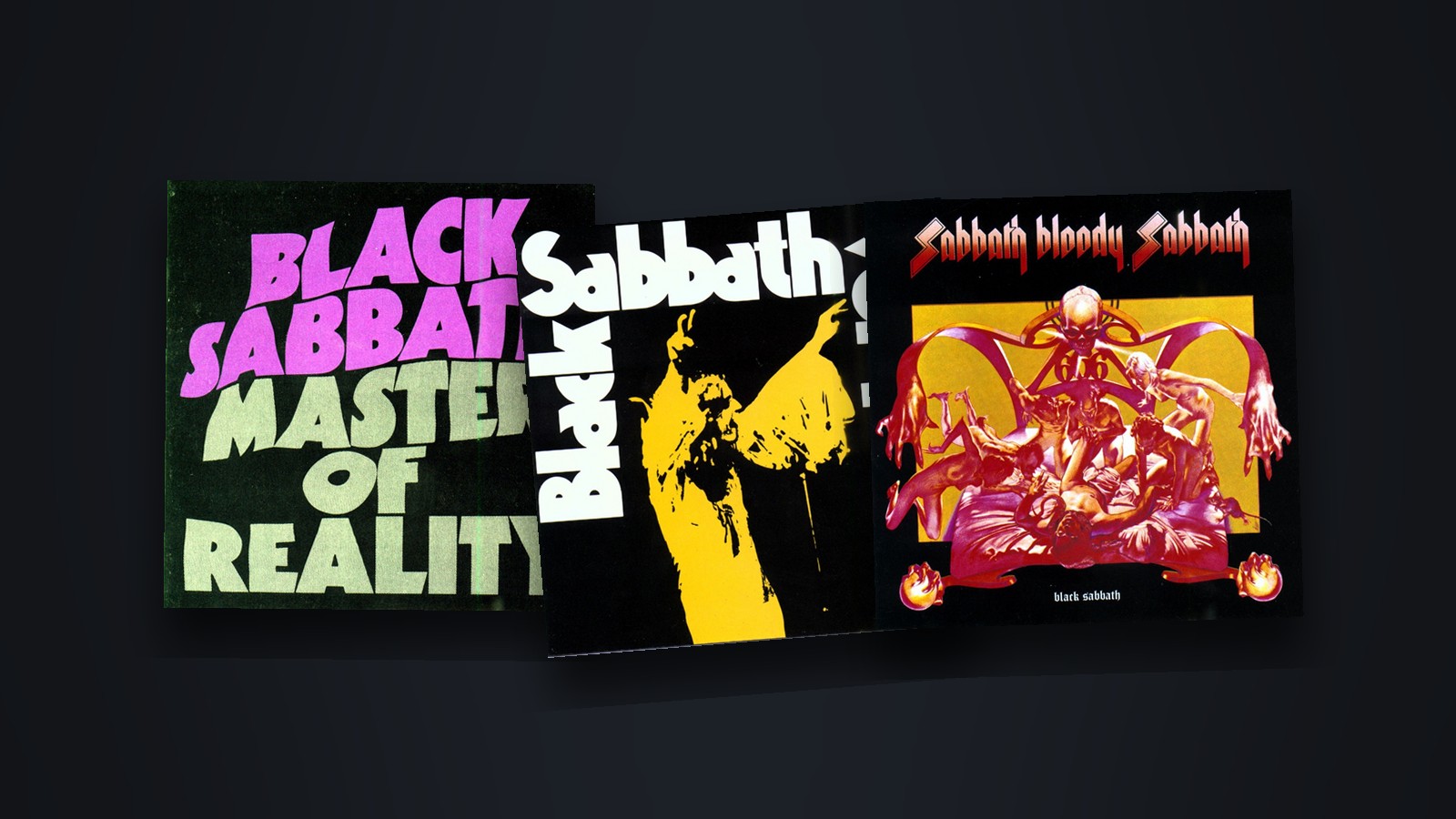
Nineteen studio albums were issued under the name Black Sabbath between Friday 13 February 1970 and 7 June 2013, sung by five singers and held together by Tony Iommi, the only musician on all of them. When the doom bands of later decades went back to that catalogue to record versions of their own, the songs they picked leaned hard on the first six. Candlemass, the Swedish band whose 1986 debut gave epic doom its name, folded "Into the Void", "Electric Funeral", "Symptom of the Universe" and "Sabbath Bloody Sabbath", with "Sweet Leaf", "Supernaut" and "Black Sabbath" beside them, into the Black Sabbath Medley that closed the CD edition of Ancient Dreams in 1988, and came back to "Sabbath Bloody Sabbath" in full on the Black Star EP in 2025. Cathedral took "Solitude" for the Earache tribute Masters of Misery in 1992. The covers are a vote. The vote is lopsided.
We weigh the records here the way a grain merchant weighs a sack on a brass balance, setting lead weights on the pan one at a time, a small stamped block for a single song, a heavier one for a whole side, and watching whether the beam drops at once or stays level while the box of weights runs out. For doom the weights are specific: a minor riff held past the point of comfort, strings tuned down, a tempo dragged rather than counted, a lyric that looks at the grave. How that slowness first entered heavy music belongs to the chapter on the beginning of the genre, and whether the band itself counts as doom is another argument. Here we only weigh the albums.
A false balance is abomination to the LORD: but a just weight is his delight.
King James Version, Proverbs 11:1
1970 and 1971: the beam goes down at once
Recorded with the producer Rodger Bain at Regent Sounds in London in a single day in the autumn of 1969 and released by Vertigo, the progressive imprint of Philips, the debut that Colin Larkin's 1994 guide praised for its "crushing atmosphere of doom" puts its heaviest weight on the pan with its first song, "Black Sabbath". Seven months later, on 18 September 1970, Paranoid set two more weights beside the hit single that sold it: "Electric Funeral", a riff sinking under a lyric about nuclear war, and "Hand of Doom", Geezer Butler's song about soldiers coming home from Vietnam addicted to heroin. The title song went to number four on the British singles chart. The weight sits elsewhere.
Released on 6 August 1971 after sessions at Island Studios between February and April, Master of Reality is the single heaviest block in the box, because on it Iommi and Butler tuned down to ease the guitarist's damaged fingertips and found what Iommi called a "bigger, heavier sound". On "Children of the Grave", "Lord of This World" and "Into the Void" the slackened strings pour the riffs out like tar into a mould, black as pitch and cooling so slowly that every band after them has had to work with the shape the stuff finally set in. Rolling Stone, whose Lester Bangs had dismissed the record as monotonous in 1971, later called the band on it "the greatest sludge-metal band of them all in its prime". Even "Solitude", a quiet song with flute, carried weight.
Vol. 4 to Sabotage: weights added, weights taken off
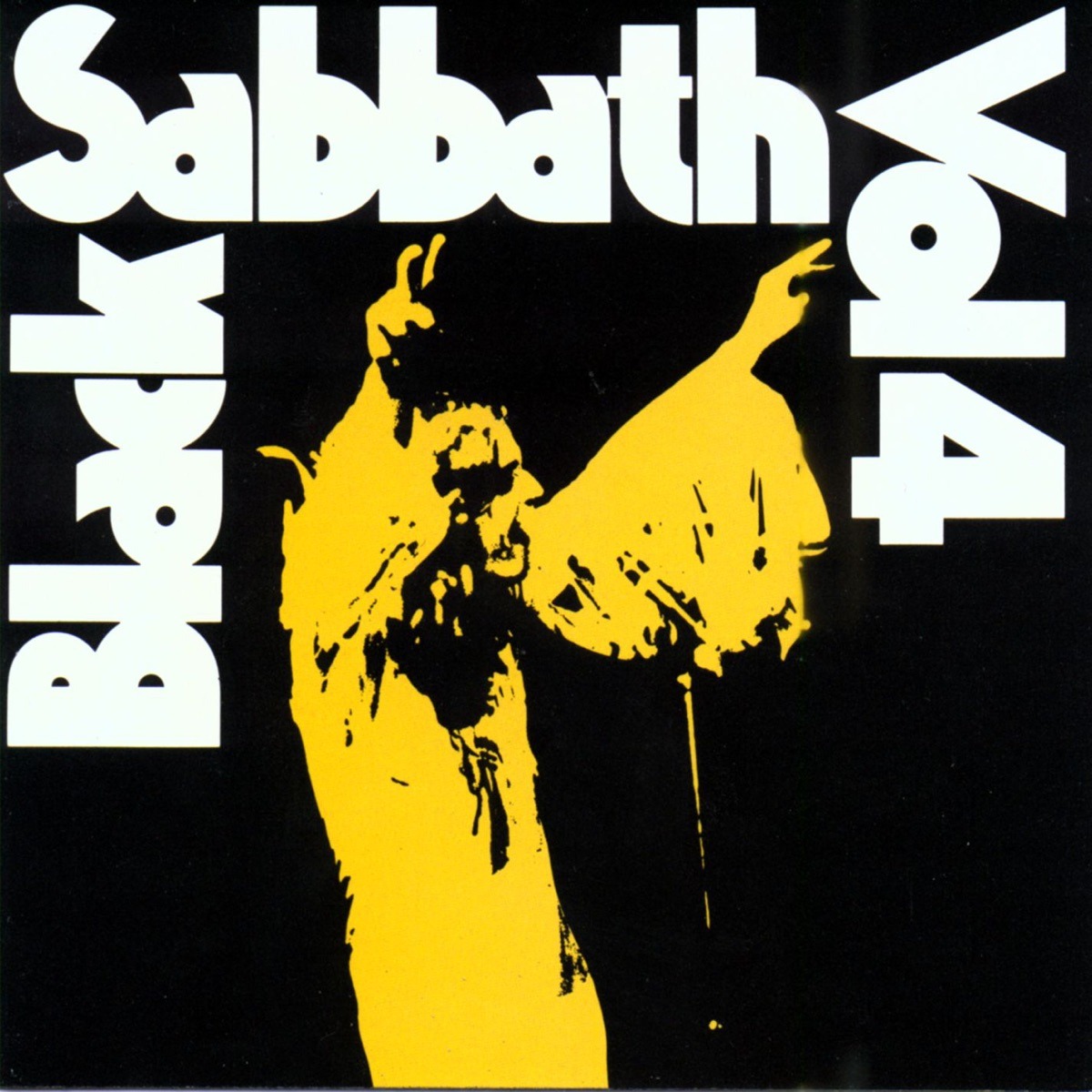
Produced in practice by Iommi and released on 22 September 1972, Vol. 4 kept the heavy direction of its predecessor. Two songs do the lifting. "Under the Sun" is the one Mick Wall, in his 2013 biography of the band, called a "sonic signpost" for the heavy groups that followed, and "Cornucopia", which Bill Ward admitted he hated playing, was later covered by the English sludge band Iron Monkey on its 1999 EP We Have Learned Nothing. Then the scale takes weight back off. "Changes" is a piano ballad.
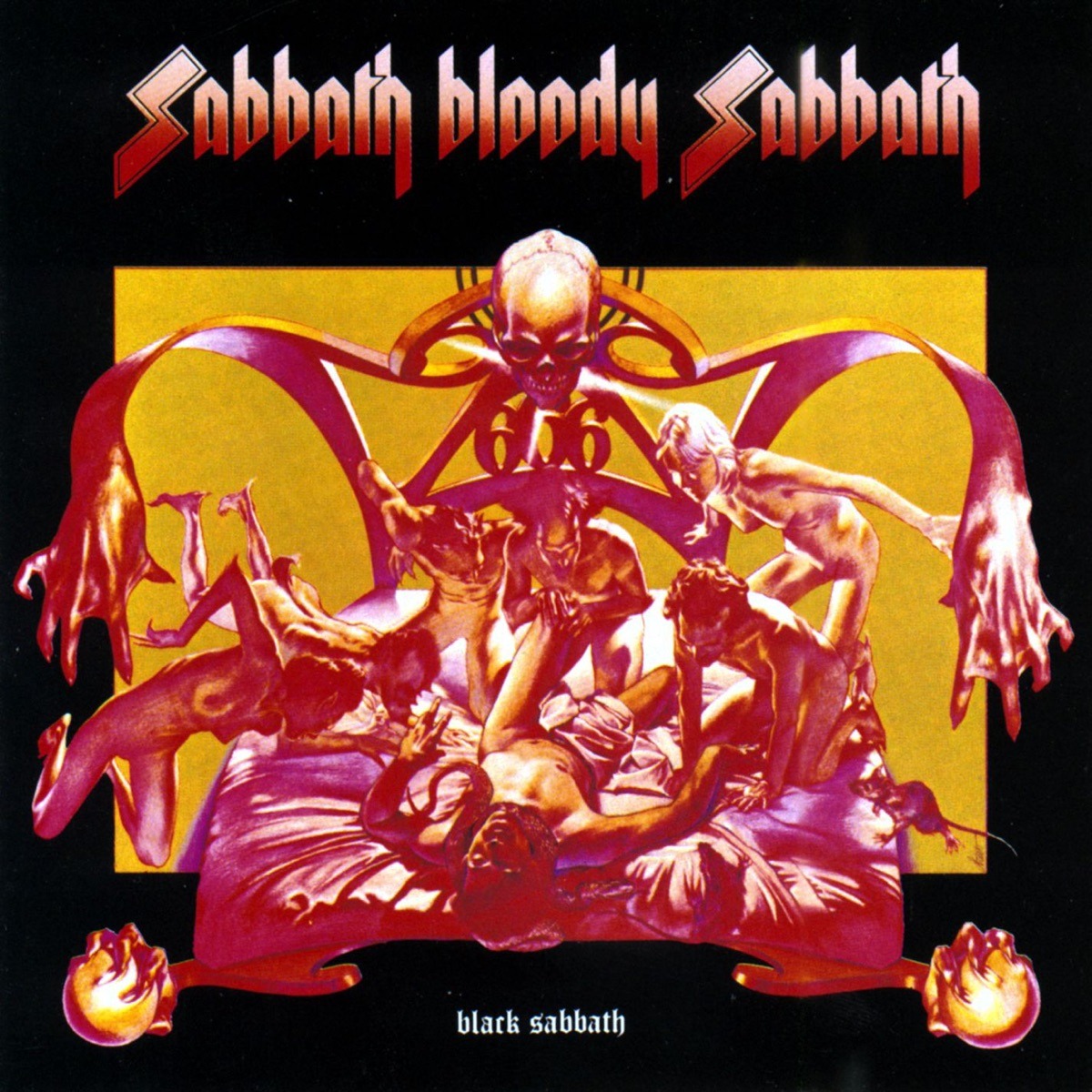
Written at Clearwell Castle, where Iommi broke months of writer's block with the title riff, recorded at Morgan Studios in London in September 1973 and released on 30 November through WWA in Britain, Sabbath Bloody Sabbath brought synthesisers, strings and keyboards into the room. Osbourne later wrote that it struck the balance between "our old heaviness and our new, 'experimental' side", and the scale bears him out: the closing riff of the title song, which Slash told Guitar World in 2008 was the heaviest thing he had ever heard, is a full weight, and much of the rest sits lighter.
The quartet that had once recorded its debut in a single day made Sabotage at Morgan Studios in 1975 while being sued by its former manager Patrick Meehan, co-produced it with Mike Butcher and released it on 28 July through NEMS in Britain, and in Bill Ward's words to Circus in October 1976 it was "probably the only album ever made with lawyers in the studio"; Iommi has credited that fight for its angrier, heavier sound. "Megalomania", nine minutes and forty-two seconds long, is the longest song on the record. After it the beam rises. Technical Ecstasy in 1976 carried the band further from the doom and darkness of its early records, and Never Say Die! in 1978 was the last studio album the original singer made with the band for thirty-five years.
| Album | Year | UK label | The doom weight | On the scale |
|---|---|---|---|---|
| Master of Reality | 1971 | Vertigo | "Lord of This World", "Into the Void" | Heaviest |
| Black Sabbath | 1970 | Vertigo | "Black Sabbath" | Heavy |
| Paranoid | 1970 | Vertigo | "Electric Funeral", "Hand of Doom" | Heavy |
| Vol. 4 | 1972 | Vertigo | "Under the Sun", "Cornucopia" | Heavy |
| 13 | 2013 | Vertigo | "End of the Beginning", "God Is Dead?" | Substantial |
| Sabbath Bloody Sabbath | 1973 | WWA | "Sabbath Bloody Sabbath" | Substantial |
| Heaven and Hell | 1980 | Vertigo | "Children of the Sea", "Heaven and Hell" | Moderate |
| Mob Rules | 1981 | Vertigo | "The Sign of the Southern Cross" | Moderate |
| Sabotage | 1975 | NEMS | "Megalomania" | Moderate |
| Born Again | 1983 | Vertigo | "Disturbing the Priest" | Disputed |
| Dehumanizer | 1992 | I.R.S. | "After All (The Dead)" | Light |
| Headless Cross | 1989 | I.R.S. | "Headless Cross" | Light |
Dio and the case of two long songs
Produced by Martin Birch at Criteria Studios in Miami and Studios Ferber in Paris and released on 18 April 1980, Heaven and Hell introduced Ronnie James Dio, formerly of Rainbow, and reached number nine in Britain. Its singles were "Neon Knights" and "Die Young", and the new voice is built for the battlements rather than the burial ground. Two songs complicate that. "Children of the Sea" began as a riff Iommi had written and abandoned before Osbourne left, and Dio and the guitarist finished it on the first day they played together. The title song runs seven minutes.
Those two tracks carry the doom case for the Dio years, and one epic doom band has argued it on record. Epic doom, the branch named after Candlemass's Epicus Doomicus Metallicus, is sung in a clean, operatic voice over drums played for grandeur, and the Texas epic doom band Solitude Aeturnus recorded its own "Heaven and Hell" for Adagio in 1998. The band's singer, Robert Lowe, went on to front Candlemass from 2007 to 2012.
The Dio records hand doom a voice to sing with, and only now and then a tempo to sing it at.
Recorded at the Record Plant in Los Angeles with Birch again and with Vinny Appice replacing Ward, Mob Rules followed on 4 November 1981 and reached number 12 in Britain; its weight is "The Sign of the Southern Cross", seven minutes and forty-six seconds long and Butler's own favourite on the record. The same line-up came back for Dehumanizer, made with Reinhold Mack at Rockfield Studios in Wales and released on 22 June 1992 by I.R.S. in Britain, where the weight is "After All (The Dead)", a song full of doubt about what waits after death. Two or three weights per record. The rest of the box goes back unused.
Gillan, Martin and the weights that are argued over
The singer borrowed from Deep Purple, Ian Gillan, fronted Born Again, recorded at The Manor in Oxfordshire with the producer Robin Black and released on 12 September 1983, which reached number four in Britain. Its weight survived a mix Butler called "muffled and unclear": for "Disturbing the Priest", Ward lowered a struck anvil on a rope into a bucket of water. AllMusic's Eduardo Rivadavia filed it among heavy metal's greatest disappointments, and musicians have outvoted him. Chris Barnes, the first singer of Cannibal Corpse, has called it his favourite Black Sabbath album, and Bill Stevenson of Black Flag told Steven Blush for the book American Hardcore in 2001 that his band was listening to it around the time of My War, and that "Trashed" and "Disturbing the Priest" were ideal. The second side of that record is three songs past six minutes each, and Mudhoney's Steve Turner told Popwell in April 2023 that it made the Melvins slow down to a crawl. On this scale the weight reads differently for every buyer.
Produced by Iommi and the drummer Cozy Powell and released on 17 April 1989 as the band's first record for I.R.S., Headless Cross was Tony Martin's second album as singer and reached number 31 in Britain. Its lyrics are full of the occult and of death, and its title song rides a riff close in pattern to "Heaven and Hell". The darkness here is carried by the words. Tyr, released on 20 August 1990, swapped the devil for Norse gods once the band had told Martin to be more subtle about it.
13: the last weight, cast from the old mould
The three founders who had not made a studio album together since Never Say Die! recorded 13 with Rick Rubin and Brad Wilk of Rage Against the Machine on drums, after Ward declined over a contract dispute, and released it on 7 June 2013 through Vertigo internationally and Republic in America. It went to number one in Britain, the band's first album to top that chart since Paranoid, a gap of nearly forty-three years, and to number one in America for the first time.
The weight comes back in the opening minutes. "End of the Beginning", eight minutes long, is the song in which the scholar Nolan Stolz, in Experiencing Black Sabbath in 2017, heard clear similarities to its forebear, the song "Black Sabbath", and "God Is Dead?", close to nine minutes long, won the Grammy for Best Metal Performance on 26 January 2014. The mastering works against it: Ben Ratliff in The New York Times and Jon Hadusek at Consequence of Sound both heard the sound crushed flat by compression, as if the last lead weight had been cast from the original mould and then filed down at the edges. It still drops the beam. The songs themselves are weighed in the Black Sabbath Songs That Became a Genre.
