
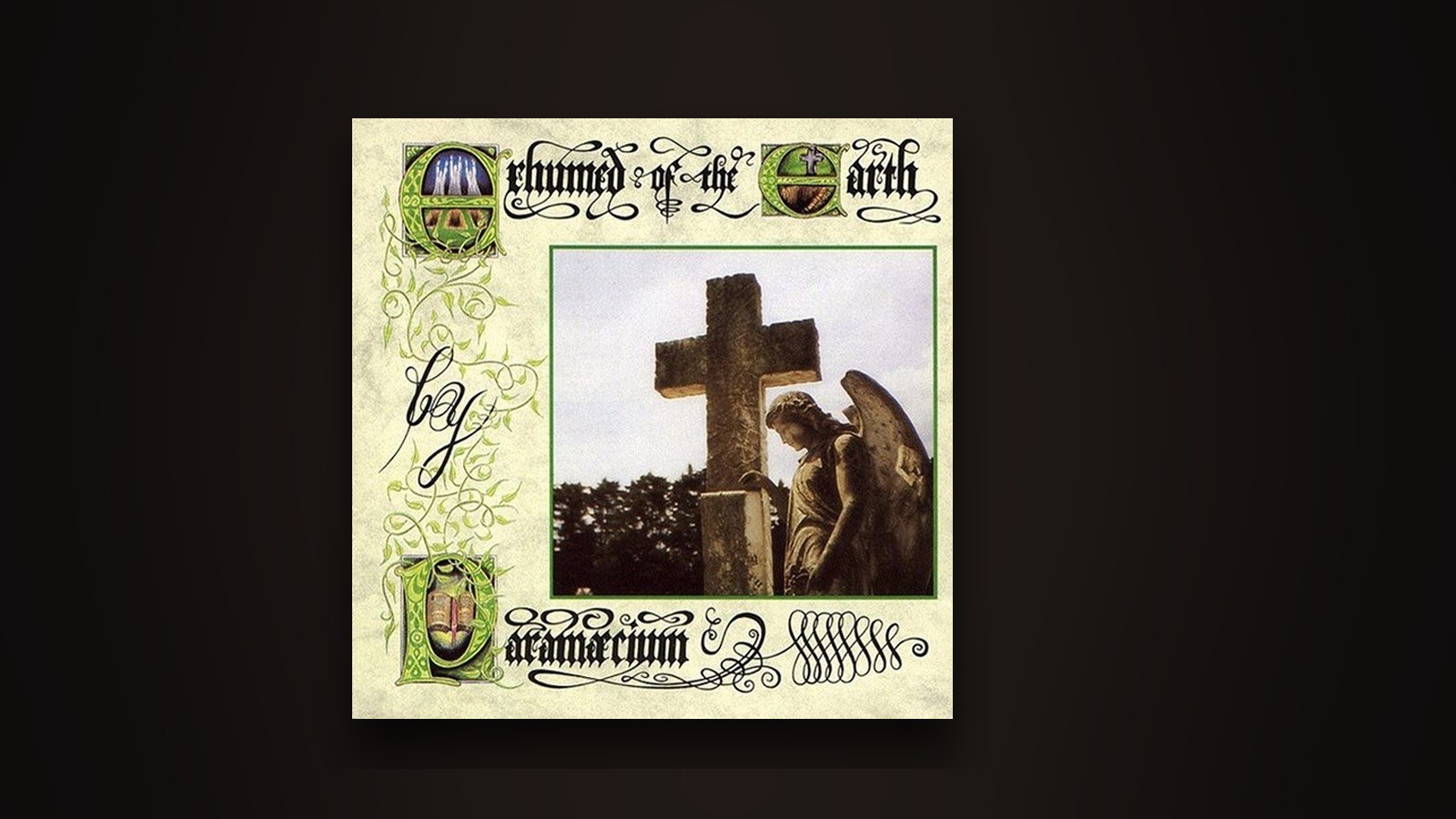
Yea, the darkness hideth not from thee; but the night shineth as the day: the darkness and the light are both alike to thee.Psalm 139:12, The Holy Bible, King James Version
Picture a man going down the worn steps of a crypt with a lantern held out at arm's length, the flame throwing its small light across the ribs of the vault and the names cut into the stone, so that nothing down there is hidden any longer and nothing is made one degree warmer, and he keeps descending because he believes that one of the tombs at the bottom stands open. That is the position of the Christian doom metal bands. Doom is the crypt, dug out of dirges and funereal weight long before anyone brought a light into it, and the few bands that went down with one never pretended the vault was a chapel.
The roll is short, and we set it out as an argument: one band that handed back the lantern it had been given, an Australian trio that carried it all the way down, a Swedish band that held it up to the arches, and a Pentagram guitarist who came back after a conversion he has described in public. Faith appears here only where the musicians stated it on the record. The vocabulary of graves was fixed by Black Sabbath and hardened in the decade that named it, and every band below walked into a vault already built.
Trouble, the question at the top of the stairs
Signed by Metal Blade for a 1984 debut that set verses of scripture to two guitars moving at a leaden walking pace, the Chicago quintet Trouble was sold to the posters as white metal, and its singer spent years handing that lantern back. Eric Wagner, who died in 2021, told Luxi Lahtinen of Metal-Rules.com in January 2004 that the tag had been Metal Blade's idea and that he wished the label had never used it, because people might take Trouble for a religious group preaching about Jesus. In the notes to a 2006 reissue of the debut he wrote that he had been raised Catholic and wanted no part of the satanic mood of early eighties metal. Trouble is the question every band below answers in its own way; its full story has a biography of its own here.
Paramaecium and the empty tomb
Formed in Melbourne in 1991 around the bassist and singer Andrew Tompkins and settled by 1993 into a trio with the guitarist Jason De Ron and the drummer Jayson Sherlock, Paramaecium recorded its debut between 12 April and 1 May 1993 at Toybox Studios in Northcote with no label behind it. Tompkins told the magazine Vibrations of Doom in 2015 that the band borrowed on credit cards and from friends and family to pay for the sessions and a first pressing of a thousand CDs, and that the debts were cleared within about six months as distributors ordered fifty or a hundred at a time. Only then did the labels call. Witchhunt Records, a one man label Tompkins remembered as an earlier home of Anathema, licensed it for Europe, and R.E.X. Records took North America on a condition written into the licence: general market shops, not only Christian stores.
Opening on a soprano aria before the rhythm guitars come down over it like a slab lowered onto a sepulchre, Exhumed of the Earth runs seven songs and some sixty-six minutes, from the seventeen-minute "The Unnatural Conception" through "Untombed" to "Removed of the Grave", and it follows the gospels from the birth of Christ through the killing and the resurrection to the dead rising at the close. Kostas Panagiotou of Doom-metal.com heard in it the elegance of early My Dying Bride, with the production their debut lacked and the death metal heaviness kept in front of the violin and flute; HM, in its 2010 list of the hundred best Christian metal albums, called it the most powerful and moving death doom recording in the history of Christian metal and ranked it 42nd. This is the lantern carried to the bottom step. The light falls on the grave clothes, the tomb is empty, and the music stays in the crypt for the whole hour.
Paramaecium carried the lantern to the bottom step, found the tomb empty, and stayed in the crypt for the whole hour.
What followed was made by a shrinking band. Within the Ancient Forest arrived in 1996 with a fantasy novel of the same name by Tompkins and a concept drawn from how he became a Christian, on the small German Christian label Pleitegeier after Nuclear Blast passed. Sherlock left in 1996. By A Time to Mourn in 1999 Tompkins was the only member left, and Echoes from the Ground followed in 2004. The trio of the debut reunited in 2006 and ended Paramaecium at NordicFest in Oslo that November by relaunching as InExordium, whose only album came in 2008.
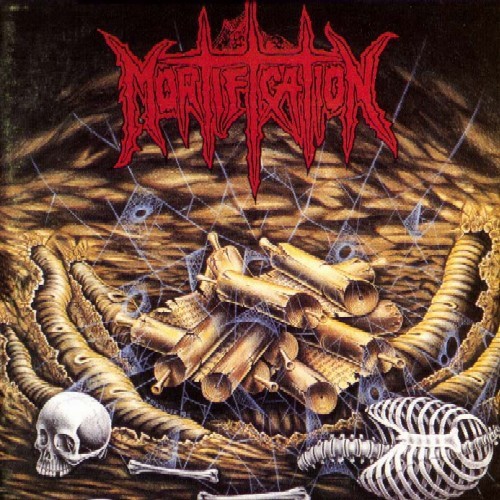
The drummer who gave Paramaecium its weight came from faster work. Sherlock had played in Mortification, the band Steve Rowe named after a King James verse about mortifying the deeds of the flesh, on Scrolls of the Megilloth, released by Nuclear Blast in 1992 and mixed at Toybox Studios in Northcote, the room where Paramaecium would record its debut the following spring. That is a fast death metal record and belongs to another story. Sherlock went from its blast beats to slow tempos inside a year, and HM's list put, one place below Paramaecium, Hellig Usvart by Horde, the Nuclear Blast record of 1994 that Sherlock made alone under that name and credited to "Anonymous".
Veni Domine and the seven seals
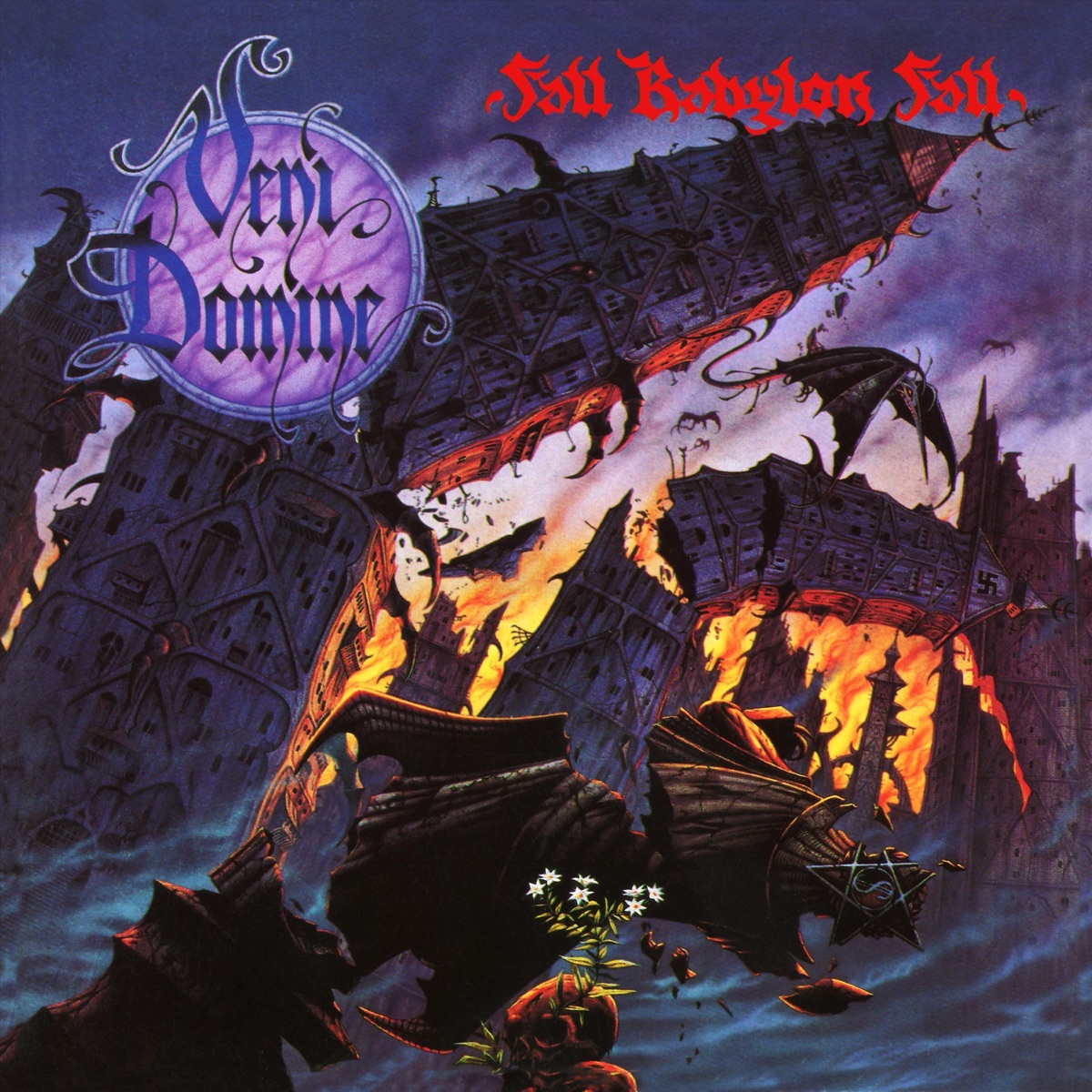
Founded in Sollentuna in 1987 around the brothers Torbjörn and Thomas Weinesjö, guitar and drums, the Swedish band Veni Domine made its debut out of the Book of Revelation. Fall Babylon Fall, recorded between June and October 1991 and issued in 1992 on Edge Records in Britain and R.E.X. in America, was begun at ICC Studios in Eastbourne and finished at Thunderload in Sweden, where the twenty-one minutes of "The Chronicle of the Seven Seals" were recorded, with P.A. Danielsson of Tiamat on keyboards and a cover painted by Rodney Matthews. HM ranked it 38th in 2010, four places above Paramaecium. Where the Australians took their lantern down into the vault, the Swedes held theirs up to the arches, long songs and keyboards over a riff weighted for doom, and by the band's own account doom festivals billed them as power metal while power metal events billed them as doom.
Material Sanctuary followed in 1994, then the records slowed, and on 20 September 2014, the year of the last album, Light, on Massacre, the band announced its end. Thomas Weinesjö had spent 2001 to 2004 drumming for the American band Saviour Machine, whose Legend albums set Revelation to theatrical gothic metal, another genre.
Victor Griffin and the band named after Golgotha
Formed in Knoxville in 1980 by the guitarist Victor Griffin and the bassist Lee Abney, Death Row took in the singer Bobby Liebling and became Pentagram. What came later is Griffin's own account, reported plainly. He told Cosmic Lava in March 2002 that in 1994, when he played guitar for Cathedral on a tour with Black Sabbath, he was drinking heavily and abusing cocaine and speed, that his father had been diagnosed with lung cancer, and that he was sent home with about a week and a half of the tour left. He left Pentagram in 1996. In 2010 he told the webzine Untombed that his father and three other relatives died within about a year, and that once he was sick of how he was living he gave it up to God.
Assembled with Abney and the drummer Tim Tomaselli in 2000, the Knoxville trio Place of Skulls took its name from Golgotha, and Griffin told Untombed he had wanted to make something uplifting. Nailed came out on Southern Lord in 2002, and four explicitly Christian songs from its sessions were held back and issued in 2005 as the Love Through Blood EP. The line-up would not hold. Ron Holzner, once Trouble's bassist, passed through in 2002, and Scott "Wino" Weinrich of The Obsessed joined for With Vision on Southern Lord in 2003 and was soon gone; Griffin told The Obelisk in December 2010 that it looked great on paper but did not work, with the members five or six hundred miles apart. The Black Is Never Far came out on Exile on Mainstream in 2006, and As a Dog Returns in 2010, with "Breath of Life" and "He's God", the record Griffin called the most direct he had ever been about faith and salvation.
We seem to be too heavy or doomy for the church.
Victor Griffin, interviewed by Jeff de los Santos, Untombed, 29 September 2010
In the same answer he said the secular world could not stand lyrics about God. By his account the Christian Cornerstone Festival gave doom its own stage for the first time in 2010, with Place of Skulls, Sweet Cicada and Troglodyte Dawn playing to a crowd drawn mostly by curiosity. Griffin rejoined Pentagram that year and played on Last Rites, left again in 2012, made the self-titled album of Victor Griffin's In-Graved, released by Svart Records in 2013 with Trouble's original drummer Jeff Olson among its keyboard players, and was back in Pentagram by 2014.
The light that is left
The present is thin. On 8 May 2026 Mortification announced a Latin American tour for February 2027 to mark thirty-five years of Scrolls of the Megilloth; Steve Rowe is not taking part while he recovers from a stroke, and Sherlock later withdrew for health reasons. Paramaecium ended in 2006 and Veni Domine in 2014. Of the three doom bands in this article that put their faith on record, only Place of Skulls is still listed as active.
None of these bands stands among the Big Four of Doom Metal, though two of those four run through this article: Trouble, which refused the lantern, and Pentagram, whose guitarist went on to carry one. What the others proved is narrower and harder: a band can go all the way down into the vault, keep the dirge at its full weight, and still sing about a tomb that stands open. Exhumed of the Earth has been down there since 1993. The light is still burning.
