

On Friday 27 October 2023 the nave of a church built to Georg Andreas Bull's neo-Gothic design in 1880, closed to its parish in 1985 and reopened in February 2000 as Kulturkirken Jakob in Oslo, was full for the first night of Høstsabbat, the doom and stoner festival that has run since 2013, and the people who had paid for their tickets stood in the nave to watch the Swedish band Magnus Pelander had formed in 2000, Witchcraft, play as a trio. The set lasted about an hour, in a room that Jan-Olav Glette, reviewing it for the Norwegian webzine Disharmoni three days later, described as full, and among the songs was "No Angel or Demon", the first thing the band ever put on a record.
That Friday the song was sound in the air of a church without a parish. Twenty-one years earlier it had been an object. Released in 2002 by the Swedish label Primitive Art Records under the catalogue number PAR 026, the seven-inch single that paired "No Angel or Demon" with "You Bury Your Head" is the disc that reached Lee Dorrian's label Rise Above Records and got Witchcraft signed, and it survives in more than one state: Discogs, the database where collectors log every pressing, lists the single on blue vinyl and, as a separate entry, a clear test pressing with plain white labels, the plant's proof before a run is approved. The song in the nave belonged to everyone in the room. The test pressing belongs to whoever holds it.
Records like that one are valued in a way the music never is, and the nearest picture we have for it is a numismatist's tray: a shallow drawer lined with worn velvet, pulled out under a lamp, forty old coins lying in rows while the dealer's loupe passes over every face the mint struck true and stops only at the ones it struck badly, the double strike, the die that slipped off centre, the date cut with the wrong numeral, because those are the coins that carry the price, an error hammered into metal by a moneyer in a hurry and kept long after every perfect copy has been rubbed smooth in ten thousand pockets. The flaw is the provenance. It records the day the machine faltered, and a leaden doom record is weighed on exactly the same scale.
What the collectors of doom metal vinyl pursue comes down to a few kinds of flaw, and none of them lives in the riffs: the run too small to travel beyond the room it was pressed for, the variant in which one album exists as two different objects, and the plain error, a wrong label, a colour the plant ran short of, a mix that survived on a single edition. The painted sleeves and the heavy lettering that make these objects worth wanting in the first place belong to the aesthetic. Here we follow the pressings, and the faults struck into them.
Pray God your voice, like a piece of uncurrent gold, be not cracked within the ring.
William Shakespeare, Hamlet, Act 2, Scene 2
The small run: records pressed for one room
The smallest runs in the genre were never meant to leave the building. Before the German funeral doom band Ahab had released anything else, its first EP, The Oath, went out as thirty CDs numbered by hand, released at the festival Doom Shall Rise on 15 April 2005 and sold out, so that the first document of a band that would drag funeral doom down to the seabed exists in fewer copies than there are pews in a village church.
The Danish one-man project Nortt turned the usual order of formats upside down. Gudsforladt, its funereal black doom album, came out first as a vinyl edition of 350 copies on Sombre Records in 2003, a year before its first CD issue, so that for a year the only way to own the record at all was to own one of those 350 discs. The American precedent is older and poorer. Before Pentagram had a settled name on its sleeves, Bobby Liebling's band put "Be Forewarned" and "Lazy Lady" on a seven-inch credited to Macabre and issued on Intermedia Productions in 1972, followed it with singles on Boffo Socko in 1973 and Gemini in 1974, eleven years before the band had an album in the shops.
The flaw is the provenance. It records the day the machine faltered.
The variant: one album, two coins
Even the founding record of the genre was struck from two different dies. Released by Vertigo on 13 February 1970, the British edition of Black Sabbath, the debut of Black Sabbath, carries "Evil Woman" on its second side, and when Warner Bros. issued the album in America on 1 June 1970 it cut that song out of the running order, forced "Wicked World" into the gap and fused the shorter pieces into titled medleys, so that a collector who wants the debut whole has to own two records that share a cover and do not share a track list.
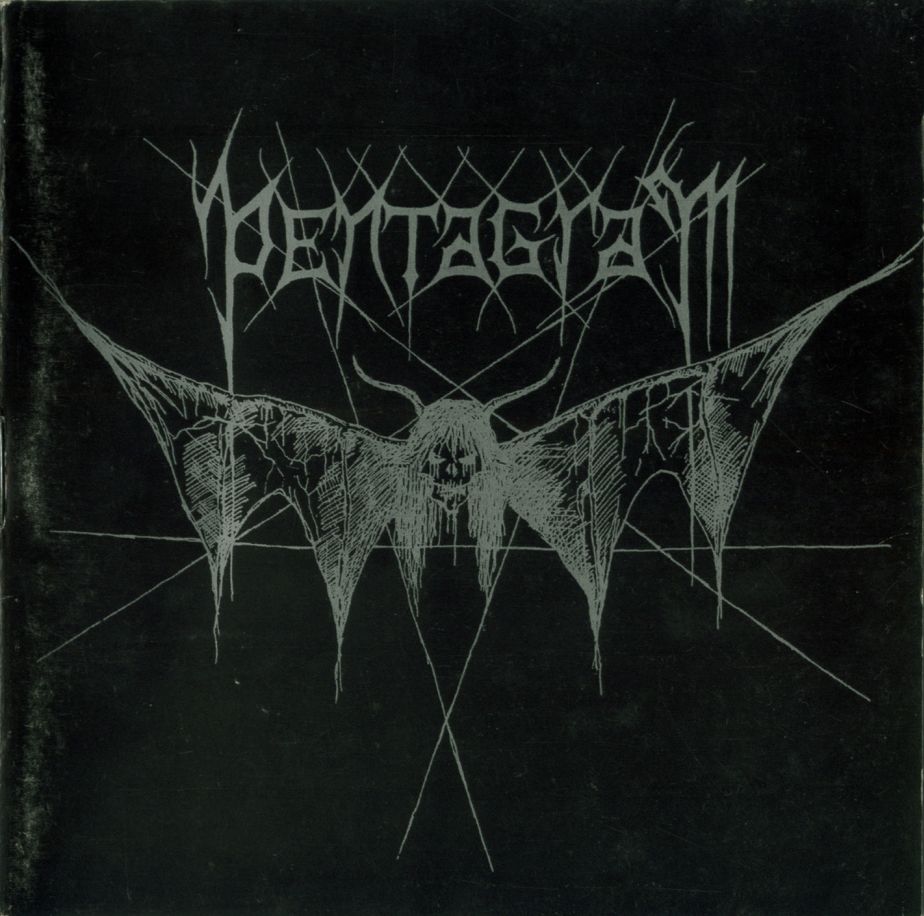
The most instructive variant in American doom hides in a colour. Recorded in two sessions in 1981 and 1982, the first Pentagram album was self-released in February 1985 on Pentagram Records after the band had gone back in 1984 to re-record some vocals and guitar parts and build a completely new mix, and that 1984 mix is the one pressed into the original LP in its black and purple sleeve; when Peaceville reissued the album as Relentless in 1993 the 1982 mix and running order of those first sessions were put back, burying the other version under the reissues that followed. The purple sleeve is the mark on the coin.
The modern variant is planned rather than accidental. When the Italian trio Ufomammut released the Crookhead EP through Supernatural Cat on 31 October 2023, its 500 copies were divided into 200 on marbled red vinyl, 200 on marbled gold and 100 on clear vinyl available only on that autumn's tour, a coin issued only at the gate of the town where it was minted.
Witchcraft: a catalogue struck with errors
No doom band of the last twenty years has left collectors a stranger tray than the band that began as a tribute. Formed in 2000 by Magnus Pelander to record a tribute to Bobby Liebling and Roky Erickson, Witchcraft signed to Rise Above on the strength of the Primitive Art single, and the label's pressing of the self-titled debut in 2004, catalogue number RISELP 47, came out as a limited edition carrying a vinyl-only bonus track, "Yes I Do", at the end of its second side; the CD left it off, and so did the picture disc Rise Above issued in 2005 under RISEPD47, so that even the band's first long-player divides into a full coin and a clipped one.
The purest error in the catalogue came in 2005. Rise Above put Witchcraft's "Chylde of Fire" on a split seven-inch with the English psychedelic folk band Circulus, whose "Miri It Is" took the other side in a remix called the Moog Up Mix, pressed the single in 500 copies under RISE7/64, and printed the labels for side A and side B the wrong way round, so that every copy of that run misinforms its owner, permanently, about which side he is about to play.
| Vinyl | Year | Copies | Sold through |
|---|---|---|---|
| Purple | 2012 | 250 | Nuclear Blast |
| Yellow | 2012 | 250 | Nuclear Blast |
| Green | 2012 | 250 | Nuclear Blast |
| Clear | 2012 | 250 | Nuclear Blast |
| Blue | 2012 | 150 | Nuclear Blast |
| Brown | 2012 | 160 | Metalizer Records |
| Clear, faux leather | 2013 | 666 | US mail order |
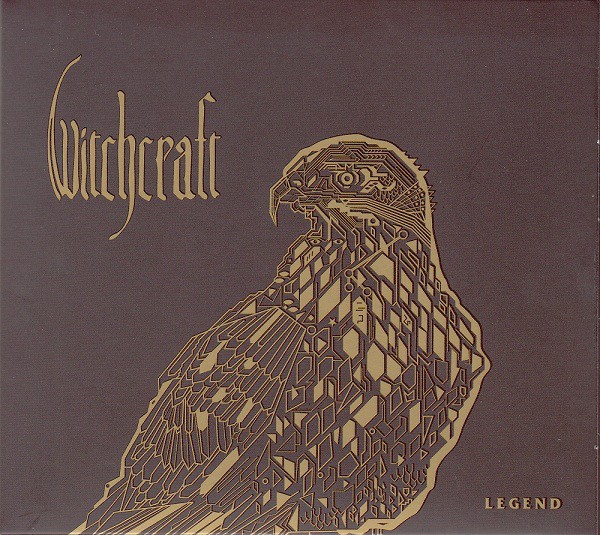
Then came the full mint. Recorded at Fascination Street Studios in May and June 2012 with Pelander singing only and the guitars handed to Simon Solomon and Tom Jondelius, Legend was Witchcraft's first album for Nuclear Blast, and the label struck its double LP in hand-numbered 180 gram editions for its own mail order, purple, yellow, green and clear in 250 copies each and blue in 150, every one in a gatefold with a poster, while a gold run of 250 for German record shops and a white run of 250 for High Roller Records went out without numbers. A brown edition for the mail order of Metalizer Records was meant to be larger, but the pressing plant made a mistake and pressed only 160, and a year later an American mail order edition on clear vinyl, 666 hand-numbered copies in a faux leather gatefold stamped in gold foil, made seven. Laid side by side, those records look like a set of proofs struck from a single die in seven alloys: the same songs, "Flag of Fate" and "It's Not Because of You" among them, the same falcon on the sleeve, and a value decided entirely by the metal and by the day the plant ran short.
What the tray is worth
A perfect copy tells a collector nothing about where it came from. The records in this tray are chased because their faults are records of work: thirty CDs numbered by hand for one festival hall in 2005, a purple sleeve carrying a mix the reissues buried, two sides labelled the wrong way round, a plant that stopped after 160 brown discs. The dirge in the grooves is identical on every copy while the object around it is not. That difference is what the collector pays for.
On that last Friday of October 2023 everyone in the old church who had bought a festival ticket heard "No Angel or Demon" played live, and the clear test pressing of the same song, in its blank white labels, stayed what it has been since 2002, a coin nobody was ever meant to spend. Why this music draws collectors of relics at all is the subject of the Doom Metal Aesthetic. The song tolls the same in every copy. The value lies in the crack in the ring.
