
The doom metal aesthetic is not a style, and the bands that wear it as one are the bands nobody keeps. It is a collection: a horror film still, a page from a grimoire, a whaling log, a funeral service and a stretch of open desert, held in the same room for more than half a century with nothing in common except the tempo at which they are shown. That is our verdict. Take the slowness away and the objects fall apart into props, a drawer of Hammer rubber here, a second hand occult paperback there; keep it, and a Finnish death doom band singing about blind Spanish revenants, a German funeral doom band reading Melville and a desert jam band plugging into a petrol generator in the dark turn out to be working the same material.
The sleeves, the logos and the stages are followed where the aesthetic is taken object by object. From further back, what the genre looks like is a cabinet of curiosities of the old collector's kind, a walnut chest of shallow drawers holding a narwhal tusk, a wax hand, a lump of meteorite and a jar of something pale, whose labels in brown ink have faded past reading, so that nobody can say any longer which drawer was filled from the Spanish cinema of 1972 and which from a Mercury Records sleeve of 1969, and the only order left in the whole chest is the glacial pace at which the drawers are pulled out, one at a time. The labels no longer matter. The weight of each drawer does.
Take the slowness away and the doom aesthetic falls apart into props.
The tempo chooses the objects
Sound comes first because it is the one part of the aesthetic no band can buy. A tempo slow enough to let a single chord hang across a whole bar leaves the listener's mind room to furnish the silence, and the bands learned early to furnish it for them: with the organ sound the Finnish quartet Skepticism set beneath its guitars on its first album in 1995, and with the tritone, the interval the old theorists called the devil in music, which the Finnish death doom band Hooded Menace took for the title of its 2021 album, The Tritonus Bell. A bell is a sound and an image at once. That is the whole method in a single object. Everything else follows from it.
Most images do not survive being played at a crawl. A skull on a fast record is decoration; on a record that takes nine minutes to reach its second riff it is something the listener has to sit with, and the whole story of doom, sludge and stoner keeps returning to the few drawers that hold up under that length of attention.
The horror drawer
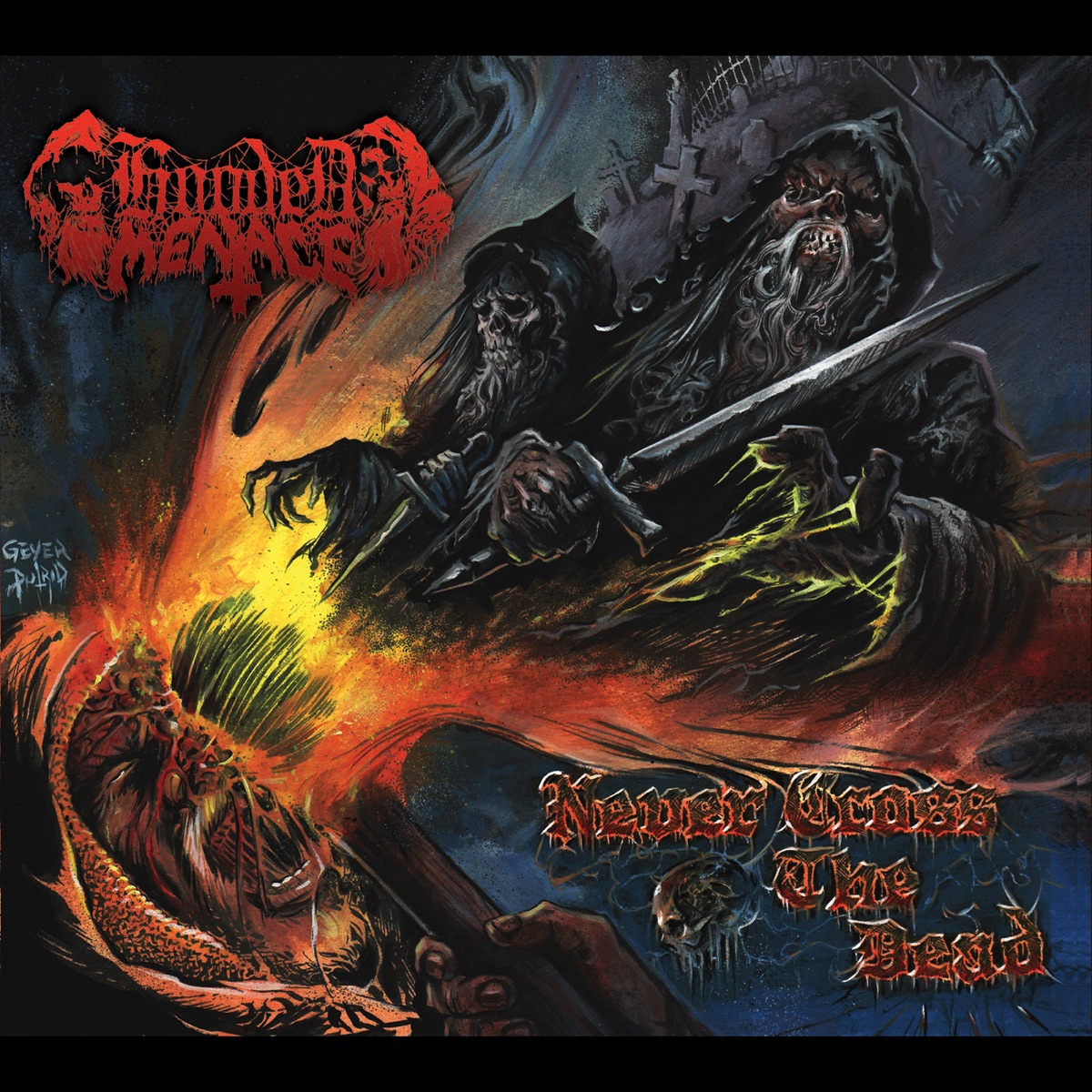
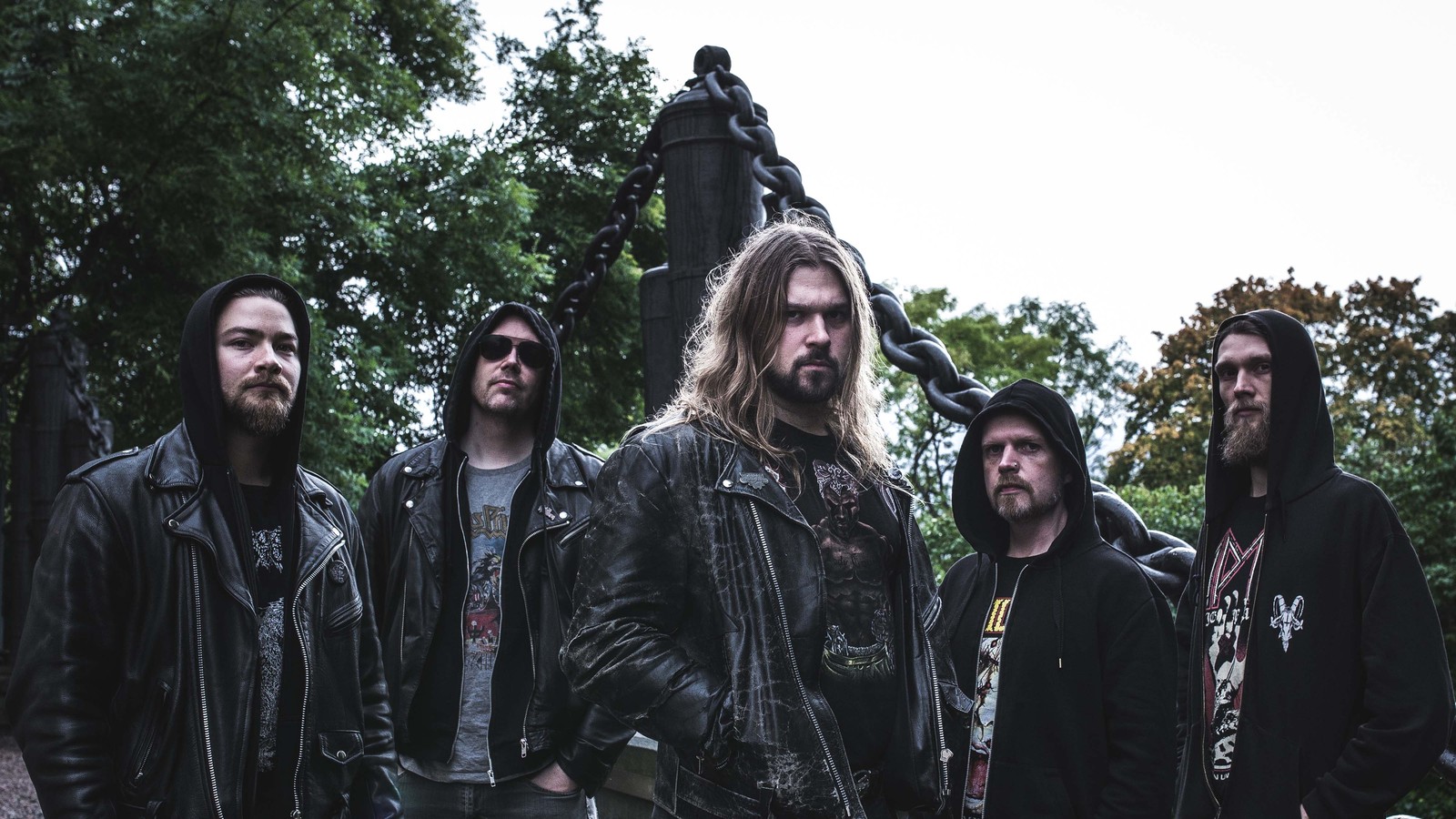
Formed in Joensuu in 2007 by the guitarist Lasse Pyykkö and named after the hooded, eyeless Knights Templar who climb out of their graves in Tombs of the Blind Dead, the 1972 film by the Spanish director Amando de Ossorio that grew into a series of four, the band from eastern Finland has spent its albums proving that a horror film can be a working method rather than a coat of paint. Never Cross the Dead, released by Profound Lore on 30 March 2010, runs from its title track through "The House of Hammer" to a closing "Theme from Return of the Evil Dead", named after the second Blind Dead film, and in the reading of Clare Buchanan in Exclaim! that May it was a thick, measured, plodding affair. Pyykkö puts the films second. Speaking to No Clean Singing in November 2017, he said the Blind Dead films "just go so well with the type of music we play", and that Cathedral had reached him before the films did. The riffs came first. The knights have never left the sleeves since.
By Ossuarium Silhouettes Unhallowed, released by Season of Mist on 26 January 2018, the early songs that retold the films' stories had given way to lyrics written, in Pyykkö's words, from a more personal perspective, and the riders had moved into a painting by Adam Burke that Pyykkö called gloomy but beautiful, adding that the same could be said about the music. When Dan Franklin of Knotfest asked about the lyrics in September 2025, he described them as horror films passed through the band's filters until they came out more surreal and abstract. The label on the drawer had faded. The drawer was as full as ever.
On a stage the horror drawer is pulled all the way out. When the Dorset band Electric Wizard played the Rickshaw Theatre in Vancouver on 14 April 2015, David Lacroix of Concert Addicts found the stage hung with three screens running B horror films, naked girls and psychedelic patterns behind more than seventy minutes of riffs. Those films run silent in that room. The guitars supply the soundtrack at the pace of a cortege, and an exploitation reel made to be watched at a drive in is slowed until it stops flickering and starts tolling, every frame of it drawn across the screen like a coffin lid across stone.
Doom is the only kind of metal where the props reach the venue before the band and are still on the stage after the van has gone home.
Gareth Llewellyn, KaosMetal
The grimoire and the whaling log
The occult drawer is older than doom itself. Released by Mercury in June 1969, eight months before the first Black Sabbath album, Witchcraft Destroys Minds & Reaps Souls by the Chicago band Coven closed on a thirteen minute recording of a "Satanic Mass", and came from a band whose singer, Jinx Dawson, raised the sign of the horns on stage while a cross was turned upside down by the end of the set. Then a photograph surfaced of Charles Manson holding a copy, and in the account Jamie Ludwig gave NPR in October 2017, shows were cancelled, records came back and the label withdrew its support. The music on it was rock, not doom. What the record left the genre was the drawer itself, the altar, the ritual and the ceremony pressed into vinyl, waiting for a band slow enough to fill it.
The nineteenth century drawer is quieter, and it smells of salt. Founded in 2004 by the guitarists Christian Hector and Daniel Droste and named after Melville's captain, the German funeral doom band Ahab built The Call of the Wretched Sea, released by Napalm Records in October 2006, on Moby-Dick, the novel of 1851, down to lines quoted from the book; took The Divinity of Oceans of July 2009 to the sinking of the whaleship Essex in 1820 and wrapped it in Théodore Géricault's painting "The Raft of the Medusa"; and in 2015 made a whole album, The Boats of the "Glen Carrig", of William Hope Hodgson's sea novel. Here the riff is ballast poured into the hold of a foundering ship, the one weight aboard that decides how fast the whole hull goes under, and Ahab's songs go under at the speed of the ballast, never at the speed of the storm.
The funeral and the desert
Funeral doom took the funeral literally, and the bands that did it best took the service rather than the corpse. Formed in 1991 and played by the same four members since a new singer arrived in 1993, the Finnish quartet that released Stormcrowfleet through the American label Red Stream in 1995 has kept the stillness of mourners at a graveside for three decades, a manner the keyboardist Eero Pöyry separated from grief when he spoke to Chris Chantler of Decibel in July 2020: the music, he said, "is not about sadness or depression", it is "purely an aesthetic choice". That choice is the aesthetic. A funeral is not despair. It is a ceremony built to carry weight slowly, a catafalque moving down an aisle at the pace set by the heaviest thing in the room, and Skepticism's songs keep exactly that pace, not a step faster for the comfort of the congregation.
The desert drawer holds no corpse at all, only distance and a can of petrol. Formed in 1986 by Gary Arce, Alfredo Hernández and the brothers Mario and Larry Lalli, the Coachella Valley band Yawning Man carried its long jams out into the empty desert beyond the valley towns, and as word spread the gatherings became the generator parties, informal concerts where a petrol generator fed the amplifiers and a small crowd drank beer, the circuit on which Kyuss, formed in Palm Desert in 1987, played before there was anywhere else to play. The desert is the one picture in doom that was a real place before it became an image. The riff went out to the sand first, an amplifier humming off a generator under a sky with no roof on it, and only afterwards came back to the record sleeves.
Why none of it reads as costume
Lay the drawers side by side and the objection writes itself: blind Templars, a recorded black mass, a whaling disaster, a funeral service and a generator party have nothing to do with one another. They share one thing. Each is a picture of time that will not hurry, a rider who moves at the pace of the dead, a rite that has to be said in full, a ship that takes days to sink, a service that moves at the speed of its coffin, a jam with no curfew, and a genre built on slowness recognises each as its own sediment, laid down in the same chest until the ink on the labels gave out. A doom band can carry the horror film and the grimoire at once without looking dressed up. The layers are shared.
The clothes on the stage belong to another drawer, the one doom Metal Fashion opens on its own. What we would keep from this one is the order of operations. The sound comes first and chooses the objects. A band that starts from the objects and then looks for a tempo to suit them has bought a cabinet, not filled one.
