
On 22 January 2007 Candlemass announced that Robert Lowe, the singer of Solitude Aeturnus, would replace Messiah Marcolin, who had left the band the previous April saying only that its members could not agree on how to make the new album. The monk's robe he had sung in left with him.
He had known what the garment was worth. Speaking to John Stefanis of the British website Get Ready to Rock! in 2005, the singer born Bror Jan Alfredo Marcolin, who had first fronted the Swedish band built around the bassist Leif Edling on Nightfall in 1987, said he had not agreed with the sleeve chosen for the band's new self-titled album and had still wanted his picture taken in the monk outfit, heard his interviewer hope to see the band on stage in the monk robe again rather than in the suits of the album's photo session, and joked that the day Edling told him he could not wear the robe any more would be the day he left the band. He left over the album instead. The cloth went anyway.
Doom has dressed its stages from the same few garments for more than fifty years, and the nearest picture we have for that wardrobe is a tailor's pattern: brown paper pieces traced in a back room around 1970, a sleeve, a yoke, the long front panel of a robe, their edges gone soft from half a century of handling and the chalk of the first fitting still on them, lifted out of the drawer for every new customer, pinned to whatever cloth that customer carries in, crushed velvet in one decade and black wool in the next, and cut again along lines nobody in the shop has redrawn since the day they were first laid down. The customers change. The pattern does not. Sleeves, logos and amplifiers are followed with what surrounds the records; here we stay with the cloth, and with two pieces from that drawer in particular, the monastic habit and the black of the horror film.
The customers change. The pattern does not.
The habit, cut for the singer

Recorded at Nacka Recording House in Stockholm in August 1988 and released on 23 November that year, Ancient Dreams, the second album Marcolin sang for the band, entered the Billboard 200, the weekly American album chart, at number 174, the first Candlemass record to chart there at all, in a production the musicians blamed on a label that had rushed it out in time for their tour of the United States. A monk's habit is the plainest garment in the whole pattern book, one length of dark cloth, a cowl and a cord at the waist, and over the stomping routine known as the Doom Dance it did the work of an entire stage set, the hem swinging a half beat behind every riff like the pall on a catafalque carried the length of a nave.
We read that robe as the pattern cut to one voice rather than to a whole stage. It told the hall what tempo was coming before a chord had been struck, and it cost nothing but cloth. What we set out in the Doom Metal Aesthetic about sound choosing the objects holds for fabric as well: the habit arrived with the operatic voice Marcolin was known for and a funereal repertoire already written for it, and on a singer without either it would have been fancy dress.
Robes for everyone on the stage
Formed in Seattle in 1998 by Stephen O'Malley and Greg Anderson, the drone duo that named itself after an amplifier brand, Sunn O))), took the habit off the singer, a post the band barely keeps, and put it on every musician on the stage. Their first recording, The Grimmrobe Demos, cut in 1998, already carried the garment in its title, and when John Wray described a January show at the Knitting Factory in New York for The New York Times Magazine of 28 May 2006, he found a room filled from two fog machines running at full blast and, in front of a wall of amplifiers, men in jet black hooded robes, as few as two or as many as five, too deep in the fog to count. Greg Anderson told him the robe made it easier to forget the audience and concentrate on what was happening on the stage. The robe does something different on them. On Marcolin it made one man a monk. On Sunn O))) it removes the men altogether, a row of hooded figures standing before the speaker stacks until the stage holds a single drape of black cloth thrown over the backline like a shroud over a coffin nobody intends to open, and the tolling chord beneath it seems to come from the fabric rather than from anyone wearing it.
The same cut reached the arenas through a band from outside doom altogether. The Swedish group Ghost, presented as an anonymous theatre band when its debut Opus Eponymous appeared in October 2010, put its instrumentalists in black hooded robes as the Nameless Ghouls and its singer, Papa Emeritus, in papal regalia. Through the latter part of 2011 and into 2012, on Ghost's tours of Europe and North America, the support act that walked on before the robes was a band from Toronto with a flute at the front of the stage.
Black cloaks in the crowd
The second pattern came in through the door with the audience. Looking back in Classic Rock in January 2015 on their early American tours, Tony Iommi remembered people arriving at the hotel of Black Sabbath in black cloaks, lighting candles, and Ozzy Osbourne remembered a man in a black cloak running on stage while the band played Memphis. The cloth was a fan's idea of the band, and the occult revival of the 2000s lifted that black out of the drawer and pinned it to new customers without moving a seam.
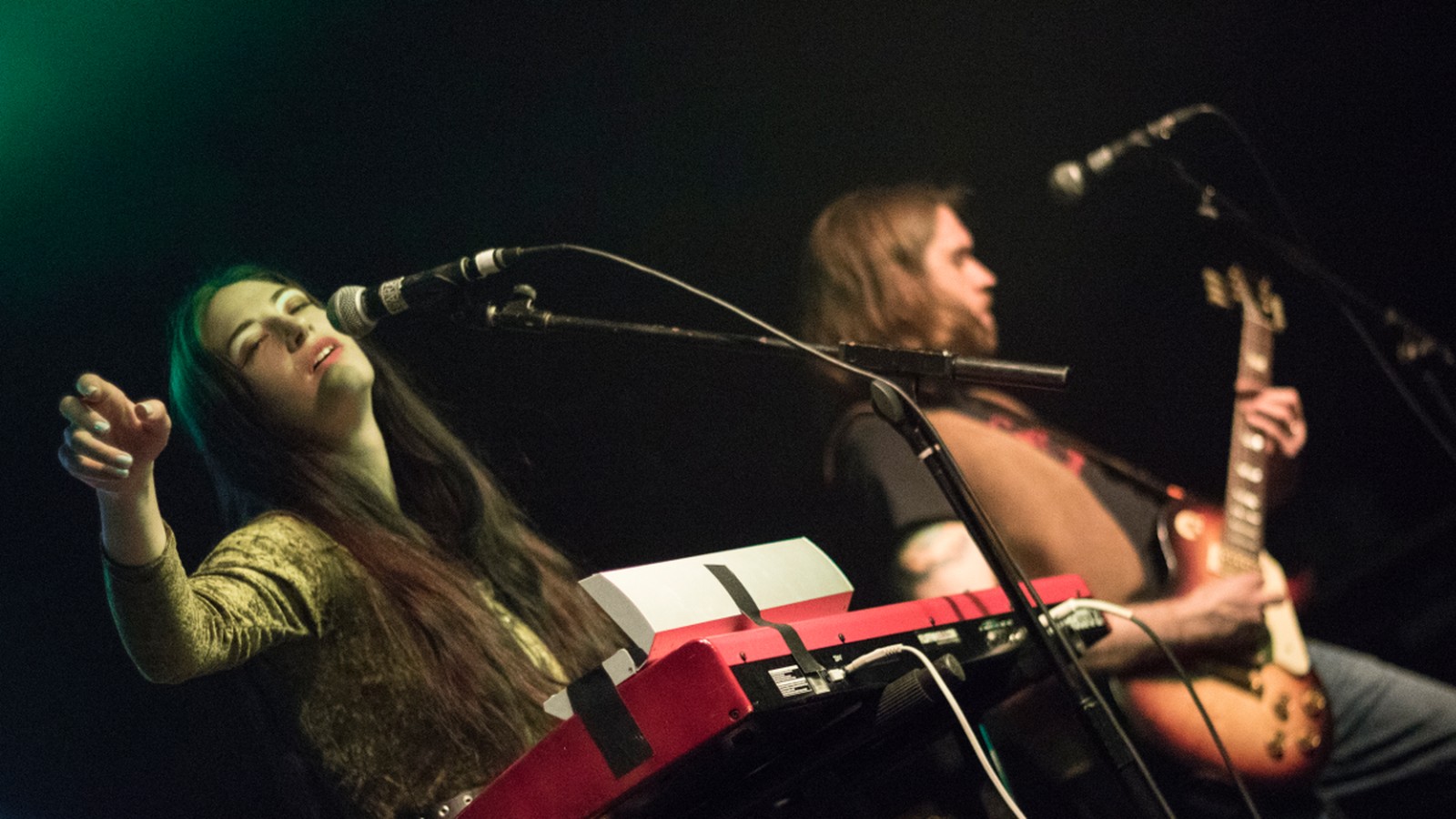
Formed in Toronto in 2006 by Alia O'Brien, who sings and plays flute and organ, and the guitarist Sean Kennedy, who writes most of the songs, the band Blood Ceremony took the sound of 1972 out of the drawer whole. Its debut appeared on Rise Above in 2008, and when the label issued Living with the Ancients in 2011, The Quietus heard in it the unearthed occult craze of the seventies, named the flute-playing British progressive band Black Widow as its nearest ancestor, and noted that Electric Wizard had taken the band on the road as their warm-up act in 2009. Kennedy's own shorthand for the sound was a folkier Sabbath.
Blood Ceremony and the Vampira photographs
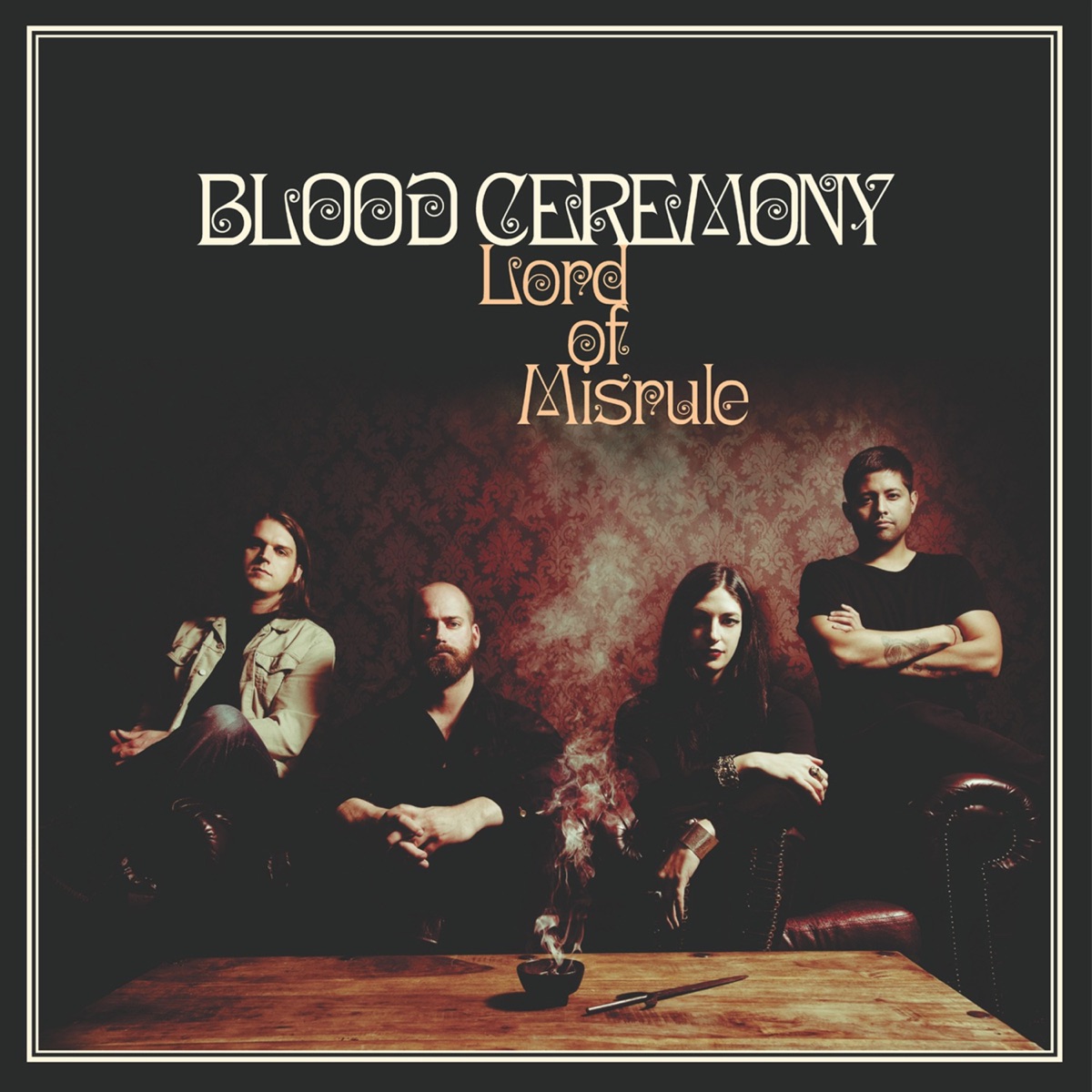
Recorded in the autumn of 2015 at Toe Rag, the analogue studio Liam Watson runs in Hackney, and released by Rise Above in March 2016, Lord of Misrule was furnished from the same drawer as the records before it, down to the lodging: O'Brien told Louise Brown of The Quietus that the band had stayed in a hostel near the studio that had once been a nunnery, still full of its old decor and furnishings, with the feel of the set of a Hammer horror film. In Brown's reading the record went beyond the Sabbath template into sixties pop and folk rock, and O'Brien said she wrote the music for "Loreley" and "Flower Phantoms" herself, while "The Weird of Finistere" was a Kennedy song held back since Living with the Ancients.
If you see the photos of us where I'm holding a dagger and I look like Vampira, and you see the name Blood Ceremony, you're probably not going to imagine what we sound like.
Alia O'Brien to Louise Brown, The Quietus, 20 April 2016
She put it plainly, and she followed it with the concession few bands that trade on an image ever make: that the way the band had chosen to present itself might also limit its appeal to some listeners. We think she is right about the cost and wrong to count it as a loss. The image is a promise about tempo and temperament, and a listener who walks away from a dagger and a Vampira pose was never going to sit through a flute solo over a slow riff in the first place.
The garment O'Brien named is older than doom by sixteen years, a black gown drawn for late night television in 1954, and it sits in the band's photographs beside a sound taken from 1972 and a record made by lodgers of a former nunnery. Three old patterns, pinned to one customer. None of the seams show, and that is the tailor's whole art.
The old ways remain
Released by Rise Above in May 2023, seventeen years after the band formed in Toronto, Blood Ceremony's fifth album carried the argument of this page in its title, The Old Ways Remain, and a tailor would read those words as an order ticket pinned to the brown paper. The robe Marcolin wanted for his photograph, the hoods Sunn O))) wear before their amplifiers and the Vampira gown O'Brien named for the band's photographs all came out of the same drawer, and each was cut to fit a new customer without a line of the original being moved. Doom changes its riffs more often than it changes its clothes.
Cloth comes off at the end of the night and goes back on the rail, to be pinned and cut again for the next band that asks. What doom marks in ink, and keeps for good, is the business of the Doom Metal Tattoo.
