
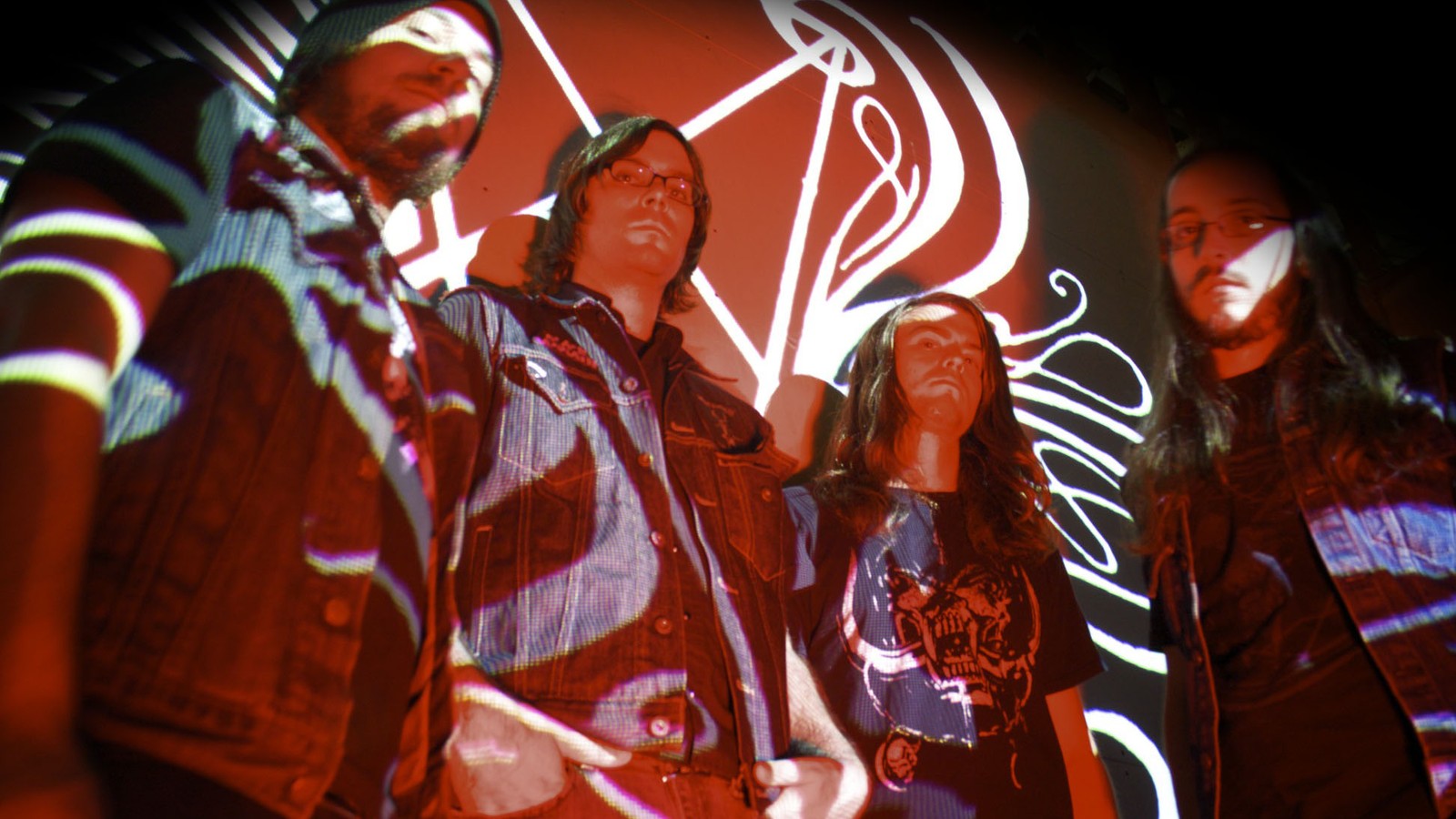
Thirty-two per cent. That is the share of American adults who told the Pew Research Center in July 2023 that they carry at least one tattoo, in a survey of 8,480 adults published on 15 August 2023, with twenty-two per cent carrying more than one, and the figure settles an old argument before a single doom record has been played: ink on skin no longer sets anybody apart from the queue at the post office, so whatever a doom metal tattoo says, the needle cannot be the thing saying it. The picture has to say it. And the pictures this music hands its listeners are often older than the bands that hand them over.
We think of it as a woodcut. A block of pear wood, cut once by a hand nobody remembers, is inked and pressed a thousand times, and the thousandth sheet carries the same black lines and the same white gaps where the knife went in as the first, while the block itself softens at the corners, opens along the grain and loses a hairline with every pass, until it is put away in a drawer and the prints go on circulating without it. A doom tattoo is the print. The block is everything behind it, the grimoire, the tarot card, the sleeve and the band, and the block is the part that wears. The paintings and letters on the sleeves belong to the account of what surrounds the records; the skin is the last sheet those pictures are pressed onto, and the only one that is never filed away.
Ye shall not make any cuttings in your flesh for the dead, nor print any marks upon you: I am the Lord.
Leviticus 19:28, King James Bible, 1611
The oldest block: a seal with a false date
Printed under a title page claiming that one Alibeck the Egyptian had written it at Memphis in 1517, a date the occultist A. E. Waite called undeniably fraudulent in 1911, the grimoire called the Grimorium Verum appeared in French or Italian around the middle of the eighteenth century and carried, among the sigils drawn to call up its superior spirits, the seal of Lucifer, a mark made to be copied line for line and copied that way ever since, from edition to edition and from book to book, for something like two hundred and seventy years. Nobody knows who cut that block. It has not changed shape.
Conceived in Richmond, Virginia, around 2005 by young men who had been listening, by David Cisco's account to the webzine SCRATCHtheSurface in January 2011, to Goatsnake and the Melvins and who "wanted to be the heaviest band in Richmond", the Virginia quartet that called itself Cough gave its first album the Latin name of that eighteenth century mark. Sigillum Luciferi came out through the independent label Forcefield Records in 2008 with Chris Kirby singing, six tracks running close to an hour and engineered by Sanford Parker, from "Killing Fields" to "Lyssavirus". The blog Kick to Kill, reviewing it in May 2008, heard "groove, feedback, repetition, misery". The name was what the Richmond band took, two centuries worn already.
Eight swords, pressed again
First published in December 1909 by William Rider & Son of London and drawn by the illustrator Pamela Colman Smith to the instructions of the same A. E. Waite, the seventy-eight card deck most people picture when they hear the word tarot kept its designs through printing after printing, and among its cards stands the Eight of Swords, a bound and blindfolded woman fenced in by eight blades. The deck has been reprinted, by one publisher or another, for more than a century.
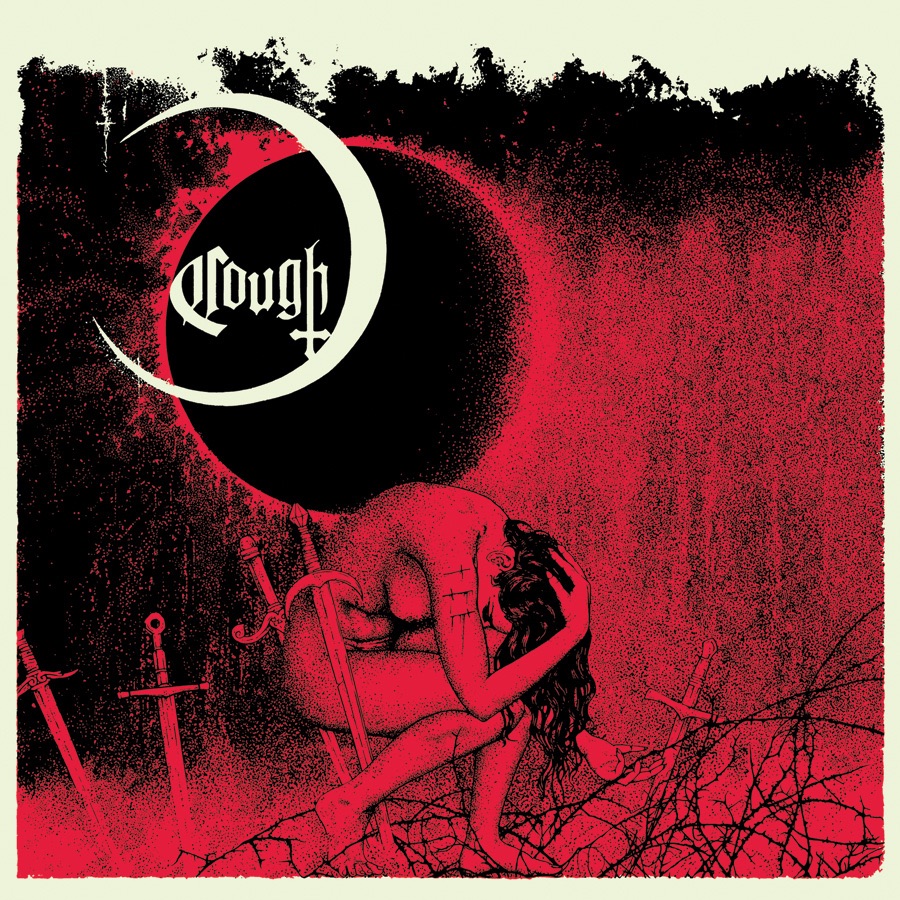
When the Virginia band, down to a trio of Cisco, Parker Chandler and Joseph Arcaro after Kirby left, made its first record for Relapse, the Pennsylvania label that signed it in 2010, it went to that card. Recorded in Chicago in October 2009 with Sanford Parker producing and released on 26 October 2010, Ritual Abuse wore a cover by Glyn Smyth of Scrawled Design built, as Cisco explained to Cyrill of the British webzine The Sleeping Shaman in December 2010, on the Eight of Swords and on "the feeling of being trapped because any move you make will only hurt you more", with a crumbling throne across the foldout. Behind the picture came five tracks and around fifty-three minutes, from the twelve minutes of "Mind Collapse" to the closing title track, the riffs laid on like coats of pitch on the hull of a boat that will never be launched, each coat sealing the one beneath it until the wood cannot be seen. The metal site Last Rites, reviewing the record that December, called it "slow, oppressive in weight, yet brightly arranged", and singled out "A Year in Suffering" as a clinic in how to present maximum heaviness.
Asked in the same interview about the inverted crosses and pentagrams on the band's records, Cisco answered plainly: "We like to keep the metal tradition alive." That is the woodcut talking. A card drawn in 1909 was pressed onto a sleeve in 2010, and a listener who took that sleeve to a tattooist would be pulling a third print from the same design. The band chose a picture already worn smooth by a century of hands, and that is exactly why it takes the ink so well.
The print keeps its first shape. The block is the part that wears.
The block wears: Still They Pray
Blocks open along the grain, and bands do the same. The singer Chris Kirby, heard on the first album with Cisco on guitar, Chandler on bass and Arcaro on drums, was gone before Ritual Abuse; Chandler and Cisco divided the vocals between them, Brandon Marcey had joined on guitar by the time Cisco spoke to The Sleeping Shaman in December 2010, and six years went by between the Relapse debut and the next full-length.
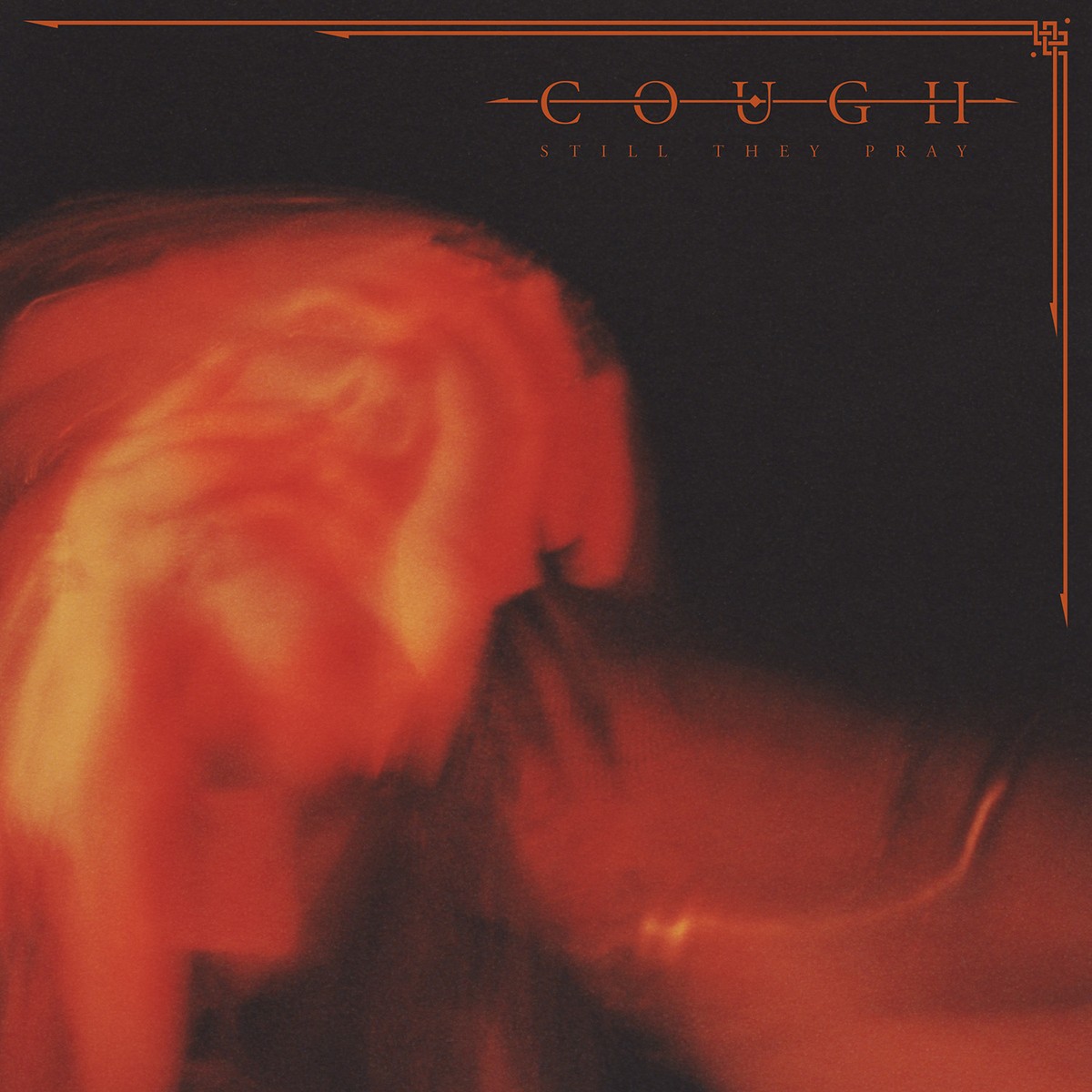
Produced by Jus Oborn of Electric Wizard, recorded and mixed by Oborn with Garrett Morris of Windhand in September 2015 and released by Relapse on 3 June 2016, Still They Pray runs eight tracks and close to sixty-eight minutes, opening on "Haunter of the Dark", sinking through the ten and a half minutes of "Possession" and closing on the four minute title track. Cisco told Ben Handelman of Noisey, the music site of Vice, on 1 June 2016 that the long wait had left the band "a large amount of riffs", and that "a certain cosmic undertone" had grown up by itself in the sessions with Oborn; Handelman heard it balance "hefty doom and bloody rock". Played end to end, the record goes down like a church bell lowered on a rope into a flooded mine shaft, tolling at every fathom and a little more leaden at each, until the last stroke comes up from a depth where nobody can see the bell at all.
The block stayed in the press afterwards, with a live record, More Dead than Live, in 2019. Every one of those line-up changes and silences took a sliver off the wood. Not one of them altered a line of the prints already taken from it.
A name pressed into a hand
The oldest print in this story was taken before there was a doom sleeve to take it from. Asked by Charlie Connell of the tattoo magazine Inked on 14 May 2020 about the name across his knuckles, the singer from Aston whose voice would lead Black Sabbath, Ozzy Osbourne, gave his own account: "I did those when I was about 15 years old," he said, "I did it myself with India ink and a needle," adding that the two Zs did not quite line up, one smaller than the other. That places the mark a few years before the four men from Aston formed, in 1968, the band that would slow the blues to a funereal crawl, a name stamped into a hand before the block that would make it famous had even been cut.
The uneven letters stayed exactly as uneven as the teenager left them. The band that made that name famous split, re-formed, changed singers and brought its first singer back again across more than half a century, the block splintering and being glued and splintering again, and the print on the knuckles, put there by the teenager himself with India ink and a needle, kept every wobble of its first impression.
What the skin keeps
The verse at the head of this page forbids marks printed upon the body, and doom has spent half a century handing its listeners pictures that could be printed there, taken from older and older blocks: the name of a seal from a grimoire that lied about its own date, a card from a deck drawn in 1909, and one name that really was pushed into a hand with ink before the band existed. Each block has worn in its own way. The grimoire lost its claim to 1517, Rider's editions stopped in 1939 and came back only in 1971, and Cough lost a singer and waited six years between records. What sits in the skin keeps the lines it was given on the first pass, and in a music that moves like a cortege it is fitting that the one part of it that does not age at all is the part that was never played.
The shapes on those sleeves are older than the people who buy them, and so is the phrase underneath them, the slow figure repeated until it becomes sediment, which is taken to pieces in the Doom Metal Riff, Taken Apart. The block is in a drawer. The print goes on circulating.
