
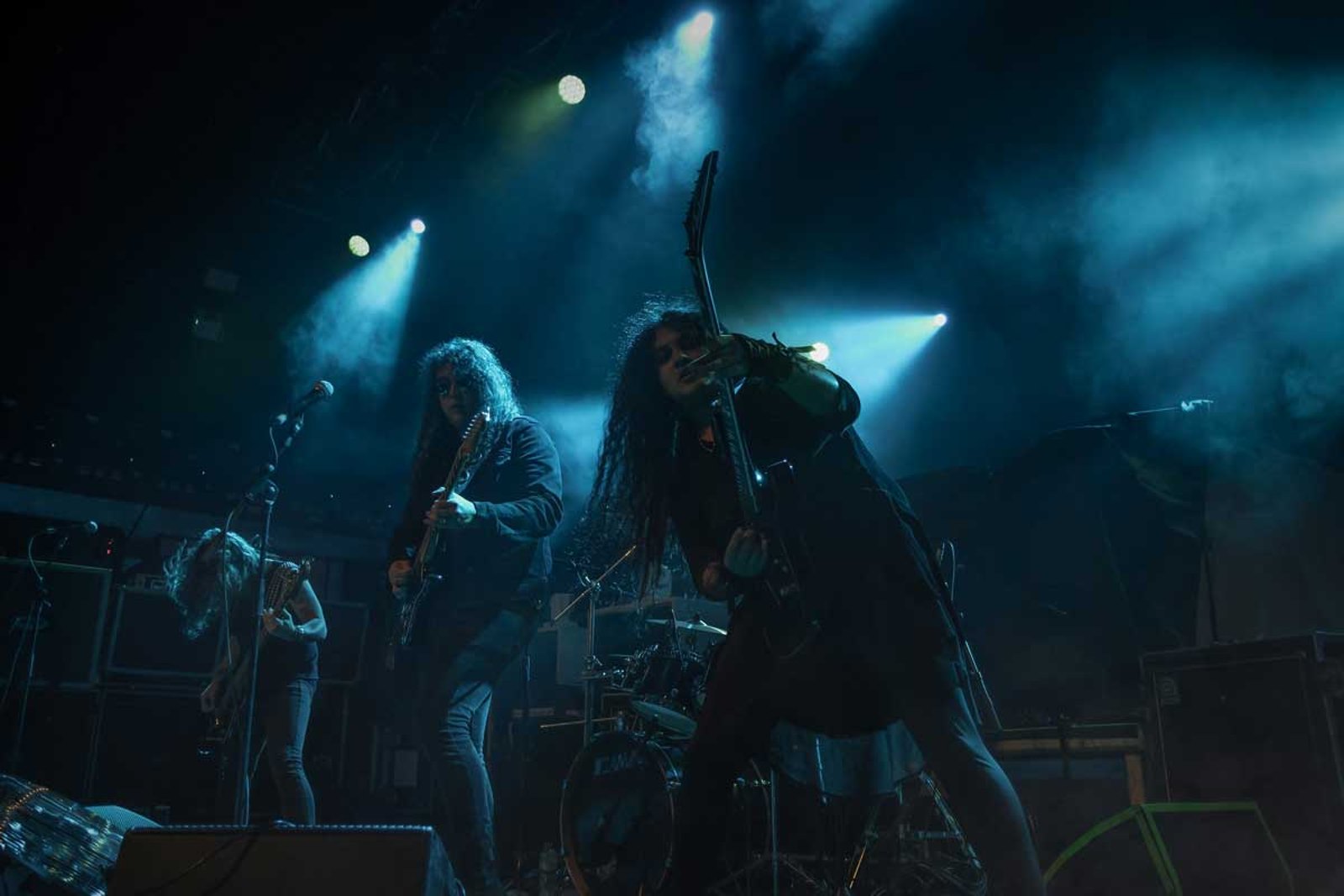
The darkest heavy metal was never the heaviest. The dark heavy metal bands kept the tempo, the tuning and the twin guitars of 1980 exactly where they were, and changed only what the song was about and how much light it let in. Their heresy was a matter of lighting. The riffs stayed loyal.
On 15 August 1934 William Beebe and Otis Barton were winched down off Bermuda inside a hollow steel ball less than five feet across, to a depth of more than nine hundred metres, where the sea pressed on its quartz windows with a weight that would have crumpled the ball like a beer can at the first crack, and where the last of the sunlight had given out hundreds of metres above. Down there the only light came from the animals themselves. That is the whole method.
The Danish quintet that set the pattern in 1983, dressing British wave riffs in horror stories and a falsetto, was Mercyful Fate, and its records, its oaths and its singer's philosophy are told elsewhere in full. The bands that followed made their own light in the same way, out of film, folklore, church Latin and a singer's face, and the guitars underneath them kept playing heavy metal as if nothing had happened. Where their line branches off the family tree is set out in the wider story.
The British cellars, 1979 to 1982
While most of the young British bands sang about motorbikes and Saturday nights, a handful went down the cellar steps instead. The Derbyshire quartet that put a pentagram on its sleeve and called its 1980 debut Give 'Em Hell, recorded for the small Rondelet label, went out as Witchfynde, and the record set occult lyrics over riffs that owed more to Black Sabbath's slow side than to the speed of the wave around it. It sold modestly. It was imitated for decades.
The Staffordshire band that borrowed the title of a 1957 horror film for its debut, released by Carrere in 1981, was Demon, and "Night of the Demon" opens on a chanted intro before Dave Hill's voice and a riff at the pace of a man walking home too fast drive straight through the middle of it. The band moved towards melodic rock within two albums. The first one is the one that stayed dark.
The darkest of them waited longest for a record. The south London band that the singer Terry Jones and his son, the guitarist Alan Jones, had started in the late seventies recorded an album's worth of songs in 1982, watched the tape circulate among collectors for years, and saw it released only in 1998 as Volume 1, under the name Pagan Altar. Nobody signed them in time. The songs did not age.
"The Cry of the Banshee", finally recorded properly for Lords of Hypocrisy in 2004, is the sound of the whole band in five minutes: Terry Jones singing like a man reading a ghost story aloud to a room with the lamps turned low, and Alan Jones working slow, clean twin leads through the verses until the song turns and the riff kicks the chair out from under the storyteller. It is folk horror played at heavy metal volume. Nobody else in Britain sounded like it.
Their heresy was a matter of lighting. The riffs stayed loyal.
Horror theatre in Pesaro, and a baritone in Lodi

Italy built the most theatrical dark heavy metal bands of all. Formed in Pesaro in 1977 by the singer Steve Sylvester and the guitarist Paul Chain, with every member cast as a figure from the horror films, the vampire, the mummy, the werewolf, the zombie and death itself, the band that took more than a decade to release a full album, ...in Death of Steve Sylvester in 1988, called itself Death SS. The costumes came before the record. The record was worth the wait.
By Heavy Demons in 1991 the sound had grown bigger and more polished, keyboards and a big chorus laid over a march, and Sylvester's voice kept the whole business sounding like a sermon preached from a crypt. Few bands have carried a single look so far. Chain left early and went off into a slower, stranger music of his own.
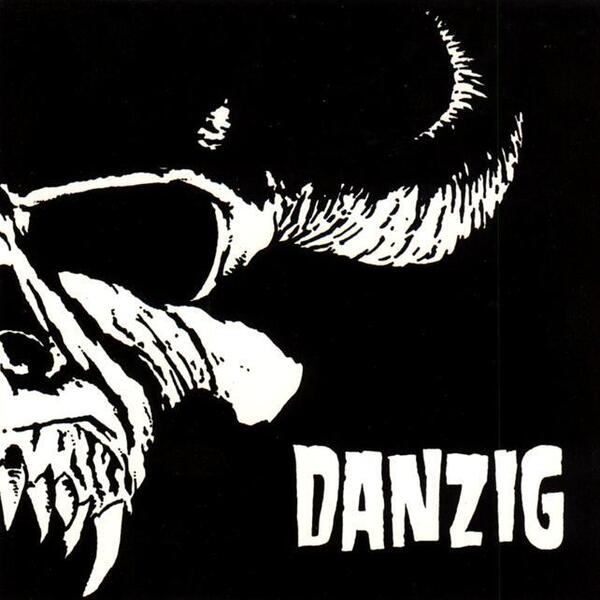
America's answer came out of the punk underground rather than the metal one. The singer from Lodi, New Jersey, who had fronted the Misfits and Samhain and then, on a self-titled album produced by Rick Rubin for Def American in 1988, set a dark baritone over riffs soaked in slow blues, was Glenn Danzig, and his band Danzig made the most sepulchral heavy metal record of that year without once raising the tempo. "Mother" became a hit five years late, as a remixed live version in 1993. The song had not changed. The audience had.
Where the dark heavy metal bands find their light
Every one of these bands borrows its darkness from somewhere outside music, and the sources are few. The cinema supplied the first of them: Demon took a title from a film, Death SS took a whole cast, and Danzig took the lighting of a black and white picture and turned it into a sound. Folklore supplied the second, which is why Pagan Altar's best songs sound like stories told on a winter night in a village where everybody knows the ending.
The church supplied the third, and the young bands took the most from it. Latin titles, organs, funerals and the vocabulary of the mass are all over their records, set against riffs that would not frighten a vicar, and the effect depends on the contrast. It is theatre, and it knows it is theatre. That is exactly why it still works.
A dark heavy metal record is a horror film with the monster kept out of shot. Nobody on it plays a note slower than a Saxon record does. They simply play it with the lights off.
Declan Rourke, KaosMetal
| Band | Country | Start with | Year | The source |
|---|---|---|---|---|
| Witchfynde | England | Give 'Em Hell | 1980 | The occult |
| Demon | England | Night of the Demon | 1981 | The horror film |
| Pagan Altar | England | Volume 1 | 1998 | Folklore |
| Death SS | Italy | ...in Death of Steve Sylvester | 1988 | The monster movie |
| Danzig | United States | Danzig | 1988 | The blues after midnight |
| Portrait | Sweden | Crimen Laesae Majestatis Divinae | 2011 | King Diamond as doctrine |
| Attic | Germany | The Invocation | 2012 | The funeral mass |
| Unto Others | United States | Strength | 2021 | Gothic rock |
The young dark heavy metal bands that kept the lights down
The revival of the 2000s brought a generation that made its records with the lights kept down and nothing bright left anywhere in the mix. The production went quiet and red. The songs went for the throat.
The Kristianstad band that treated the early King Diamond records as a doctrine, and on Crimen Laesae Majestatis Divinae in 2011 stretched their approach into songs of seven and eight minutes, is Portrait. The Gelsenkirchen quintet with a falsetto singer calling himself Meister Cagliostro, whose debut The Invocation came out in 2012, goes by the name Attic, and its records take a church organ, a funeral and a riff out of 1984 and desecrate all three with evident joy.
Uppsala went furthest out of the genre and furthest into the dark. The Swedish band whose second album had already joined the canon of the revival turned, on Sister for Metal Blade in 2013, towards the gothic rock of the early eighties, and the quintet that made it, the singer Pelle Åhman now crooning where he had once howled, was In Solitude. The band ended in 2015. Sister was the last thing it said, and the strangest.
The most original of the young dark bands came from Portland, Oregon. Formed as Idle Hands and renamed after a dispute over the name, the quartet that crossed gothic rock with heavy metal on Mana in 2019 and on Strength for Roadrunner in 2021 is Unto Others, with Gabriel Franco singing in a low, cool croon while the guitars run twin leads underneath. It is the nocturnal side of the family with the collar turned up. The lineage runs straight back to 1983.
The dark bands never broke away from the trunk; they stayed on it and turned the lights down. The sound under the stories is the sound of traditional heavy metal, the same riffs and the same twin guitars, and the darkness lives in what the singer chooses to see in front of him. A falsetto, a crypt, a lamp turned low, a Latin title: none of it costs a single beat per minute. Heavy metal has always allowed that. It will go on allowing it.
