
In January 1986 the debut album of a band from Seattle came out in Paris. The group the guitarist Terry Gorle had assembled in 1983, with Paul Davidson at the microphone, was Heir Apparent, and Graceful Inheritance went out through Black Dragon Records, cut for the European market and never offered, all through that decade, in the country that made it. The question behind every list of US power metal 80s albums is why so few were ever in an American shop. The answer is almost never musical.
Before the microphone there was a horn in a wall. A band recorded that way is arranged by what the horn will take: the loudest players are sent to the back wall, the violinist plays a Stroh violin with a metal resonator clamped to its bridge, the drummer is left with woodblocks because a bass drum would tear the cutting stylus out of the groove, and the singer is wheeled forward and back on a trolley by an assistant. Everything else in the room played. None of it is on the wax. What survives of a decade is never what was played in it, only what the channel could be forced to carry, and this music spent the eighties playing into one built for something else.
The mechanics are duller than the legend and they settle everything: who pressed the record, who owned the master when the pressing stopped, and what year it reached a counter against a word already crossing to Hamburg. The branch itself, with its sound and the names that came through it, is laid out in its place in the story. The attrition ran underneath it.
The US power metal 80s records that were pressed for another continent

What happened to Heir Apparent next is the pattern in miniature. Black Dragon put the record on compact disc in the autumn of 1986, and in October 1988 the band signed a seven album contract through a joint venture between Capitol and Metal Blade, only to fall to pieces before One Small Voice reached the shops in June 1989. The second album arrived as the work of a band that no longer existed, and it was the first one most Americans were in any position to buy.
En Trance opens the debut, and its fate is the argument in one song: Europe attested to it with a dozen concerts in May and June of 1986, and the country that produced it was given no pressing of its own that decade. Los Angeles put a second band on the same Paris list. The band that had cut the EP The Dominatress in 1983 and then put Mike Smith in front of Christian Logue's guitar was Savage Grace, and Master of Disguise, recorded in Los Angeles between August and October 1984, came out in 1985 through a New York distributor called Important and went to Europe on Black Dragon as catalogue number BD 001.
Seattle produced the oddest case of the three. Assembled in 1983 out of two local bands, with a guitarist who had invented the locking tremolo, the group that made Steel the Light in 1984 was Q5, and that album came out at home on Albatross Productions, a label whose whole metal catalogue is that one record, before Music for Nations took it to Europe and Victor to Japan in 1985. The first label to hold the record had nothing else in metal to sell.
A record nobody manufactured for the country that made it is not a cult object. It is an unreleased one.
When the label went under it took the record with it
Insolvency handles music in a way nobody in a studio would recognise. A receiver's schedule lists the finished goods in a warehouse by weight, enters the master tapes among the assets of a company rather than among the works of anybody alive, pulps whatever will not move, and leaves the remainder with the creditors until somebody buys it back out of them. Not one bar is played anywhere in that process. The record is counted rather than heard.
Two schoolfriends in Bethel, Connecticut, Rob Thorne and Pete Altieri, had started the band in 1985, and the group that recorded A Crystal Vision at Presence Studios in East Haven in 1987 was Sacred Oath. Mercenary Records issued it in January 1988 and closed its doors within months, so that the band toured the Midwest with no label behind it and came apart that December. Sentinel Steel reissued it in 2001. Thirteen years is a long wait for a thing that was already finished.
The smaller the label, the shorter the reach, and several were one person. Launched in 1984 by Bill Peters, a college radio presenter in Ohio who ran a Friday night metal programme on WJCU, A college radio presenter in Ohio who ran a Friday night metal programme on WJCU, Bill Peters, launched Auburn Records in 1984 and used it to press the first album by Shok Paris, Go for the Throat. A label run out of a radio station can make a record. Getting one into a shop two states away is a different trade, and the second album, Steel and Starlight, went to I.R.S. Records, which issued it in September 1987.
The majors signed them and then lost the thread

A house will sometimes engage a singer for a season and then never schedule the opera he was engaged for. The man comes in for his calls, the fee is paid out in full on the dates the contract names, the repertory is announced twice with the work missing from it, and the part is finally let go to a house three hundred miles away that can sell the tickets. By the time anybody wants him for it the writing sits above where his voice now lives. Nothing there is a judgement on the voice. It is a judgement on a calendar.
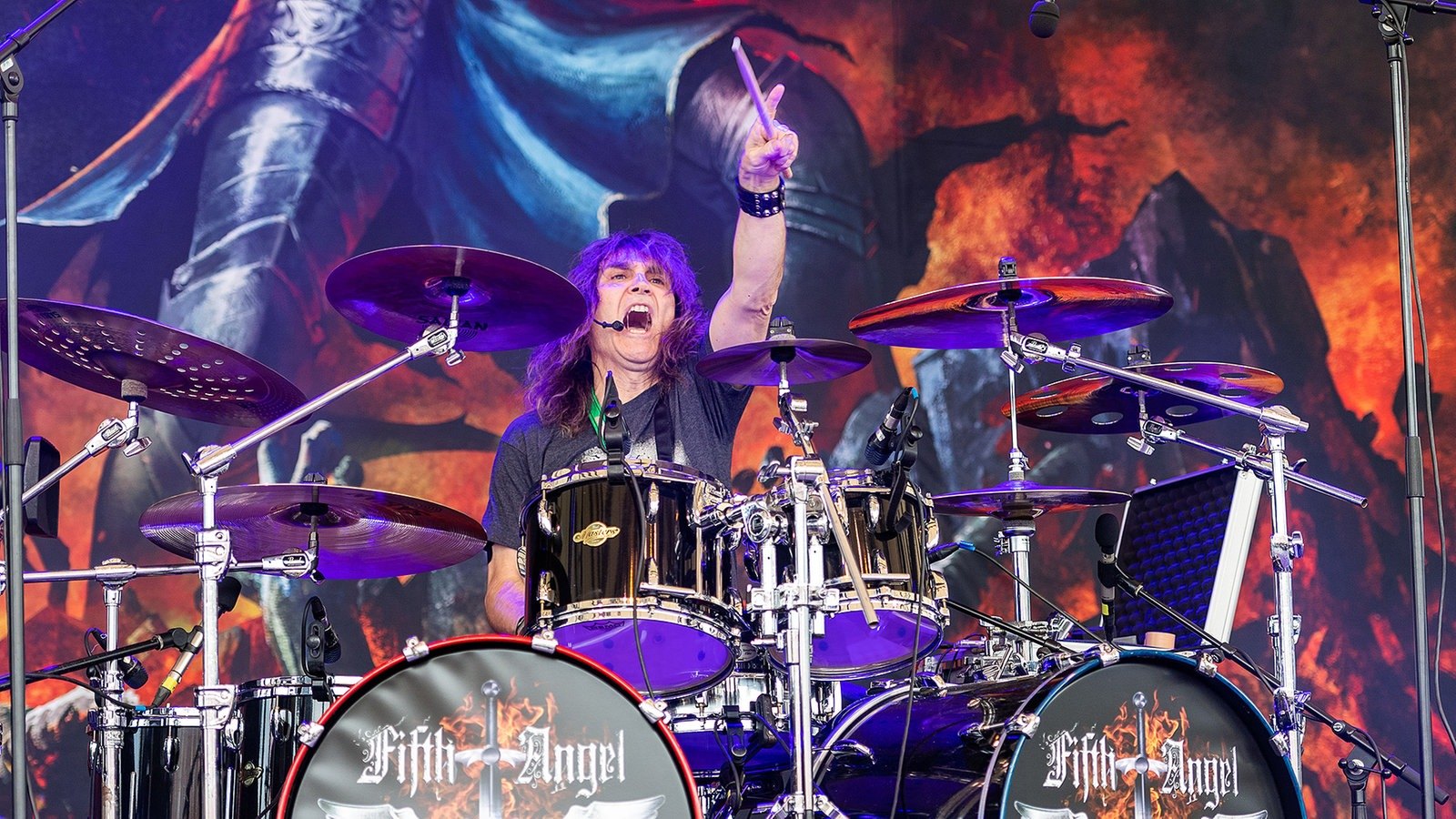
Formed in Bellevue, Washington and carried to a debut on Mike Varney's Shrapnel label in 1986, the band Epic picked up and re-released two years later was Fifth Angel, and the reissue reached number 117 on the Billboard 200. Time Will Tell followed on Epic in 1989, and the group was finished by 1990, its singer Ted Pilot putting the failure down to a buyout at the label's parent company that took the tour support and some of the people who had signed the band. The contract had been real.
Known as the Triple Axe Attack for its three guitar line up, the band Island signed out of Huntington Beach was Leatherwolf, and Street Ready, produced by Kevin Beamish and mixed by Michael Wagener in 1989, was recorded in the Bahamas at a cost its singer later put near two hundred thousand dollars. By 1992 the band had changed its name to Hail Mary, and it stopped in 1993. The money had arrived. The man at Island who signed the band left straight afterwards, the singer remembers, and nobody in the building owned the record.
Minneapolis supplies the exception, because there a major did stage the record. The band that had formed there in 1984 was Powermad, and Absolute Power, issued by the Warner label Reprise in 1989, came with a video on MTV and a tour opening for Overkill. David Lynch then put the band on screen in Wild at Heart in 1990, playing Slaughterhouse until Nicolas Cage, as Sailor, stops it to lead an Elvis Presley number. The one record on this list a major did stage came in the year the band's own run ended.
Arriving in perfect order, after the word had moved
Two of the records on the American side turned up after the word itself had moved. Built in Colorado Springs around three brothers and fronted by Harry Conklin, the singer of Jag Panzer, the band whose self titled debut appeared on US Metal Records in September 1989 was Titan Force, and by that month the Hamburg template of 1987 had settled what power metal meant east of the Atlantic. The second album, Winner / Loser, came out in 1991 on the German label Shark. The group toured Germany with Anvil and was finished once Conklin went back to Jag Panzer.
Kentucky supplied the other, later still. Formed in 1982 by the brothers Eric and Glen Cook in Hebron, the band that finally delivered Programmed through Metal Blade in 1990 was Lethal, eight years in the making. It reached the shops a year before the autumn that swept American metal off the major labels, and the schism that followed is the subject of why America turned its back on power metal.
What the reissues settled
The records came back, and the manner of their return settles the question. Heir Apparent's debut has been reissued by four separate companies between 1999 and 2022, none of them Black Dragon. Q5 walked onto a stage at Sweden Rock in 2014, thirty years after Steel the Light, and Titan Force reappeared at a German festival long after breaking up. None of that is a change of taste. Every one of those is a decision taken by somebody who had not been in the room the first time.
So this music was not forgotten the way a weak record is forgotten. It was never put properly in front of the people who might have bought it, and the reasons are addresses, catalogue numbers, contracts and dates. Anathema would be too strong a word for what America did here, because anathema requires somebody to care enough to pronounce it. What the record shows is duller and worse than hostility: a trade that never got round to offering these albums to the teenagers who might have taken them gladly. The music was ready in 1985. The means of delivering it turned up around 2001, by which time several of the bands had been gone for a decade.

