
The best 80s hair metal ballads were written by bands who could also play fast, and the worst by bands who had been signed to play slow. Every major label on the Sunset Strip wanted one slow song per album, and the ballad came to rule the decade's singles chart so completely that a Maryland band with four albums of party rock behind it would reach the top forty only once, and with the quietest song it ever cut.
A cellarman with a cloudy cask of ale stirs in a jug of isinglass finings, and overnight the stuff drags every grain of yeast and haze down through the beer and packs it on the floor of the cask, until what runs from the tap next morning is clear enough to read a newspaper through. The power ballad did that to a band. It pulled the grit to the bottom and left something radio could see through.
The Hagerstown five who learned it the hard way were Kix, and their "Don't Close Your Eyes", co-written with the professional songwriter Bob Halligan Jr., took Blow My Fuse, released by Atlantic in 1988, to the platinum sales the band's louder singles had never come near, the ballad itself climbing to number eleven on the Hot 100 in 1989. The rockers paid the rent for years. The ballad bought the house.
How the 80s hair metal ballads were built
The machine had four parts, and the order never changed. An acoustic guitar or a piano opened alone, the singer came in at half voice, the drums held off until the second chorus, and the guitar solo arrived in the last minute to justify the distortion pedal, before a final chorus sung a key or a shout higher than the first. Radio programmers knew the shape by heart. So did every band in the country.
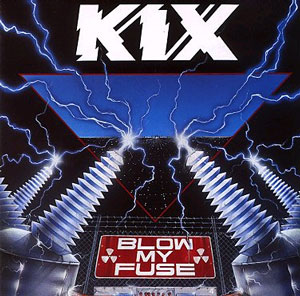
"Don't Close Your Eyes" follows the blueprint to the bar and still earns its place, because Steve Whiteman sings it without a wink, holding a rasp in reserve for the chorus instead of spending it on the first verse, and because the band behind him plays the heavy half with the same weight it gave the party songs. It sounds like a band slowing down. It does not sound like a band borrowed for the afternoon.
The template had an older pedigree than the Strip. The drummer who sang the first great heavy rock ballad of the seventies, over a string arrangement and without a single guitar, was Peter Criss, and "Beth", tucked onto Destroyer by Kiss in 1976 and pushed to number seven on the Hot 100 when radio turned the single over, showed the labels a decade early what a slow song could earn for a band sold on spectacle and greasepaint. How that lesson took over a whole scene is that part of the history.
If music be the food of love, play on; Give me excess of it, that, surfeiting, The appetite may sicken, and so die.
William Shakespeare, Twelfth Night, Act I, Scene 1
The pens for hire
Once the ballad was the most reliable single on an album, labels stopped leaving it to chance. The songwriter from Los Angeles who wrote "When I See You Smile" alone and handed it to a supergroup of veterans, John Waite, Neal Schon and Jonathan Cain trading as Bad English, was Diane Warren, and the song went to number one on the Hot 100 in November 1989 without a single member of the band on the credits. It topped the chart on November 11, 1989. The song was the product. The band was the delivery van.
Kiss went back to the well with more help than in 1976. The singer and writer who sat down with Paul Stanley to finish "Forever", the ballad from Hot in the Shade in 1989, was Michael Bolton, and the single reached number eight in 1990, the band's highest placing in more than a decade. The outside pen did the work the greasepaint could not.
"Forever" is built on an acoustic figure and a vocal Stanley pitches low and close, with a guitar solo from Bruce Kulick that plays the melody back rather than racing it. It is professional to the last bar. It is also the moment the ballad stopped needing the band that played it.
Volume is where the formula went wrong. By 1990 the labels were ordering two and three ballads an album, written to a release date instead of to an ear. Albums carried two ballads, some three. Most of them sound rushed.
The power ballad pulled the grit to the bottom and left something radio could see through.
Ballads the bands wrote themselves
The Californian quintet that wrote its slow songs in its own rehearsal room, with no hired pen in sight, was Tesla, and "Love Song", from The Great Radio Controversy on Geffen in 1989, opens on a long classical guitar prelude by Frank Hannon before Jeff Keith's voice comes in, then climbs to number ten on the Hot 100 on the strength of the band alone. It is, beyond dispute, a band ballad in the full sense. The guitars carry the weight.
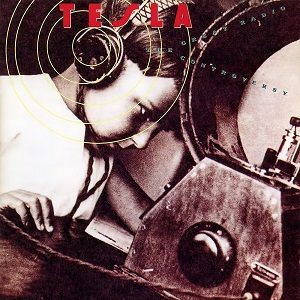
What separates "Love Song" from a label commission is the guitar work on the way up. Hannon and Tommy Skeoch keep playing real parts under the chorus instead of strumming chords for the singer to stand on, and the solo sounds like the same two men who play the band's heavy songs, which is exactly what it is. The ballad did not swallow Tesla. Tesla swallowed the ballad.
The Las Vegas quartet that wrote its own slow song and still sold on it was Slaughter, whose "Fly to the Angels", from Stick It to Ya on Chrysalis in 1990, reached number nineteen on a vocal by Mark Slaughter pitched so high it clears the guitars by a mile. Mötley Crüe did the same that year with "Without You", from Dr. Feelgood, a song by Nikki Sixx and Mick Mars that went to number eight. Both bands wrote their own. Both sold on the slow one.
| Song | Band | Year | Hot 100 peak | Written by |
|---|---|---|---|---|
| Beth | Kiss | 1976 | 7 | Peter Criss, Stan Penridge, Bob Ezrin |
| Don't Close Your Eyes | Kix | 1989 | 11 | Donnie Purnell, Bob Halligan Jr., John Palumbo |
| Love Song | Tesla | 1989 | 10 | Frank Hannon, Jeff Keith |
| When I See You Smile | Bad English | 1989 | 1 | Diane Warren |
| Forever | Kiss | 1990 | 8 | Paul Stanley, Michael Bolton |
| Without You | Mötley Crüe | 1990 | 8 | Nikki Sixx, Mick Mars |
| Fly to the Angels | Slaughter | 1990 | 19 | Mark Slaughter, Dana Strum |
Where the slow songs still stand
The test is simple enough. Take the ballad off the album and play the rest: if the band behind it can still carry a fast song, the ballad was a choice, and if the rest falls to pieces, it was a crutch. Tesla, Kix and Mötley Crüe pass. Many of the bands signed after 1988 in the scramble for the next "Heaven" do not, and their second albums tend to prove it, ballad after ballad with the brakes worn through.
Played side by side today, the band ballads hold and the commissions fade. "Beth" still sounds like a drummer singing to someone he left at home, "Love Song" still sounds like Tesla, and "Don't Close Your Eyes" still carries Whiteman's rasp. "When I See You Smile" sounds like a hit, and nothing else. It could have been sung by anybody with the range, and within a few years the charts had moved on to singers who were not in bands at all. The pen outlived every band it hired.
The albums that pass the whole test, fast songs and slow ones together, stand among the best hair metal albums, where a ballad counts for exactly one track and no more. The slow song never made a great album on its own. It only ever made a great single.
The chroniclers of the decade usually file the ballad as its disgrace. The chart says otherwise, and so do the few written from inside a working band, by people who would walk back onto the stage the same night and play the loud half at full volume. Those are the ones still sung back from the floor. The rest went to the bargain bins with the hairspray.