
On 31 October 1981 a small New Jersey label put five thousand copies of a seven inch called "Halloween" into the shops, timed to the night itself. The singer who owned the label, pressed the record on it and printed the band's new monster-magazine logo across the sleeve for the first time was Glenn Danzig, and the band was the Misfits, a punk group that heavy metal would spend the next decade stripping for parts, dragging its riffs into bigger rooms and louder amplifiers.
That single set the terms. Halloween heavy metal songs are not horror songs, however much they borrow from the late film and the paperback rack. A horror song is written for any night of the year and wants the listener alone in the dark; a Halloween song is written for one date on the calendar and wants the listener out in the street, in a costume, with company. The best of them know the difference. The rest are scary songs somebody put on a playlist in October.
Before the pumpkin crossed the Atlantic, children in Ireland and Scotland made their lanterns out of turnips, driving a kitchen knife into the purple root, gouging the white flesh out with a spoon until the walls were as thin as a thumbnail, hacking a grin through the skin and dropping a coal or a candle stub inside, then swinging the whole blazing head on a string down the lane. It frightened nobody who could see who was carrying it. It was not supposed to. The Halloween song is that lantern: a face cut to look terrible, lit from inside, made to be carried.
Halloween heavy metal songs written for the date
The Danish falsetto who wrote the night its own birthday song, a celebration sung from the side of the things that come out on it rather than a warning to the people indoors, was King Diamond. "Halloween" sits seventh on Fatal Portrait, the first album under his own name, released by Roadrunner on 14 March 1986, and it rips through its verses behind a fanfare of twin guitars and a chorus pitched for a room to shout back. It came out as a picture disc single on 6 June 1986. Nobody at the label seems to have checked a calendar.
He had already worked the other end of the year. Before the album, King Diamond's first single under his own name was "No Presents for Christmas", released on 25 December 1985, a seasonal record that runs the melody of "Jingle Bells" under the wheels of a speed metal riff, and the pairing shows how he treated the calendar: as a set of stage cues, each festival a costume change. The man writes for dates the way other singers write for radio.
The Hamburg band whose name already carried the pun treated the night at full length. The man who wrote "Halloween" for Keeper of the Seven Keys: Part I, released by Noise on 23 May 1987, a guitarist who had handed the microphone to a Hamburg teenager, eighteen year old Michael Kiske, only a year before, was Kai Hansen, and the song runs past thirteen minutes, the night's whole cast of witches, ghosts and trick or treaters set to a gallop. The song's fate on video is the stranger story.
For the video, Helloween cut it to about five minutes. A good shearer on a sheep station takes the fleece off a ewe in one piece in under two minutes, the blades running flat along the skin, the whole coat peeling away and landing on the boards like a dropped rug, and the animal that scrambles back into the pen is half the size and exactly the same beast. The edit sheared off more than half the running time and left the chorus standing. The chorus was always the animal.
The costume, the car radio and the director's chair
The song on the car radio in John Carpenter's Halloween of 1978, playing while Annie and Laurie drive through Haddonfield on the night itself, belongs to Blue Öyster Cult. "(Don't Fear) The Reaper" was two years old and had nothing to do with the holiday. The film annexed it anyway, and every October since, the Long Island five have been played on the strength of one short scene in a car, which is how most songs get onto the Halloween shelf: by being in the room when the film was shot.
The traffic went the other way twenty years later. The White Zombie singer who named his first solo single after the coffin-bodied dragster Grandpa drove in The Munsters, the sixties sitcom about a family of friendly monsters, was Rob Zombie. "Dragula", released in August 1998 as the lead single from Hellbilly Deluxe on Geffen, is a costume song at full speed: a salvo of industrial drums, a riff that shovels the whole B-movie back catalogue into the engine, and no fear anywhere in it.
Then he took the director's chair. Rob Zombie wrote and directed the 2007 remake of Halloween, the ninth film in the series, which makes him a rare musician who has written the songs for the night and then remade the film the night is named after. The circle that opened on Carpenter's car radio closed in his edit suite. It is the spectacle of a fan who kept going until the studio handed him the mask.
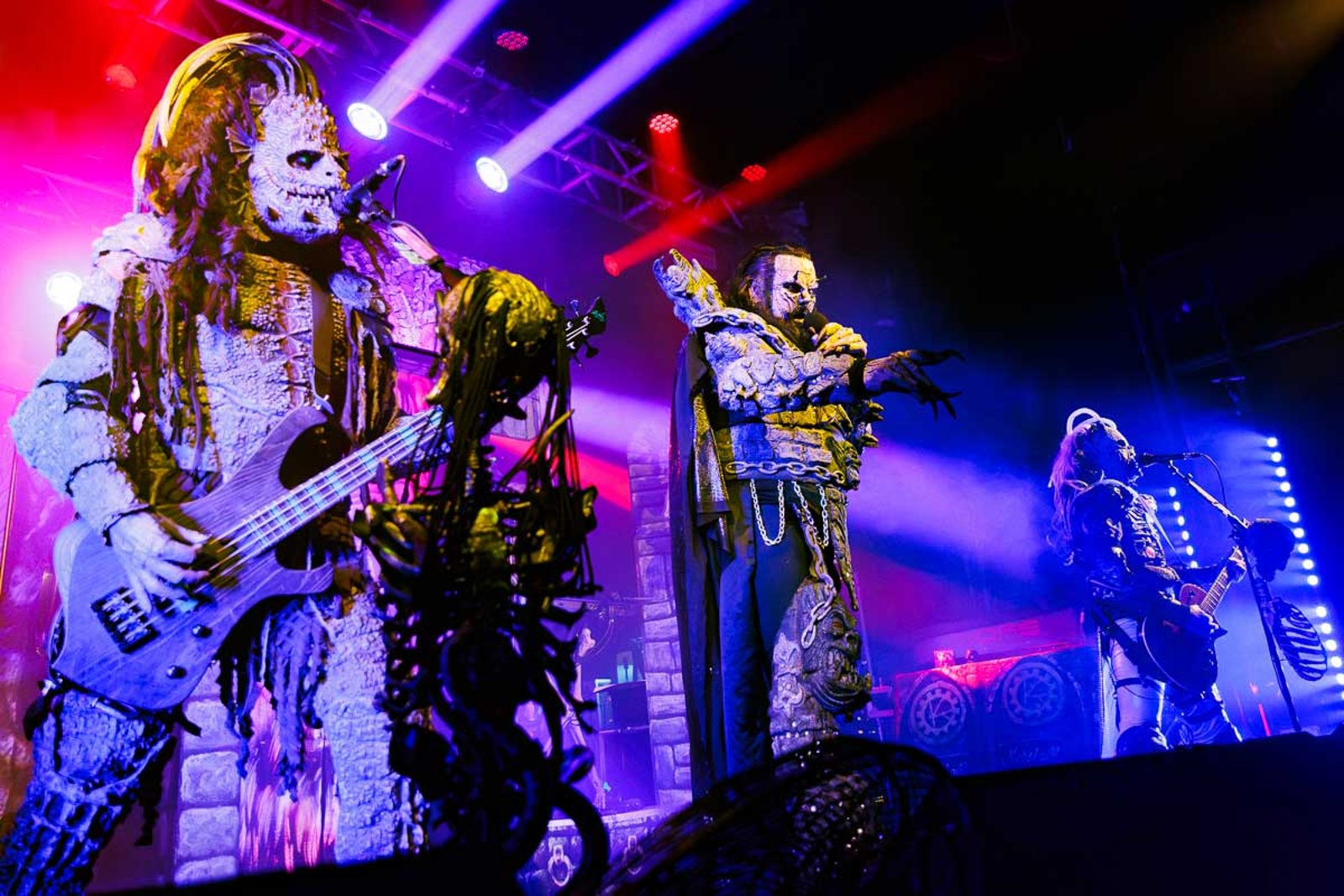
The Finnish band that never takes the masks off, on stage or for the press, answers to the name Lordi. "Would You Love a Monsterman?", the 2002 debut single, is a love song from inside a latex suit, and when the band won the Eurovision Song Contest in 2006, a television audience of millions that had never bought a heavy metal record watched a costume win. Halloween is the one night the audience dresses like the band. Lordi simply never changed back.
Upon that night, when fairies light
Robert Burns, Halloween, 1785
On Cassilis Downans dance,
Every day is the thirty-first
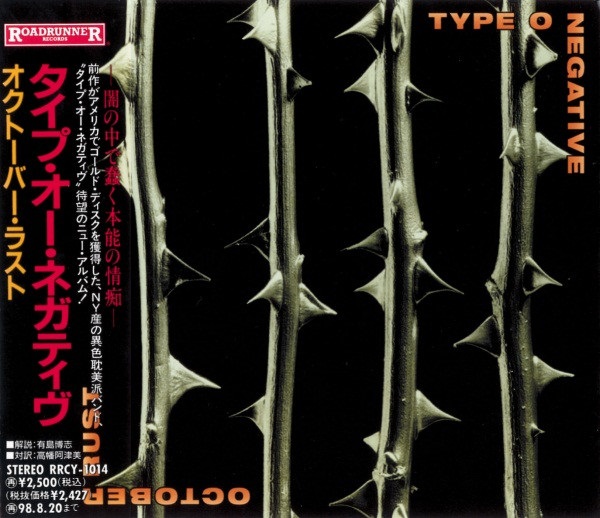
The Brooklyn four who treated the whole of autumn as a costume were Type O Negative. October Rust, released by Roadrunner on 20 August 1996, took its title from the colour of the leaves and came out two months early by design, so that the record would be in the house before the season arrived. Peter Steele's bass voice sinks through the slow songs like a stone through a pond, and the guitars pile keyboards and fuzz on top until the whole thing sounds like a garden of dead leaves smouldering in the rain. The title did the marketing on its own.
Their literal Halloween song came last. "Halloween in Heaven", on Dead Again, released 13 March 2007, imagines a party on the far side for musicians who have died, and it was written as a tribute to Dimebag Darrell, the Pantera guitarist who was shot and killed on stage in Columbus, Ohio, on 8 December 2004. The song is a costume party. The grief under it is not dressed up.
A Halloween song is written for one date on the calendar and wants the listener out in the street, in a costume, with company.
| Song | Band | Year | What it does |
|---|---|---|---|
| Halloween | Misfits | 1981 | Released on the night itself |
| Halloween | King Diamond | 1986 | Sings the party from the side of the guests |
| Halloween | Helloween | 1987 | Thirteen minutes, sheared to five for the video |
| (Don't Fear) The Reaper | Blue Öyster Cult | 1976 | Annexed by Carpenter's car radio |
| Dragula | Rob Zombie | 1998 | The Munsters at full throttle |
| Would You Love a Monsterman? | Lordi | 2002 | The costume that never comes off |
| Halloween in Heaven | Type O Negative | 2007 | A party for the dead, meant as a tribute |
What the night asks of a song
What joins them is the refusal to frighten, and on any honest reading none of them ever frightened anyone. Each one takes the props of the horror film, the reaper, the monster, the grave, and turns them outward, toward a crowd in fancy dress rather than a single listener with the lights off, which is why a heavy metal Halloween playlist sits so comfortably next to a party and so badly next to the films it borrows from. The faithful know this without being told. They play these songs on the way out, never on the way home.
Not one of them sits on a record from the canon of the style, and the canon is not what they are for. A great album is judged on where it sits in the story, and a Halloween song on whether a street full of costumes can sing it after two drinks. Different courts. Different verdicts.
At midnight the costumes come off and the calendar turns to 1 November, All Saints' Day, the older feast the night was only ever the eve of. The eve belonged to the monsters and the feast after it to the saints, and the believers who wrote heavy metal for that side of the calendar left a shelf of their own in the Christian heavy metal songs. November starts quietly. The records wait eleven months.
