
On 14 March 2021 the Grammy for Best Metal Performance went to "Bum-Rush", from an album called Carnivore, ahead of songs by Code Orange, In This Moment, Poppy and Power Trip. The winners, a Los Angeles band put together in 1990 by a guitarist and a rapper who had been at school together, were Body Count, and its singer had waited three decades for a second trophy.
Heavy metal bands with Black singers are nearly as old as the music itself, and the useful question about them is the one asked of every band: what did the singer do to the music? The answer runs from a Dublin storyteller to a Cleveland horror band nobody signed twice, and it is never the same answer twice.
A big-wave surfer does not fight the water. He drops in as the face stands up, cuts a line across it while tons of sea pitch over and explode behind him, smashing the lip into white foam a board's length from his heels, and the ride lasts exactly as long as he stays ahead of the collapse. A singer over a heavy riff does the same job. Each of these singers found a different line.
Heavy metal bands with Black singers, from Dublin to Cleveland
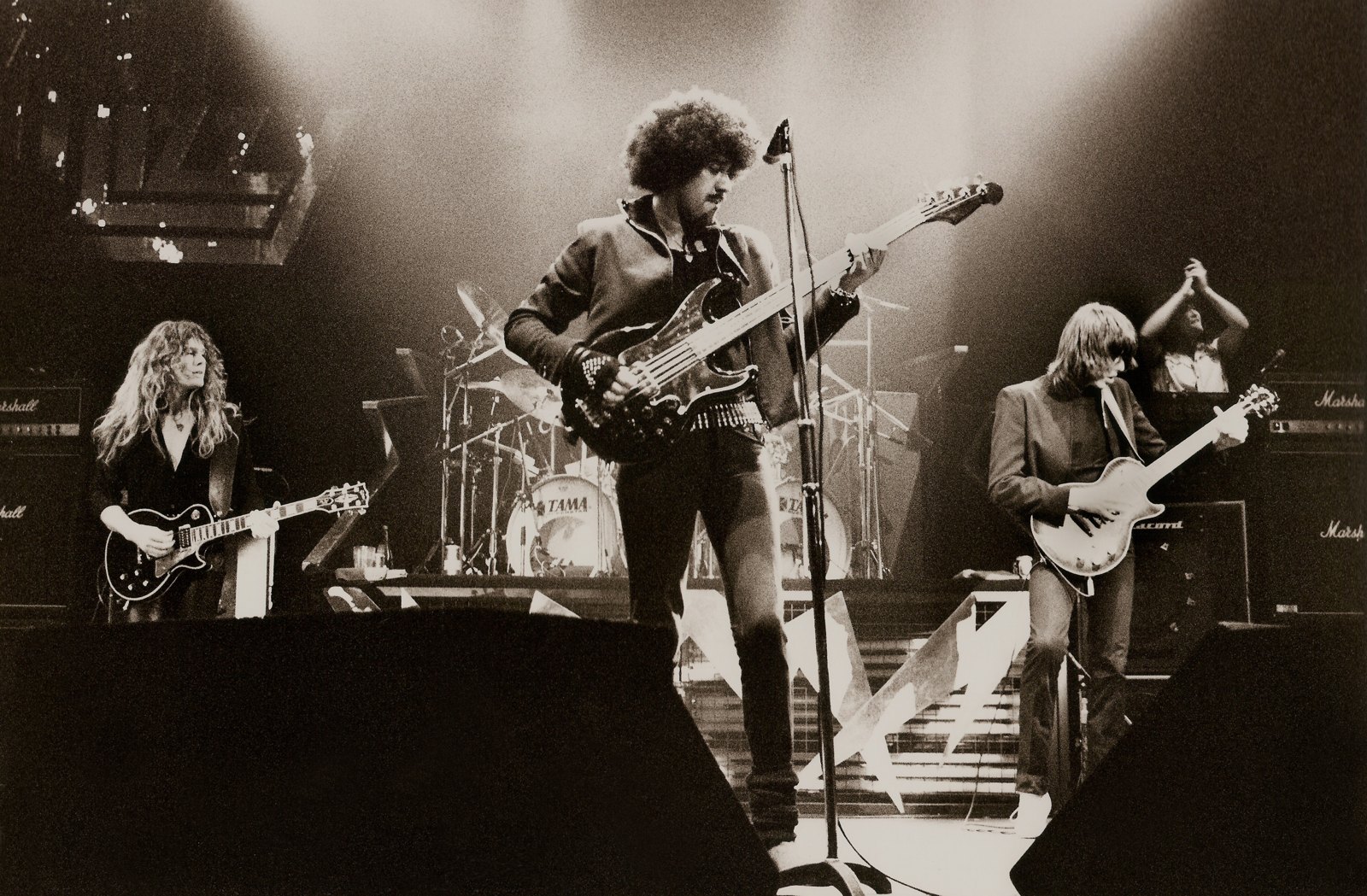
The Dublin bassist who wrote and sang nearly every song his band ever recorded, and who put a storyteller's speaking voice over two lead guitars, was Phil Lynott of Thin Lizzy. Born in 1949 to an Irish mother and a father from British Guiana, and raised by his grandmother in Crumlin, he fronted Thin Lizzy through the whole of its recording life and died on 4 January 1986, at 36.
The heaviest record he left is the last studio album. Released by Vertigo on 4 March 1983 with John Sykes newly on guitar, a hire that gave the band a heavier tone than it had carried before, Thunder and Lightning reached number four on the UK albums chart, and its title track rips through the old Lizzy harmonies at a speed the young British bands had taught their elders. Lynott had taught those bands their harmonies in the first place, so the pedigree ran both ways.
The Cleveland band noted by collectors and historians as the first heavy metal group with an all-African-American line-up was Black Death, begun in 1977 as a trio of Greg Hicks on guitar, Clayborn Pinkins on bass and Phil Bullard on drums before Siki Spacek joined on voice and guitar. Released in 1984 by Bill Peters on Auburn Records, his Cleveland independent, Black Death is the only album, horror and fantasy set to riffs out of the Judas Priest and NWOBHM school, Siki Spacek's voice climbing to a Halfordian screech on the choruses. Its songs carry titles such as "Night of the Living Death" and "The Scream of the Iron Messiah", and the playing sits closer to the American underground of that year, the small-label epic bands of Kansas and California, than to anything a major was selling.
The record still finds new listeners today. Collectors now chase original pressings of an album that earned its makers almost nothing at the time, the surest evidence the songs outlasted the industry that ignored them.
The industry had no shelf for them, so it sold nothing and called the silence a verdict.
Los Angeles, 1983: a video and a dropped contract
The Los Angeles four said to have put the first heavy metal video by an all-Black band onto MTV, in 1983, were Sound Barrier, with Bernie K. singing, Spacey T. on guitar, Stanley E. on bass and Dave "Skavido" Brown on drums, formed in 1980 on a diet of Judas Priest, Thin Lizzy and Iron Maiden. On "Rock Without the Roll", from the MCA album Total Control, Bernie K. throws his voice off the end of the riff the way a steam catapult throws a jet off a carrier deck, the shuttle tearing the aircraft from a standstill to flying speed in the length of the deck.
MCA dropped the band after Total Control, recorded in 1982 and released the following year, sold about 12,000 copies. The industry had no shelf for them, so it sold nothing and called the silence a verdict. Metal Blade put out the album Speed of Light in 1986, and the story mostly stopped there. The better known American and British bands of those years are argued one by one in the full chapter. These two never reached a bill big enough to be argued with.
Two bands, two labels, one outcome. In New York in 1985 Vernon Reid and Greg Tate set up the Black Rock Coalition to fight the very assumption that sank them both, that a loud guitar record made by Black musicians had no rack to go in and no radio station to play it.
Houston and New York, on the border
The Houston trio that handed its drop-tuned riffs to the producer of Pearl Jam's Vs. in 1994 and came out with the heaviest record of its career was King's X, and on Dogman, released by Atlantic that year and produced by Brendan O'Brien, Dug Pinnick's voice climbs out of the low string with the gutsier, soul-inflected phrasing critics heard arrive on this record. Pinnick has talked for decades about being one of the very few Black musicians in heavy rock, once noting that his own side project with Jabo and Scot Bihlman was the first all-Black rock band he could name since Living Colour. He also plays the bass, which puts the voice and the lowest note in the band into one pair of hands. The title track does the arguing.
The New York quartet that collected a hard rock Grammy in two successive years, in 1990 and 1991, was Living Colour, and its case for heavy metal rests on Stain, the 1993 record Epic released with Doug Wimbish, previously of Tackhead, newly driving the low end on bass. On "Leave It Alone" Corey Glover's soul tenor holds the melody while Vernon Reid's riff comes down on the verse like a fusillade from a rank of rifles, and the funk in the rhythm section is still there, only buried deeper.
That is the border. Living Colour stands on it, funk in the bass and jazz in the solos, and Stain is the record that leans furthest over into heavy metal. King's X stands on it too, with one foot in progressive rock. Both belong in the conversation, beyond dispute, and neither belongs wholly to it. What carries Living Colour across is Glover himself, a voice schooled on Broadway projection and on the soul records he still performs, holding a melody over a riff that most heavy metal singers of 1993 would simply have shouted at.
A riff does not ask who is singing over it. The labels asked, and the labels were wrong.
Declan Rourke, KaosMetal
Body Count, and where the others belong
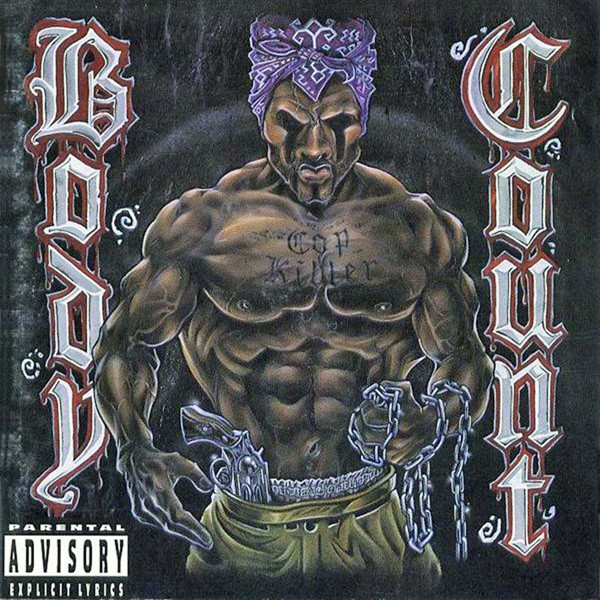
The guitarist who wrote the riffs and let the rapper take the microphone was Ernie C, and the first Body Count album, released by Sire in March 1992, is a thrash and heavy metal record through and through, built, by the guitarist's own account, on the dark low end of Black Sabbath and the attack of Slayer. Ernie C's riffs go through the verses like a brick through a bus shelter while Ice-T delivers the words in a spoken snarl rather than a rap cadence. "Cop Killer" was removed from later pressings that year after police organisations campaigned against Warner Bros, the parent label, over the song.
Twenty-nine years later "Bum-Rush" took the prize the band had been working toward since the first record, an uptempo, riff-heavy track built, in one review's words, for the headbangers. The Grammy committee had caught up. Body Count had not changed at all.
Several of the best-known Black singers in heavy music belong to other shelves. Bad Brains, and its singer H.R., belong to hardcore, where the band is a forebear of half the genre. Derrick Green has fronted Sepultura since 1998, hauling Against, the first Sepultura record to carry his voice, through thrash and groove. Howard Jones fronted the metalcore of Killswitch Engage, and Lajon Witherspoon still fronts the nu metal of Sevendust, each an exponent of a neighbouring style, judged there and not here.
The same rule applies to the all-female heavy metal bands: the record is the evidence, and who made it is a fact about the band, not a verdict on the music. Measured that way, Black Death and Sound Barrier made heavy metal in 1983 and 1984 as straight as anything coming out of the Midlands, and the labels let both go. Thin Lizzy, King's X, Living Colour and Body Count each changed what a singer could do over a heavy guitar. Each of them did it on a record that still plays.
