Ninth of twenty-four, with 125 points. The Norwegian four who walked onto the stage of the Eurovision Song Contest in Kyiv in May 2005 in spandex and eyeliner, with a chorus built for an arena in 1987, and left a continent of television voters clapping along to a style the music business had buried fourteen years earlier, were Wig Wam. The obituary had been filed in 1991. Nobody had told the voters.
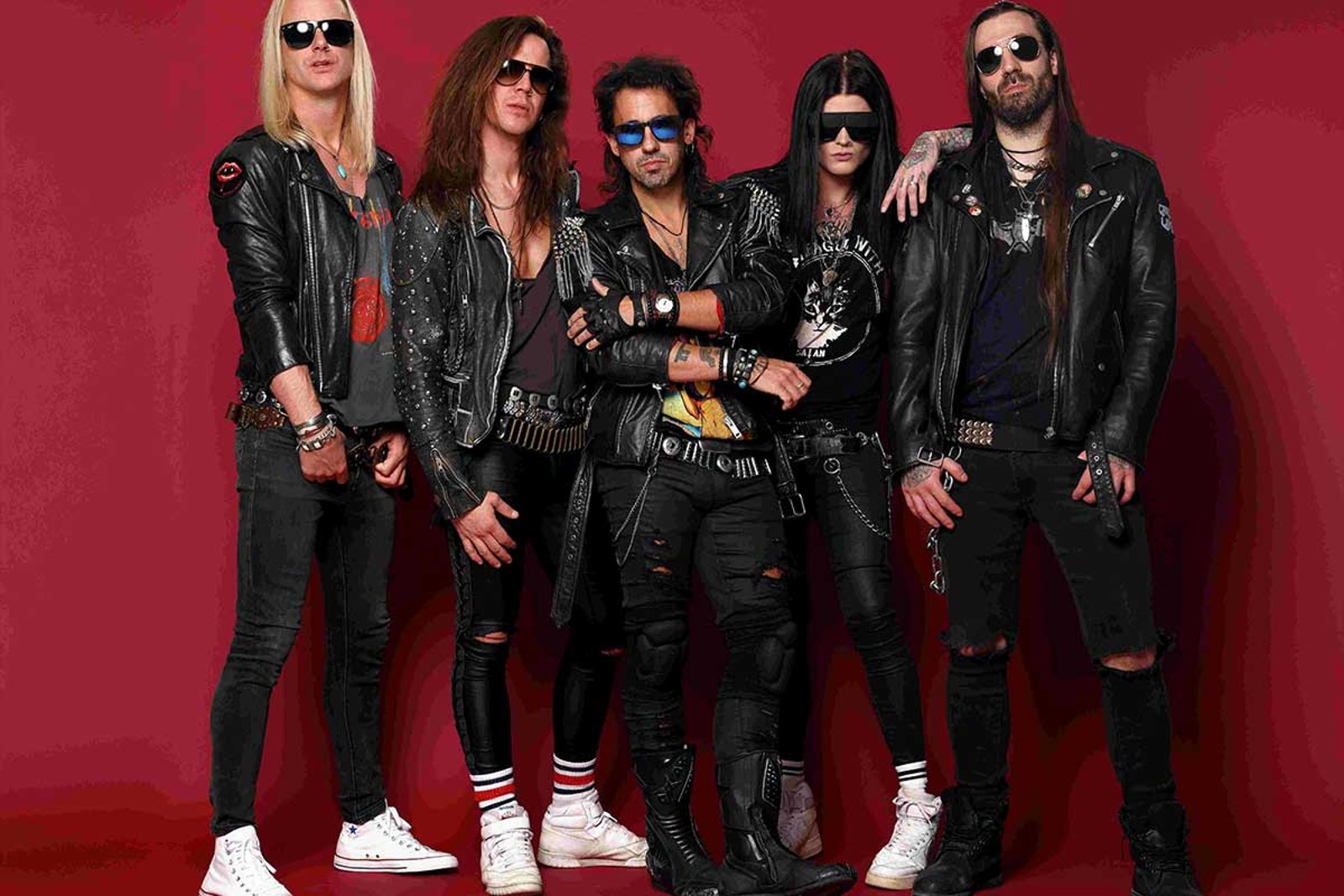
The modern hair metal bands are what came up out of that grave, and they came up in Stockholm, Gothenburg, Malmö, Kuopio and Helsinki far more often than on Sunset Boulevard, bands formed in the 2000s by musicians who were infants when Nevermind blew the lipstick off every screen in America. They learned the style from records. Some of them learned it better than the teachers.
On 27 December 1974 Ned Maddrell died at ninety-seven, and with him went the last man who had learned Manx as a child from people who spoke little else, the end of a language that two centuries of English schooling had ground down to a few old men on a small island. The language did not go into the grave with him. The Irish Folklore Commission had caught the old speakers on tape in 1948, and from those reels, a dictionary and a few stubborn adults a new generation learned it, until early this century a primary school on the island began teaching every lesson in Manx. Its pupils are native speakers of a language they learned from recordings.
How the first generation spoke it, in the clubs, on the video channel and in the ballads, is that part of the story. What follows is the second generation, band by band, judged on one question only: what each of them did to the sound once it had learned it.
The modern hair metal bands of the Swedish sleaze wave
The Stockholm band that Dave Lepard rebuilt in 2002 after its original lineup split, taking it to number twelve on the Swedish album chart with Rest in Sleaze in 2005, was Crashdïet, and it played the Hanoi Rocks and early Mötley Crüe songbook at punk tempo, the guitars rougher and the choruses shouted rather than stacked. Lepard died on 13 January 2006. "Generation Wild", the title track of the 2010 album with new singer Simon Cruz, proved the band's speed had outlived its founder.
Older and heavier, the Gothenburg four who had been playing since 1997 went out as Hardcore Superstar, and after the self-titled record of November 2005 had put them at number twelve in Sweden, Dreamin' in a Casket in November 2007 bolted a heavier, more aggressive attack onto the sleaze template. The hair stayed. The bottom end did not.
Built from the start as a deliberate revival, the Malmö band that Danny Rexon and Vic Zino formed at the end of 2002 was Crazy Lixx, and its debut Loud Minority on the local Swedmetal label in 2007 went straight for the gang chorus shouted by the whole band, the one part of the old records every revival band reaches for first. Frontiers, the Naples label that took the band on for New Religion in 2010, has been the bastion of the whole revival ever since.

The Swedish Idol winner of 2009 who joined a melodic hard rock band from Upplands Väsby the following year was Erik Grönwall, and the band was H.E.A.T, whose Address the Nation, released by Gain on 23 March 2012, reached number eight in Sweden. H.E.A.T took the other half of the inheritance, the keyboards and the arena polish of the Scandinavian eighties, and recorded it with a modern low end that no 1987 console could have delivered.
"Living on the Run", off that same album, is that bargain in four minutes: a keyboard intro, a riff that stays out of the singer's way and a chorus pitched at the back wall, with Grönwall's voice doing the work a wall of overdubs did for the old bands. Grönwall went on to front Skid Row itself.
The slowest scion of the lot took thirty-two years to make its debut. The Falköping five who had played locally between 1989 and 1995 without an official record, then reunited and released Kids in a Ghost Town in 2021, were Nestor, and the album, nominated for the Grammis in the Hard Rock/Metal category, sounds as if it had been finished in 1989 and kept in a cupboard. It even carries a duet with Samantha Fox.
Some of them learned it better than the teachers.
Finland, Norway and the television
The Kuopio band formed in 2001 whose self-titled debut reached number thirteen in Finland in 2010 was Reckless Love, and it pushed the style toward pop, synthesisers and a sheen closer to the charts than to the clubs, the one revival band that sounds like it wanted the radio as much as the guitars. Olli Herman, out front, had already spent a year and a half fronting Crashdïet.
Helsinki answered harder. Santa Cruz, formed in 2007 by Archie Kuosmanen and Johnny Parkkonen, signed to Spinefarm and released Screaming for Adrenaline in April 2013, which reached number twenty-seven in Finland, and it married the sleaze template to a production tight and modern enough to sound engineered well after 2010, even while the songwriting stayed inside 1988.
Then the television gave Wig Wam a second life. "Do Ya Wanna Taste It", from the 2010 album Non Stop Rock'n Roll, became the theme to the opening credits of the series Peacemaker in January 2022, the whole cast dancing to it with straight faces, and a band that had been a novelty at Eurovision was suddenly being streamed by viewers who had never heard of the Sunset Strip. The song had not changed a note. The audience had.
America, Germany and the joke
The Los Angeles four who play the style as a burlesque of itself, and take it seriously enough as music to have reached number forty on the Billboard 200 with Balls Out in 2011, are Steel Panther, and the joke works only because Satchel on guitar plays the 1986 solos note for note, with the tone and the tapping of the originals. Take the lyrics away and it is a revival record. Leave them in and it is an affectionate autopsy.
The German answer is Kissin' Dynamite, formed by the teenage brothers Hannes and Ande Braun in 2006, which spent the 2010s turning the style into festival anthems for German open-air stages, and whose self-titled album, released by Napalm on 18 September 2026, mixes six new songs with seven re-recordings of tracks from its first two records. Its lineage is Bon Jovi rather than Mötley Crüe. The fanfare is the point.
The border runs the other way as well. The Los Angeles band that wore the black leather, the eyeliner and the backcombed hair of 1984 over metalcore breakdowns and screamed verses was Black Veil Brides, whose debut We Stitch These Wounds came out on StandBy in 2010, and it kept the wardrobe while throwing the sound away. By the ear it is not hair metal at all. By the photograph it is nothing else.
What the modern hair metal bands changed
Almost all of them changed the same three things. The drums are tighter and drier than anything Mutt Lange's imitators recorded, the low end sits deeper under the guitars, and the ballad, which carried the old bands onto pop radio, has shrunk from the centrepiece of every album to an optional extra, because no radio station is waiting for it. The chorus survived intact. It always carried the weight.
| Band | Country | Start with | Year | What it did to the sound |
|---|---|---|---|---|
| Crashdïet | Sweden | Rest in Sleaze | 2005 | Punk tempo, rougher guitars |
| Hardcore Superstar | Sweden | Dreamin' in a Casket | 2007 | Riffs pushed toward thrash |
| Crazy Lixx | Sweden | New Religion | 2010 | The gang chorus, restored |
| H.E.A.T | Sweden | Address the Nation | 2012 | Keyboards and a modern low end |
| Nestor | Sweden | Kids in a Ghost Town | 2021 | 1989, kept in a cupboard |
| Reckless Love | Finland | Reckless Love | 2010 | Synthesisers and pop sheen |
| Santa Cruz | Finland | Screaming for Adrenaline | 2013 | Modern metal weight |
| Wig Wam | Norway | Non Stop Rock'n Roll | 2010 | The chorus, straight faced |
| Steel Panther | USA | Balls Out | 2011 | The solos exact, the words a joke |
A revival is judged like any other band: by the second album, never by the first costume.
Saint Sylveszter, KaosMetal
What the second generation proves is that the style was never only a haircut. The Scandinavians play it with the habits of their own records, heavier in Gothenburg, glossier in Kuopio, faster in Stockholm, and the best of them wrote songs the first generation would have been glad to sign. How they measure against the originals, the players and the writers who aged well and the ones the camera carried, is the business of the hair metal bands. The revival has earned the comparison. It has not always won it.