Most hair metal bands were a haircut with a recording contract stapled to the back of it. Thirty five years have gone over the whole shelf the way a heat gun goes over a sideboard bought at a house clearance, blistering the lacquer, lifting it off in long brittle curls and dropping it on the floor, until what stands underneath is either walnut or chipboard. Most of it is chipboard. Not all of it.
Sold on a screen from the day MTV went on the air in August 1981 until grunge routed the whole enterprise off the playlists a decade later, 80's hair metal was lit by the same studio lamps for everybody, so that a guitarist who had practised scales for eight hours a day since school and a singer who had bought his first spandex for the audition came out of the edit looking exactly alike. The heat gun is less generous. It separates the players and the writers from the bands the camera carried, and it never once looks at the hair.
Guitarists who outplayed the hairspray
The first quintet onto the walnut pile is Ratt. Released by Atlantic in February 1984 with Beau Hill producing, Out of the Cellar rode "Round and Round" into the top twenty of the Hot 100, the Billboard singles chart, and into heavy MTV rotation, yet the record still gets played for one reason, the solos of Warren DeMartini, barely twenty when he cut them, which go through the choruses like a bandsaw through a pine plank. The songs start repeating themselves on the second side. The guitar never does.
A harder band to live with and a harder one to argue against, the quartet named after its singer and driven by a guitarist the singer could barely share a tour bus with went by the name Dokken, and the friction between Don Dokken and George Lynch runs through every record they made together like current through a wet floor. It did the music no harm whatsoever.
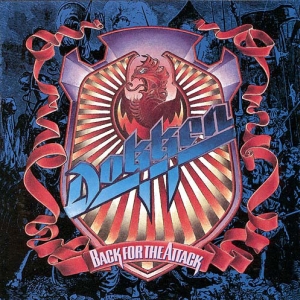
Released by Elektra in November 1987 and carrying "Dream Warriors", written for the third Nightmare on Elm Street film, Back for the Attack is where Lynch stopped decorating songs and started taking them apart, the opening salvo of "Kiss of Death" ripping the upholstery off a perfectly serviceable hard rock chorus, and the instrumental "Mr. Scary" teaching a generation of bedroom players what a whammy bar is actually for. The band came apart soon after. The record is still standing.
Of all the players the decade buried, the guitarist whose tapping and legato phrasing still make teachers stop the video and rewind was Vito Bratta, and the band he wrote for called itself White Lion. On Pride, released by Atlantic in June 1987, "Wait" and "When the Children Cry" both reached the Hot 100 top ten, and Bratta's solos on them are compositions with a beginning, a middle and a way out, which is more than most of his neighbours on that chart could say of their entire songs. He stepped off the stage in the early nineties and has not come back. The records are all there is. They are enough.
Then the band a cartoon turned into a joke, by putting its T shirt on the most hapless character on MTV's Beavis and Butt-Head. The New York four built around Kip Winger, a bassist trained in classical composition, and Reb Beach, a guitarist of alarming precision, answered to the name Winger; their 1988 debut on Atlantic sold on "Seventeen" and "Headed for a Heartbreak", and their third album, Pull, went out in 1993 with the ballads cut back and the riffs sharpened toward progressive metal, into a market that had already stopped listening. It is the best hair metal record almost nobody owns.
Songwriters under the lacquer
Out of the suburbs of Philadelphia came the one band of the era that took the blues seriously enough to get it right. Fronted by Tom Keifer, a singer with a rasp like a gate hinge forced open against its own rust, and signed to Mercury after Jon Bon Jovi saw them play, the Pennsylvania quartet that dressed like everyone else and wrote like nobody else was Cinderella. Their 1986 debut Night Songs was a hard rock record in the fashion of its day. What came next was not.
Long Cold Winter, released in July 1988, is where Keifer burned the lacquer off his own band: "Gypsy Road" rides an acoustic guitar figure built for a slide, the title track is a slow blues played without a single apology, and "Don't Know What You Got (Till It's Gone)" is a ballad that earns every minute it takes, peaking at number twelve on the Hot 100. By Heartbreak Station in 1990 the hairspray was gone and the slide guitar was running the room. Few bands of the decade aged half as well.
The Sacramento five who refused the costume outright, played in jeans and still sold millions on the same radio stations were Tesla, filed under hair metal because a record company needed a shelf to put them on. Their Geffen debut Mechanical Resonance came out in 1986, and Five Man Acoustical Jam, a live acoustic set from 1990, took a cover of "Signs" into the Hot 100 top ten. Walnut, never lacquered at all.
What the camera carried
The chipboard pile is taller. The quartet that left Pennsylvania for Hollywood with more colour on its sleeves than any band before or since was Poison: Look What the Cat Dragged In came out on Enigma in 1986, Open Up and Say... Ahh! followed in 1988 and sold in the millions, and "Every Rose Has Its Thorn" reached number one on the Hot 100 that Christmas. The ballad is a real song. Most of the rest is a party invitation printed on the back of a guitar, and the band never pretended otherwise, which counts for something.
The Los Angeles five whose label asked for one more single, and got a song that swallowed the band whole, were Warrant. The title track of Cherry Pie, released by Columbia in 1990, was written late and reportedly at the label's request, and its video flattened everything else on the record, including "Uncle Tom's Cabin", which deserved better, and buried the darker, heavier Dog Eat Dog in 1992 before anyone had heard it. The video won. The songs lost.
Below them the pile runs thin and long. Britny Fox spent its 1988 debut sounding like Cinderella's understudy, Slaughter sold Stick It to Ya in 1990 on a high register and a generous video budget, and FireHouse landed "Love of a Lifetime" in 1991 just as the scene was caving in beneath them. Competent, polished and gone. Take away the video and the building comes down with the scaffolding, because the scaffolding was the building.
Take away the video and the building comes down with the scaffolding.
What came out of the heat gun whole
The last band to arrive before the roof fell in turned out to be the best of them all. It was the New Jersey five with a Canadian singer out front and Rachel Bolan and Dave Sabo writing the songs behind him: Skid Row. Their 1989 debut on Atlantic sold on "18 and Life" and "I Remember You", a hair metal record with more teeth than most of its class.

Released on 21 May 1991 and produced, like the debut, by Michael Wagener, Slave to the Grind took an angle grinder to everything its predecessor had sold, shoving the ballads to the back of the record, tuning the title track and "Monkey Business" closer to thrash than to anything on the Sunset Strip, and entering the Billboard 200 chart at number one, the first heavy metal record to open there in the Nielsen SoundScan era. Four months later Nirvana released Nevermind. Nobody else from the class of 1989 got a record that good out before the door shut.
| Band | Start with | Year | Verdict |
|---|---|---|---|
| Skid Row | Slave to the Grind | 1991 | The best of them, and the heaviest |
| Cinderella | Long Cold Winter | 1988 | Blues writers in borrowed clothes |
| Dokken | Back for the Attack | 1987 | George Lynch alone justifies it |
| White Lion | Pride | 1987 | Every Bratta solo is a song |
| Ratt | Out of the Cellar | 1984 | DeMartini outplays the material |
| Winger | Pull | 1993 | The great unheard record |
| Tesla | Five Man Acoustical Jam | 1990 | Filed here by mistake |
| Poison | Open Up and Say... Ahh! | 1988 | One real song and a long party |
| Warrant | Cherry Pie | 1990 | The video ate the songwriter |
The stadium acts, the vanguard of the whole movement, sit in a different argument. Mötley Crüe, Bon Jovi and Def Leppard sold on a scale none of the bands above ever touched, and each drags its own quarrel about which label fits it, a quarrel that belongs with the glam metal bands, where the costume came before the hairspray and the spectacle came before both.
Put the whole shelf under the heat gun again in another twenty years and the walnut will be the same few pieces: Skid Row's second album, Cinderella's second and third, the guitar playing on Back for the Attack, Pride and Out of the Cellar, and a Winger record nobody bought. Where the decade sits in the longer line of the music is in the heavy metal overview. What it left behind is this handful of solid wood, and on any honest reading that is more than its enemies ever allowed it.