
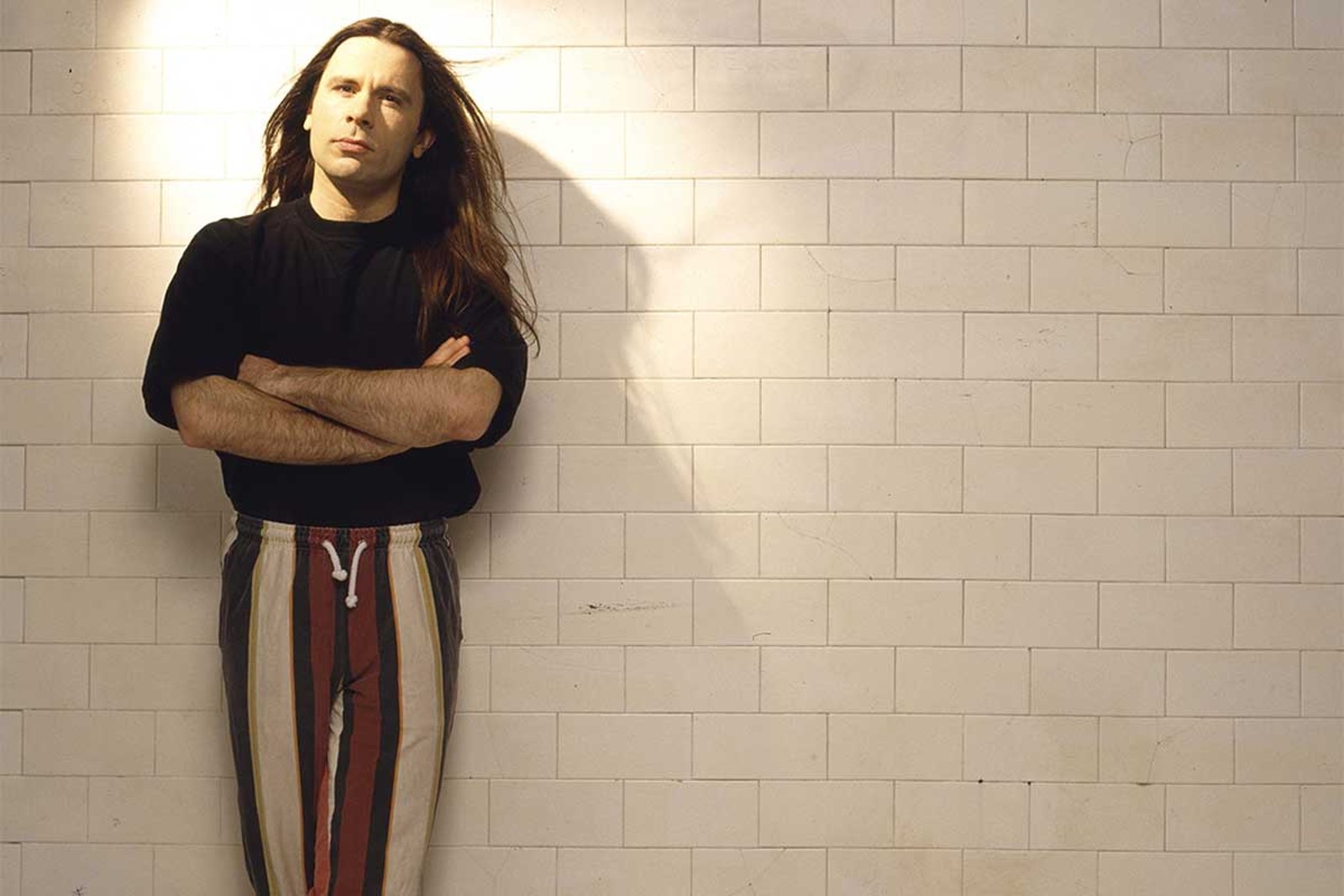
Eleven minutes and seventeen seconds. That was the length of the song Iron Maiden chose to open its first album without Bruce Dickinson, in October 1995, in a year when no radio programmer in America would play a heavy metal song of four minutes, let alone eleven. The singer hired out of Wolfsbane to stand in front of a Gregorian chant, a slow build and a riff that finally kicks the choir stalls over, was Blaze Bayley. Nobody told the band to be shorter. Nobody was listening closely enough to tell them anything.
Lodgepole pines seal some of their cones shut with resin, and those cones can hang on the branch for years, closed tight, until a fire runs through the canopy, melts the seal and lets them open onto ash, dropping their seed into ground the flames have just cleared of every rival. The best 90s heavy metal songs came out of cones like that. The fire burned down the radio, the video budgets and the arenas, and in the heat the songs got longer, darker and stranger than the eighties had ever let them be.
What 90s heavy metal songs became without a deadline
The decade has three stories that are told elsewhere and at length: the Seattle bands, the down tuned rap metal that came after them, and thrash getting slower and richer at the same time. The rout of 1991 cleared the ground for all three. None of them is heavy metal in the narrow sense, the riff, the clean voice and the twin guitars. What follows is the other nineties, told through songs that had no chart to aim at and aimed at the listener instead.
They share one habit. Freed from the four minute single, the writers let the arrangement decide the length, the subject turned inward or historical, and the old singers found out what their voices could do over a heavier floor. Whatever the decade took away from the style, it took the deadline with it.
Old voices over new floors
The bassist who wrote the riff that opens the biggest song of the ex-Sabbath singer's decade, and who does not play a note of it on the record, was Mike Inez. Released by Epic on 16 September 1991 and running seven minutes and twenty-three seconds on the album, "No More Tears" begins with the bass line Inez came up with in rehearsal, played on tape by Bob Daisley, and then Zakk Wylde's guitar and John Sinclair's keyboard pour over it like floodwater over a weir. It reached number five on the American mainstream rock chart, and Ozzy Osbourne had never sounded this unhurried.

Eight months later the singer who had left Black Sabbath in 1982 came back to it, and the voice over the riff of "TV Crimes", released as a single on 1 June 1992 ahead of Dehumanizer, was Ronnie James Dio. Geezer Butler was back on bass for the first time since 1983, Vinny Appice on drums, and Tony Iommi played the fastest single riff the band had put out in years, a salvo aimed squarely at the television preachers of the day that carried the single to number 33 in Britain.
What "TV Crimes" proves is that the old voices did not have to soften to survive. Dio sings it harder than anything on Heaven and Hell, over a guitar sound thicker and lower than the one the band had in 1980, and the song does not contain a single bar that was written for radio. The reunion lasted one album. The song outlived it.
Songs written on the way out
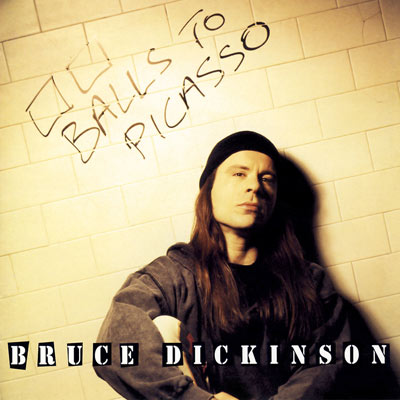
The singer who walked out of Iron Maiden in 1993 and wrote the leaving into a ballad the following spring was Bruce Dickinson, and "Tears of the Dragon", the first single from Balls to Picasso, released on 16 May 1994 with Roy Z on guitar, is about that departure and nothing else. It opens soft and builds for six minutes into a chorus the size of the halls he had just left. It stopped at number 28 in Britain, and it is the song of his that his audience asks for first.
A hermit crab that has outgrown its shell has to walk out of it and across open sand to the next one, soft bodied and naked to every gull on the beach, and for those few seconds it is the most exposed animal on the shore. The song is written from inside that crossing. Roy Z's guitar keeps a low, steady pace under Dickinson's voice, and when the full band finally comes down on the chorus it lands like armour closing round him.
The band he had left wrote its own song of the edge. His replacement took Iron Maiden's "Man on the Edge", written by Bayley with Janick Gers from the film Falling Down and released in 1995, to number 10 in Britain, a fast, bitter song about a man walking away from a traffic jam and his whole life with it. Blaze Bayley sang it in his own dark baritone rather than in anyone else's range, and that was the whole point of hiring him.
The long song and the counterpoint
The other gift of the decade was length. "Sign of the Cross", drawn from Umberto Eco's The Name of the Rose, spends its first minutes on chant and a slow march before the guitars break in, and it sits beside the long songs of the seventies more comfortably than anything Maiden recorded in the eighties. The chanted introduction alone ran longer than some of the hit singles of 1987. Bayley starts low and close, Steve Harris lets the march build for minutes before anything is resolved, and when the twin guitars arrive they play a long instrumental passage that asks nothing of the singer at all. It is a song built to be listened to in one sitting, which in 1995 was an act of faith.
Whatever the decade took away from the style, it took the deadline with it.
The Florida band that turned a heavy metal song into a fugue for voices was Savatage, and "Chance", from Handful of Rain, released on 16 August 1994, tells the story of Chiune Sugihara, the Japanese diplomat in Lithuania who signed exit visas for thousands of Jewish refugees in 1940 against his government's orders. Its last section stacks as many as five overdubbed vocal lines from Zachary Stevens in counterpoint, each singing a different line at once, and it was the first time the band wrote that way. By common consent it is the most ambitious thing a heavy metal band recorded that year.
The nineties did not shorten the songs. They took away the man with the stopwatch.
Declan Rourke, KaosMetal
What the decade left standing
Read the running times and the case makes itself. Seven minutes for Osbourne, six for Dickinson, eleven for the opener of The X Factor, a vocal fugue for Savatage: every one of these songs is longer, slower to arrive or stranger in shape than anything the same writers were allowed to release in 1986. None of the records that carried them made the ranking of the best heavy metal albums, which is its own verdict on how the decade is remembered: by its songs, one at a time, and hardly ever by its albums from end to end.
The faster songs of the decade belong as much to the gym as to the stage, and "TV Crimes" and "Man on the Edge" would sit comfortably among heavy metal workout songs for the same reason they worked in a hall: the tempo never flags. The slow ones asked for more patience than any radio programmer ever gave them. They got it from the faithful, who had nowhere else to go and nothing else to buy.
The obituary for heavy metal was written around 1992 and never withdrawn, and it was wrong in a particular way. The style lost its money and its airtime. It kept the songs, and the songs, left alone for once, grew into shapes the boom years would never have let them take. A listener who knows the decade only from its charts has heard almost none of them. That is the best argument for going back.
