
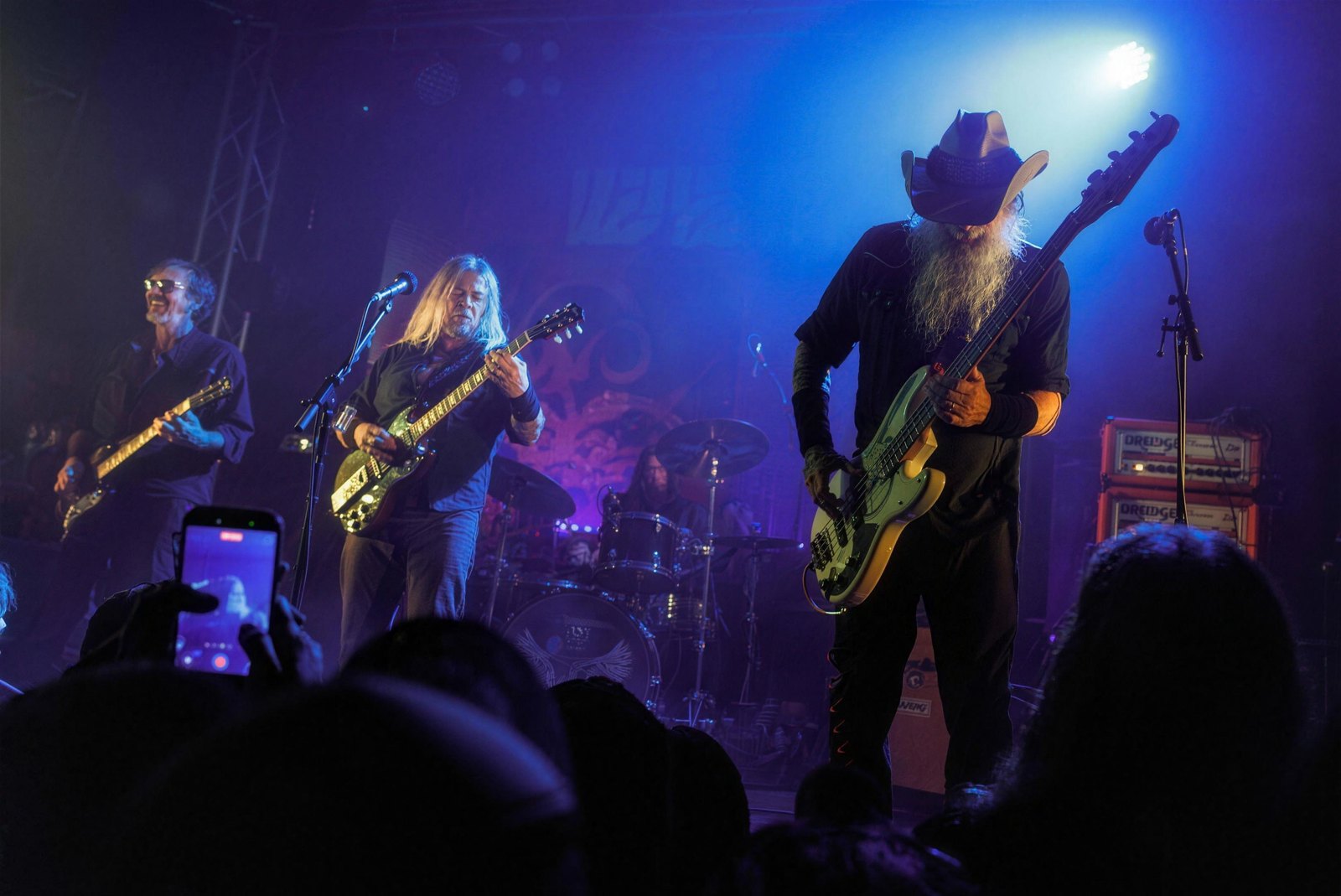
The best southern heavy metal bands play slower than they could, and the restraint is the whole style. The Jacksonville band whose 1979 album Strikes, released by Atco, carried a song written in the thirties by the singer's grandfather, and let the old man blow the harmonica on it himself, was Blackfoot, and "Train, Train" reached number 38 on the Hot 100, the American singles chart, with Rickey Medlocke's guitars flattening a country blues under the weight of a hard rock band.
A saw gin, the machine that emptied the southern cotton fields into the mills, runs a row of toothed circular saws between close-set steel ribs, and every tooth hooks the lint, tears it off the seed and drags it through a gap too narrow for the seed to follow, so that fibre goes one way and husk the other at a rate no picker's hands could match. The southern bands put the blues through the same teeth. What came out was the pull, the drawl and the dirt of the old music, stripped clean of everything that would not fit through a Marshall.
That separation is the heresy that made the style. Everywhere else in the family the blues was the thing to be burned out; here it was the crop.
Southern rock, turned up
The Jacksonville sextet that put three lead guitarists on stage at once and a Frank Frazetta painting on the sleeve of Flirtin' with Disaster, released by Epic in September 1979, was Molly Hatchet, and the title track rides Dave Hlubek, Steve Holland and Duane Roland through a boogie played at the volume of a heavy metal band. It stopped at number 42. The album went double platinum.
Neither band called itself metal. Both are the forebears of every band that followed them, because both showed that a southern groove could survive the amplifiers of the late seventies without losing its hips.
Tarpon Springs and the New Orleans basement
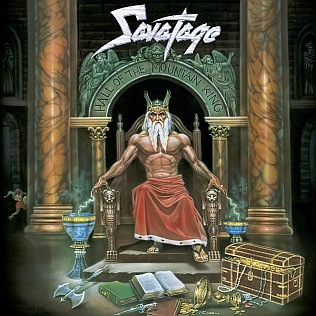
The Tarpon Springs band that the brothers Jon and Criss Oliva had started as Avatar in 1978 made its name as Savatage, and Hall of the Mountain King, released by Atlantic in 1987 with Paul O'Neill producing, set Jon's shredded, theatrical voice and Criss's huge riffs against a piece of Grieg. Criss Oliva's guitar on Prelude to Madness climbs Grieg's theme the way a band climbs stairs with an amplifier on its back, slowly and then all at once. It is southern only by postcode. It is on this shelf because Florida raised the heaviest pure metal band the region produced in the eighties.
The New Orleans five who formed in January 1986 and released Slaughter in the Vatican on Roadrunner in 1990 were Exhorder, and their mid-tempo breakdowns, thrash riffs slowed until they swung, drew comparisons with a certain Texan band that the New Orleans faithful still argue about. The argument over who played it first in the clubs has never been settled. The sales gap has.
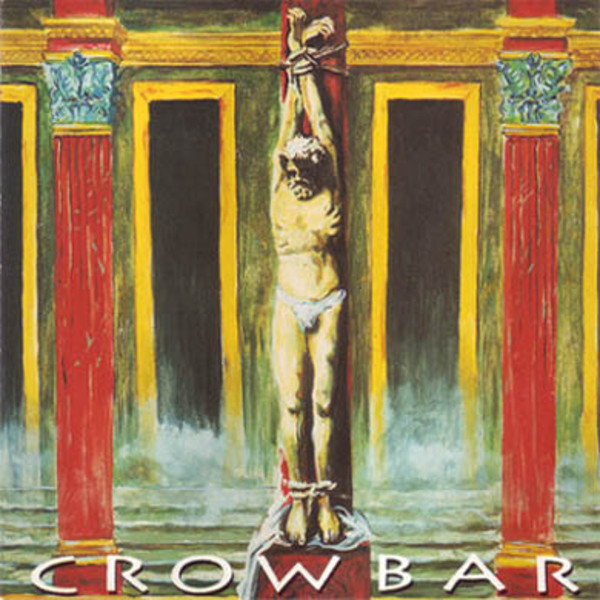
At the end of the line, the ginned lint was pressed into bales under a steam compress, hundreds of pounds of loose cotton crushed to half its bulk and bound in steel ties so tightly that a bale dropped from a wagon bounced instead of bursting. The New Orleans band built around Kirk Windstein's guitar and voice packed its riffs the same way on Crowbar, released by Pavement on 12 October 1993 and produced by Phil Anselmo: Crowbar, whose "All I Had (I Gave)" crushes a doom tempo into something denser than doom, with a cover of Led Zeppelin's "No Quarter" slowed to a crawl.
Everywhere else in the family the blues was the thing to be burned out. Here it was the crop.
The southern heavy metal bands of the nineties
The Raleigh band that had spent the eighties as a hardcore crossover act, then handed its microphone to the guitarist Pepper Keenan, was Corrosion of Conformity, and on Deliverance, released by Columbia in 1994, "Albatross" and "Clean My Wounds" slow the old speed into a Sabbath groove sung with a Louisiana accent. The punk was gone. The groove had arrived.
Keenan, Windstein and Anselmo came together in the side project Down, whose 1995 debut NOLA sounds like players from four bands taking the afternoon off to play Black Sabbath records in a humid garage, all loose shuffles and hanging chords, the Sabbath riff with its collar undone. Formed in 1991 as a part-time band between tours, it closed NOLA on "Bury Me in Smoke", a riff that sounds as though it had been left out overnight in the heat and come back heavier. The swamp got darker from there on, and the occult and funereal side of that shade runs on into the dark heavy metal bands.
The New Orleans five who formed in 1988 and let the feedback run between the riffs until it became part of them were Eyehategod, and Take as Needed for Pain, released by Century Media in 1993, drags a blues shuffle across broken glass at a crawl, the vocals screamed from somewhere at the back of the room. It is the far edge of the southern sound. Past it there is only noise.
Georgia and the second wave
The Atlanta four who formed in 2000 and set Moby-Dick to riffs on their second album, Leviathan, released by Relapse in 2004, were Mastodon, and "Blood and Thunder" drives Melville's story on Brann Dailor's rolling toms and a riff that turns over like an engine with too much compression. The southern accent here is in the drums. It is a fusion drummer's swing played at sludge weight.
Savannah answered with two bands of its own. Baroness, formed in 2003 around the singer, guitarist and painter John Baizley, put twin harmony guitars over sludge on Red Album for Relapse in 2007, under a sleeve Baizley painted himself. Kylesa ran two drummers side by side, and on Static Tensions, released by Prosthetic in 2009, Carl McGinley and Eric Hernandez roll the beat from one side of the stereo to the other like a sortie from two gates at once, a width no single kit could make.
Virginia and Alabama took the accent into the new century by different roads. The Richmond five that had started out as Burn the Priest and renamed itself in 2000 were Lamb of God, and on Sacrament, released by Epic in 2006, "Redneck" sets Randy Blythe's bark over a groove that swings like the Louisiana bands even while the double kick drums run underneath at thrash pace. The Birmingham band that bolted southern rock slide and harmony guitars onto metalcore breakdowns went out as Maylene and the Sons of Disaster, with a debut in 2005. Neither sounds like the other. Both still drawl.
The roll call is longer than any list. North Carolina's Weedeater drowned sludge in feedback, Richmond's Alabama Thunderpussy played Skynyrd guitar lines at doom weight, and every city from Memphis to Mobile has a band that nobody outside the state has heard, tuned low and playing behind the beat on purpose.
| Band | Home | Record | Year | What it did to the sound |
|---|---|---|---|---|
| Blackfoot | Jacksonville | Strikes | 1979 | Country blues under hard rock weight |
| Molly Hatchet | Jacksonville | Flirtin' with Disaster | 1979 | Three guitars on a boogie |
| Savatage | Tarpon Springs | Hall of the Mountain King | 1987 | Pure heavy metal from Florida |
| Exhorder | New Orleans | Slaughter in the Vatican | 1990 | Thrash slowed until it swung |
| Crowbar | New Orleans | Crowbar | 1993 | Doom tempo, sludge density |
| Corrosion of Conformity | Raleigh | Deliverance | 1994 | Hardcore turned into a Sabbath groove |
| Mastodon | Atlanta | Leviathan | 2004 | Swing drumming at sludge weight |
| Baroness | Savannah | Red Album | 2007 | Harmony guitars over sludge |
| Kylesa | Savannah | Static Tensions | 2009 | Two drummers in one band |
The succession runs from a grandfather's harmonica in 1979 to two drum kits in 2009, and it never once gave up the swing. Where southern metal sits among the other splits, beside speed, doom, power and the rest, is set out in the chapter it belongs to.
Slow was never the southern weakness. It was the point.
