
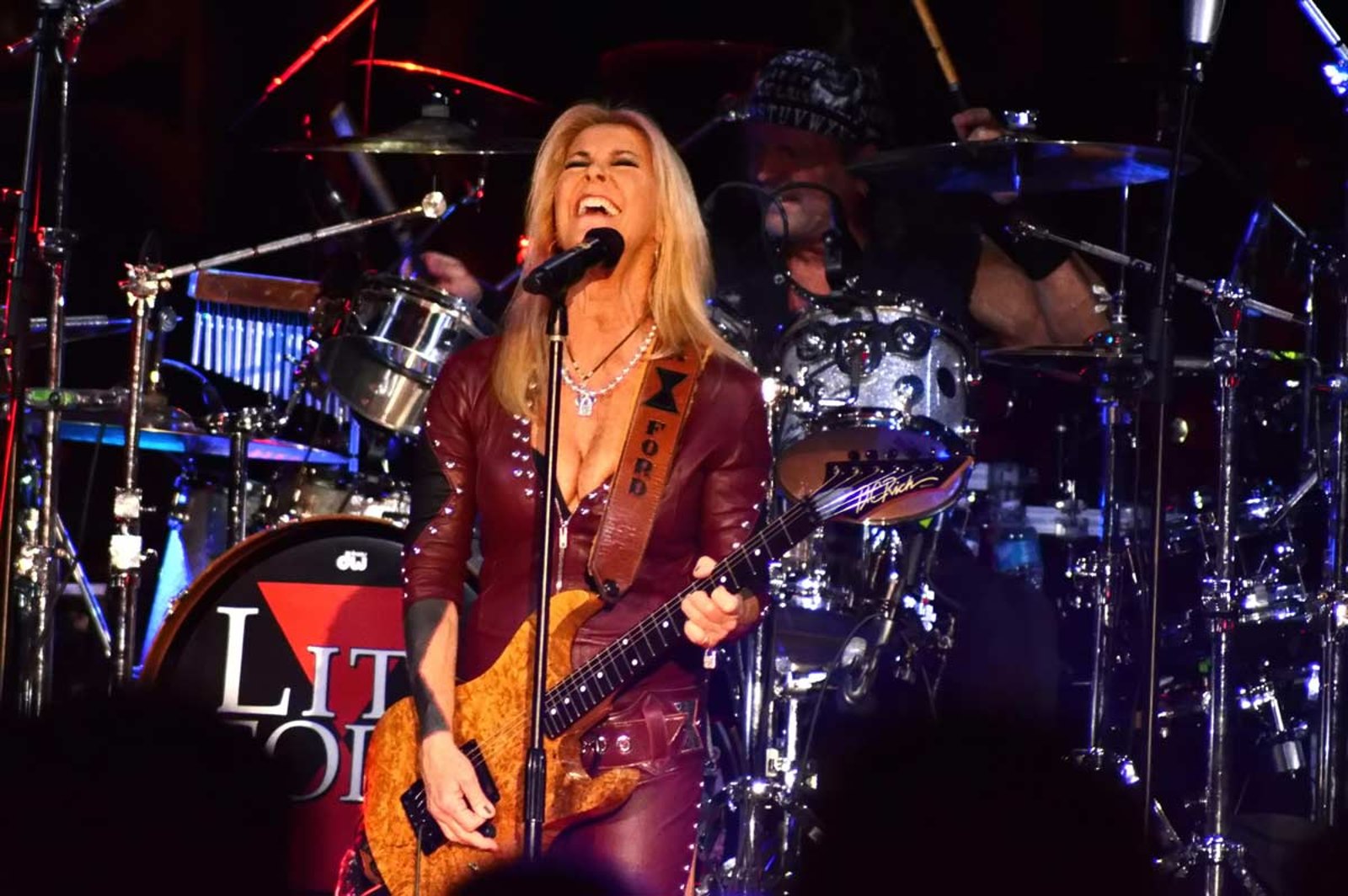
In 1989 a duet with Ozzy Osbourne reached number eight on the Billboard Hot 100, and the name printed first on the sleeve belonged to the woman who played the guitar solo. The Los Angeles guitarist who had spent the late seventies as lead player of an all-female band, and the eighties proving she needed nobody's permission to lead a band of men, was Lita Ford, and "Close My Eyes Forever" was the song.
For forty years the cameras treated the women in heavy metal bands as the dial of a clock, the painted face behind the glass that everybody reads and nobody opens, and missed that in the bands worth hearing she was the movement itself: the mainspring wound tight, the pallets hammering the escape wheel tooth by tooth, the gear train grinding under the dial while the hands took the credit. The singers have been counted often enough. The players, the owners and the bosses have not.
The guitar, the bass, the name on the contract and the label on the spine were all held by women long before the magazines noticed. The photographers framed none of it.
Women in heavy metal bands, on the guitar
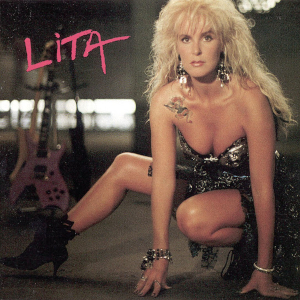
Released by RCA in February 1988 with Mike Chapman producing, Lita carried "Kiss Me Deadly" to number twelve on the Hot 100, and the solo on it goes through the pop chorus like a paving stone through a glasshouse roof, the panes coming down in sheets over the seedlings. Lita Ford had made her solo debut, Out for Blood, on Mercury in 1983, and the video age did its best to photograph her rather than listen to her. The records answered back.
A generation later the guitarist a veteran shock rock singer hired in 2014 to play lead in his touring band was Nita Strauss, and she stood stage left for Alice Cooper after the Australian guitarist Orianthi, who had held the same post since 2011, which put two women in succession on lead guitar for the singer who taught heavy metal its stage show. Her own instrumental album, Controlled Chaos, came out on Sumerian in 2018. She was not a novelty act in the band. She was the lead guitarist, and the set list said so every night.
The job is older than either of them. The occult rock band from Chicago that put the sign of the horns on the sleeve of its 1969 debut, fronted by a singer called Jinx Dawson, was Coven, and the heavy bands of the next decade took the gesture and the black candles and mostly forgot where they had found them.
The engine room
The bassist who co-founded a New York noise band in 1985 and stayed with it through every record until it broke up in 1998 was Sean Yseult, and the band was White Zombie. On La Sexorcisto: Devil Music Vol. 1, released by Geffen in 1992, her line on "Thunder Kiss '65" lands like a stack of green glass carboys toppled off a glassworks gantry, every note bursting on the concrete, and the song took the band to a Grammy nomination for Best Metal Performance at the 36th Annual Grammy Awards in 1994. The groove came from the bottom string. It usually does.
White Zombie sat on the border where heavy metal met industrial noise and B movie sampling, and the bands that crossed that border in the nineties are gathered with the alternative heavy metal bands. What Yseult proved there travelled further than the genre did: that the player holding the low end of a heavy band could be a woman and nobody in the pit would notice the difference, only the weight.
The death metal bastion of Coventry makes the same case at a lower pitch. The bassist who held down the bottom of Bolt Thrower from 1987 until the band laid down its arms in 2016 was Jo Bench, through Realm of Chaos, The IVth Crusade and every war record in between, and not one of those records needed a footnote to explain who was playing the load. That is the whole argument, played rather than stated.
Nobody in the pit would notice the difference, only the weight.
Out front, and owning the name
The Düsseldorf band that stood a young singer named Doro Pesch in front of four men and let her set its course was Warlock, and Triumph and Agony, released by Vertigo in 1987, carried "All We Are", a chorus written to be shouted back by a hall and still shouted back today. When Doro lost a 1989 lawsuit brought by the band's own former manager and was barred from using the Warlock name, she did not wait for anyone to return it. From Force Majeure in 1989 she simply recorded as Doro, and the faithful followed the singer rather than the logo.
In Los Angeles the leader of Bitch, the singer Betsy Weiss, billed as Betsy Bitch, put out the Damnation Alley EP in December 1982 on Brian Slagel's young Metal Blade label, the label's second release and its first by a single act, and followed it with Be My Slave in 1983. The sleeves were built to provoke. The riffs were built to last.
Ann Boleyn of Hellion went one step further and founded a label of her own in 1984, New Renaissance Records, whose early compilations carried some of the first recordings by Morbid Angel, Mayhem and Sepultura alongside her own band's. In Belgium, Acid put Kate De Lombaert at the microphone of one of the earliest speed metal bands on the continent, its self-titled debut arriving in January 1983. Owning the name, the label and the masters was a lineage of its own, and it ran alongside the music rather than behind it.
The young guard
The Olympia band that took the twin guitars of 1980 and put Christine Davis's smoky, raspy voice over them is Christian Mistress, and Possession, released by Relapse in 2012, sounds as if it had been left in a garage since the first British wave and found still in tune. To Your Death followed in 2015, and its "Open Road" carries the same charge forward. Nothing about it asks for allowance.
The Toronto band that set Sarah Ann's voice over Michael Moorcock's sword and sorcery tales is Smoulder, whose Times of Obscene Evil and Wild Daring came out on Cruz del Sur in 2019, and the Vancouver quintet that made power metal into a concept saga on Apex, released by Napalm in 2017, is Unleash the Archers, fronted by Brittney Slayes. Neither band is a novelty. Both are exponents of a style that never needed to be told who could play it.
The Pennsylvania band whose singer also plays rhythm guitar, and whose "Love Bites (So Do I)" won Best Hard Rock/Metal Performance at the 55th Annual Grammy Awards in February 2013, is Halestorm, the first female-fronted act to win that category. Lzzy Hale stands nearer hard rock than heavy metal. The award still counted, because it was handed to a working band and not to a mascot.
In Berlin the singer Johanna Sadonis built Lucifer around riffs heavy with the dust of 1971, and its first album went out on Rise Above in May 2015. The heavier revival bands of the last fifteen years have hired, followed and been led by women without a press release to announce it. That silence is the progress.
| Musician | Band | Job | Start with | Year |
|---|---|---|---|---|
| Lita Ford | Lita Ford | Lead guitar and vocals | Lita | 1988 |
| Doro Pesch | Warlock | Vocals and leadership | Triumph and Agony | 1987 |
| Betsy Weiss | Bitch | Vocals | Be My Slave | 1983 |
| Jo Bench | Bolt Thrower | Bass | Realm of Chaos | 1989 |
| Sean Yseult | White Zombie | Bass | La Sexorcisto: Devil Music Vol. 1 | 1992 |
| Christine Davis | Christian Mistress | Vocals | Possession | 2012 |
| Brittney Slayes | Unleash the Archers | Vocals | Apex | 2017 |
| Nita Strauss | Alice Cooper | Lead guitar | Controlled Chaos (solo) | 2018 |
| Sarah Ann | Smoulder | Vocals | Times of Obscene Evil and Wild Daring | 2019 |
None of these musicians turns up on a list because of who she is. Each earned her place by the same rule that governs the roll call: a band, a record, and something on that record the style would be poorer without. Measured that way, the women in heavy metal bands were never the exception to the music's history. They were inside it from the first gatefold, holding a bass, a guitar, a contract or a label, and the only thing missing for most of that time was the photograph taken from the right side of the stage.
