
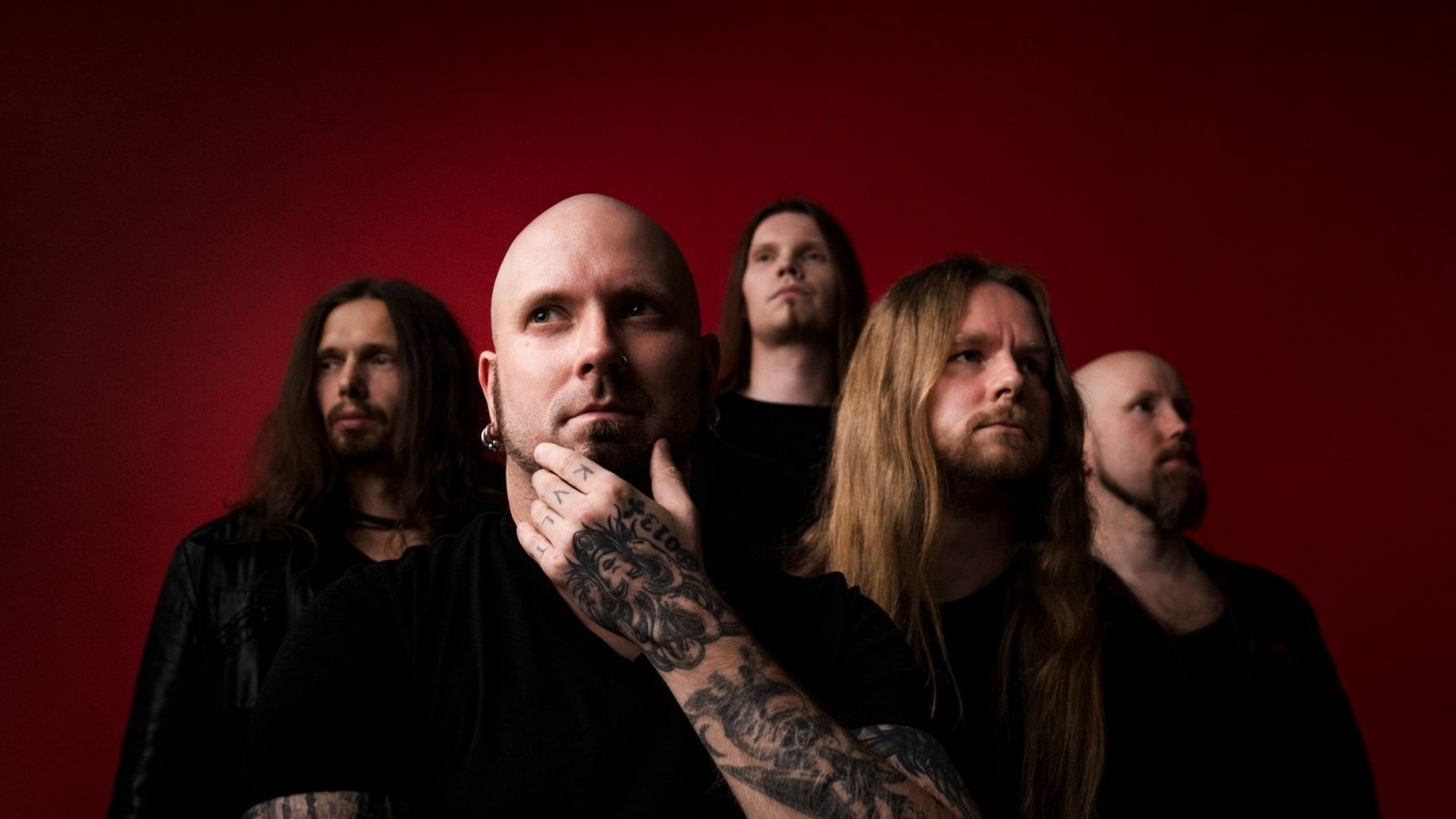
One hundred and fifty-three minutes and thirty-nine seconds. Released by Century Media on 13 November 2015, the triple album Songs from the North I, II & III by the Finnish band Swallow the Sun spends fifty-nine minutes on death doom under the heading Gloom, forty-two on quiet, largely acoustic songs under the heading Beauty and fifty-two on funeral doom under the heading Despair, and across all three discs, through the growl, the hushed middle hour and the interminable dirge of the last, one thing never changes, which is the amount of air the band leaves around every note. That constant is what the name atmospheric doom metal describes.
Atmospheric doom is not a riff, a tempo or a throat. It is a distance. The records filed under the name keep the slow, minor key weight of death doom or of traditional doom and wrap it in sustained keyboards, long reverb, a melodic lead guitar and a voice set back inside the mix, so that the weight reaches the listener from further away than the instruments seem to stand. Our chart of every branch of doom files it as an overlay rather than a channel of its own, and nothing on this page quarrels with that. What follows is an account of what the overlay does to the sound, which records put it there, and the three places where it stops being atmospheric doom at all.
Atmospheric doom is not a riff, a tempo or a throat. It is a distance: the same weight, heard from further away.
What atmospheric doom metal is: weight heard through snow
The picture that explains it best is a forest after a heavy snowfall. Every branch loaded white to the tip, every hollow filled level, the whole floor of the wood turned into one soft surface that drinks sound the way dry cloth drinks water, such a forest swallows a snapped branch or a shout a few feet from where it starts, and anyone standing among the trees hears their own footsteps arrive muffled and oddly close while the world beyond the first ring of trunks has gone completely silent. The sound is still being made. It simply does not travel.
Atmospheric doom treats the riff in exactly that way. The chord is struck as hard as on any death doom record, but the keyboard pad laid beneath it and the reverb wrapped around it sand the attack off the note before it reaches the ear, so that what arrives is the mass of the chord without its impact, a leaden shape moving slowly behind a white screen. In practice that comes down to a handful of decisions taken in the arrangement and at the mixing desk. The keyboards hold chords rather than playing tunes, filling the space the guitars leave as they ring out. The lead guitar carries a slow melodic line over the riff in place of a solo. The voice moves between a low growl and clean singing. And the tempo stays at walking pace while keeping a pulse the body can still follow, which is the first of the borders drawn further down this page.
Anathema and the first snowfall
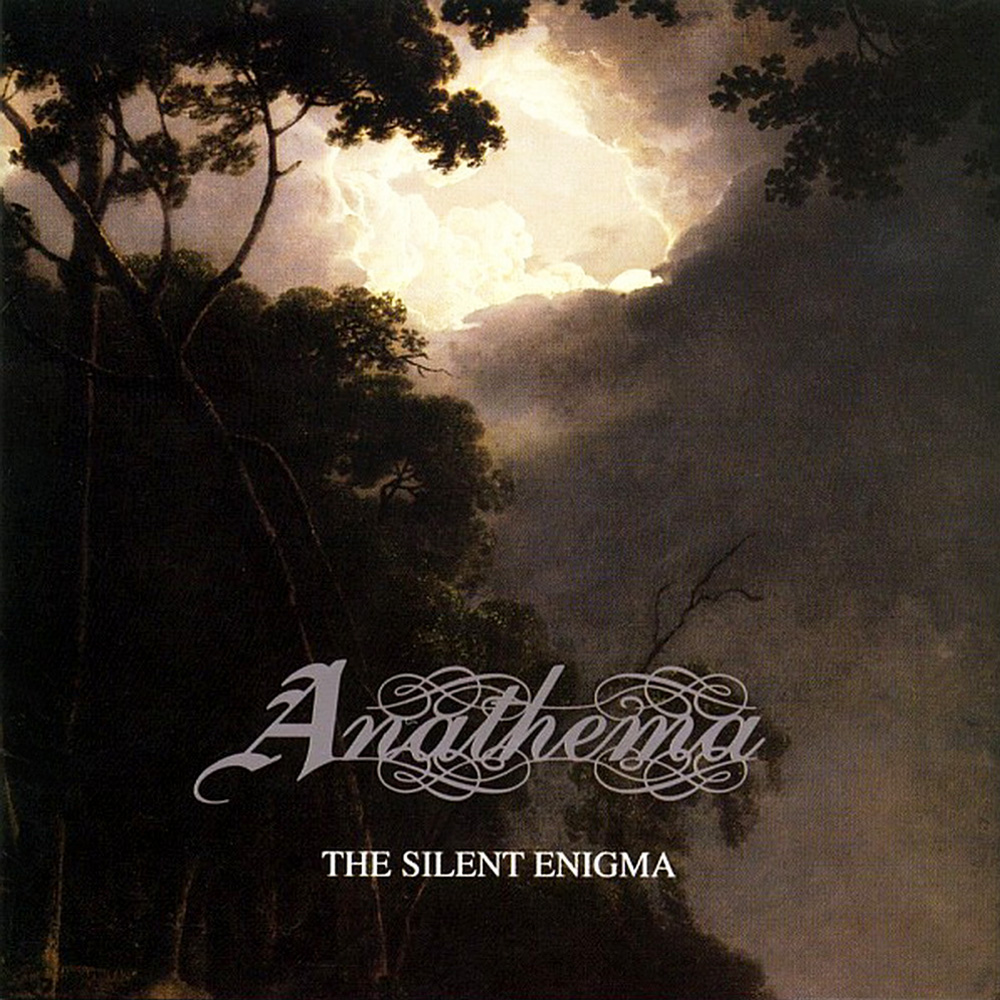
Recorded in May and June 1995 at Lynx Studios in Newcastle and produced by the band with Kevin Ridley, the second album by the Liverpool quartet that had just lost its first singer, Anathema, reached the shops on Peaceville on 6 November 1995 as The Silent Enigma, with the guitarist Vincent Cavanagh moved to the microphone in place of Darren White, the singer of Serenades. Looking back for Decibel in October 2013, Cavanagh called that second record very much metal, but already edging away. Across "Restless Oblivion" and "A Dying Wish" the death doom of the debut is not abandoned. It is thinned out. Our chart of the subgenres dates the branch from this record, and on any honest reading it is the first snowfall.
The following year made the point plainer. Produced and engineered by Tony Platt at The Windings in Wales and released on 25 November 1996, Eternity put Daniel Cavanagh on keyboards as well as guitar, leaned on mostly clean vocals and closed its first half with a cover of Roy Harper's "Hope". Anathema then kept walking until they were out of the wood altogether, into the progressive rock of their later albums. The Finns who took the idea deeper, Shape of Despair on Angels of Distress for Spikefarm in 2001, carried it the other way, down into the tempo of funeral doom.
Swallow the Sun, the band that stayed in the snow
Formed by the guitarist Juha Raivio in Jyväskylä in 2000 and settled from 2001 on a line-up in which Mikko Kotamäki still sings and Matti Honkonen still plays bass, the Finnish band that has done more than any other to turn atmospheric doom from a single record into a working career, Swallow the Sun, came out on Firebox with The Morning Never Came on 15 November 2003 and had reached number three on the Finnish album chart by Hope, released by Spinefarm on 7 February 2007. Critics a dozen years apart describe the same method. Chris Dick, streaming Emerald Forest and the Blackbird for Decibel on 31 August 2012, called the band Finland's answer to My Dying Bride and its music romantic doom death; Adam Brennan, reviewing Shining for Louder on 14 October 2024, heard gloomy melodic doom veterans working with shimmering melodies, piano and twin vocals. The death doom weight is kept whole. It is simply set down inside the snow.

After Emerald Forest and the Blackbird reached number two in Finland in 2012, the triple album followed. The keyboard player Aleksi Munter told Andrew Bonazelli of Decibel on 27 October 2015 that the band had talked about it for years, that Raivio had written all of the music, and that the quieter second disc sat in the middle as a breather before the third. He also let slip the rule that governs that third disc: "Lost & Catatonic" had been meant for it and was moved because it was too fast. Five compositions between eight minutes forty-eight and twelve minutes fifty-seven, with the tolling pace held from the first bar to the last, are what Despair was allowed to contain, and the record reached number seven in Finland.
Raivio's partner, the singer Aleah Stanbridge, who sang on Emerald Forest and the Blackbird and with him in the band Trees of Eternity, died of cancer on 18 April 2016, aged 39. Raivio told Chris Dick of Decibel on 3 June 2019 that every word and note of When a Shadow Is Forced into the Light was written for her, and that album, released in January 2019, went to number one in Finland. Moonflowers followed on 19 November 2021 and reached number two.
People think I'm some kind of goth, weeping in a forest and drinking red wine.
Juha Raivio to Paul Travers, Prog, 19 February 2025
The joke lands because the caricature sits so close to the picture the records paint, and Raivio told the same interviewer that there had always been both light and darkness in him. Shining, produced by Dan Lancaster and released on 18 October 2024, reached number five in Finland, and two reviewers at Louder heard the same turn in it: Brennan found shades of optimism anchored in the old despondency, and Phil Weller, writing for Prog the same week, heard the abrasiveness dialled back in favour of a smoother sound. The snow still lies on the record. The band has walked into a clearing.
Where atmospheric doom ends: funeral doom, atmospheric sludge and post-metal
The first border runs against funeral doom, and the pulse draws it. Funeral doom slows the beat until the listener waits for each stroke rather than following it, as Skepticism did on Stormcrowfleet for Red Stream in 1995; atmospheric doom keeps a beat the body can still ride, as Anathema did on Eternity a year later. Swallow the Sun drew that line inside a single release, and Munter's remark about a song too fast for the third disc is the line itself, spoken aloud.
| Neighbour | What separates it | Atmospheric doom keeps | Record across the line |
|---|---|---|---|
| Funeral doom | The pulse | A beat the body can follow | Skepticism, Stormcrowfleet (1995) |
| Atmospheric sludge | The throat | Death doom growl and clean singing | Neurosis, Times of Grace (1999) |
| Post-metal | The shape of the song | Weight held level, never spent | Cult of Luna, Somewhere Along the Highway (2006) |
The second border runs against atmospheric sludge, and the throat draws it. Neurosis, founded in Oakland in December 1985 as a hardcore punk band, on Times of Grace in 1999, and Cult of Luna, formed in Umeå in 1998 from the remains of the hardcore band Eclipse, on Somewhere Along the Highway in 2006, kept the bark of the hardcore clubs they came out of even in their longest and quietest songs. Atmospheric doom's voices come from the other side of the family, from the death doom growl and from the singer who sings, and no amount of shared reverb makes the two throats one.
The third border runs against post-metal, and the shape of the song draws it. In post-metal, as our chart of the subgenres already has it, crescendo and release replace sustained weight: the music gathers its weight towards a climax and spends it there, demolishing the build it spent ten minutes raising, while atmospheric doom holds the weight level and never spends it. The sextet formed in Jyväskylä in 2005, Ghost Brigade, stood on exactly that line across four albums for Season of Mist, from Guided by Fire in 2007 to IV: One with the Storm in 2014, with a sound its label described as an amalgam of post-rock, metalcore, progressive rock, death and doom metal, until the band announced its split on 20 August 2020.
A record is atmospheric doom, then, when its pulse can still be followed, its voices come from death doom or from singing, its weight stays level to the final bar, and all of it reaches the ear muffled a few feet from where each note was struck. The rougher question of the slow musics belongs to sludge Metal or Doom Metal.
