
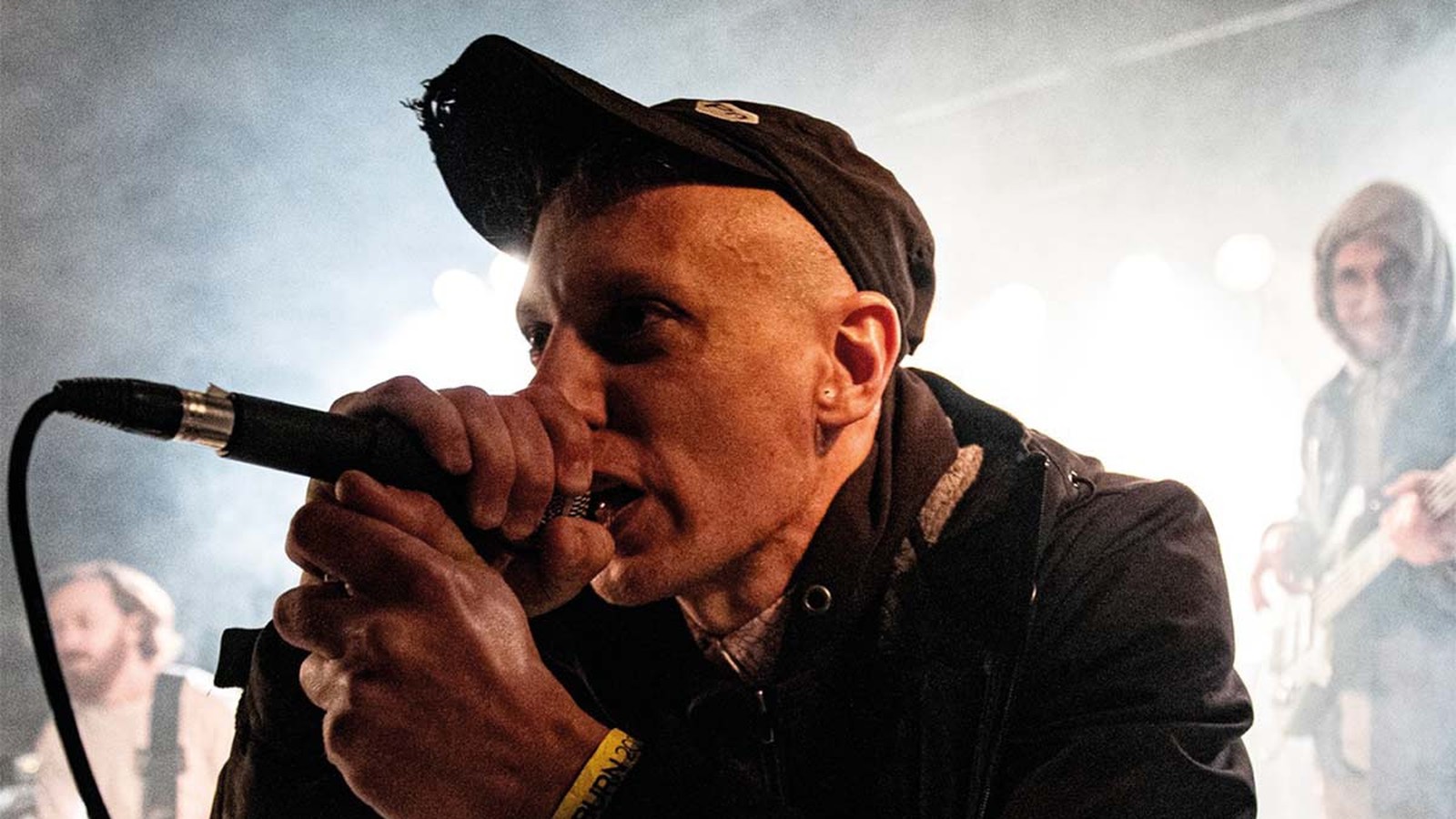
Sludge metal vs doom metal is a question with a short answer, and we give it first. The two share their tempo, their down-tuned guitars and their descent from Black Sabbath, and they are still two separate musics, because they put the same weight to opposite uses. Doom lays its weight down as a memorial, to the dead and to grief made formal, and its singer carries a melody over the riff the way a mourner carries a wreath. Sludge pours its weight into the week it is living through, into the addiction and the poverty outside the rehearsal room, and it takes its throat and its sudden bursts of speed from hardcore punk rather than from heavy metal. The records below are the evidence.
Picture a street on a working morning. At the kerb a road mender's tar boiler stands with the lid propped open and smoke coming off it, and the man beside it ladles the black load into the cracks a winter of lorries has opened in the asphalt, knowing the patch will be driven over by noon and broken again by spring. Twenty yards along, in a monument mason's yard, another man bends over a slab of polished granite and cuts a name into it one letter at a time, mallet on chisel, for a stone meant to stand long after everyone who knew the name has gone. Both men work in black. Both work in weight, and neither can hurry. The sludge riff is the tar, poured hot into a wound in the road so the traffic can go on crushing it; the doom riff is the letter in the granite, struck slowly so that it will still be legible in a hundred years.
Why sludge counts as a channel of its own is argued in the chapter on how the branches divide. This page is narrower. It sets named records from both sides next to each other and says plainly where they part and where they do not.
Slow a hardcore band down to half speed and you do not get doom. You get the same band, exactly as angry, with twice as long to kick the amplifier.
Gareth Llewellyn, KaosMetal
Tempo: one crawl keeps its manners, the other breaks them
Released by Axis Records on 9 November 1987, produced by the band itself and sung by a new arrival, Messiah Marcolin, the second album by the Stockholm quintet Candlemass, Nightfall, runs ten tracks across forty-six minutes and twenty-nine seconds on the funereal plan of a service: the short instrumentals "Gothic Stone", "Codex Gigas" and "Black Candles" and an arrangement of Chopin's funeral march stand between the songs like the silences in a liturgy, while "The Well of Souls" and "Dark Are the Veils of Death" each run past seven minutes at a leaden pace. Rock Hard found its rhythms sluggish in 1987, and AllMusic's Eduardo Rivadavia heard the band thrash out only a little, on "At the Gallows End" and "Dark Are the Veils of Death". The hurry is rationed. The ceremony is not.

Nine years later a band in New Orleans recorded the opposite kind of slow. Cut at Side One Studios in the city late in 1995, produced by Billy Anderson with the band and released by Century Media in 1996, Dopesick, the third album by the Louisiana quintet Eyehategod, crams twelve tracks into thirty-eight minutes and fifty-one seconds, and the drag of "My Name Is God (I Hate You)" is torn apart by pieces that are over almost before they begin, "Dogs Holy Life" at a minute and ten seconds and "Non Conductive Negative Reasoning" at a minute and six. Terrorizer, ranking it the second greatest sludge album in 2009, heard vicious hardcore punk set against crushing metallic comedowns, and AllMusic called it an exhausting, challenging listen.
The two records share a tempo only in the way the tar boiler and the mason share a colour. The doom record slows down in order to last. The sludge record slows down so that the fast pieces, when they come, land like a brick through a shop window, and then it drags itself back into the tar before the glass has finished falling. Speed in sludge is not relief. It is the damage.
The tuning settles nothing. The standard definitions of both genres describe slow tempos and guitars tuned low, and a band from either side can sit at the same slack depth and still land on the opposite side of the line.
The voice and the hardcore lineage
The voice is where a listener hears the difference inside a single bar. Marcolin won his place in Candlemass by phoning the bassist Leif Edling and singing "Solitude" down the line with nothing under it, and that audition is the doom tradition in a single call: a singer judged on whether he could carry the melody with nothing under it, heir to the clean, despairing voices of Ozzy Osbourne and Bobby Liebling. Sludge judges its singers the other way, on whether they can scream from inside the riff without being buried by it, and the standard definition of the genre names the aggression and the screamed vocals of hardcore punk as what separates sludge from every other style descended from doom, while allowing that a sludge band may also sing.
The lineage is where the two stand closest and where the gap runs deepest. The slow second side of My War, released by Black Flag on SST in 1984, taught hardcore musicians that a crawl could be a form of violence, and sludge grew up afterwards in the clubs, vans and self-booked tours of that world rather than on the heavy metal circuit that carried Candlemass. Yet the traffic ran the other way first. Greg Ginn's SST signed the Los Angeles doom band Saint Vitus, released Born Too Late in 1986 and, before that, put the band straight onto punk rock shows and sent it out on the first tour it ever played, supporting Black Flag, so that doom was played to punk audiences before sludge had a name. The guitarist Dave Chandler told The Obelisk in April 2012 that the punks hated them at first for their slowness and their long hair, and that the disruption was exactly what the label wanted. The family tree from 1970 onward is laid out in the index of the series; what matters here is the fork.
| Record | Released | Tracks and running time | Shortest and longest track | At the microphone |
|---|---|---|---|---|
| Candlemass, Nightfall | 9 November 1987, Axis | 10 tracks, 46:29 | "Gothic Stone" 0:48, "The Well of Souls" 7:27 | Messiah Marcolin, sung |
| Eyehategod, Dopesick | 1996, Century Media | 12 tracks, 38:51 | "Non Conductive Negative Reasoning" 1:06, "My Name Is God (I Hate You)" 5:21 | Mike IX Williams, screamed |
| Thou, Magus | 31 August 2018, Sacred Bones | 11 tracks, 75:38 | "My Brother Caliban" 1:04, "Supremacy" 10:53 | Bryan Funck, screamed |
| Thou, Umbilical | 31 May 2024, Sacred Bones | 10 tracks, 48:46 | "Lonely Vigil" 3:05, "House of Ideas" 6:43 | Bryan Funck, screamed |
Thou, the band that works at both benches
Formed in Baton Rouge in 2005 by the guitarists Andy Gibbs and Matthew Thudium, the bassist Mitch Wells and the drummer Terry Gulino, with Bryan Funck taking the microphone in time for the first album in 2007, the Louisiana collective that has spent two decades refusing to choose between the kerb and the mason's yard, Thou, is a sludge band by birth and by conviction: Funck screams, the lyrics carry anarchist themes, and the band's do-it-yourself approach to touring has become one of the things it is best known for. What Thou took from doom is the architecture.
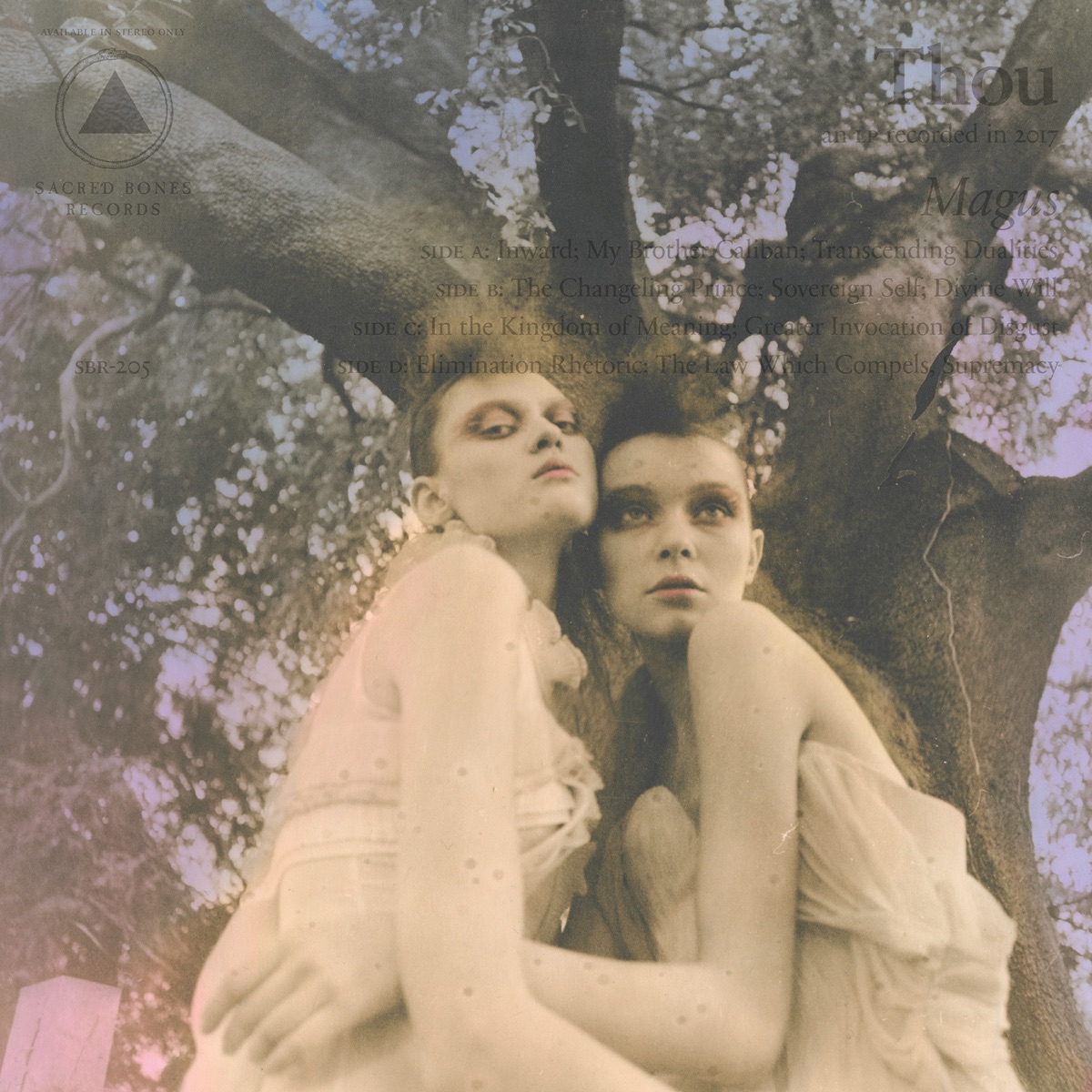
Recorded in 2017, as its own sleeve announces, and released by Sacred Bones on 31 August 2018, Magus runs for seventy-five minutes and thirty-eight seconds across eleven tracks, four of them, "Inward", "Sovereign Self", "In the Kingdom of Meaning" and the closing "Supremacy", past nine and a half minutes, with "My Brother Caliban" and "Divine Will" set between the long pieces as interludes of just over a minute and just over a minute and a half. That is the plan of Nightfall redrawn by a band with a hardcore throat, a tolling dirge cut into granite with the chisel of a scream. The band dedicated it to what it called the sacred ego, not to any grief.
Roadburn, the Dutch festival for heavy and experimental music, made Thou its artist in residence in 2019 with four sets. Its artistic director Walter Hoeijmakers suggested a collaboration with the singer and guitarist Emma Ruth Rundle, first performed there on 12 April 2019 and released by Sacred Bones on 30 October 2020 as May Our Chambers Be Full, and the fourth, kept off the printed schedule, was a secret show at the Ladybird Skatepark on Saturday 13 April: fifteen songs by the punk band Misfits, with Rundle joining them for the last, "Last Caress". That is not a band leaving sludge. It is a band carrying the whole family tree on its back.
Doom slows down in order to last. Sludge slows down so that the fast pieces, when they come, land like a brick through a shop window.
Then Thou pulled back towards the kerb. Recorded at Hightower Recording in New Orleans in December 2023 with James Whitten recording and mixing, and released by Sacred Bones on 31 May 2024, Umbilical was presented on the band's Bandcamp page as its firmest nod to the obscure do-it-yourself hardcore punk of the nineties, a record of mosh-ready riffs and heavy breakdowns, and the running order bears the claim out: ten songs in under forty-nine minutes, none shorter than three and none longer than the six minutes and forty-three seconds of "House of Ideas". Harry Sword of The Guardian, reviewing it on the day of release, heard the band's ties to the underground punk and hardcore scenes in its shorter, more aggressive songs and called it one of the finest metal albums of the past decade. The chisel was put down. The tar boiler was lit again.
Where the two overlap, and the test at the kerb
The border has bands standing on it, and the voice alone does not decide the side. Death doom and funeral doom bands growl and scream over slow riffs without becoming sludge, because a harsh throat makes a record sludge only when it arrives with the lurch of hardcore and the subject matter of the street, and Kirk Windstein's Crowbar stayed a sludge band when its self-titled album of October 1993, produced by Phil Anselmo, carried its crawl onto MTV, where Butt-Head judged the music slow and fat, and never took on doom's ceremony.
So the test has two questions. Does the record hold its tempo like a service, or does it break into hardcore speed and fall back into the crawl? And is its weight cut for a name that has to outlast everyone, or poured into the cracks of the week the band is living in? A record that answers ceremony and memory is doom, whatever its singer does. A record that answers damage and the street is sludge, even when it runs for seventy-five minutes. The same slowness faces a third direction, towards fuzz and swing, and that border has its own page under the question doom Metal or Stoner Metal.
