
Branching so broad and long, that in the ground
The bended twigs take root, and daughters grow
About the mother tree, a pillared shade
High over-arched, and echoing walks between.John Milton, Paradise Lost, Book IX
Milton was describing the banyan, the great fig of the Malabar coast, and no tree answers more plainly what a genre label covers. Letting thin aerial roots down from its horizontal branches until they reach the soil, thicken into columns of timber and take the weight of the limbs that lowered them, a single banyan spreads over the decades into what looks like a grove of separate trees, each pillar with its own bark and its own shade, and every one of them still joined at the crown to the first trunk and fed by heartwood that stood alone in the ground before any root came down. The doom metal genre is that tree. Whatever the label honestly covers is joined to the first trunk overhead. Whatever is not is a neighbouring tree whose leaves happen to touch.
That picture sets the order of this page: first the heartwood, the traits a record must carry before the label fits it at all; then the pillars that dropped from the branches and now stand as genres of their own; last the edge of the grove, where styles fed by other roots stand close enough to be mistaken for part of it, and where the word itself was put to work. The branches taken one at a time, each with the line it draws, are set out in the map of the genre.
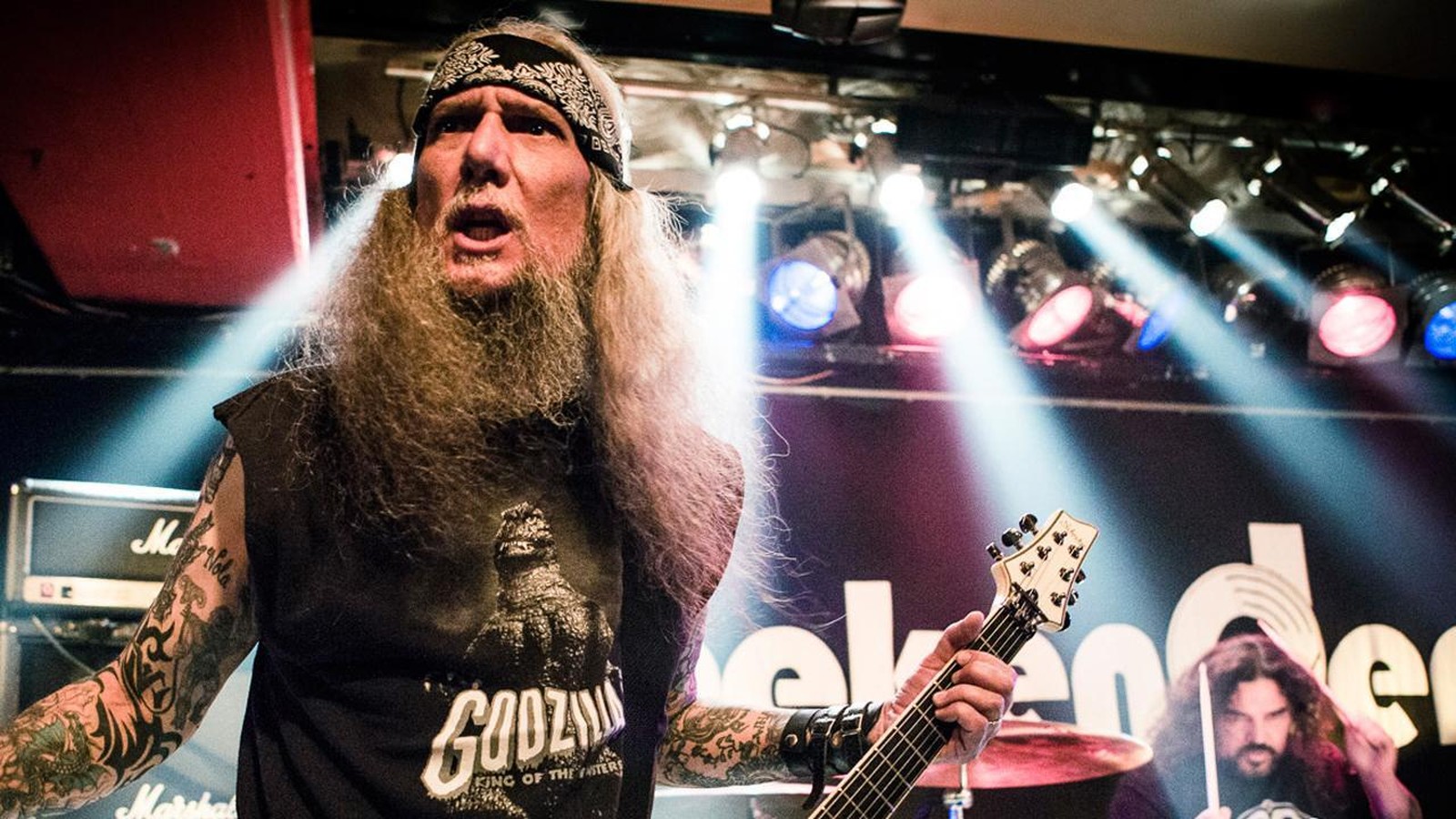
The trunk we stand beside for all of it belongs to a band that carried the heaviest sound in Los Angeles into rooms built for hardcore punk. Formed in 1978 as Tyrant by the guitarist Dave Chandler, the bassist Mark Adams and the drummer Armando Acosta, settled on the singer Scott Reagers after two others had been tried and renamed in 1980 after the Black Sabbath song "St. Vitus Dance", the quartet the city's metal clubs turned away, Saint Vitus, landed on SST because Chandler, a Black Flag fan, asked a punk band on the label to bring someone from Black Flag to one of its shows, and Greg Ginn, Chuck Dukowski and Henry Rollins came, watched the set and offered a record, as Chandler told the blog Hammer Smashed Sound in January 2010. Its records are the cleanest cross-section of the first trunk we know. Nothing grafted on.

The heartwood: what the label requires
Recorded at Total Access in Redondo Beach, produced by Joe Carducci with the band and released by SST in October 1986, Born Too Late was the first album with Scott Weinrich, known as Wino, who had come over from The Obsessed to replace Reagers early that year, and its six songs, from the title track through "Dying Inside" to "The War Starter", carry every trait the label still demands. Paul Kott at AllMusic reached for Black Sabbath sedated and sunk underwater in lead suits to convey its weight, and Chris Chantler, in a Metal Hammer list of essential doom records last revised in 2020, heard a bleak record about alienation, war, madness and drug addiction. Two readings, one timber.
Taken apart, the traits are few and strict. The tempo sits below the pace of a rock song and stays there; guitar and bass play the same down-tuned riff in unison, through distortion thick enough to smear the low strings into a single leaden mass; the riff descends from the blues shapes of the first Black Sabbath records, sits in a minor key and is repeated well past the point where a listener expects it to move; and the words keep to grief, dread, addiction, the occult and death. Only the voice is left free. It may sing clean in open despair, as Wino does, climb into an operatic pulpit, drop to a growl or rise to a shriek, and the record stays under the canopy for as long as the riff beneath it keeps its funereal weight.
The man who cut most of that timber is the one member present on every Saint Vitus record. Writing nearly all of the band's songs, from "Zombie Hunger" and "Burial at Sea" on the 1984 debut through the whole Wino era, Dave Chandler put at the centre of the sound a guitar that the reviewer at The Obelisk, returning to the debut in July 2026, heard opening the record in a burst of caustic noise before the tone thickened into gruel, and it is the unrepentant ugliness of that tone, a guitar the band's present label, Season of Mist, describes as full of reverb, feedback, flanger and apocalyptic distortion, that dragged the band clear of heavy metal's polished lines. Chandler held the band together through the Count Raven singer known as Chritus on C.O.D. in 1992, through Reagers's return on Die Healing in 1995, the record Chandler called the band's finest effort in that same 2010 interview, the first they made with a real metal producer, Harris Johns, and on to Lillie: F-65 for Season of Mist in 2012 and a second self-titled album, again with Reagers, on 17 May 2019.
Armando Acosta left the band in 2009 because of his health and died on 25 November 2010, at 58. Mark Adams, absent from the band's tours through illness and diagnosed with Parkinson's disease, as was made public in October 2018, died on 23 May 2023, at 64, as Blabbermouth reported the following day.
Roots that became trunks
Every branch of the tree has let down a root of its own by now, and the roots have thickened into genres. Death doom stands on the roster Peaceville built in Yorkshire, funeral doom in Finland, sludge in the clubs of New Orleans, stoner doom in the fuzz of the Californian desert and drone in the amplifier hum of the Pacific Northwest, and each has raised what a pillar needs to bear its own limbs: labels, critics, festival bills and audiences. That independence is real. It is also incomplete, because at the crown every one of those pillars is still joined to the first trunk.
The proof is the timber moving back up the roots. When Mark Adams could no longer tour, the bass in Saint Vitus passed from 2016 to Pat Bruders, a musician from the New Orleans sludge band Crowbar, so that a pillar which had stood for a quarter of a century on its own Louisiana ground sent its strength back up into the crown it had dropped from; and in 2024 the drummer who had replaced Acosta, Henry Vasquez, joined Pentagram, the band formed around Washington, D.C. in 1971.
A genre label covers every pillar still joined to the first trunk at the crown, and nothing whose leaves merely touch it.
The trees at the edge of the grove
Four styles stand close enough to the canopy to confuse a listener, and each drinks through a root system of its own. Stoner rock sets the fuzz and the Sabbath riff rolling on a groove drawn from psychedelic and acid rock; gothic metal grew out of the death doom pillar in the early nineties and turned towards gothic rock and its keyboards; post-metal feeds the weight of doom and sludge through the long build of post-rock; and slowcore, an indie rock style of subdued tempos and sombre voices, shares nothing with the genre beyond the slowness.
| Neighbour | What it shares with doom | Its own root | The name in print |
|---|---|---|---|
| Stoner rock | Fuzz, Sabbath-shaped riffs, slow to mid tempo | Psychedelic and acid rock, groove | Roadrunner compilation Burn One Up! Music for Stoners, 1997; Welcome to MeteorCity, 1998 |
| Gothic metal | A birth inside death doom, a register of grief | Gothic rock, keyboards | Taken from Paradise Lost's Gothic, 1991 |
| Post-metal | The weight of doom and sludge | Post-rock and its crescendo | Later than post-rock, a term Simon Reynolds put into print in 1993 and 1994 |
| Slowcore | Slow tempos, sombre voices | Indie rock, folk, singer-songwriters | Chuck Eddy, Stairway to Hell, 1991 |
The test at the edge is not how slow a record is. It is where the timber came from. A slowcore band out of the indie rock clubs can play more slowly than Saint Vitus ever did and stand wholly outside the grove, while a stoner doom band that keeps the interminable Sabbath riff in fuzz at the pace of a dirge stands inside it however much desert sand it carries in its tone. Tempo is shade. Roots are ownership.
How the name was put to work
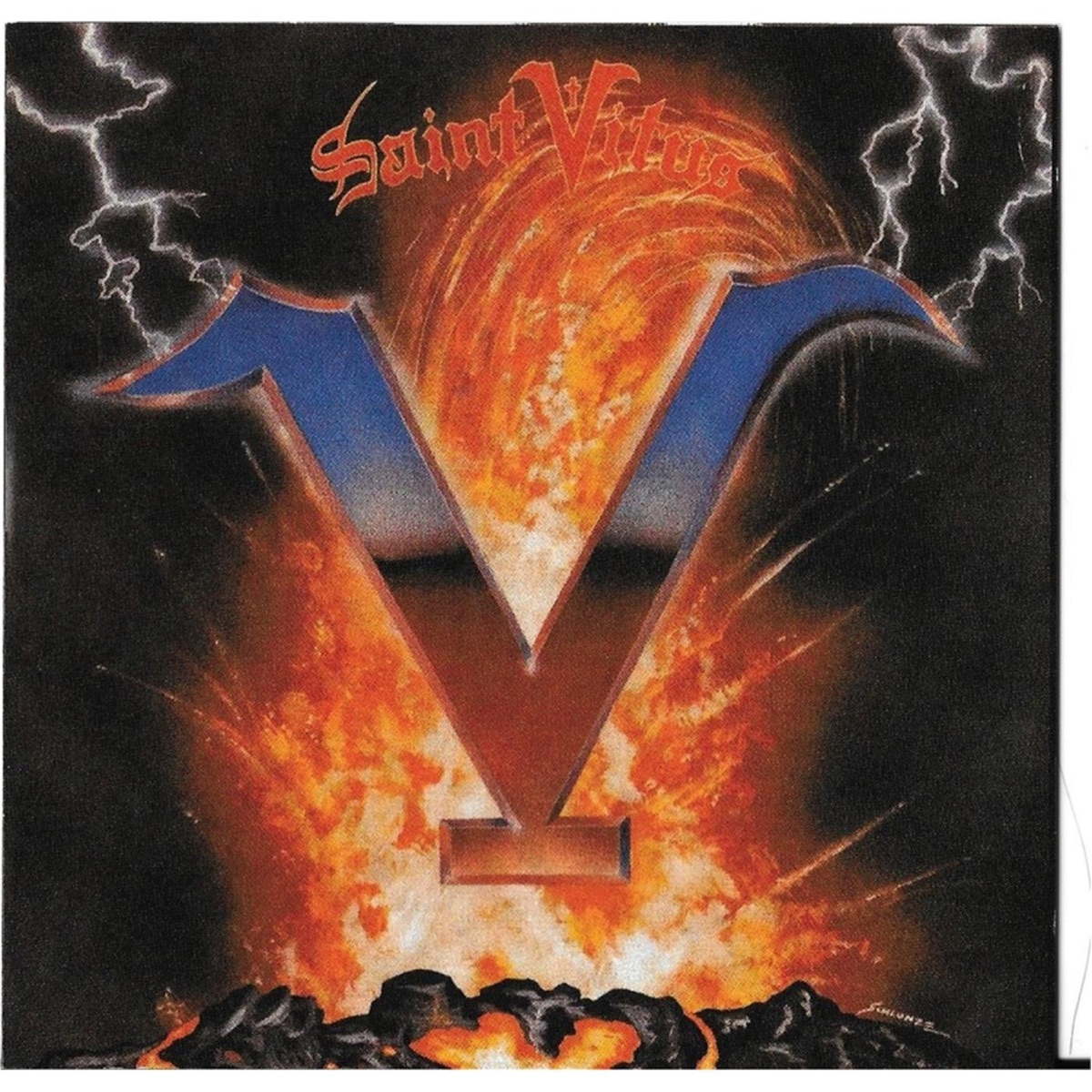
The name came after the trunk, and it was fastened to the records backwards. The dark, heavy music Black Sabbath and Pentagram made in the early seventies only began, in the standard account, to be called doom metal in the eighties, and Candlemass put the word on a sleeve with Epicus Doomicus Metallicus two years after the Saint Vitus debut had been sold to punks. What turned the word into a working label was trade. Dropped by SST by 1989, Saint Vitus moved to Hellhound Records in Germany, which released V in 1990, a live album the same year and C.O.D. after it, took on The Obsessed and Count Raven, and filled its catalogue in the early nineties with the doom bands of Maryland until a Hellhound spine was a fair guide to what the record inside would weigh.
Since then the name has been built so deep into the scene that it holds up part of the canopy by itself. Festivals printed it on the poster: Doom Shall Rise in Germany from 2003 to 2013, in Göppingen from its second edition, and Hammer of Doom in Würzburg from 2009 to 2023. When J. J. Anselmi wrote the genre's history for Rare Bird Books in 2020, Doomed to Fail took in doom, sludge and post-metal between the same covers, stretching the canopy for the length of a book over a tree that grows outside it. Some of the newest uses of the word describe no trunk at all, only colour moving through the leaves, which is the argument we make in psychedelic Doom Metal.
The first trunk still stands. Returning in July 2026 to the album SST had released forty-two years earlier, The Obelisk placed the Saint Vitus debut high among the greatest doom albums ever made, and under a canopy that now shades a whole grove, the heartwood of those five songs still feeds every pillar that ever came down from its branches.
