
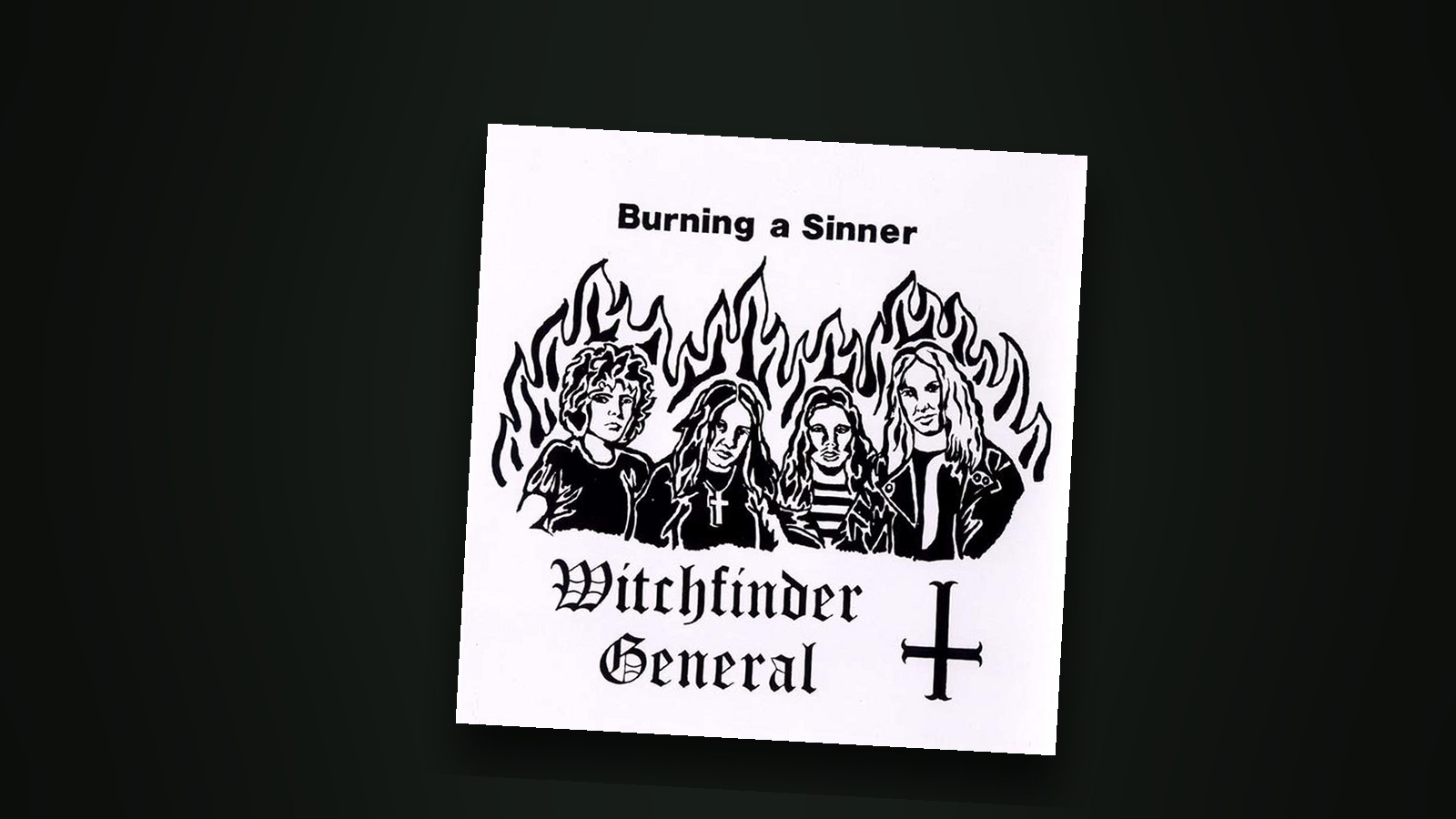
Witchfinder General recorded Death Penalty on 10 and 11 April 1982, with Pete Hinton credited as producer and Robin George engineering, and Heavy Metal Records released it that September. Four months later a Los Angeles quartet recorded a debut its label held back until 1984, and eleven years earlier a Virginia band had formed that would wait until 1985 for an album. Between those dates lies the whole dispute over the first doom metal band. It is a dispute about claims, not about sound.
The question hides two tests that give different answers: who played slowly and heavily before anyone else, and who first took slowness as a band's whole identity and put it on a record a stranger could buy. The seventies, told at full length in the first chapter of our doom history, settle the first test easily and barely touch the second.
| Band | Formed | First public release |
|---|---|---|
| Black Sabbath | 1968 | Black Sabbath, February 1970 |
| Pentagram | 1971 | "Be Forewarned" single, as Macabre, 1972; first album 1985 |
| Bedemon | c. 1973 | Child of Darkness, 2005 |
| Pagan Altar | 1978 | Self-titled demo, 1982; Volume 1, 1998 |
| Saint Vitus | 1978, as Tyrant | Saint Vitus, early 1984 |
| Trouble | 1978 | Trouble, later Psalm 9, March 1984 |
| Witchfinder General | 1979 | "Burning a Sinner" single, 1981; album 1982 |
| Candlemass | 1984 | Epicus Doomicus Metallicus, June 1986 |
Black Sabbath and the loud Americans: the ground, not the claim
Formed in Aston in 1968 and on record by February 1970, Black Sabbath did not so much discover the ground as survey every yard of it, pacing out the leaden crawl of "Black Sabbath" and "Into the Void" long before any other band set foot there. The same four men also ran "Paranoid" in under three minutes into the British top five and in 1975, on Sabotage, built "Symptom of the Universe" on an up-tempo riff often counted among the forerunners of thrash metal. A band that plays at every tempo is not a doom band. It is a heavy metal band that happened to own the field.
The American power trio usually brought in as a precedent fails the same test from the other side. On Vincebus Eruptum, released by Philips in January 1968, Blue Cheer flattened Eddie Cochran's "Summertime Blues" under a wall of amplifiers and carried the wreckage to number fourteen on the Billboard singles chart. AllMusic's Mark Deming heard in it rock and roll primitivism "run through enough Marshall amps to deafen an army". The record was built for volume, not for time.
The Brooklyn trio Sir Lord Baltimore put out Kingdom Come on Mercury in December 1970, and when Mike Saunders reviewed it for Creem in May 1971 he praised a band that had the best heavy metal tricks down pat, one of the earliest uses of those two words for a style of music. Heavy metal, not doom. The earliest slow song is a separate quarrel, taken up in the piece that asks what Was the First Doom Metal Song; on this page the unit is the band, and a band is judged on what it decided to be.
Pegs in the dark: Pentagram, Bedemon and the unreleased decade
The Virginia band with the oldest claim after Black Sabbath, Pentagram, was formed in Alexandria in 1971 by the singer Bobby Liebling and Geof O'Keefe, who started on guitar and later moved to the drums, and its singles belong to a band whose singer has always preferred to call it heavy hard rock, from "Be Forewarned" under the name Macabre in 1972 to a 1974 version of the Rolling Stones' "Under My Thumb". The first Pentagram album, released on the band's own label in 1985, was made by another group altogether: Death Row, formed in Knoxville, Tennessee, in 1980 by the guitarist Victor Griffin and the bassist Lee Abney, which took Liebling on as singer and then took the Pentagram name. On dates Pentagram came early. Its doom reached the shops through a band formed the year after Witchfinder General.
Out of the same rehearsal basement in Alexandria came a second band, and in its own time nobody outside that room heard it. Begun around 1973 by the guitarist Randy Palmer with Liebling, O'Keefe and the bassist Mike Matthews, Bedemon taped "Child of Darkness", "Serpent Venom" and "Frozen Fear" with no release and no concert in mind, and those tapes appeared as Child of Darkness on the Italian label Black Widow only in 2005, three years after Palmer died of injuries from a car crash.
The father and son who formed Pagan Altar in Brockley in 1978, the singer Terry Jones and the guitarist Alan Jones, put forty minutes of their songs on a self-titled demo in 1982 that reached a handful of listeners, an American fanzine among them, and only after a bootlegger pressed it to vinyl did they issue it themselves, remastered, on their own Oracle Records as Volume 1 in 1998. Death Row, Bedemon and Pagan Altar each drove a peg into the field early, but they drove it at night, and the grass closed over the wood before anyone came walking that way to read what was written on it.
A claim that nobody can see has not yet been made.
Stourbridge, 1981: Witchfinder General drives the first peg in daylight
Formed in Stourbridge in 1979 by the singer Zeeb Parkes and the guitarist Phil Cope, at the moment when the new wave of British heavy metal, the flood of young, mostly independent bands that filled British clubs and music papers at the turn of the decade, was driving every guitarist of their age towards speed, the Midlands band named after Michael Reeves's 1968 film Witchfinder General trampled straight through that sprint and took its lead from the heavy, occult side of the Black Sabbath catalogue. Then it did what no band formed for the slow and the heavy had yet done. It went public.
A surveyor marks a plot before a single builder arrives: a wooden peg hammered into open turf, a date pencilled on its flat face, a string pulled taut to the next corner, so that anyone crossing the empty field can see that the ground is taken and roughly what will stand on it. "Burning a Sinner", backed with "Satan's Children" on Heavy Metal Records in 1981, was that peg, hammered into turf where no genre yet stood, and Death Penalty the following year was the string run out to all four corners. Nobody had built anything on the plot. Nobody could pretend any longer that it was unclaimed.
Recorded in two days over Easter, with Cope playing bass as well as guitar and Graham Ditchfield on drums, the album gathers "Invisible Hate", "No Stayer", the title track and the band's own anthem "Witchfinder General" into half an hour. Martin Popoff gave it ten out of ten in his Collector's Guide to Heavy Metal. It has a weakness, and it has to be named: this is a band of the new wave as much as a doom band. Even the riff Cope picked out, in an interview on the band's website in November 2004, as the one he was proudest of, the opening of the title track, is a slow start that gives way, in his telling, to a bang. Friends of Hell followed in 1983, and the band broke up in 1984 amid controversy over the photographs on its sleeves.
Playing slowly first proves nothing. The first doom band is the first one that told the world, on a record with a catalogue number, that slow was all it meant to be.
Andrzej Sawicki, KaosMetal
Saint Vitus, Trouble and Candlemass: the builders on the plot
Formed in Los Angeles in 1978 as Tyrant by the guitarist Dave Chandler, the bassist Mark Adams and the drummer Armando Acosta, with Scott Reagers brought in to sing after the first show, renamed in 1980 after the Black Sabbath song "St. Vitus Dance" and signed to SST by Greg Ginn of Black Flag, the quartet that the Los Angeles metal crowd turned away and the punk clubs took in, Saint Vitus, recorded its debut overnight at Total Access Recording in Redondo Beach on 16 and 17 August 1982. Its five songs run to nearly thirty six minutes, "The Psychopath" alone past nine, and the band carried that dirge through the hardcore clubs of the early eighties like a plough dragged through frozen clay in front of a crowd that had paid to watch a sprint. On purity, Saint Vitus has the strongest case of anyone. On dates it is weaker, because SST held the album back until early 1984.
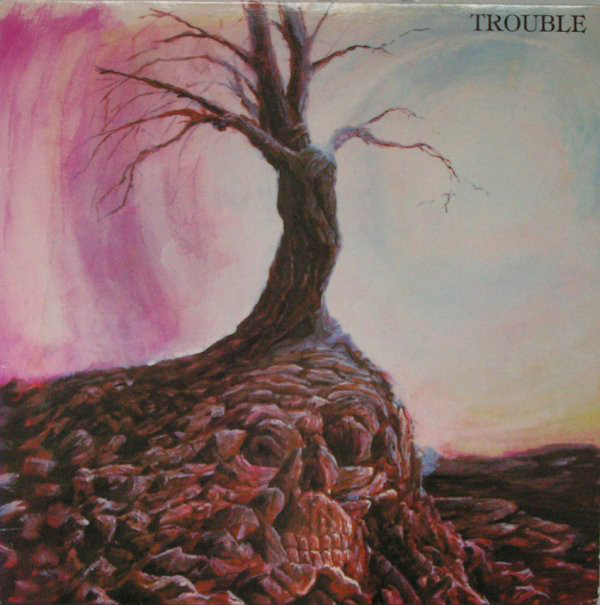
The Illinois band that Metal Blade sold as white metal, Trouble, was started in Chicago in 1978 by the guitarist Rick Wartell, then still at high school, and recorded its debut at Track Record Studios in Los Angeles in February 1984 with Bill Metoyer and Brian Slagel producing. Metal Blade released it that March, with the song "Psalm 9" setting verses of the King James Bible directly. Both American debuts reached the shops well over a year after the Stourbridge album.
Founded in 1984 in Upplands Väsby, outside Stockholm, by the bassist Leif Edling after the break-up of his first band Nemesis, Candlemass recorded Epicus Doomicus Metallicus in February 1986, and Black Dragon Records released it on 10 June 1986 under a title that is dog Latin for epic doom metal. The Swedish band did not stake the plot. It carved the name of the house into a board and nailed that board over the gate, and every band that has called itself doom since has walked in underneath it.
The verdict: Witchfinder General, with Saint Vitus close behind
Laid side by side, the dates settle more than the arguments usually allow. Black Sabbath owned the ground and played on it at every speed, which makes it the source of doom and not a doom band. Pentagram's doom reached the shops only in 1985, and Bedemon, Pagan Altar and Death Row drove their pegs in the dark. Saint Vitus and Trouble raised the first whole houses of American doom in 1984, and Candlemass wrote the name over the gate in 1986, when the funereal crawl already had a street of its own.
That leaves one band that took the heavy, occult side of Black Sabbath as its whole identity, formed around it in 1979, and put that choice on sale in 1981 and on a full album in 1982, ahead of every band that meant the same thing. The first doom metal band is Witchfinder General. Purity is the only test on which Saint Vitus wins, and it is the weaker test, because a debut recorded four months later and released well over a year later cannot claim ground a record already in the shops had marked out. Everything raised on that plot afterwards, from the Swedish epics to the funeral crawl of the nineties, is doom metal, in order.
