
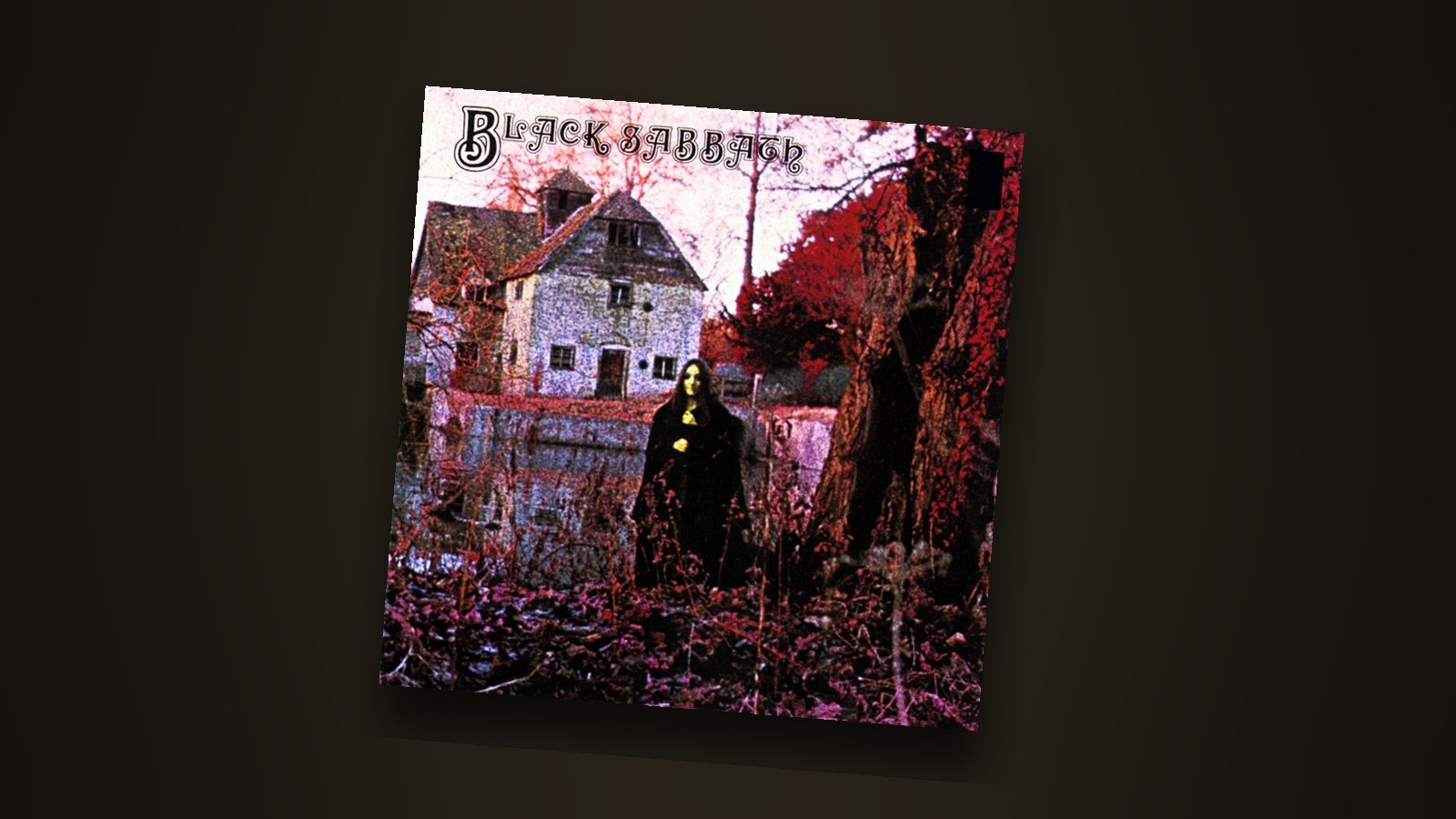
Twelve hours was about all the time the quartet from Aston spent at Regent Sound in London with the producer Rodger Bain, one day in the autumn of 1969, playing its live set straight onto tape with the singer shut in a booth beside them, and the song that opens the record made that day has outlasted every rival for the title this page is about. Released by Vertigo in Britain on Friday 13 February 1970, the first Black Sabbath album begins with rain and a tolling bell, and then a riff of three sounds, struck slowly and left to hang in the air. It took a day to record. It has taken more than half a century to argue about.
We give the verdict now, so that everything after it can be tested against it. "Black Sabbath" is the first doom metal song, and it earns the title not because nothing slow or dark was recorded before it, but because it is the first recording on which slowness and dissonance are the method of the entire piece rather than the mood of a passing section. How four young men from Aston arrived at it is told in the first chapter of our doom history. This page has a narrower job. It weighs the other claimants, and it asks what the tritone and the tempo do on that song that no earlier record managed.
The claimants before the Midlands
Released in June 1967 as an edited single that went on to reach number six on the Billboard Hot 100, the American singles chart, the reading of the Supremes' "You Keep Me Hangin' On" by the New York quartet Vanilla Fudge took a Motown hit and hauled it down to a crawl, the drummer Carmine Appice telling the Classic Rock Music Reporter in January 2014 that the band slowed songs down until the music followed what the lyrics dictated, because the Supremes had sung unhappy words over a happy sound. That is a tempo precedent, and a real one. What it slowed down was heartbreak, not dread. Seven months later the San Francisco trio Blue Cheer released Vincebus Eruptum on Philips, and its version of Eddie Cochran's "Summertime Blues", flattening a teenage rock and roll standard under a wall of amplifiers turned as far as they would go, reached number fourteen on the same chart. Blue Cheer had the volume. Volume alone does not make a dirge.
The closest call is a matter of names. Recorded in February 1969 with the Chicago producer Bill Traut and released by Mercury on 15 June 1969, Witchcraft Destroys Minds & Reaps Souls, the debut of the psychedelic group Coven, opens with a song called "Black Sabbath", credits its bassist as Oz Osborne, and lost its label's support soon after release, once a photograph of Charles Manson holding a copy surfaced. The coincidences are all real, and none of them is doom. Coven's "Black Sabbath" is three and a half minutes of psychedelic, bluesy occult rock. Coven brought an imagery onto the stage, the raised horns and a cross turned upside down. The sound came from somewhere else.
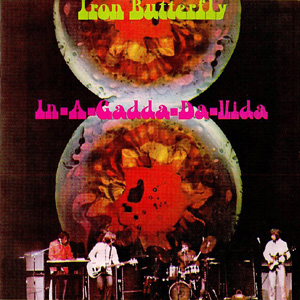
The argument from length belongs to Iron Butterfly. Released by Atco in June 1968, In-A-Gadda-Da-Vida gave its whole second side to the title song, seventeen minutes and five seconds wound around one circling organ and guitar figure, and the album went to number four in America. The riff comes back long past the point of patience, but the song around it is a jam with a drum solo of about two and a half minutes from Ron Bushy in its middle, music built to carry a hall along rather than to bury it. The Beatles came nearer in September 1969 with "I Want You (She's So Heavy)", which ends the first side of Abbey Road on a coda of about three minutes repeating one heavy figure until the tape is cut dead, and which Guitar World placed in 2015 among the heaviest songs recorded before Black Sabbath, one that "might have inadvertently started doom metal". Inadvertently is the word that decides it. A band arriving at a slow heavy riff by accident is not a genre beginning.
"Black Sabbath", the song
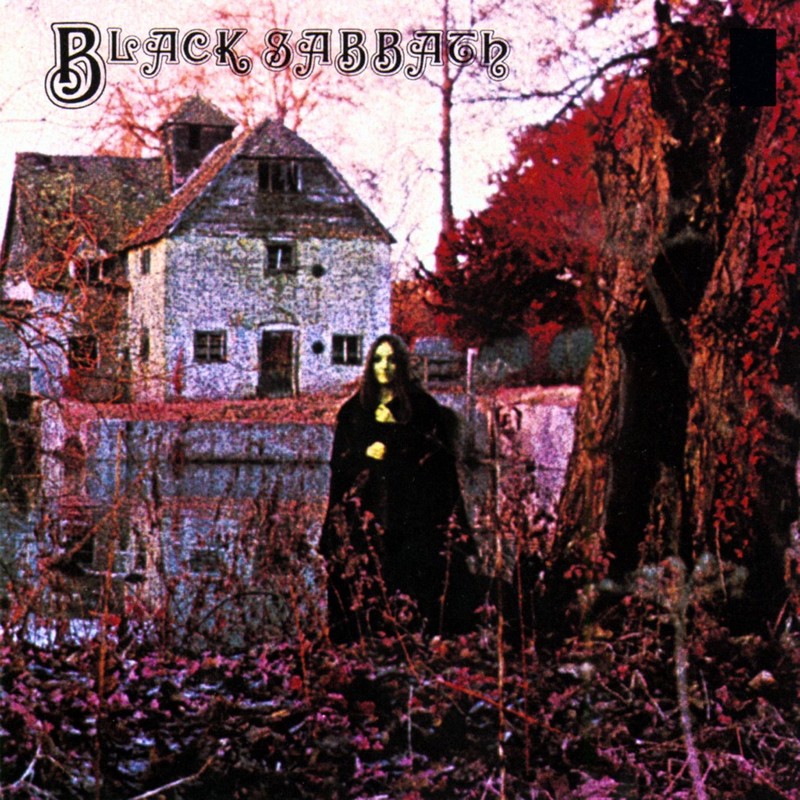
Formed in Aston in 1968 and renamed in August 1969 after the Italian horror film released in English as Black Sabbath, the quartet of Tony Iommi, Geezer Butler, Bill Ward and Ozzy Osbourne had the title song written in 1969, and by Butler's account the riff grew out of a fragment of Gustav Holst's "Mars, the Bringer of War" that he had been playing, which Iommi turned the following day into the figure that now opens Black Sabbath. The album reached number eight in Britain and, released by Warner Bros. in America on 1 June 1970, number 23 on the Billboard 200.
The riff is built from three sounds: a power chord on G, the same G an octave higher, and a C sharp. The distance from G to C sharp is the tritone, six semitones, exactly half an octave, the least settled interval in Western harmony, because it withholds the home that a major or minor chord gives the ear. Speed decides what the interval does. Played fast, it is a flash of menace inside a riff. Played at a funereal crawl, with each chord struck and left to ring until it has almost died away, the unresolved interval stops being an event and becomes the room the listener is shut inside, a dirge whose door is never opened, and that is the specific thing no record before it had done. In its final section the song throws off the crawl for a fast riff and a galloping close, so the first doom metal song does not stay doom to its last bar.
The first stroke of a cast bell
Firmly walled within the earth, burnt of loam, the frame doth stand; today the bell must have its birth; brisk, my comrades, be at hand!
Friedrich Schiller, The Lay of the Bell, translated by Thomas James Arnold, 1842
A church bell is not finished when the metal goes in. Melted from copper and tin in the furnace of a foundry and run into a clay mould sunk in a pit of rammed earth, the bell lies buried while it cools, and nobody who stood over the pour knows what has been made until the mould is broken off and a hammer strikes it for the first time, and that one stroke, the note swelling out of the fresh bronze and hanging over the foundry floor, tells the founders whether the alloy is sound or the bell goes back into the furnace. Every record in the first section of this page is metal in that furnace. Vanilla Fudge supplied the slowness, Blue Cheer the volume, Iron Butterfly the patience to repeat, Coven the name and the imagery, and for close to three years nobody struck the result.
"Black Sabbath" is the first stroke. The riff comes out of the silence after the storm the way a note comes out of new bronze, one chord hit and left to hang over the floor until it has nearly gone, and the leaden ring of it proves that the pour has held: that slowness and the devil's interval could carry a whole song on their own, not a cover and not a coda. A genre is identified the way a founder identifies a bell, by what rings on after the hammer, not by what went into the melt. The bands who built doom over the following fifteen years, from the Virginia group Pentagram, formed in 1971, to Saint Vitus, who took their name from a Black Sabbath song, tuned their instruments to that stroke and not to any of the records poured before it.
Everything before it was metal in the furnace. "Black Sabbath" is the first stroke, the moment the casting proved it could hold a note.
None of this makes the earlier records worthless. The slowed covers, the fuzz trios and the organ epics of 1967 to 1969 are what we file under proto Doom, heavy music made before the name existed, and each is worth hearing for what it added to the alloy. What they are not is the thing itself. The first doom metal song is the first one on which every element is present at once and nothing else is asked of it.
What the verdict leaves open
| Released | Song | Band | What it brought | What it lacked |
|---|---|---|---|---|
| June 1967 | "You Keep Me Hangin' On" | Vanilla Fudge | A hit slowed down on purpose | Dissonance and dread |
| January 1968 | "Summertime Blues" | Blue Cheer | Volume and distortion | Slowness |
| June 1968 | "In-A-Gadda-Da-Vida" | Iron Butterfly | Length and repetition | Slowness as the method |
| June 1969 | "Black Sabbath" | Coven | The name and the occult imagery | Heaviness |
| September 1969 | "I Want You (She's So Heavy)" | The Beatles | A slow repeated heavy riff | Intent |
| 13 February 1970 | "Black Sabbath" | Black Sabbath | Tritone and crawl as the method | Nothing it needed |
Two objections deserve an answer. The first is that the word was not there. "Black Sabbath" is not called doom, the band's first song with the word in its title was "Hand of Doom" on Paranoid in September 1970, and doom metal as the name of a style belongs to the 1980s, when the Swedish band Candlemass put Epicus Doomicus Metallicus into the shops in 1986. The name records when the critics caught up, not when the music began. The second objection is the song's own ending, the fast closing section described above. We accept it, and it does not move the verdict, because the part before the change is the template that everything slow and heavy since has copied.
Judged by a single song, the Aston quartet has no serious rival. Judged by a whole programme, the question of what Was the First Doom Metal Band has to weigh a group that spent the 1970s writing faster records against bands who made slowness their entire career. For the song, the matter is closed. A G, its octave and a C sharp, struck slowly and left to ring, pressed onto Vertigo vinyl in February 1970. That is where doom starts.
