
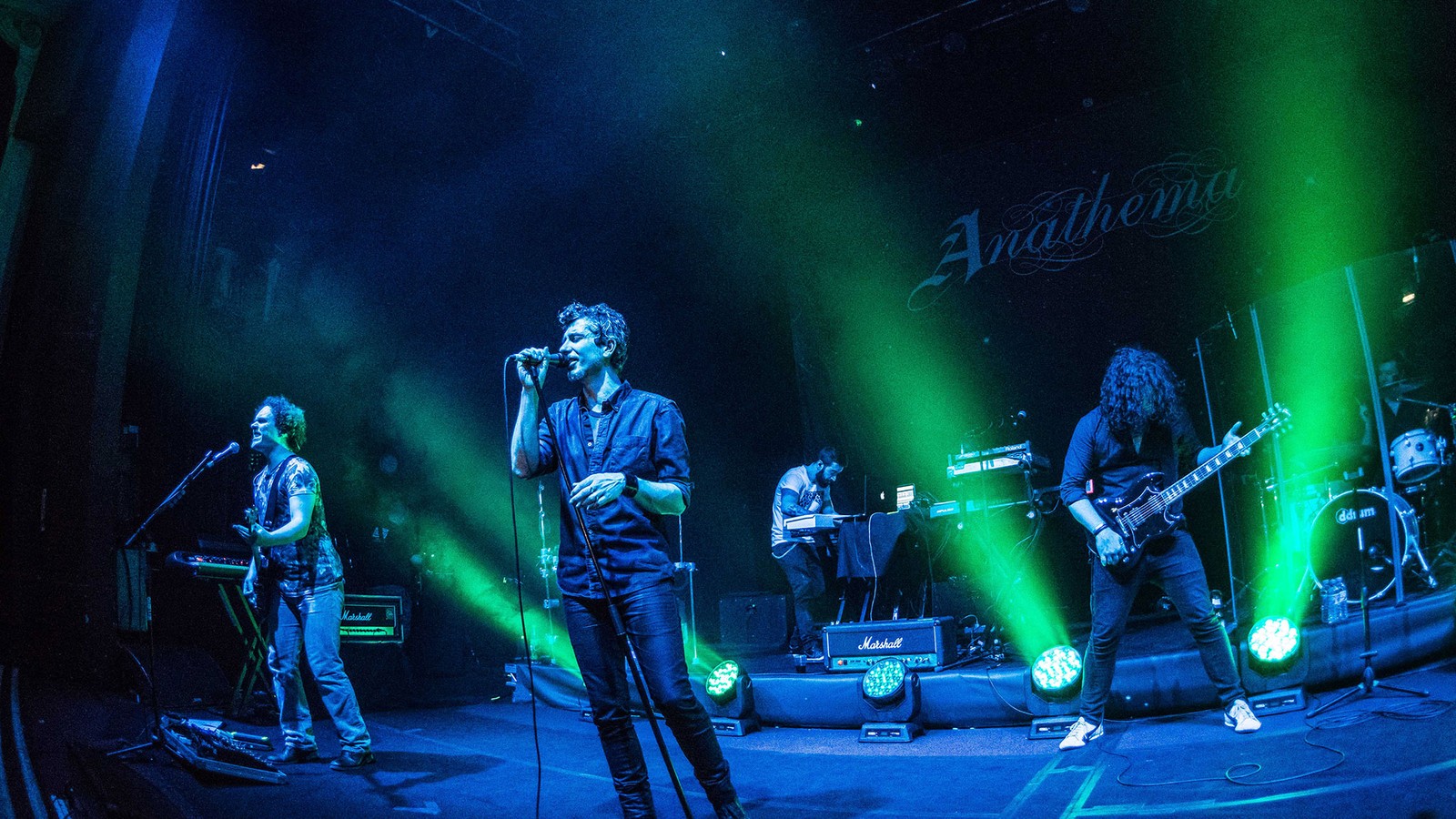
On 1 March 1996 a television studio on the Krzemionki hill in Kraków, Studio TVP, held a band from Liverpool, a camera crew and a set list that no longer added up. Four months after Peaceville Records had released the band's second album, and filmed for the live half of a video the same label issued in 1997 and later put out again on DVD, the quartet that had lost its singer ten months earlier, Anathema, opened on "Restless Oblivion" and "Shroud of Frost" and then reached back for "We, the Gods" and "Sleepless", songs written for the throat of Darren White and now carried by the guitarist Vincent Cavanagh in a voice that moaned where the old one had torn at the microphone. The riffs were the same leaden slabs. The voice over them belonged to another building.
That room is the clearest picture we have of what gothic doom metal is: a style caught in the middle of a move, one foot still in the death doom it came from and the other already in the goth rock its musicians had grown up on. Picture the nave of a ruined abbey after the roof has gone. The columns still stand, dressed stone quarried by death metal and lowered to a funereal pace, but ivy has climbed them to the capitals, and the rain now falls straight onto the flagstones where the vault once held it off. Gothic doom is that nave. The weight is the stone, the melody and the second voice are the ivy, and the open sky is everything goth rock let in. It is one chapter of the doom metal history in full, and a short one, because a building without a roof does not stay a building forever.
Gothic doom is what happens when a death doom band finds the goth records in a big sister's bedroom and a second-hand keyboard in the same week. The growl moves out first. The riffs stay behind to lock up.
Gareth Llewellyn, KaosMetal
What it kept from death doom
The stone was cut in the north of England. Readers who have followed Peaceville and what it pressed know the three bands that label signed at the start of the nineties, and know that the first of them to put the word on a sleeve was Paradise Lost, whose second album, Gothic, came out on 19 March 1991 with Sarah Marrion's voice set against Nick Holmes's growl and orchestral parts laid under the guitars, while My Dying Bride gave Martin Powell's violin a permanent seat on Turn Loose the Swans in 1993. What gothic doom inherited from that shelf is precise: a tempo brought down to the pace of a dirge, a downtuned riff held long enough to stop being a riff and become architecture, and a growl that for the first few years nobody thought to remove.

Formed in Liverpool in 1990 under the name Pagan Angel, signed to Peaceville on a four-album deal on the strength of the All Faith Is Lost demo, and sent into Academy Studios in Yorkshire between June and September 1992 to build on the material of The Crestfallen EP, the band of the brothers Daniel and Vincent Cavanagh, the drummer John Douglas, the bassist Duncan Patterson and the singer Darren White released Serenades on 15 February 1993. It is a death doom record in the strict sense, with "Sleepless" and "Sweet Tears" pressing forward at the weight of wet masonry, and it ends without warning on "Dreaming: The Romance", twenty-three minutes and twenty-three seconds of ambient drift. Writing on Sputnikmusic in January 2008, the critic signing as Trey gave it 4.5 out of five, heard in White's growl "a strong sense of sadness and loss", and four days later, reviewing the album that followed, called Serenades the only record needed from the band's doom years. The ambient closer is the first crack in the vault.
What it took from goth rock
The ivy came from the clubs rather than from any metal record. Gregor Mackintosh, the guitarist and main composer of Paradise Lost, told Dave Everley of Metal Hammer in April 2020 that after punk his teenage listening had moved on to Siouxsie and the Banshees, Bauhaus and, above all, The Sisters of Mercy, a scene then alive in Leeds and Bradford a short drive from his own town. From that shelf gothic doom took the baritone that sings instead of growling, the chorus left hanging in reverb, keyboards used as weather rather than as ornament, and a romantic, openly self-dramatising lyric that death metal had never allowed itself. Talking to Adam Rees of MusicRadar the same month, Mackintosh said that on their second album the band tried out what they liked, the Sisters, early Cure and Siouxsie, and mixed it with the death doom on two or three of its songs. Some of it came in by a side door. On "Mesmerized", from Celtic Frost's Into the Pandemonium, released by Noise in 1987, Tom G. Warrior dropped the bark for a mournful croon, and Paradise Lost's singer Nick Holmes, ranking his ten favourite Celtic Frost songs for Louder in July 2020, called it his favourite song on that record, so sad he could nearly cry to it, and said he loved the way Tom sang it.
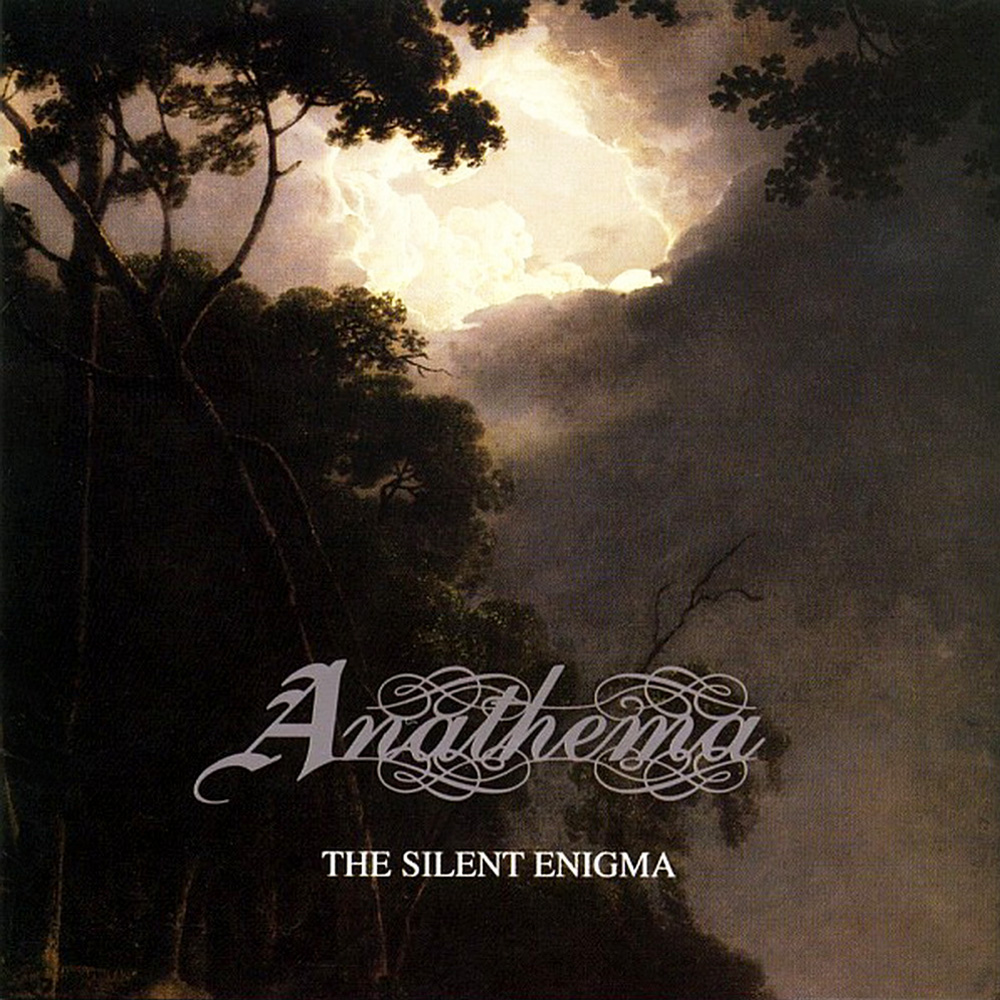
Recorded at Lynx Studios in Newcastle upon Tyne in May and June 1995, produced by the band with Kevin Ridley and released by Peaceville on 6 November 1995, The Silent Enigma is the record on which the four who remained after White's departure that May, and who made their debut as a four-piece on a British tour with Cathedral, let the ivy up the columns without taking a single column down. "Restless Oblivion" runs past eight minutes and "Shroud of Frost" past seven and a half with Derek Fullwood speaking over it, and both still rest on slow, heavy riffs; "...Alone", recorded separately at M.A. Studios in Liverpool, gives a woman's voice, Rebecca Wilson's, a song of its own. Opinion on the album has never settled. Metal Storm's reviewer gave it 9.5 out of ten, while Trey of Sputnikmusic, at 2.5 out of five, heard a singer still moving between a mid-range growl, a spoken rasp and "a clean gothic moan", solid doom in the first two songs and, across much of the rest, doom by numbers that felt directionless. Both readings describe the same scene: a band standing in the nave with the rain already on its face.
Where it stops being doom
The roof was one loss; the columns were another. Produced by Tony Platt at The Windings in Wales and released by Peaceville on 25 November 1996, Eternity pushed keyboards, some of them played by the guest Les Smith, to the front, gave Vincent Cavanagh mostly clean vocals, brought in Michelle Richfield as a second voice, and covered "Hope", Roy Harper's song, with Harper himself speaking on it. "Angelica", "Far Away" and the three parts of the title piece are still mournful. They are no longer heavy in the way Serenades was heavy. AllMusic's review heard the blistering guitars replaced by atmospheric keyboards, and Trey of Sputnikmusic had already filed the album before it as the band's last doom release. That difference is the border. Alternative 4 followed on 22 June 1998, written largely by Patterson, who quit over musical differences in 1998, and Judgement in June 1999 completed the band's exit from doom altogether. From there Anathema walked into the atmospheric rock of Weather Systems and The Optimist and, on 22 September 2020, into an indefinite hiatus. By then the columns had been pulled down one by one and the ivy had become a garden.
Anathema was not the only band to walk out of the building, and the other exits show exactly where the line falls. Founded in Stavanger on 2 October 1993, Theatre of Tragedy set Raymond Rohonyi's growl against Liv Kristine's soprano on a debut released by Massacre Records on 4 July 1995 and again on Velvet Darkness They Fear in August 1996, fixing the duet of beauty and beast as a formula many later bands copied, and then on Musique, released on 2 October 2000, threw out the death grunts and the old heavy riffing in favour of electropop and industrial rock. Paradise Lost had already gone into synthesisers with One Second in 1997. The test is not the growl, which gothic doom can lose, and not the keyboards, which it needs. It is whether the slow riff still carries the song.
When the slow riff stops carrying the song and the tempo is slow only because the mood is sad, the columns are gone, and what remains is gothic rock with a metal past.
The bands that kept the stone
The style did not end with those departures, because every few years a new band finds the ruin and moves in. Type O Negative had already shown in 1993, on Bloody Kisses, what the formula sounded like with Peter Steele's bass-range voice at the front and a dry sense of humour behind it, a record Decibel described as full of "doom-pop epics" and the first Roadrunner album certified gold in the United States, in November 1995. In Sweden, Draconian recorded Where Lovers Mourn at Studio Mega and released it through Napalm Records on 20 October 2003, setting the growl, the female voice and a tolling tempo back between the same columns, and My Dying Bride has kept its own nave standing for thirty-five years. Who else belongs inside those walls, and in what order, is the business of the Gothic Doom Metal Bands.
So the definition holds at both ends. Gothic doom is death doom that let the weather in: the columns of slow, weighted riffing still standing, the ivy of melody and a clean voice climbing them, and the rain of goth rock falling where the vault of the growl used to be. Take away the ivy and what is left is death doom. Take away the columns and what is left is gothic rock. Anathema lived in that nave for the length of two records, and the second already had cracks running up its stone. That is the style at its purest, a room that exists only while it is falling.
