
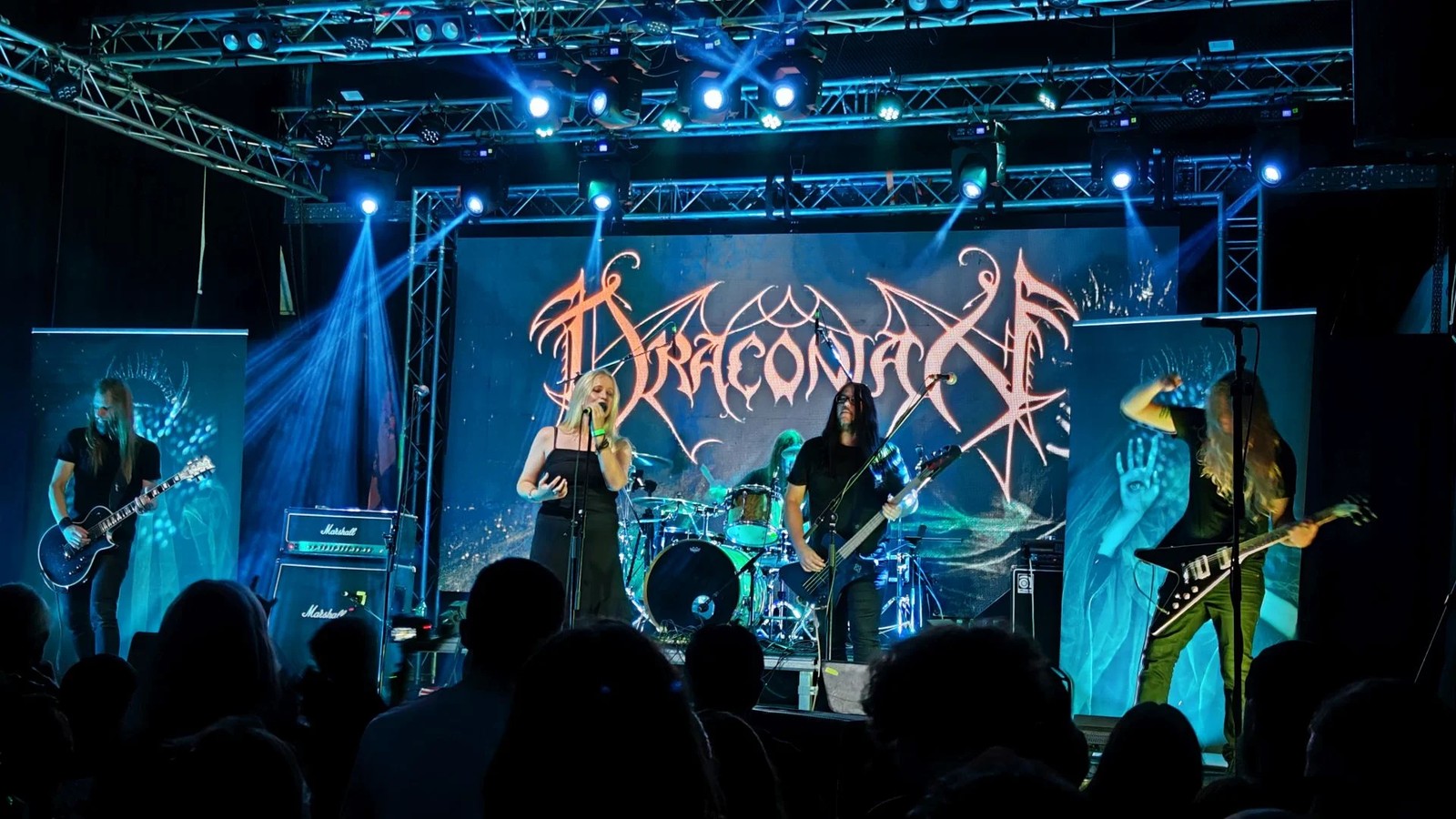
In October 2020 Dom Lawson reviewed Under a Godless Veil for Blabbermouth, gave the seventh album by Draconian eight and a half out of ten, and still felt bound to note that it "seldom strays from a well-trodden musical path". We think the observation is exact and the apology inside it misplaced. The path Lawson meant, a death metal growl set against a clean voice over riffs slowed to the pace of a dirge, with a violin or a bank of keyboard strings standing in the corners of the room, was never trodden by a crowd. It was worn down across thirty years by a small number of bands, and a path walked that slowly by that few people is not a rut. It is the genre.
The Victorians understood this better than the reviewers do. Mourning jewellery cut from black jet, the fossilised wood that nineteenth century workshops carved into brooches and lockets for the bereaved, was made to the same handful of patterns for decades, and nobody who pinned it to a black collar asked the stone to be new, because its whole worth lay in the hours of polishing that brought a dull lump of lignite to the point where it gave back the flame of the candle beside the coffin. Gothic doom is that stone. What separates the bands below from the many who tried the formula and vanished is the polish: years spent working a leaden riff and a grieving melody against each other until the black surface returns the light.
The roll keeps to a narrow rule. Gothic doom grew out of the story of when doom met death metal at Peaceville in the early nineties, and it began when the growl stopped being alone: a second voice, a violin or a string section entered, and the funereal weight of the riffs was kept rather than traded for speed. A band earns its place with a record on a named label in a named year and two songs that carry the method. Eleven bands pass. Several famous names do not.
| Band | Country | Start with | Label, year |
|---|---|---|---|
| Paradise Lost | England | Gothic | Peaceville, 1991 |
| My Dying Bride | England | Turn Loose the Swans | Peaceville, 1993 |
| Anathema | England | Serenades | Peaceville, 1993 |
| Type O Negative | United States | Bloody Kisses | Roadrunner, 1993 |
| Tiamat | Sweden | Wildhoney | Century Media, 1994 |
| The Gathering | Netherlands | Mandylion | Century Media, 1995 |
| Theatre of Tragedy | Norway | Velvet Darkness They Fear | Massacre, 1996 |
| Saturnus | Denmark | Paradise Belongs to You | Euphonious, 1997 |
| Draconian | Sweden | Where Lovers Mourn | Napalm, 2003 |
| Swallow the Sun | Finland | The Morning Never Came | Firebox, 2003 |
| Trees of Eternity | Sweden | Hour of the Nightingale | Svart, 2016 |
The Peaceville founders and an American baritone
The quintet whose second album handed the style its adjective, Paradise Lost, released Gothic through Peaceville on 19 March 1991, with a female guest voice and orchestral parts set against Nick Holmes's growl and Gregor Mackintosh's lead guitar climbing in long mourning lines above riffs dragged to a walking pace, and the title track and "Eternal" hold the entire grammar of gothic doom between them. Draconian Times, on Music for Nations in 1995, reached the album Top 20 in the United Kingdom and Germany with "The Last Time" and "Enchantment".
Formed in June 1990 and signed to the same label, the band that moved a violin from the margins of death doom to its front line, My Dying Bride, released Turn Loose the Swans in 1993 with Martin Powell, who joined that year, playing violin and keyboards across the record and Aaron Stainthorpe moving between growl, spoken word and a plaintive clean voice on "Your River" and "The Crown of Sympathy". In April 2024, two weeks before A Mortal Binding came out on Nuclear Blast, the band cancelled its live dates citing internal tensions, and in October 2025 it confirmed that Stainthorpe would not return.
Anathema belong here for one record. Serenades, released by Peaceville on 15 February 1993, laid Darren White's growl under the slow minor-key guitars of the Cavanagh brothers on "Sleepless" and "They (Will Always) Die"; in May 1995 White left and the band began the long walk out of metal.
Across the Atlantic, the quartet that answered the growl with a baritone, Type O Negative, released Bloody Kisses on Roadrunner on 17 August 1993, putting Peter Steele's deep clean voice over doom riffs and church organ on "Christian Woman" and "Black No. 1 (Little Miss Scare-All)". In November 1995 it became the first Roadrunner album certified gold in the United States. The band ended with Steele's death on 14 April 2010.
A path walked that slowly by that few people is not a rut. It is the genre.
The second voice enters the room

Recorded in July 1994 at Woodhouse Studio with Waldemar Sorychta producing, and released by Century Media on 1 September 1994, Wildhoney is the record on which the Swedish band Tiamat dragged its death doom into psychedelia while keeping the tread of a pallbearer under every song, with "Whatever That Hurts" and "Gaia" among its songs, and it sold better than the Grave and Unleashed records that had been Century Media's best sellers. The following June Sorychta was back at Woodhouse for the first album The Gathering made with Anneke van Giersbergen.
Released by Century Media on 22 August 1995, Mandylion is where the clean female voice stopped answering the growl and evicted it from the building, leaving slow, heavy guitars under synthesiser, and "Strange Machines" and "Leaves" carried it to number 20 on the Dutch album chart, the first time the band had charted at home. The history of gothic Doom Metal treats that eviction as the point where the style split in two.
The Norwegian septet that wrote its lyrics in Early Modern English, Theatre of Tragedy, released its debut through Massacre on 4 July 1995, and on "A Hamlet for a Slothful Vassal" and "Cheerful Dirge" Raymond Rohonyi's growl and Liv Kristine's soprano trade lines like two players in a masque staged at a wake, a duet many bands copied through the following decade. Velvet Darkness They Fear followed on Massacre in 1996 with "Der Tanz der Schatten" and "And When He Falleth".
Draconian, and the singer who came back
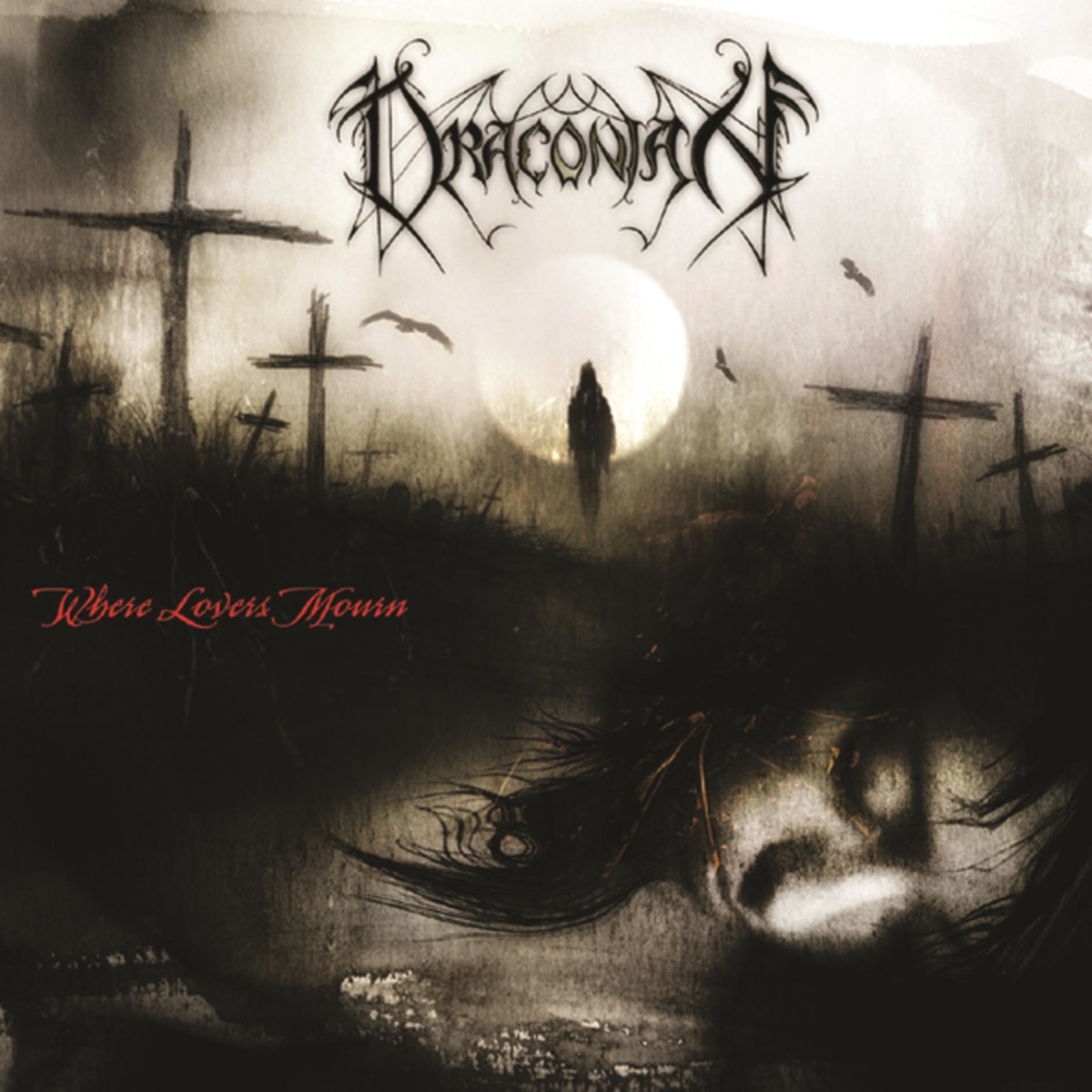
Formed in Sweden in 1994 out of a melodic death metal band called Kerberos, and signed by Napalm Records on the strength of Dark Oceans We Cry, the first recording with Lisa Johansson, the band that took the Peaceville method and refused to leave it recorded Where Lovers Mourn at Studio Mega with Chris Silver and released it on 20 October 2003. It opens on the nearly thirteen minutes of "The Cry of Silence" and closes on "It Grieves My Heart", with Anders Jacobsson's growl laid under Johansson's voice like the black setting beneath a mourning locket, the dark ground that makes the lighter stone shine. A Rose for the Apocalypse, released in June 2011 with "The Last Hour of Ancient Sunlight" as its video, polished the same pattern further.
Then the clean voice changed. Johansson left on 15 November 2011 for personal reasons, and on 19 September 2012 the band introduced Heike Langhans, a singer from South Africa, who co-wrote lyrics for Sovran, released by Napalm on 30 October 2015 with "Stellar Tombs", and carried Under a Godless Veil, released on 30 October 2020 with "Sorrow of Sophia" and "Sleepwalkers". On 3 May 2022 the band announced that Langhans was leaving to concentrate on her own projects and that Johansson was returning, and at the French festival Hellfest that summer both singers shared a farewell set. On 11 February 2026 the band announced an eighth album, In Somnolent Ruin, scheduled for release through Napalm on 8 May, the first with Johansson's voice since 2011.
Two singers came and went, and the method never moved. The growl tolls underneath, the clean voice carries the melody over it, the riffs keep the slow pace, and what Lawson heard as a well-trodden path was twenty years of the same black stone taken back to the wheel.
The northern mourners
The Danish band that stayed furthest from the charts and closest to the dirge, Saturnus, began in 1991 as a death metal band called Asesino, took its present name in 1993, signed in 1996 to Euphonious Records, an offshoot of the Voices of Wonder label, and released Paradise Belongs to You in January 1997. Thomas A. G. Jensen's growl carries "Christ Goodbye" and "Pilgrimage of Sorrow" over keyboards and slow guitars, with whispered guest voices and a flute on "The Fall of Nakkiel". Its fifth album, The Storm Within, arrived through Prophecy Productions in June 2023.
Founded in Finland early in 2000 by the guitarist Juha Raivio, Swallow the Sun released The Morning Never Came through Firebox on 15 November 2003, and on "Swallow (Horror I)" and "Deadly Nightshade" Mikko Kotamäki's growl and clean voice ride riffs that land like shovelled earth on a coffin lid, one heavy load to every bar.
Raivio's other band belongs here as well. Trees of Eternity formed in 2009 around Raivio and the singer Aleah Stanbridge, and finished its only album in 2014. Stanbridge died of cancer on 18 April 2016, aged 39, while the album was in its final post-production. Svart Records released Hour of the Nightingale, produced by Jens Bogren, on 11 November 2016. Stanbridge's voice leads "Eye of Night", and Nick Holmes of Paradise Lost sings on the closing "Gallows Bird".
Where the roll stops
The names missing from this page are missing on the rule that admitted the others. Lacuna Coil and Within Temptation kept the second voice but, on the records that made their names, raised the tempo until the riff carried no weight, which makes them gothic metal, not gothic doom. The border on the other side is older, and it runs through the question of doom Metal and Death Metal: where the voice stays a growl and the melody goes, the jet loses its shine and the music becomes a dull lump of lignite again. The eleven bands above chose the polish over the novelty, and the records show it was the harder choice.
