
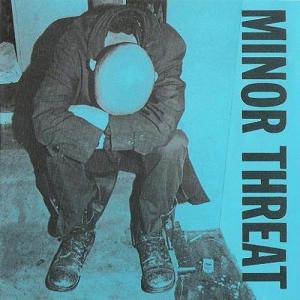
Forty-six seconds. That is the whole of "Straight Edge", and the Washington four who packed it onto an eight-song EP in 1981, pressed on the label two of them had founded the year before, were Minor Threat. Three years later the London five who closed Powerslave, issued by EMI in September 1984, with thirteen minutes and forty-five seconds of Coleridge set for two guitars, long enough to play the Washington song eighteen times back to back, were Iron Maiden. Heavy metal vs hardcore is settled on the clock.
Everything else follows from the clock. Hardcore was made the way the writers of the same years painted the New York subway: a crew slipped into a lay-up yard after midnight, hit the whole flank of a car in the minutes between one patrol and the next, and watched it roll through the boroughs in the morning until the transit authority's buff, a car wash that sprayed chemical solvent, scoured the paint back to bare steel. Then they came back and did it again.
Nothing was meant to last. Everything was meant to be seen.
Heavy metal vs hardcore on the clock
A hardcore set of 1982 ran twenty songs in twenty minutes and fed them through the public address the way an office shredder takes a ream, each sheet dragged headlong into the rollers and spat out in ribbons before the next is squared on the tray. There was no intro tape, no drum solo and no encore worth the name. The count-in was the overture.
Heavy metal spent the same years going the other way. The song grew longer as the band grew better, because length was where a heavy metal band kept its ambition: the extra verse, the second solo, the passage where the tempo drops and the story turns. Time was the raw material. Hardcore treated it as the enemy.
"Rime of the Ancient Mariner" shows what the older music does with a quarter of an hour. The gallop carries the first verses, then the whole band stops dead for a becalmed middle section, a bass figure creaking under the silence while a spoken passage from Coleridge is read over it, and only then does the salvo of guitars rebuild the song from the first riff up. A hardcore band would have finished its set in the same span. Neither side thought the other was playing music.
Hardcore was painted to be seen once. Heavy metal was built to be kept.
The wider frontier, where the audience stands and which way it faces, is drawn in the related chapter. The border with hardcore is narrower and older than that, and it runs through the stopwatch before it runs through anything else.
The hands prove nothing
The easy answer is that metal musicians could play and hardcore musicians could not. The records demolish it.
The Washington quartet that started out in 1977 as a jazz fusion band called Mind Power, then threw the fusion out of the window and played hardcore faster and tighter than anyone on the east coast, went by the name Bad Brains. "Banned in D.C.", on the cassette ROIR issued in February 1982, is a song about being shut out of every club in their own city, and it goes by in two minutes and twelve seconds with Dr. Know's guitar ripping through the changes at a speed few metal players of the day could hold. The skill was there. It was spent on getting to the end first.
That is the real line. A heavy metal musician uses his technique to extend the song, adding the harmony, the solo and the extra section; a hardcore musician uses the same technique to compress it, and the better the band, the shorter and harder the song comes out. Same hands. Opposite direction.
The voice runs the same way. A heavy metal singer is a soloist with a range to display, and the note he is known for sits an octave above the guitars and stays there for as long as his lungs allow; a hardcore singer barks a headline at the people pressed against the monitors, pitched wherever the throat happens to land, and the front rows bark it straight back. One voice is admired from a distance. The other is shared at arm's length.
What the ticket cost
The second body of evidence is money. The label that put out Minor Threat, founded in 1980 by Ian MacKaye and Jeff Nelson to release a single by their previous band, was Dischord, and it ran for decades on small pressings, xeroxed flyers and shows kept cheap enough for a fifteen-year-old to get in. The entry policy itself became a creed. Under-age fans were marked with a black X on the back of the hand so the bar would not serve them, a system the band brought home from the Mabuhay Gardens in San Francisco that summer and talked the 9:30 Club into adopting, and the kids turned the mark into a badge.
Heavy metal in 1984 ran on a different scale entirely. The tour behind Powerslave went on for three hundred and thirty-one days and a hundred and eighty-nine shows, on a stage dressed as an Egyptian temple with a mummified giant rising behind the drum riser, paid for by a major label and paid back by the halls. None of that was a betrayal of the music. It was the music's natural size.
Hardcore's natural size was a room with no stage, which is why the question of selling out, a hanging offence in Washington, barely existed in heavy metal at all. A metal band that signed to EMI had arrived. A hardcore band that did the same had left.
The first great test case came out of the Midwest. Leaving SST, the label Black Flag had built by hand, for Warner Bros. in 1986 and taking Candy Apple Grey to a major, the Minneapolis trio whose move drew howls of protest from its own fan base was Hüsker Dü. No heavy metal fan in the same year would have understood the complaint.
Where the two traded
For a few years in the middle of the eighties the border opened, and the traffic ran in both directions. Metal fans started turning up at the Sunday hardcore matinees at CBGB, the Bowery club that ran them through most of the decade, and a handful of bands took the lineage of both into the same songs.
The New York band whose 1986 debut The Age of Quarrel sold to both camps without apologising to either turned out to be the Cro-Mags, with John Joseph shouting over guitars that carried the weight and the palm-muted chug of a metal record, a sound thick enough to shake the plaster off the ceiling of any club on the Bowery. "We Gotta Know" runs three minutes and nineteen seconds, opening a record that empties out in under half an hour. The guitars had crossed the border. The clock barely had.
That is the pattern every crossover record repeats. The Houston band that sped its songs up and then slowed them into thrash across the middle of the decade, and in 1987 named an album after the whole movement, answered to the initials D.R.I., and the metallic hardcore of the nineties bolted heavier riffs still onto the old frame. Hardcore took the tone and the tuning from heavy metal. It never took the solo, the long form or the tenor.
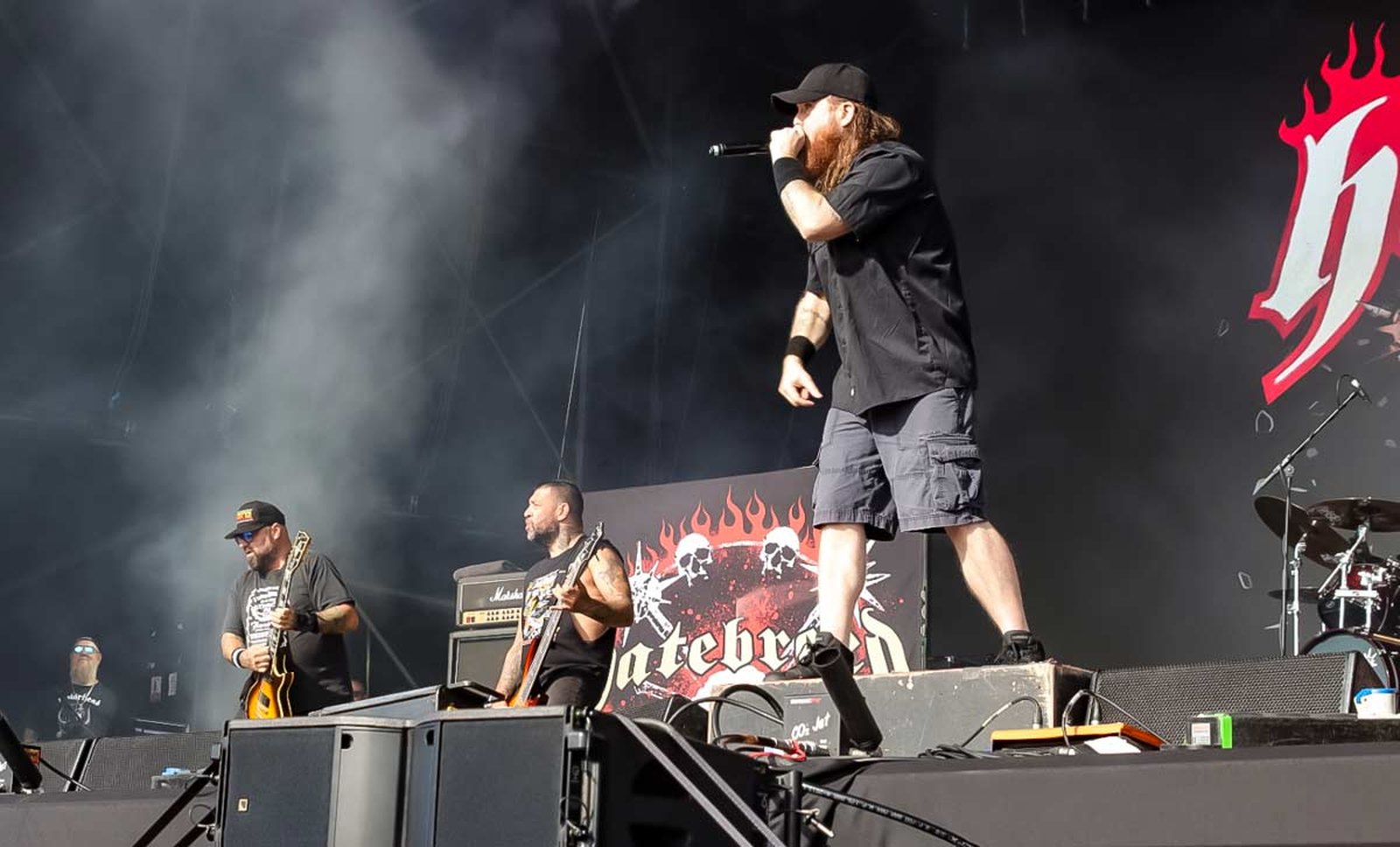
The proof came again a decade later. The Connecticut band that tuned its guitars down to death metal depth, borrowed the Cro-Mags' chug wholesale and still kept every song on Satisfaction Is the Death of Desire, released by Victory in 1997, under three minutes, called itself Hatebreed. Heavier than half the metal shelf. Hardcore to the bone.
What each kept
Heavy metal kept the virtues of a building: the high voice aimed at the back of the hall, the twin leads worked out note by note, the song that takes its time because it expects to be played for forty years. Hardcore kept the virtues of a shout across a street. It arrived without warning, said one thing, and was gone before anyone could argue, and a band that learned to stay longer, to add the solo and let the song breathe, had crossed into the other country whether it admitted it or not.
The long form came to heavy metal from further away than any punk band ever looked, from the conservatory and the concert hall, and that older debt is traced in heavy metal and classical music. Hardcore owed the conservatory nothing, and paid it back in full.
